Listen through the publisher, then discuss the episode here or arrange an in-person Roundtable. Your city determines where to meet.
Roundtables are designed for groups of four, with a shared subject and room for everyone to speak. Come for discussion, with no dating expectation.
If you have inflammatory bowel disease (IBD), you've probably wondered whether what you're eating is making your symptoms worse, if you need to cut out certain foods, or if changing your diet could actually help heal your gut. With so much conflicting nutrition advice out there, it can be difficult to know what to eat, especially when you're worried about triggering another flare. In this episode of The Gut Show, I'm joined by dietitian Stacey Collins to talk about what IBD is, if your diet caused IBD, diet therapy and more! In this episode, we cover: Introducing Stacey Collins [2:36] What is IBD? [5:42] What is the diet for IBD? [8:52] Did your diet cause IBD? [9:43] I have IBD, can food heal my disease? [16:24] Inflammation [18:18] Can nutrition alone heal? [20:32] Diet therapy [25:36] When can diet therapy be used? [30:32] Can you decide based on symptoms alone? [32:25] Look at the whole patient [35:39] Malabsorption and malnutrition [36:44] "I'm healing when I feel like I'm not" [41:43] Can you transition out of restriction? [42:39] I ate this and flared, can I ever eat it again? [48:11] About our guest: Stacey Collins is a multi-state licensed registered dietitian nutritionist, a board certified specialist in digestive health nutrition (CSDH), with focused training in Inflammatory Bowel Disease (IBD) nutrition from Cedars-Sinai in Los Angeles. She completed her dietetic internship and graduate nutrition program at The University of Oklahoma Health Sciences Center and her undergraduate education from The University of Texas at Austin. Currently, Stacey is a clinical outpatient dietitian at the Digestive Health Center at The University of Colorado Hospital, enthusiastically supporting the University of Colorado Crohn's & Colitis Center multidisciplinary team as their IBD- specialist Dietitian. Since 2022, she has owned her own virtual IBD nutrition private practice. As a person with Crohn's disease and a j-pouch who never received a dietetic consult, she feels passionately about advancing RD accessibility and their clinical confidence and therefore collaborates on nutrition education and research opportunities as often as she can. Outside of her work, she enjoys Colorado mountain hikes with her husband and their deaf dog, learning to rollerblade and ski faster, and trying not to drown while learning to surf. Website (http://staceycollinsnutrition.com/) Instagram (https://www.instagram.com/staceynellc_rd/) Substack (https://substack.com/@staceycollinsrd%20() Thank you to our partner: Connect with Erin Judge, RD: Instagram (https://www.instagram.com/erinjudge.rd/) TikTok (https://www.tiktok.com/@erinjudge.rd) Work with Erin (https://arugula-caribou-6rgf.squarespace.com/services) FREE symptom tracker (https://www.ibsmastermethod.com/my-gut-journal-opt-in)
Episode information is provided by the publisher. Listening takes place on the publisher’s service.
If you'd like to dive deeper into any of the individual topics we discussed, including BPC-157, Larazotide, and KPV, you can find dedicated deep dives in our Peptides and More library, here: https://staycuriousmetabolism.substack.com/p/peptides For the written companion to this video—including all the references and extra nuances—check out the letter at StayCurious Metabolism, here: https://open.substack.com/pub/staycuriousmetabolism/p/how-to-heal-20-years-of-gut-damage?r=40ekz2&utm_campaign=post&utm_medium=web&showWelcomeOnShare=true (https://open.substack.com/pub/staycuriousmetabolism/p/how-to-heal-20-years-of-gut-damage?r=40ekz2&showWelcomeOnShare=true) try.gotwingspan.com/norwitz Chapters 0:00 – My Gut Health Recovery Story 1:55 – Free Foundational Tools for Gut Health 7:32 – Dietary Principles for a Healthy Gut 12:57 – The Ultimate Peptide Stack for Gut Recovery Description What would I do if I could go back to the day, I was diagnosed with inflammatory bowel disease and start ove
What if the scale isn't telling you the whole story? Have you ever been consistent with your workouts, making better food choices, and really trying to take care of yourself, only to step on the scale and see absolutely no change? And just like that, your motivation takes a hit. You start questioning whether your workouts are working, whether you're doing enough, or whether you need to change something. But here's what I want you to understand: The scale is only measuring one small piece of your health and fitness journey. It doesn't measure how much stronger you've become, how much better your endurance is, how much energy you have, or how much easier it is to do things that used to feel difficult. And if you're only using the scale to determine whether you're making progress, you could be missing some pretty amazing changes happening in your body. Today, we're talking about five ways to measure your fitness progress beyond the scale so you can start recognizing the changes that actua
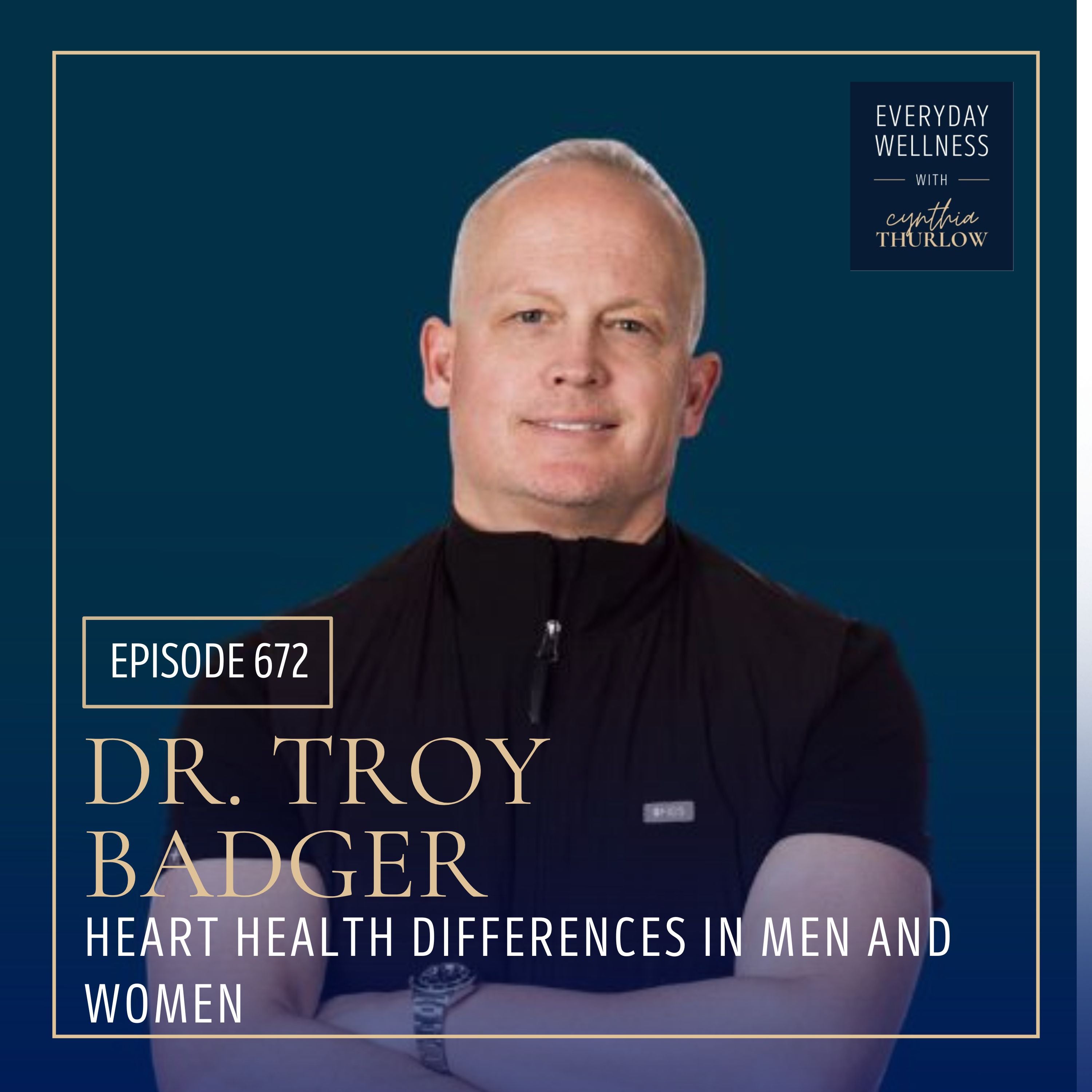
Today, I’m honored to connect with Dr. Troy Badger. He is a board-certified cardiologist and interventionalist and the founder of Cardiostrong, a concierge preventive cardiology clinic in Provo, Utah, focused on reducing cardiovascular risk, optimizing metabolic health, and improving strength and cardiorespiratory fitness for executives and athletes. In today’s conversation, we discuss Dr. Badger’s gender- and age-specific approach to heart health, including treatment differences for men and women, and diagnoses such as INOCA, SCAD, vasospastic disease, and Takotsubo. We examine emotions and their influence on heart health, coronary ischemia and cardiomyopathies, labs and diagnostics, how Dr. Badger assesses risk in his patients, and the differences between a CAC and a CCTA. Dr. Badger also shares the labs he finds essential for all patients and discusses the role of VO2 Max, cardiovascular training, and lifestyle—specifically nutrition, the use of GLP-1 drugs, and a multidisciplinary
Is your body weight stable, but you're still not eating enough to properly fuel your training, recovery, and overall health? Introducing Why Stable Weight Doesn't Always Mean You're Eating Enough from Jeff Hoehn of the Mind Muscle Connection Podcast (https://www.buzzsprout.com/1508401). Just because your weight isn't changing doesn't necessarily mean you're adequately fueled. In this episode, Jeff breaks down why maintaining a stable body weight doesn't always mean you're meeting your body's energy needs, especially if you're training hard, staying lean, or spending long periods dieting. You'll learn: Why stable body weight doesn't automatically mean adequate energy availability Who is most at risk of underfueling, even when their weight isn't changing How high training output, staying too lean, and chronic dieting can contribute to low energy availability The potential signs of underfueling, including changes in performance, recovery, hormones, and menstrual health Why spending too lo
If you're training hard but feeling wiped, eating a restricted diet for your gut, or just never hungry after a tough workout, you might not be getting the protein you need. This episode breaks down how much you really need and how to get it without upsetting your gut. YOU'LL TAKEAWAY: Macronutrients and calories 101, and how restrictive diets throw off your balance How your body digests protein, and why it matters before workouts The many roles of protein, from enzymes and iron storage to post-workout appetite How much protein you need, plus 3 easy low FODMAP ways to boost it — RESOURCES & LINKS MENTIONED: ⤵️ Want high touch coaching support for IBS & fuelling performance? Apply for coaching. (http://gutfitnutrition.com/apply) Free Training: How to Control IBS So You Can Fuel Your Training Without a Lifelong Low FODMAP Diet (https://gutfitnutrition.com/heal-ibs-training-live) Supporting your immune system when you're sick (Ep. 70) (https://open.spotify.com/episode/5bCto0jWLcbC5hQW4hrH6
Happy Regular Guy Friday! We fooled them again and somehow made it through another week! This week, we're hauling furniture, dodging birthday cakes, revisiting old memories, and asking one very important question: Why can't we just make things fun? We talk birthdays and why sometimes a vanilla cake and a fork beat a celebrity-filled bash. We talk moving, downsizing, and how getting rid of years of accumulated stuff can make life feel a whole lot lighter. We talk anxiety, the need for control, and how music, laughter, and the right attitude can turn an overwhelming job into a good time. We revisit Blue Collar versus Blue Blood, old family stories, and why the memories we hold onto aren't always the whole story. We talk letting go of old resentments, appreciating the intentions behind difficult decisions, and helping our parents navigate life's later chapters with dignity and love. Plus, Hulk Hogan, Corey Feldman karaoke, Mercedes Moné's big moment with Team USA women's wrestling, and wh
Are your gut symptoms getting worse as you enter perimenopause? Or are you experiencing digestive symptoms for the first time and wondering if your hormones are to blame? Hormonal changes during perimenopause and menopause can impact much more than your menstrual cycle. From changes in metabolism to bloating, constipation, and other digestive symptoms, there's a lot happening in your body during this transition. In this episode of The Gut Show, I'm joined by Dr. Terri Malcom to discuss what's happening with your hormones, how these changes can impact your gut, and how to determine if your symptoms are related to perimenopause or something else that needs further investigation. We also dive into hormone replacement therapy (HRT), including which hormones are used, the different forms of hormone therapy available, how long it may take to notice improvements, and whether HRT can help with digestive symptoms. Whether you're approaching perimenopause, navigating menopause, or wondering if h
Are you reacting to foods, experiencing unexplained symptoms, or feeling like your body is overreacting to everything? Maybe you've tried eliminating foods, tracking symptoms, or asking your doctor for answers, only to be told everything looks normal. Could histamine be part of the problem? In this episode of The Gut Show, I'm joined by Michelle Shapiro to talk about histamine, what happens when your body has trouble managing it, and how histamine intolerance and MCAS may be connected. We discuss signs that histamine could be playing a role in your symptoms, why these reactions happen, strategies for managing symptoms and whether it's possible to feel better In this episode, we cover: Introducing Michelle Sharpiro [1:47] What is histamine? [4:58] Histamine intolerance + when this becomes a problem [6:16] What are the signs if someone is reacting? [10:20] Why is this happening? [17:09] "you're overreacting" [20:24] How do you assess if it is possibly MCAS? [29:32] Can you feel better? [
A workable temporary compromise is often better than delaying all action.
Share your view, then see how readers voted. No sign-in required. This poll is shared across stories.
Do you agree or disagree?
Common Quandary
A Common Quandary to discuss
Another conversation to explore, separate from this news story.
You scratched a borrowed heirloom and repaired it perfectly. Do you confess?
You borrow a family heirloom for an event and accidentally leave a small scratch. A careful repair makes it almost invisible, and its owner happily accepts it back without noticing anything.
What is confession for when the harm has already been repaired?