Listen through the publisher, then discuss the episode here or arrange an in-person Roundtable. Your city determines where to meet.
Roundtables are designed for groups of four, with a shared subject and room for everyone to speak. Come for discussion, with no dating expectation.
In 1984, Van Halen’s hard-rock jam "Jump" crossed paths on the Hot 100 with a completely different "Jump," the Pointer Sisters’ electro-R&B bop. Eight years later, yet another “Jump,” a hip-hop banger by Kris Kross, topped the chart. In 1959, Frankie Avalon took the dreamy love ballad "Venus" to No. 1. Barely a decade later, the Shocking Blue topped the chart with an entirely different "Venus," before Bananarama took that one back to No. 1 in 1986. For as long as music has been recorded, artists have been recycling the same titles for entirely unrelated songs. On the pop charts, it's been no different. Because, let's be honest: sometimes a good title is just too good not to reuse—even a title as specific or verbose as “Best of My Love,” “How Deep Is Your Love,” “Cruel Summer,” or “Wild, Wild West.” Join Chris Molanphy as he looks at some of the quirkiest, most familiar, and most surprising song titles shared by multiple hits. For more on songs that keep coming back check out Hit Parade’s Gotcha Covered Edition (https://slate.com/podcasts/hit-parade/2024/03/what-fast-car-by-luke-combs-tells-us-about-the-art-of-the-cover-song), on the history of cover songs on the charts. Get more Hit Parade with Slate Plus! Join for bonus episodes of "The Bridge" and ad-free listening across all your favorite Slate podcasts. Visit slate.com/hitparadeplus (https://slate.com/podcast-plus) to get access wherever you listen. Need to set up your Slate Plus feed? If you subscribed through Slate.com, check out our FAQ (https://slate.com/podcastfaqs) at slate.com/podcastfaqs for easy instructions. Members subscribed via Apple Podcasts get automatic access—no setup required. Hosted on Acast. See acast.com/privacy (https://acast.com/privacy) for more information.
Episode information is provided by the publisher. Listening takes place on the publisher’s service.
In 1984, Van Halen’s hard-rock jam "Jump" crossed paths on the Hot 100 with a completely different "Jump," the Pointer Sisters’ electro-R&B bop. Eight years later, yet another “Jump,” a hip-hop banger by Kris Kross, topped the chart. In 1959, Frankie Avalon took the dreamy love ballad "Venus" to No. 1. Barely a decade later, the Shocking Blue topped the chart with an entirely different "Venus," before Bananarama took that one back to No. 1 in 1986. For as long as music has been recorded, artists have been recycling the same titles for entirely unrelated songs. On the pop charts, it's been no different. Because, let's be honest: sometimes a good title is just too good not to reuse—even a title as specific or verbose as “Best of My Love,” “How Deep Is Your Love,” “Cruel Summer,” or “Wild, Wild West.” Join Chris Molanphy as he looks at some of the quirkiest, most familiar, and most surprising song titles shared by multiple hits. For more on songs that keep coming back check out Hit Parade
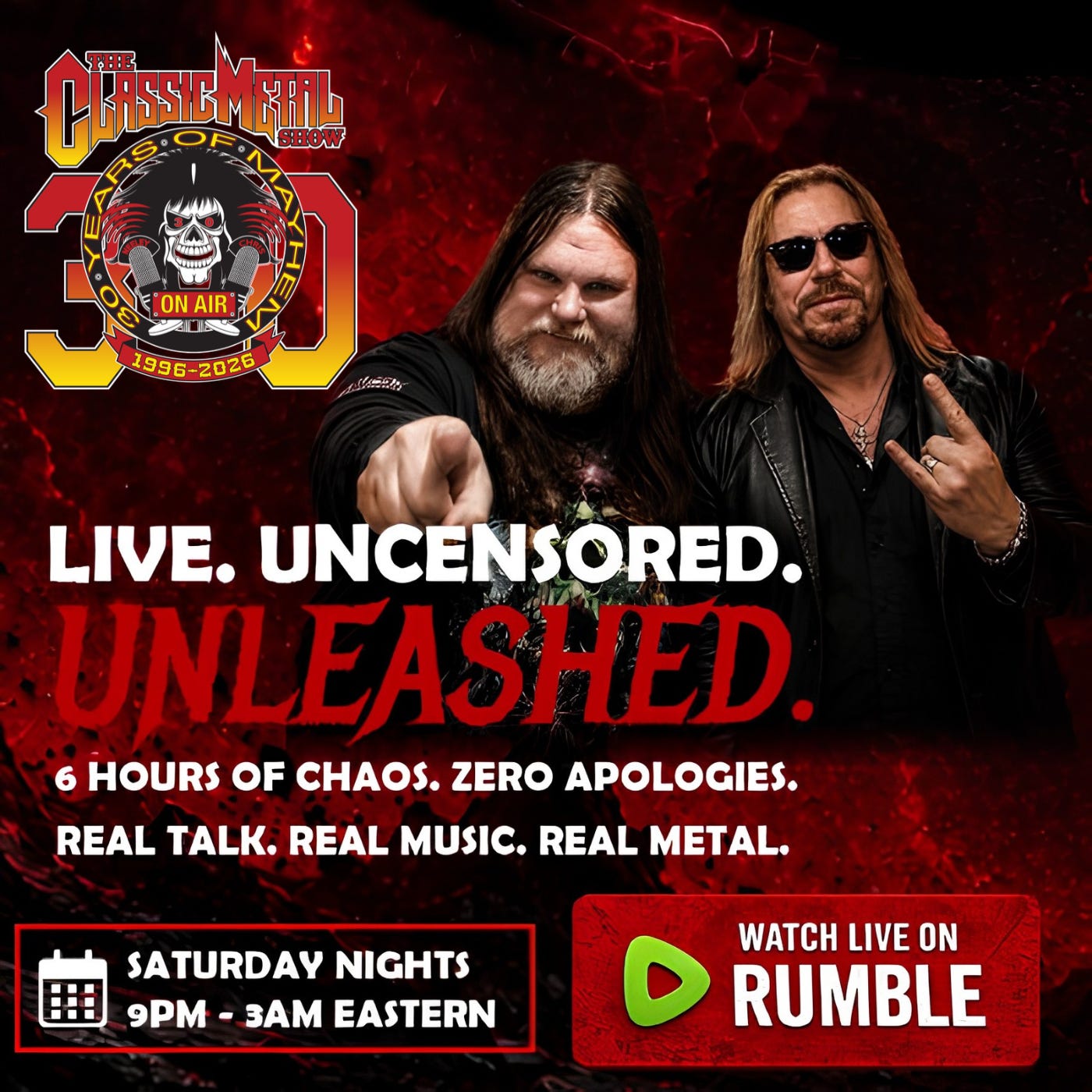
AC/DC is still selling out stadiums. Iron Maiden is entering a new era without Nicko McBrain on the road. But how much longer can the biggest names in classic metal keep going? WATCH THE FULL EPISODE HERE: https://rumble.com/v7i5f9c-are-acdc-and-iron-maiden-running-out-of-time-best-of-the-classic-metal-show.html?mref=1jbjb&mc=7rr45 (https://rumble.com/v7i5f9c-are-acdc-and-iron-maiden-running-out-of-time-best-of-the-classic-metal-show.html?mc=7rr45&mref=1jbjb) On this archival BEST OF THE CLASSIC METAL SHOW, Neeley and Chris Akin revisit the longevity of rock’s biggest legends and the reality that the bands we’ve been listening to our entire lives won’t be around forever. The guys also dig into Sammy Hagar, the departure of Steve “Zetro” Souza from Exodus, the Beatles ‘64 documentary, Megadeth, and the end of Riley’s L.A. Guns. It’s classic CMS: music, memories, arguments, and plenty of unfiltered opinions. This is the free, commercial-supported audio edition of BEST OF THE CLASSIC META
Happy Thanksgiving from the Deadpod. Every year I try to make the holiday show an acoustic one, and this year we're going to Phoenix, Arizona, for March 8, 1970, at the Star Theatre. The room was also called the Travelodge Theatre in the Round, and it had a revolving stage. Put the Grateful Dead on a turning stage in 1970 and things are bound to get a little strange. This was a time of change for the band. Workingman's Dead was recorded but not yet released, and the Dead were just starting to work an acoustic set into their shows. The night before, in Santa Monica, they didn't play any acoustic songs at all. In Phoenix they put one right in the middle of the show, so the bonus here is that you get everything: a hot electric opening, a quiet acoustic stretch, and a finish that nobody saw coming. The tape cuts in on Cold Rain And Snow. Then there's a long technical delay, and Bob Weir tries to fill it with his rambling "Yellow Dog" story. Once they get going again, they tear into China C
Before Graham Gold championed trance on Kiss FM or played to three balconies of clubbers at Camden Palace, he was a soul and reggae obsessed teenager playing his first gig at a house party in Ealing. On this episode of Hard House History, Paul Glazby catches up with one of the DJs whose mix CDs helped introduce him to dance music. Paul's in Australia, Graham's in Thailand, and the conversation starts with the time Vogue called Graham a hard house DJ. Graham takes Paul back to Shampers, the Sunday night he ran out of a pub ballroom in Greenford, and recalls driving around West London in the early hours with posters and buckets of wallpaper paste. From the Gulliver's residency to London's pirate stations and the launch of legal Kiss FM, he remembers how DJs found an audience when getting people through the door meant putting up posters and handing out flyers. Then there's Peach. Graham explains how a Kiss club night at Legends grew into a fixture of London clubbing, how the harder sounds
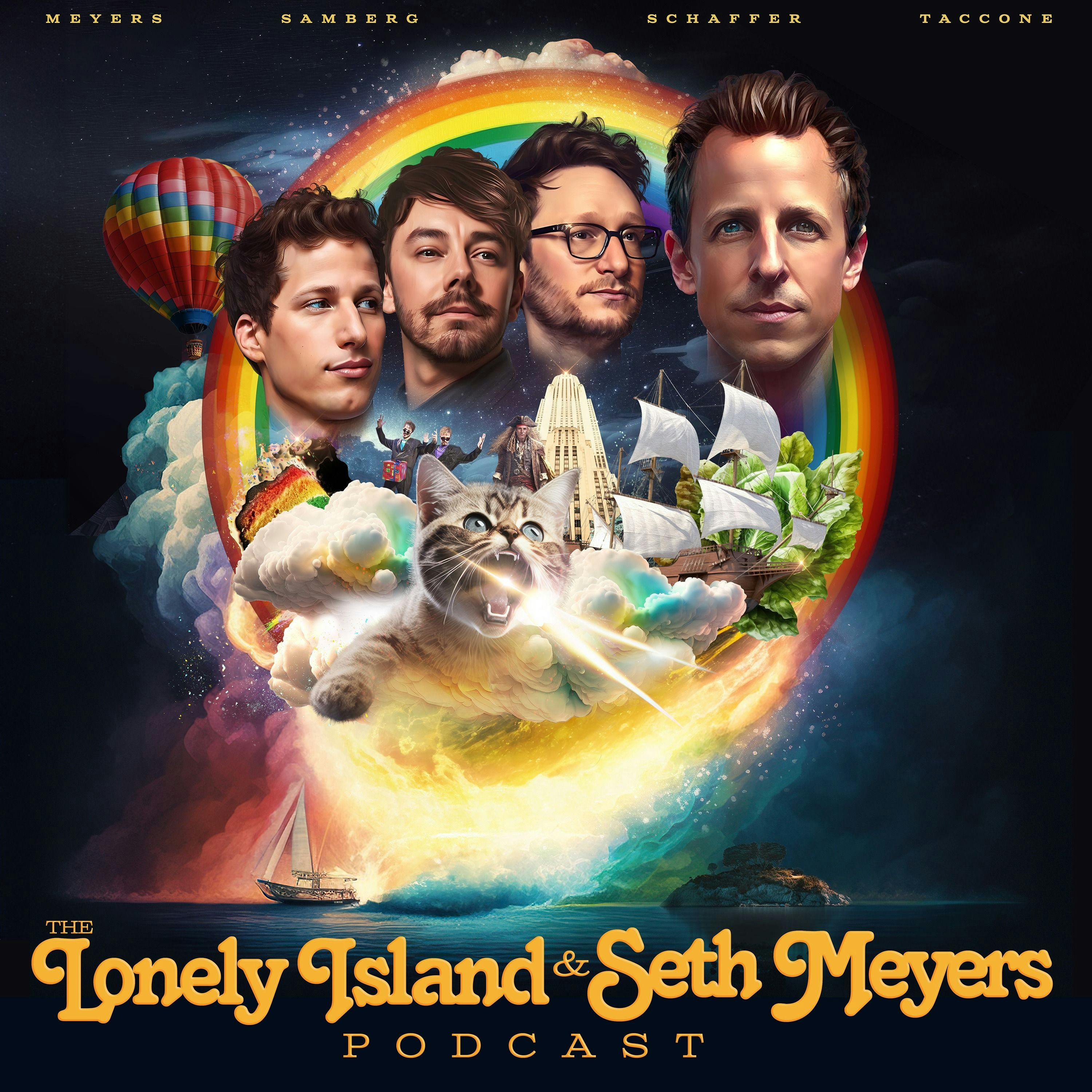
On this episode of The Lonely Island and Seth Meyers Podcast the guys are finally getting to the sketch Seth has been talking about since last episode. It’s a classic from a “banger episode” that Seth constantly thinks about. It’s Episode 20 Season 36 on May 7th 2011 with host, Tina Fey. You probably know where this is going from the title but it’s not Jack Sparrow, it’s Ralph the Assistant. I can confidently say you’ve never seen it because it was cut from dress but now you finally can! Also on this episode, Muammar Gaddafi’s Best Friends from Growing Up featuring Fred Armisen and Vanessa Bayer, Googie Rene’s Slightly Damaged Prom Wear Barn with Keenan Thompson and Tina Fey. Weekend Update: Muammar Gaddafi's Best Friends from Growing Up | https://www.youtube.com/watch?v=XsZGZe4LSH0 Googie Rene's Slightly Damaged Prom Wear Barn | https://www.youtube.com/watch?v=_u7E4UYzN1Y Princess and Crabby Find Osama bin Laden's Corpse Below the Waves | https://www.youtube.com/watch?v=IlbblRaYt1I Se
We’ve got a great episode today that will take you back. Back in the day, there were some albums you could never find in a record shop or on store shelves. The only way to get your hands on them was if you happened to watch late-night TV infomercials and then called a toll-free number… with an operator standing by. The infomercial album was its own unique art form, and today we’re counting down the 7 greatest infomercial compilations of the 80s and 90s in all their cheesy glory! We’ve got the story of a punk rock compilation that contained exactly “zero” punk songs. It was sold to a generation of unsuspecting teenagers and marketed by a pair of hilariously fake punk rockers with bad wigs. But since then this collection has passed into infomercial immortality! We’ve also got a set of albums that features REO Speedwagon and Kevin Cronin, who carried around a half-finished song (Can't Fight This Feeling) for almost a decade, convinced the verses were too good to waste on just any song. Wh
For decades, America’s Hot 100 pop chart has been regularly invaded by Canadian artists like Paul Anka, the Guess Who, Bryan Adams, Céline Dion, Justin Bieber, and Drake. Yet in Canada, some of these Canucks’ biggest hits aren’t considered fully “Canadian.” Join Chris Molanphy for a look at how the country’s requirements for Canadian content, or CanCon, on radio, television, and other cultural outlets has influenced the music industry and entire careers on both sides of the border. From Kon Kan’s “I Beg Your Pardon” to Tate McRae’s recent “Housewife,” Chris explores how much credit, or blame, Canada’s radio rules deserve for what Americans hear on the pop charts. For more chart history for the Great White North, check out Hit Parade’s recent episode on Celine Dion (https://slate.com/podcasts/hit-parade/2026/08/celine-dions-voice-helped-define-the-90s-and-shaped-the-sound-of-the-decades-top-movie). Get more Hit Parade with Slate Plus! Join for bonus episodes of "The Bridge" and ad-free
Giving a player another chance should depend on their effect on the whole team.
Share your view, then see how readers voted. No sign-in required. This poll is shared across stories.
Do you agree or disagree?
Common Quandary
A Common Quandary to discuss
Another conversation to explore, separate from this news story.
Would you want a doctor to give you a fake pill if the lie might make you feel better?
A patient has persistent symptoms that have not responded to standard treatments. A harmless placebo may help, but its effect could weaken if the clinician fully explains that it contains no active medicine.
Can a beneficial deception respect the person it helps?