Listen through the publisher, then discuss the episode here or arrange an in-person Roundtable. Your city determines where to meet.
Roundtables are designed for groups of four, with a shared subject and room for everyone to speak. Come for discussion, with no dating expectation.
Recorded in person in Washington, D.C., where Mind & Life had gathered to celebrate the Dalai Lama's 90th birthday, this conversation finds Jon Kabat-Zinn, founder of Mindfulness-Based Stress Reduction, insisting that it was never about MBSR. It was about the “M.” Jon and David talk about Jon’s stress reduction clinic in 1979 and the challenge Jon gave every patient: to turn toward pain instead of away from it. They talk about the psoriasis study that put mindfulness training in a light box, how MBCT was born when three cognitive therapists came to borrow the tapes from Jon, loneliness, attention in an age built to capture it, 26,000 people on the first day of a Zoom retreat, and what Jon calls the koan for humanity: can we wake up enough? David ends the show with a short 2-minute guided meditation practice, focusing on a way of ‘putting out the welcome mat’ to our experience. In this episode: The stress reduction clinic at UMass, 1979: catching people falling through the cracks of the health care system The pain is bare sensation; the suffering's extra Nothing is to be clung to as I, me, or mine: the Buddha's teaching in one sentence Sitting here, not sitting there For MBSR: "My marketing strategy is no marketing," and the birth of MBCT The psoriasis study: meditation in a light therapy box Attention in the age of perpetual distraction Our analog genius: 13.8 billion years of evolution Many doors, one room: send your awareness a change-of-address card The koan for humanity, and "United and Present" at the UN Loneliness vs. aloneness, and MBSR as sangha The two-second peek: reclaiming your body Permission to be awkward: an improv study Repetition over novelty: why the guided meditations never change "You're at home and I'm at home": 26,000 people on the ‘mitigation’ retreat Glaciers as a mindfulness practice: no planet B David's takeaway, a 2-minute guided meditation practice Full show notes and resources (https://podcast.mindandlife.org/jon-kabat-zinn-2/)
Episode information is provided by the publisher. Listening takes place on the publisher’s service.
Does your relationship feel like home, or does it feel like standing on the edge of something you might lose? In Part 3 of our Relationship Anxiety series, clinical hypnotherapist and former paramedic Martin Hewlett guides you through the process of teaching your nervous system that love doesn't have to hurt to be real. We explore the physical manifestations of anxiety—the tight chest, the 2:00 AM racing mind, and the "stomach drop" when a text takes too long—and provide the tools to "turn down the alarm" of your internal survival response. If you are ready to stop "cherry-picking" evidence of disaster and start building a foundation of trust, this session is for you. In This Episode, We Cover: The Science of Safety: Understanding how your nervous system confuses love with danger. Guided Visualization: A journey into your own "safe room" where you are already enough. Rewiring the Brain: Moving from worst-case disaster reels to the reality of small, daily kindnesses. Breaking the Cycle:
THE SEARCH FOR THE ULTIMATE RED LIGHT THERAPY IS OVER! After decades of exploring wellness technologies, Michael Jaco sits down with Rob Rene, founder of Exodus Strong, to explore the Red Light+ Total Body Reset system, the science behind red and near-infrared light, and why this technology has become such an important part of their wellness conversation. Rob's remarkable personal journey—including surviving five near-death experiences—inspired his mission to develop practical wellness tools that people can incorporate into their everyday lives. Discover the full-body Red Light+ Mat, designed for convenient 20-minute sessions, and the portable Red Light+ Wand, created for targeted use on areas such as the knees, shoulders, hands, and lower back. Michael and Rob discuss the technology, personal experiences, and how red light therapy may support a daily wellness routine. BLACK FRIDAY–CYBER MONDAY LISTENER EXCLUSIVE! This is your opportunity to explore Exodus Strong's special holiday offe
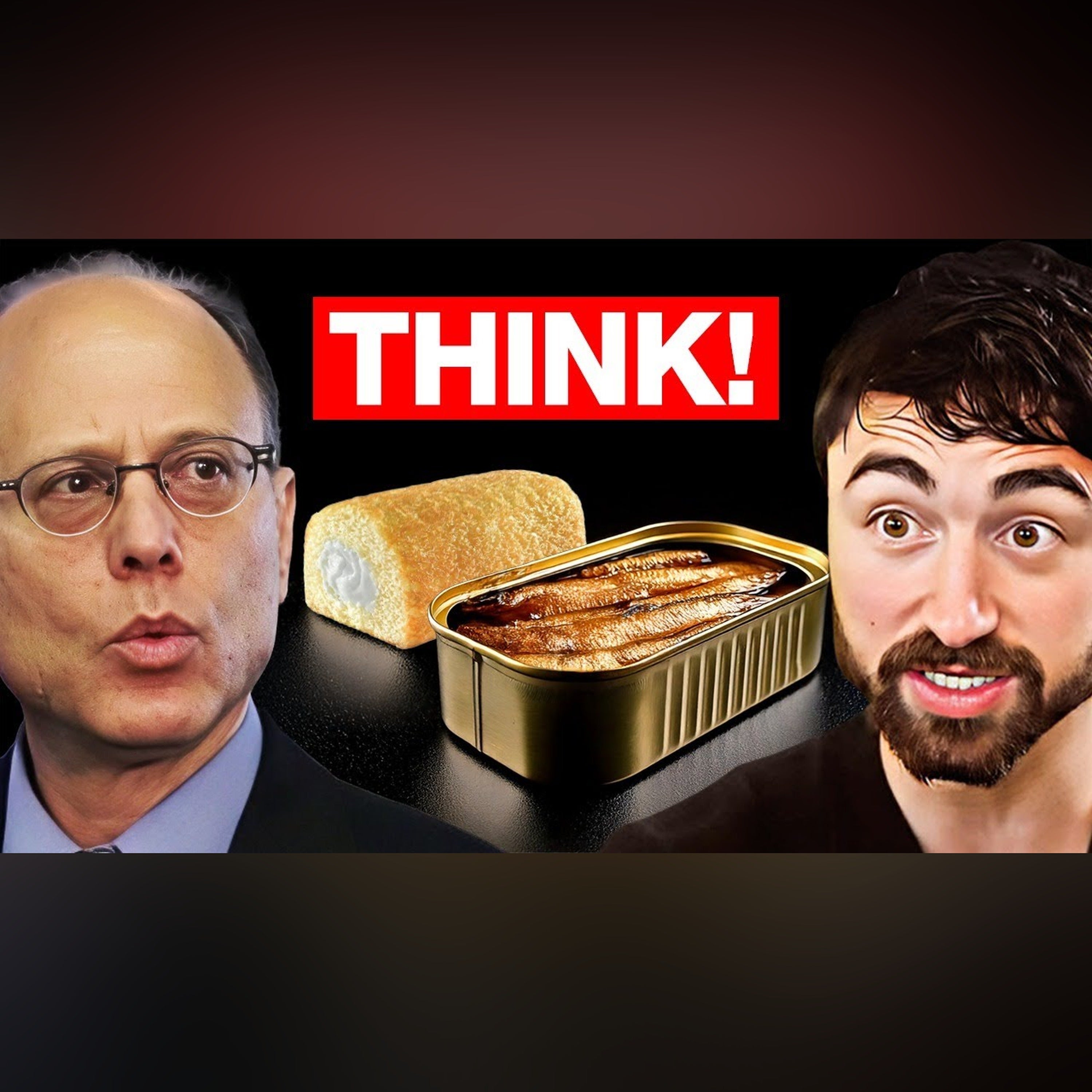
Today’s guest is David Ludwig, MD, PhD, an endocrinologist, pediatrician, and international thought leader in obesity medicine and metabolic health. He’s also a treasured mentor of mine from my time at Harvard Medical School. In this episode, we discuss his new paper in the New England Journal of Medicine on ultra-processed foods and why “simple” is the enemy of metabolic health. We explore the science of nutrition, weight loss, and food quality, challenging conventional wisdom about diet and metabolism. If you’re courageous enough to listen all the way through, this conversation will expand your perspective, change the way you think about food, and inspire a healthier relationship with eating. New England Journal of Medicine Article: https://www.nejm.org/doi/full/10.1056/NEJMp2508694 David Ludwig MD PhD’s Medium Blog (No Paywall): https://davidludwigmd.medium.com/ultra-processed-food-retold-by-hc-andersen-7a3d2ae60f39 Chapters 0:00 – Meet Harvard Endocrinologist David Ludwig MD PhD 1:
This is an edited lesson from NCI Grad School. Check out Grad School here: https://nci.university/nci-4 Uploaded 26-06-25 Scholarships AVAILABLE now. Want to command attention the moment you walk in—without saying a word? In this video, Chase Hughes reveals the exact behavioral psychology, body language, and frame control techniques used by elite operators, interrogators, and top-level influencers. Learn how to walk into any room and instantly radiate authority, presence, and control—before you even speak. Free behavior skills training: https://nci.university/masterclass Chase’s books on Amazon: https://www.amazon.com/stores/Chase-Hughes/author/B06VW1H89K?ref=sr_ntt_srch_lnk_1&qid=1750928422&sr=8-1&isDramIntegrated=true&shoppingPortalEnabled=true (https://www.amazon.com/stores/Chase-Hughes/author/B06VW1H89K?isDramIntegrated=true&qid=1750928422&ref=sr_ntt_srch_lnk_1&shoppingPortalEnabled=true&sr=8-1) ⸻ Keywords: frame control, nonverbal dominance, how to own the room, influence and pers
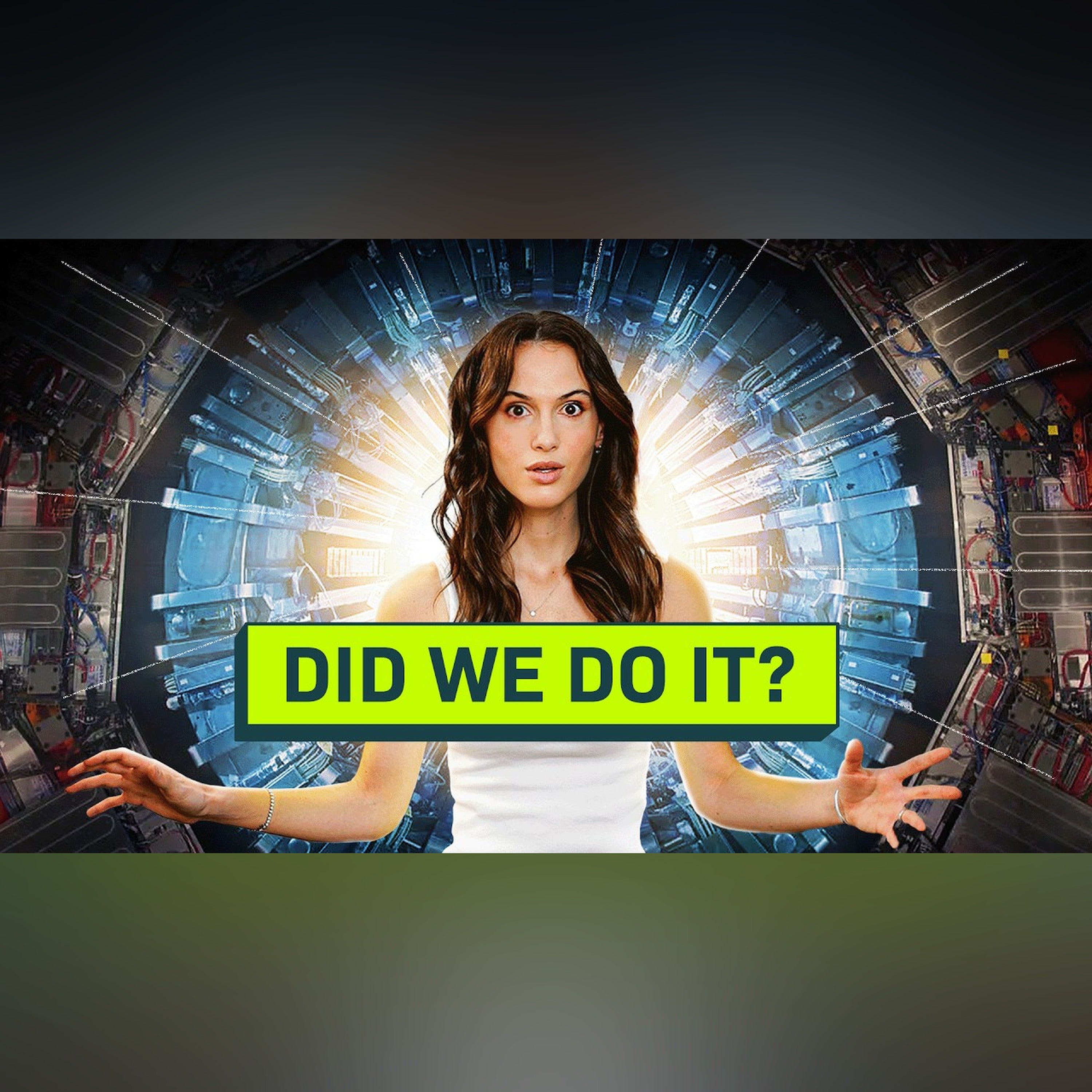
The world’s most astonishing science experiment, simply explained. On the border between France and Switzerland is the biggest science experiment humanity has ever built. Over a 100 meters underground, there’s a tunnel 27 kilometers long in a big loop under nearby homes, businesses, and farms. Inside that tunnel, scientists built a blue tube big enough to crawl through, and inside that tube, they put two pipes that they keep colder and emptier than outer space. Down those pipes, they fire particles smaller than atoms in opposite directions…. and push them faster and faster… until when they’re almost at the speed of light… they SMASH TOGETHER. This underground particle-smasher is also known as the Large Hadron Collider at CERN. It took thousands of scientists from over nearly 100 different countries $5 billion dollars and 30 years to plan and build. My question is: Why? Why did they do that??? Why spend so much money and time to smash particles underground? And now… why do so many scien
A family trip to Jefferson, Texas, included everything a young paranormal enthusiast could want: a ghost tour, a stay at the historic Jefferson Hotel, and the possibility of experiencing something unexplained. During that first visit, a young boy woke in the middle of the night to something unusual happening in his bed. He was convinced he'd experienced something paranormal, but his mother wasn't nearly as convinced. A few years later, the family returned to the same hotel, this time bringing along paranormal investigation equipment. And once again, strange things began happening, including activity that seemed to respond to their attempts at communication. But perhaps the most interesting discovery came when they began reading through a guestbook filled with experiences from previous visitors. Could other guests have encountered the same mysterious presence they'd experienced years earlier? #RealGhostStoriesOnline #JeffersonHotel #HauntedJeffersonHotel #JeffersonTexas #TexasGhostStori
"These practices are to support us in our life, but our life is also our practice." — Willem Kuyken Dr. Willem Kuyken, a clinical psychologist at the University of Oxford, led MYRIAD, the largest trial of mindfulness training in schools, with more than 8,000 students aged 11 to 14 in 84 UK schools. In this conversation Willem tells David what the trial found. Students who were taught mindfulness by their own teachers did no better than students whose schools carried on with their usual social-emotional teaching, and most of them practiced just once. The teachers, who learned mindfulness for themselves first, did benefit. Willem and David talk about the meeting where the results were revealed, whether mindfulness training can be prescribed or has to be chosen, what protected young people's mental health through the pandemic, and how Willem would design the trial today. They also talk about parenting, two small practices from Willem's book Mindfulness for Life, and what the London Underg
Access to effective legal representation should not depend mainly on personal wealth.
Share your view, then see how readers voted. No sign-in required. This poll is shared across stories.
Do you agree or disagree?
Common Quandary
A Common Quandary to discuss
Another conversation to explore, separate from this news story.
You inherit a fortune made in ways you despise. Can you keep it?
You inherit a substantial sum from a relative who accumulated it through practices you consider exploitative. Keeping it would improve your family's security; donating it could support people harmed by similar practices.
Can ownership be morally clean when its history is not?