Listen through the publisher, then discuss the episode here or arrange an in-person Roundtable. Your city determines where to meet.
Roundtables are designed for groups of four, with a shared subject and room for everyone to speak. Come for discussion, with no dating expectation.
Congress has broad power to investigate the executive branch. When Democrats take over the House and the Senate in January, expect them to use it. Hosted by Simplecast, an AdsWizz company. See pcm.adswizz.com (https://pcm.adswizz.com/) for information about our collection and use of personal data for advertising.
Episode information is provided by the publisher. Listening takes place on the publisher’s service.
The D.C. Circuit considers whether the President could remove members of a federal privacy watchdog without showing cause. The Privacy and Civil Liberties Oversight Board reviews counterterrorism programs and advises Congress and the executive branch about their effects on privacy and civil liberties. Two members refused White House requests to resign and were told that their positions had been terminated in January 2025. They sued, and a federal judge held the removals unlawful and ordered officials other than the President to treat them as still serving. The government appealed. The case turns on a 2007 rewrite of the Board’s statute. Congress made it a separate independent agency and deleted language saying members served at the President’s pleasure, but did not add an express for-cause removal clause. The government’s lawyer will argue that this silence leaves the President free to remove members, and that the Board’s advisory role is still an executive function. The former members
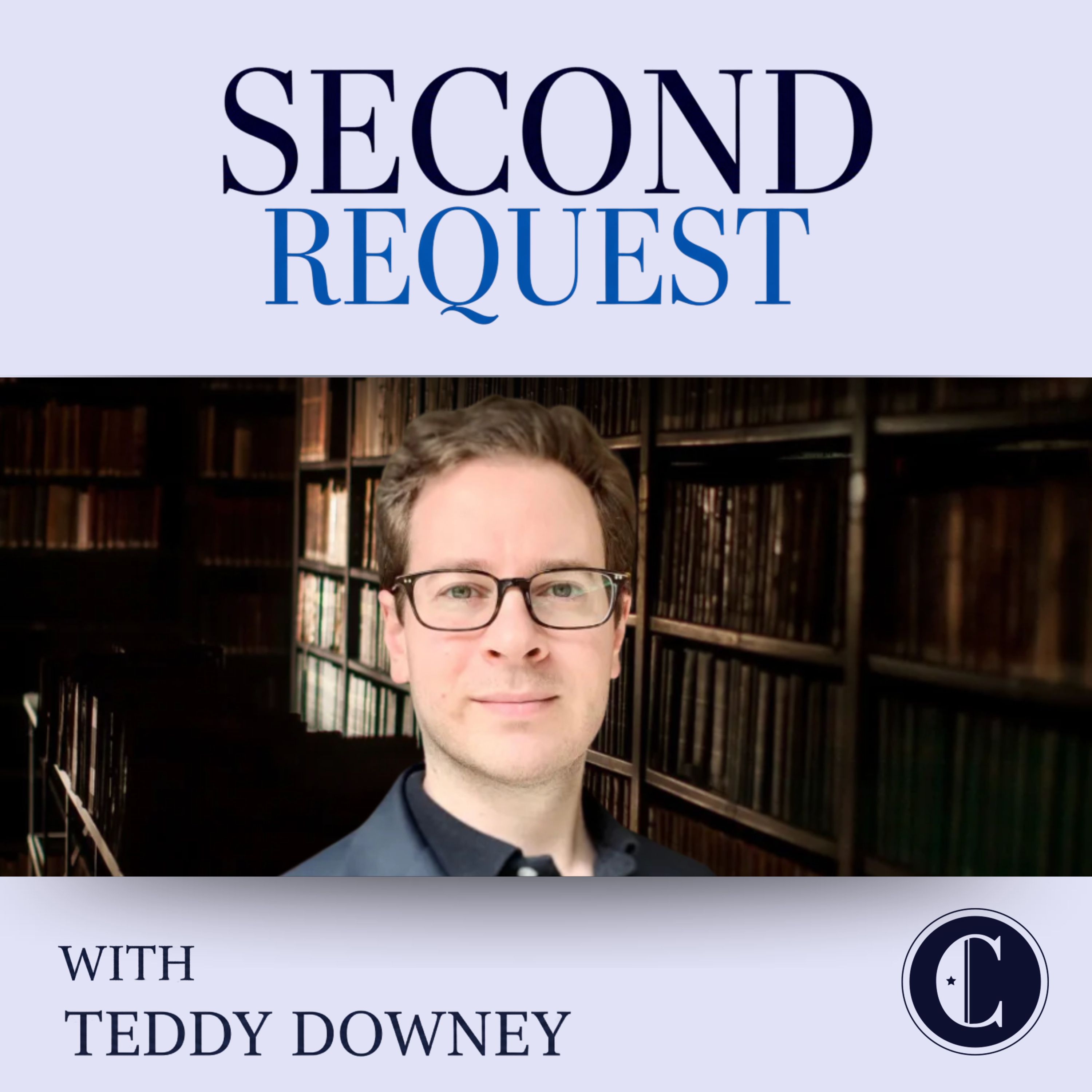
The first votes of the new Congress don’t make headlines, but they decide who holds power for the next two years. Before any bills move in January, members vote on their caucus rules and the House rules, and those votes settle who gets committee seats, how much control the speaker has, and how much say rank-and-file members get. In this episode of Second Request, Teddy Downey sits down with Daniel Schuman, executive director of the American Governance Institute, to talk about why the opening weeks of a new session are when members have the most leverage to win some of that back.
November 19, 2026; 5pm: Deadline: White House examines Democrats' incoming oversight agenda, threats against lawmakers, election denial among Trump nominees, and new corruption questions involving Jared Kushner and elite law firms. Nicolle and guests argue that congressional investigations will test the rule of law as Democrats prepare to probe the Trump administration. Hosted by Simplecast, an AdsWizz company.
November 20, 2026; 9am: President Trump is set to hold a press conference about his high-stakes meeting with Vladimir Putin and Xi Jinping. What did the U.S. get out of it? Then, the pressure is mounting on Defense Secretary Pete Hegseth as Democrats demand answers about his alleged role in blocking military promotions. Plus, Anthropic makes a historic Wall Street debut, closing out with a nearly 1.8 trillion dollar market cap. What this could mean for the A.I. industry. Paula Reid, Sudeep Reddy, Mychael Schnell, Priya Sridhar, Brendan Greeley, John Harwood, Dr. Vin Gupta and Lisa Rubin join Money Power Politics. Hosted by Simplecast, an AdsWizz company.
This week, Scott was joined by his Lawfare colleagues Senior Editors Anna Bower, Michael Feinberg, and Molly Roberts to talk through the week’s big national security news stories, including: “Occam’s Router.” It’s been a rough week for the systems that keep the country running. On Friday, the FAA ordered a rare nationwide ground stop after a communications failure disrupted radar and radio links at air traffic control centers across the country—just a day after a global Microsoft outage knocked Outlook and Teams offline. On Monday, customers at Chase and other big banks found themselves unable to log in or move money. And on Tuesday, the NSA’s classified internal network went dark, forcing the agency to stagger employees’ arrivals at Fort Meade. Officials insist none of these incidents was a cyberattack, and the explanations offered so far—a misbehaving router, a latent software bug, a routine patch gone wrong—are decidedly mundane. But the clustering has fueled plenty of anxiety and s
In part one of Red Eye Radio with Gary McNamara and Eric Harley, a look at what the AI company Anthropic does / The Senate Thursday gave support to the “Bipartisan Affordability and American Jobs Act of 2026,” voting 65-31 to move the legislation forward / The Bipartisan American Affordability and Jobs Act will make it easier, faster, and more affordable to build American infrastructure / The Democrats' AI problem / A National Review article "Has Hakeem Jeffries Lost His Mind?" / Will flattering Trump help Democrats to pass legislation?
The Supreme Court’s astonishingly narrow interpretation of corruption in campaign contributions, and why the trouble of money in politics goes beyond Citizens United. Hosted by Simplecast, an AdsWizz company. See pcm.adswizz.com (https://pcm.adswizz.com/) for information about our collection and use of personal data for advertising.
New competition formats should improve the experience for players as well as audiences.
Share your view, then see how readers voted. No sign-in required. This poll is shared across stories.
Do you agree or disagree?
Common Quandary
A Common Quandary to discuss
Another conversation to explore, separate from this news story.
Your adorable child could pay for college by becoming an influencer. Do you start filming?
Parents post cheerful videos of their young child and earn enough to fund the child's education. The child enjoys filming now but cannot understand what it means for strangers to watch those moments years later.
Can parents consent to a permanent public identity on a child's behalf?