Creatine gets called the most researched supplement in sports nutrition, and it's now sold for memory, depression, menopause and Alzheimer's disease. Dr. Jordan Feigenbaum and Dr. Austin Baraki put each claim on one ruler, the effect size, next to what lifting does for strength and what antidepressants do for depression. Creatine helps a little with lifting: about an extra rep on a hard set, or a few kilos over a training block. In rested, healthy people, the cleaner cognition trials show close to no effect, and the better depression trials land near zero. The two largest trials in brain disease were stopped early. We also cover what creatine does to your kidney labs, California's new age limit on muscle-building supplements, and what we'd tell the parent of a 16-year-old athlete. Black Friday Sale is Live: https://www.barbellmedicine.com/holiday-gift-guide-2026/ Timestamps: 00:00 California's new creatine law 02:05 Effect sizes, explained 04:44 Creatine's history and how it works 13:5
Ever been in an audience applauding and wondered, "Why are we still clapping?" Everyone seems ready to stop, yet the applause goes on and on. It turns out there's some fascinating science behind when applause starts, when it stops, and how the behavior of just a few people can influence an entire crowd. https://royalsociety.org/news/2013/applause-social-contagion/ We have more control over our lives than ever before. We can customize almost everything, track our health, and have practically anything delivered to our door. But has all that control actually made us happier? And what happens when we encounter the many things in life we simply can't control? Our need for certainty may be creating more anxiety and frustration than we realize. Anna Lembke, professor of psychiatry at Stanford University and medical director of the Stanford Addiction Medicine Program, joins me to explain why our obsession with control can work against us — and why learning to let go may be one of the smartest
Low energy after 40 is a struggle many women talk about, often feeling dismissed when labs look "normal" yet fatigue and fog persist. This episode explores why energy can drop in midlife, the role Ken Swartz sees for oxidative stress, and the steps he says have helped. Full show notes, key takeaways, and transcript: https://www.natalietysdal.com/post/low-energy-after-40 Ken Swartz is the founder of C60 Power, with a long career running research and science labs. Ken shares his views on cellular health, energy, and oxidative stress, as well as his own experience using C60 and what he has seen in others. What you'll learn: - How Ken describes oxidative stress as "your body rusting," and how he links it to low energy, aches, and brain fog after 40 - Why chemicals, radiation, and fast-paced lifestyles add stress on the body in midlife - The antioxidant basics including CoQ10 and glutathione - Intermittent fasting - Realistic expectations for how long changes take - Why more testing matters
Fin Taylor is an English comedian, writer and podcaster. Horatio Gould is also an English comedian, writer, and podcaster. Expect to learn why there is such a range of historical beauty standards, what historians think about Clavicular, why the Manosphere has gone back to the Stone Age way of thinking, which historical world leaders had the best rizz, the most overrated dictators of history, how much of a genius Napoloean really was, the most corrupt sporting event in history, and much more… Get a free bottle of D3K2, an AG1 Welcome Kit, and more when you first subscribe at https://ag1.info/modernwisdom Timestamps: (00:00) Is There a Secret War Between Historians? (01:01) Maxxing vs Mogging: How Beauty Standards Have Changed (09:19) How Incels Are Reshaping Modern Beauty Standards (15:13) Why Henry VIII Was Such a Ruthless King (24:35) Is David Starkey a Controversial Historian? (29:24) Why Fin & Horatio Can't Stop Talking About Hitler (31:02) Where Would Dictators Go on the Political
Eckhart Tolle is a world-revered spiritual teacher and author known for sharing practical tools that allow people to experience life more richly. We discuss, and Eckhart demonstrates, how you can access greater inner peace, authenticity, creativity, and connection in your everyday life. Eckhart also shares tools for quieting compulsive thinking, accessing inner stillness, and adopting a helpful mental vantage point when life gets challenging. We also discuss how to balance your pursuit of external goals with your spiritual growth and relationships and, in doing so, foster a deeper sense of well-being. Read the full episode show notes at hubermanlab.com (https://www.hubermanlab.com/episode/access-the-power-of-now-to-experience-life-more-fully-eckhart-tolle). Thank you to our sponsors AG1: https://drinkag1.com/huberman Function: https://functionhealth.com/huberman Joovv: https://joovv.com/huberman Mateina: https://drinkmateina.com/huberman Rorra: https://rorra.com/huberman Timestamps (00
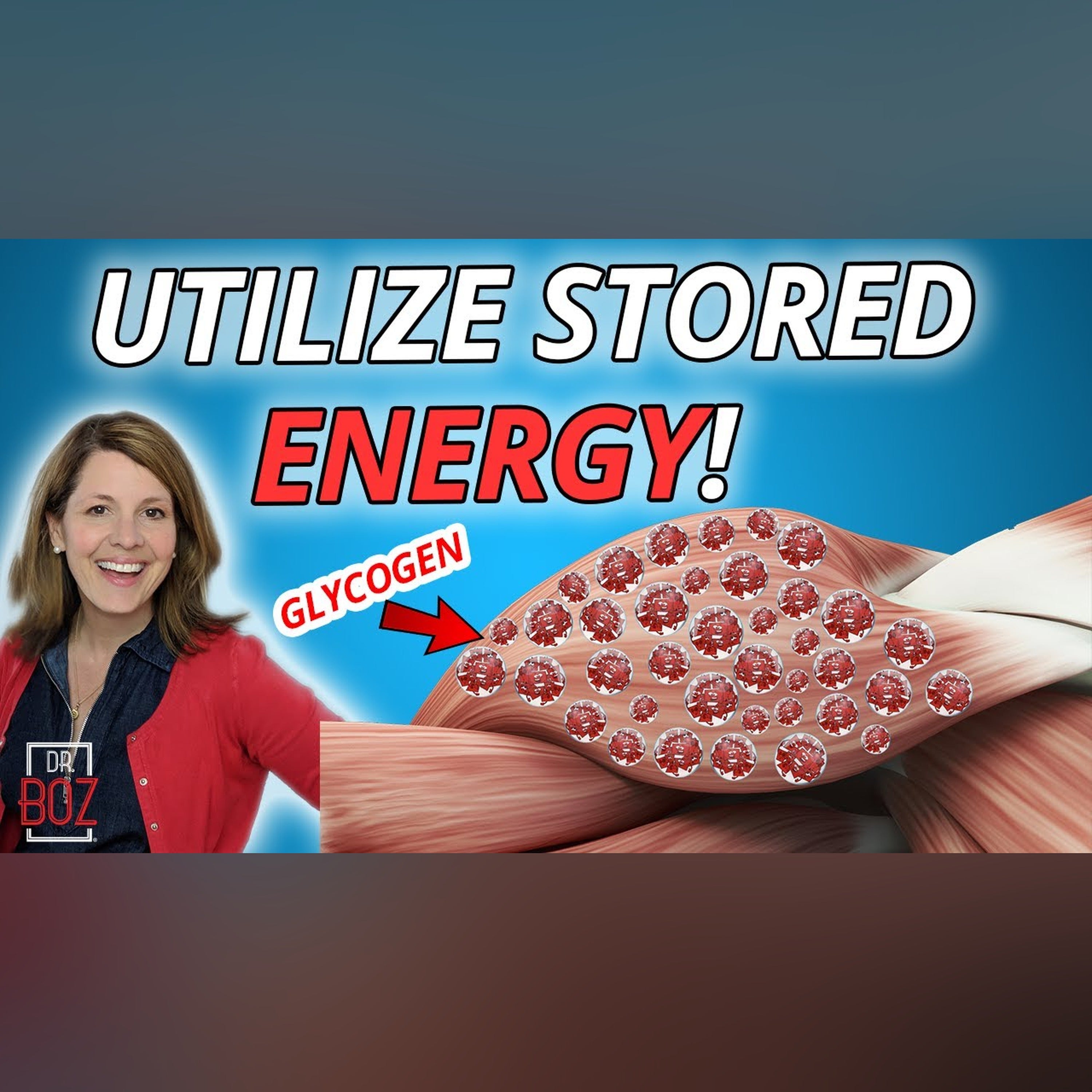
Glycogen is your enemy and your friend. Our bodies store energy as sugar or fat. Glycogen- stored sugar- can be your enemy or your friend. We use glycogen when our body needs a little boost of energy. Too much Glycogen can lead to fatty livers and cause your liver to fail. Get rid of your fatty liver by staying in ketosis. Use fasting, a keto diet, or BHB Powder. Listen and learn. BHB Powder will give you the ketones needed to energize your body and help burn that excess Glycogen: Try it here: https://amzn.to/2M4tJpw To learn more about Stacy and Jerry's story read this blog here: https://bozmd.com/fasting-and-autophagy-story-of-success/ And watch this video here: https://youtu.be/9b2NqzQq2pI This is a clip from my weekly live recording. Watch the full version here: https://youtu.be/sI9hV7WbxTU ************** Thanks for checking out the Dr Boz Channel. Tune in Sunday nights, 6PM Central Time to watch me Live! We are KETONES FOR LIFE. Improving your health - One ketone at a time. Dr Boz
This week's Live Well Be Well Moment is with Alain de Botton, philosopher, author and founder of The School of Life. We hear so much about the power of vulnerability, so I loved that Alain pushed back on it. He explains when opening up helps and when it doesn't, why real connection always involves a risk, and the slightly ridiculous thing he suggests telling yourself every morning to stop fearing humiliation. If this resonates, you can join the thousands who read The Compassionate Cure each week. Let's be friends! Instagram: https://www.instagram.com/sarahannmacklin/ Twitter: https://x.com/SarahAnnMacklin TikTok: https://www.tiktok.com/@livewellbewellpodcast Newsletter: https://sarahmacklin.substack.com/
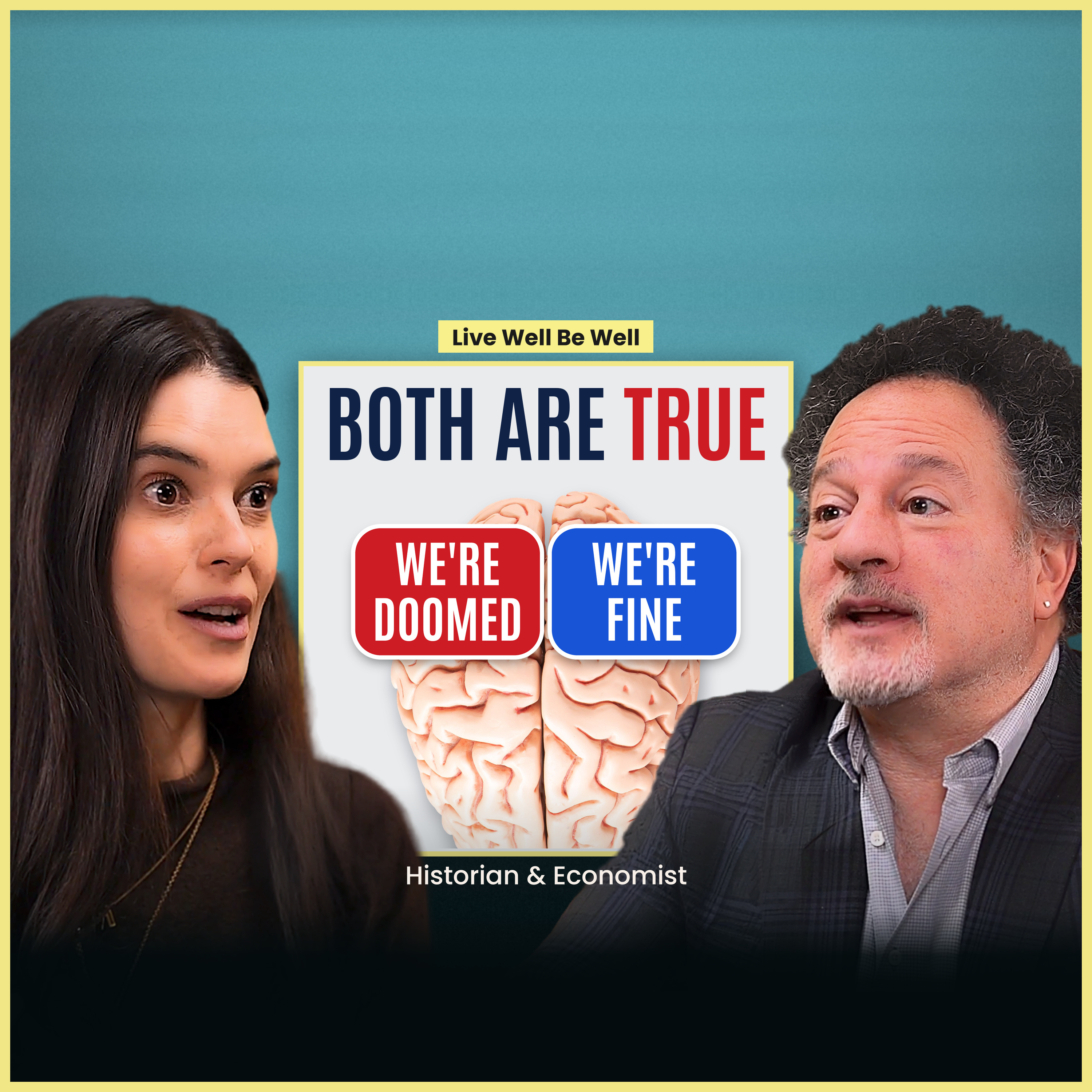
Before we recorded, I asked you on Instagram whether you feel optimistic or pessimistic about where the world is heading. 71% of you said pessimistic. So I sat down with historian Zachary Karabell to ask whether that feeling is right. Zachary is the founder of The Progress Network, writes The Edgy Optimist, and is the author of books including The Leading Indicators and Inside Money. He started writing about optimism in 2009, just after the financial crisis, when every conversation he had was about when the next shoe would drop. His argument isn't that everything is fine. It's that pessimism is a false certainty about the future, and that acting on it is what makes it come true. What we explore together: •Why 71% of you feel pessimistic about the world, while most people feel fine about their own lives •Why optimism isn't positive thinking: it's the humility that none of us know what's coming •The "doom loop": how losing faith in the future stops us investing, building and even dating
This week's Live Well Be Well Moment is with Alain de Botton, philosopher, author and founder of The School of Life. Alain wrote the famous essay 'Why You Will Marry the Wrong Person', so I had to ask him about it. If this resonates, you can join the thousands who read The Compassionate Cure each week. Let's be friends! Instagram: https://www.instagram.com/sarahannmacklin/ Twitter: https://x.com/SarahAnnMacklin TikTok: https://www.tiktok.com/@livewellbewellpodcast Newsletter: https://sarahmacklin.substack.com/
People should receive clear risk information before buying property in hard-to-insure areas.
Share your view, then see how readers voted. No sign-in required. This poll is shared across stories.
Do you agree or disagree?
Common Quandary
A Common Quandary to discuss
Another conversation to explore, separate from this news story.
Your new television goes on sale elsewhere. Can you return it and buy the identical one cheaper?
A week after buying a television, another store offers the same model for much less. Your retailer refuses to match the price but allows unopened-looking returns. You could carefully repack the perfectly functional set.
Is a generous return policy permission to reverse a deal for any reason?