English-language podcasts

The Retirement and IRA Show

Little-Known IRA Rules, Part 2: EDU #2645
83 min

Listen through the publisher, then discuss the episode here or arrange an in-person Roundtable. Your city determines where to meet.

Roundtables are designed for groups of four, with a shared subject and room for everyone to speak. Come for discussion, with no dating expectation.

If you would prefer to skip Jim and Chris chatting about Chris’s mild fall weather in Colorado, Jim’s Nashville trip, and upcoming Cumberland Gap hike and whitetail hunting trip, you can skip to 13:30. Chris’s Summary Jim and I continue our discussion of little-known IRA rules, centered on naming a trust as an IRA beneficiary. We cover when a trust may make sense, compressed trust tax brackets, a recap of see-through trust requirements, master trusts and subtrusts under SECURE, and moving an IRA out of a trust into separate inherited IRAs. We also look at which date starts the 365-day count under the once-per-year rollover rule. Jim’s “Pithy” Summary Chris and I pick back up on our list of little-known IRA rules, and if you want confusion, just involve a trust. A trust is a non-human. It’s a piece of paper. Yet the IRS will let it be treated as human for distribution purposes if certain rules are followed to the T. We’re not huge fans of naming a trust as IRA beneficiary, but I can concede a few situations, like a charitable remainder trust, or a trust that passes required distributions and proactive tax planning through to your child rather than giving them access to a large inheritance all at once. Want the trust to hold that money back from a spendthrift? That’s where compressed trust tax rates come in, and Chris shows how fast a trust hits the top bracket. Ever heard of the master trust workaround, where a very creative attorney got a PLR so a 1-year-old wouldn’t have to stretch over the life expectancy of a 100-year-old? SECURE made that easier, though with some very strict rules. I bring in Moe, Larry, Curly, and Shemp to show who can stretch, who gets the 10-year rule, and how an IRA may be able to pass through a trust into separate inherited IRAs. The once-per-year rollover rule may be the most confusing of the bunch. Everybody says you can only do one rollover per 365 days, but when does that 365-day count begin? I give an example where a second rollover was completed less than 365 days after the first and was perfectly acceptable, and another that may look fine but isn’t. The post Little-Known IRA Rules, Part 2: EDU #2645 (https://www.theretirementandirashow.com/podcast/little-known-ira-rules-part-2-edu-2645/) appeared first on The Retirement and IRA Show (https://www.theretirementandirashow.com/).

Episode information is provided by the publisher. Listening takes place on the publisher’s service.

Listen at the source ↗

Featured places to meet in Palo Alto, CA

Explore these places and arrange a conversation through ThinkMatch.

City guide for Palo Alto, CA

More from The Retirement and IRA Show

The Retirement and IRA Show

Social Security, Special Needs Trust: Q&A #2646

93 min

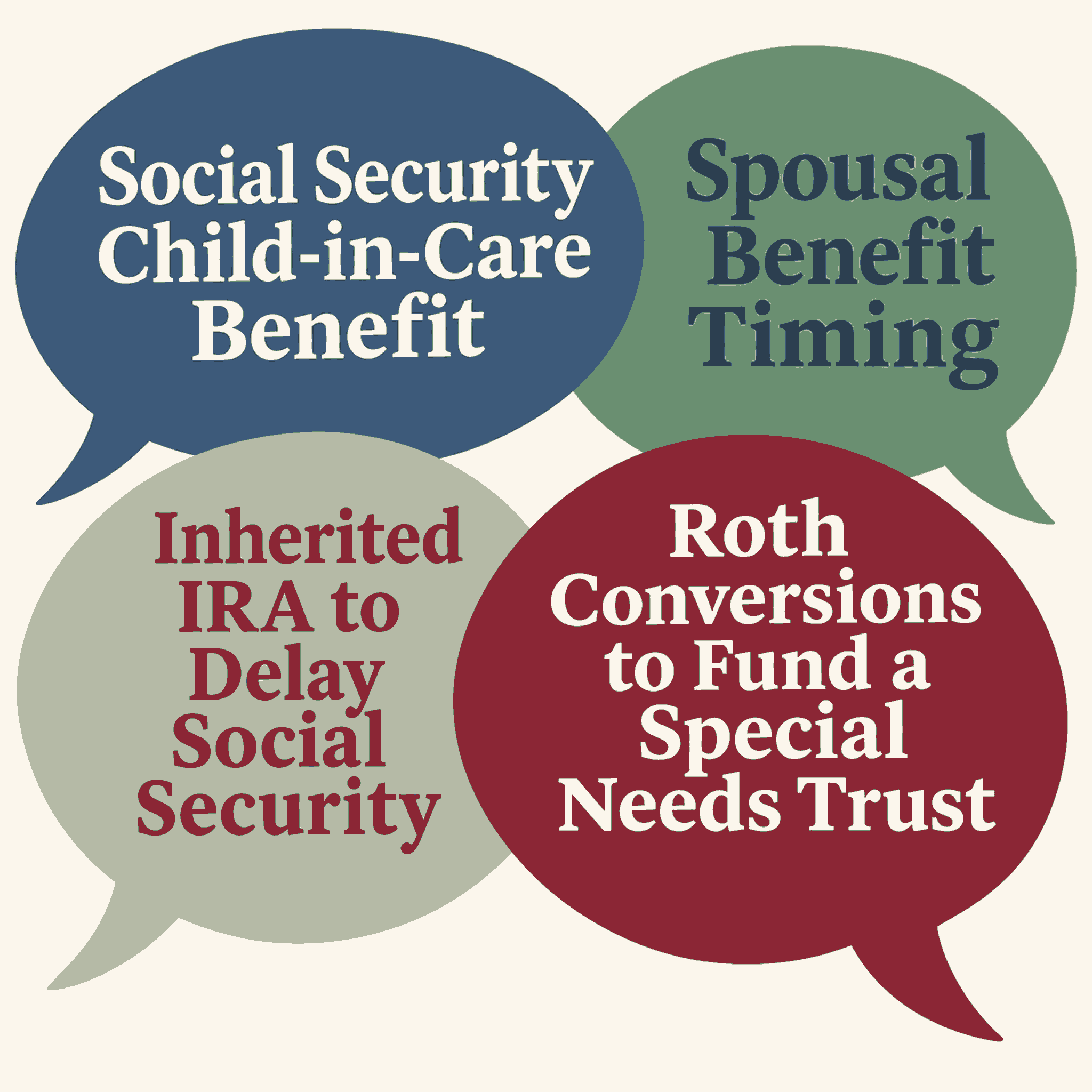
Jim and Chris discuss listener emails on Social Security child-in-care and spousal benefits, drawing from an inherited IRA to delay Social Security, and Roth conversions to fund a Special Needs Trust. (7:15) A listener caring for a disabled adult daughter wonders whether a child-in-care spousal benefit could allow the higher-earning spouse, to delay her own benefit until age 70. (16:45) The guys field a question from a 68-year-old waiting until 70 to claim, who asks whether a wife already collecting since 62 can add a spousal benefit and, if so, when to file. (23:45) Jim and Chris weigh whether a single 68-year-old ready to leave a stressful job should start Social Security now or draw from an inherited IRA until age 70. (44:30) George asks whether Roth conversions, paired with a tax-efficient place to hold the cash for conversion taxes, are the right way to protect an inheritance left to two children through a special needs trust. The post Social Security, Special Needs Trust: Q&A #26

Discuss this episode

The Retirement and IRA Show

Social Security, HSA Contributions, Liquidity Account, ETFs: Q&A #2645

79 min

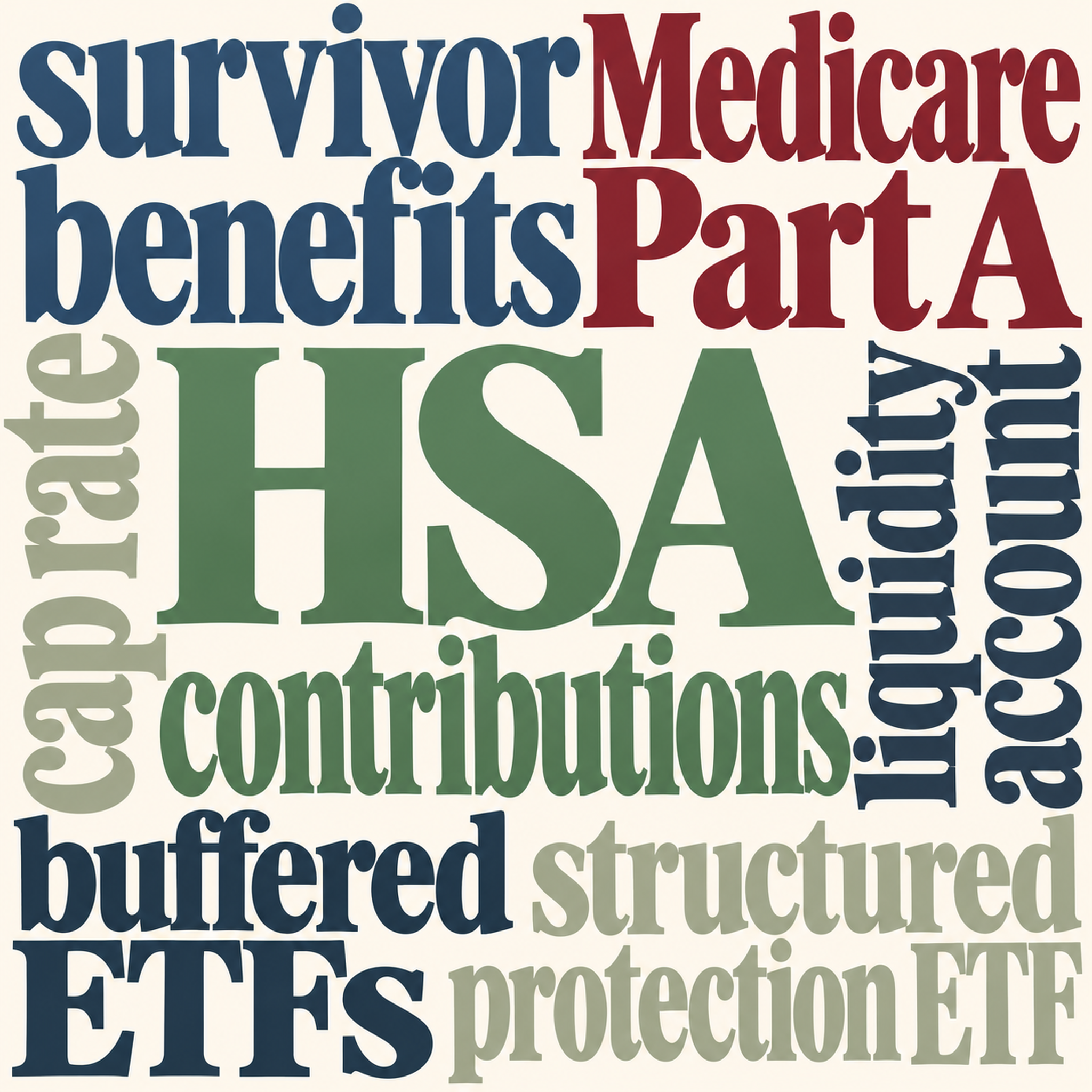
Chris is joined by Jacob to discuss listener emails on withdrawing an early Social Security claim to collect survivor benefits, how Medicare Part A back-dating can affect HSA contributions, details of a liquidity account, buffered ETFs, and buying a protection ETF after its outcome date. (10:00) George asks whether a husband who claimed Social Security at 62 could withdraw his application within 12 months after his wife’s death, collect survivor benefits on her record, and later switch to his own benefit at 70. (20:45) A listener points out that Medicare Part A’s six-month retroactive coverage may be counted back from when a Social Security appointment is made rather than when benefits begin, which can affect when HSA contributions need to stop. (26:00) The guys get a request to define the liquidity account term heard on recent episodes, including how it is funded, how often it is replenished, and how much it should hold. (37:30) Chris and Jacob field a question on how to gauge the his

Discuss this episode

The Retirement and IRA Show

Seven Unfixable IRA Mistakes: EDU #2644

69 min

If you would prefer to skip Jim and Chris chatting about Jim’s end-of-season garden update and what home-grown produce he’s going to try to get through TSA (and why), you can skip to 7:45. Chris’s Summary Jim and I continue our run of IRA topics with seven IRA mistakes that cannot be fixed once they are made. The list spans inherited IRA transfers, rollover limits and requirements, Roth conversions, net unrealized appreciation, and 72(t) distributions. In at least one case, nothing improper occurred at the time. We also distinguish these seven from errors that may still be corrected, such as certain missed 60-day rollovers. Jim’s “Pithy” Summary Chris and I keep the IRA conversation going this week. With all the rules attached to these accounts, I like to picture the Peanuts character Pigpen, with a cloud of rules, regulations, taxes, and penalties following the IRA from custodian to custodian and owner to beneficiary until it is finally closed. Plenty of slip-ups, like a missed RMD or

Discuss this episode

Community Poll

Public cultural institutions should present contested works with context instead of simply removing them.

Share your view, then see how readers voted. No sign-in required. This poll is shared across stories.

Do you agree or disagree?

Choose one answer

Common Quandary

A Common Quandary to discuss

Another conversation to explore, separate from this news story.

You find a rare library book your father kept for forty years. Do you return it anonymously?

While clearing your father's attic, you find a rare book stamped by the local library and due in 1986. The library would be thrilled to recover it, but returning it openly would expose a secret he apparently kept for decades—and might produce a spectacular overdue fine.

Does making an old wrong right require admitting who did it?

Explore this quandary