Listen through the publisher, then discuss the episode here or arrange an in-person Roundtable. Your city determines where to meet.
Roundtables are designed for groups of four, with a shared subject and room for everyone to speak. Come for discussion, with no dating expectation.
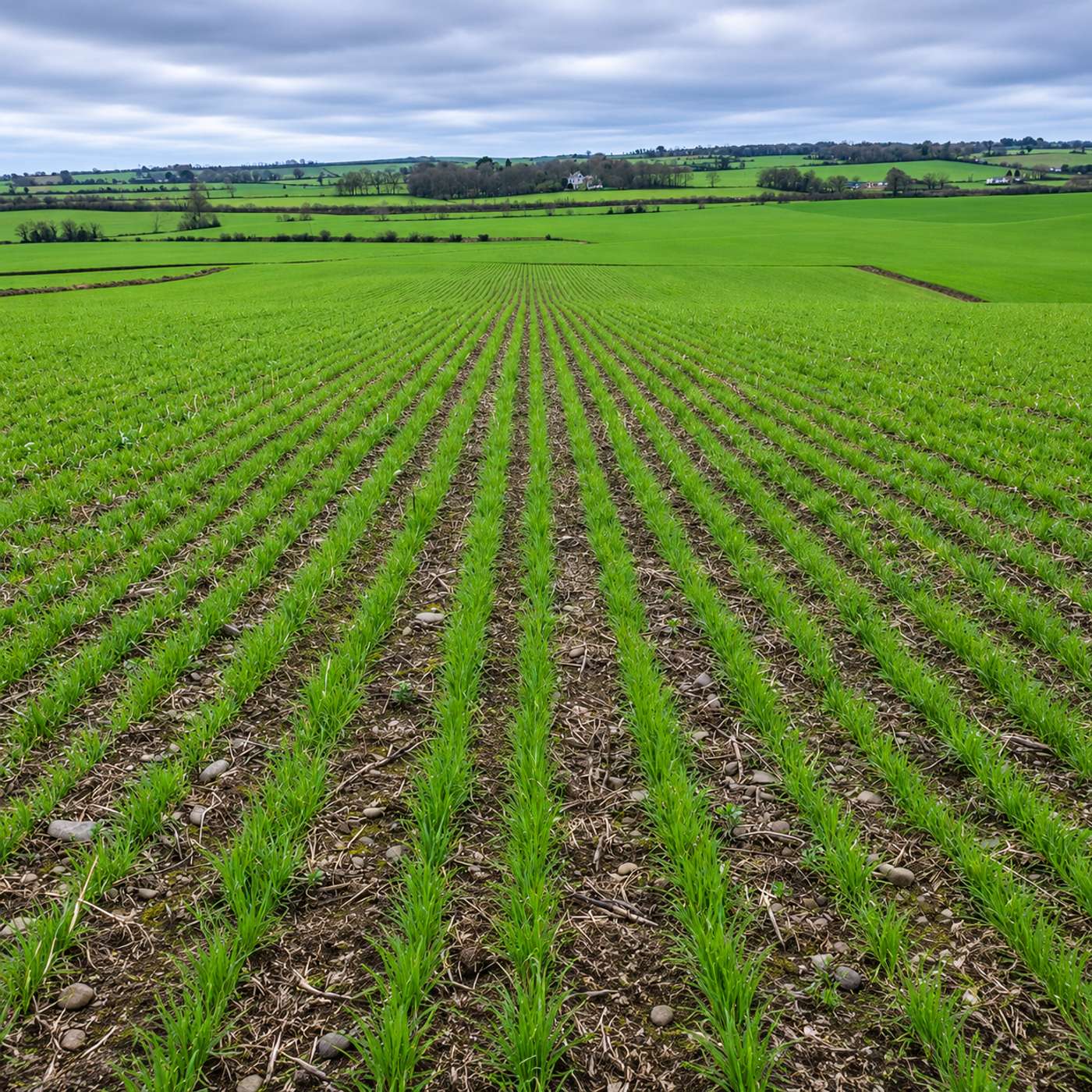
The Irish grain industry is well positioned to produce low-carbon grain, but the markets purchasing that grain increasingly require evidence to support those sustainability claims. In this episode of the Tillage Edge podcast, John Mahon, Tillage Signpost Advisor, Bobby Miller, Irish Grain Growers representative and tillage farmer from County Laois, and Pat Collins, IFA representative and tillage and beef farmer from County Cork, discuss the AgNav programme and its practical application on Irish tillage farms. Both Bobby and Pat highlight how straightforward the platform is to use, with data entry requiring relatively little effort. They also stress that completing this process is becoming an essential step for tillage farmers, enabling them to quantify and verify the environmental credentials of their grain and demonstrate its low-carbon footprint to the marketplace.
Episode information is provided by the publisher. Listening takes place on the publisher’s service.
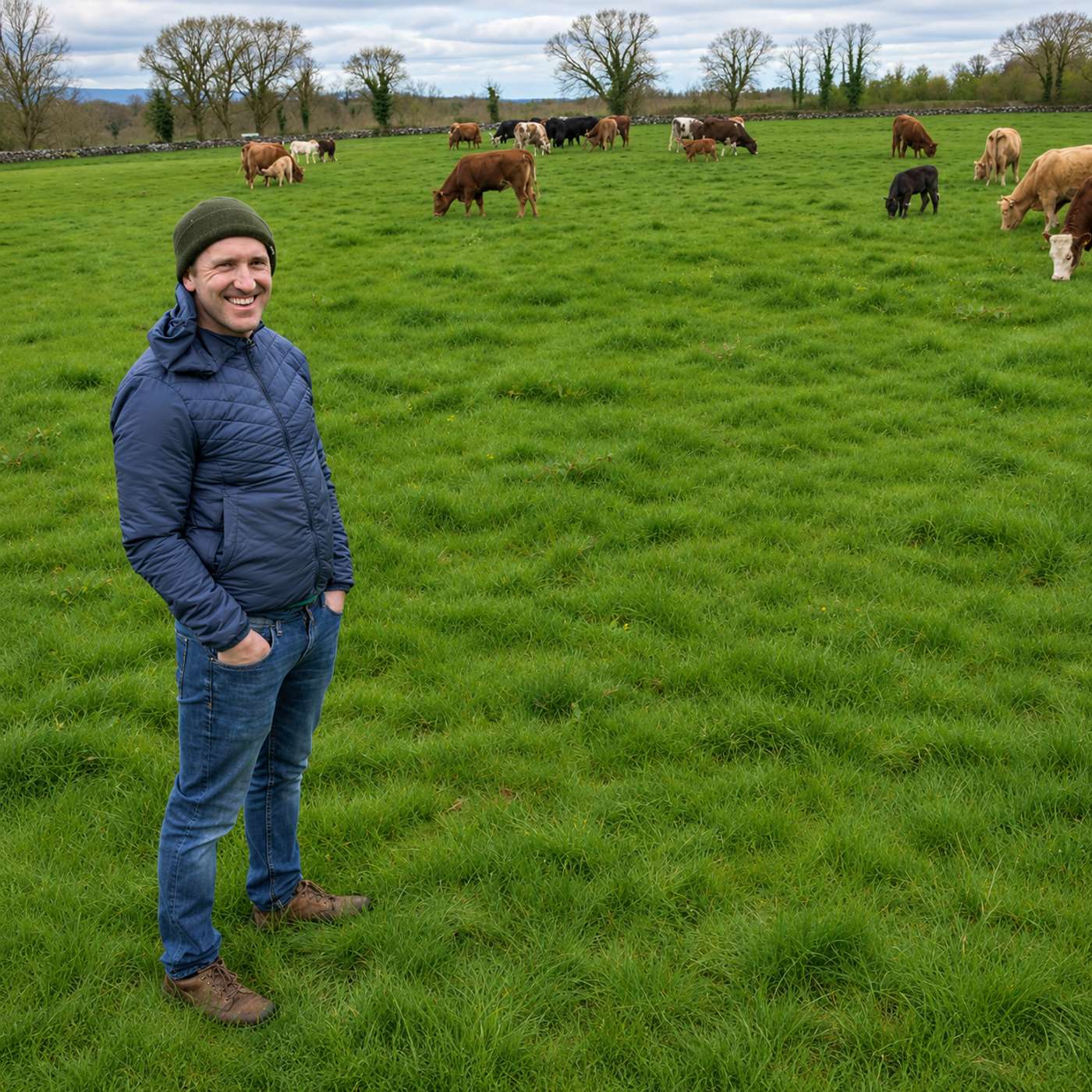
In advance of the Teagasc National Beef Conference on 30th November at the Hodson Bay Hotel, Athlone, Aonghusa Fahy, a Future Beef programme farmer, and Martina Harrington, Teagasc Future Beef Programme Manager, join this week’s Beef Edge. This year’s conference theme is ‘Profitable Beef Farming, Balanced Lifestyle’, and Aonghusa shares how he successfully balances a full-time career as a secondary school teacher along with running a suckler and beef finishing enterprise, whilst also raising a young family. He discusses the importance of farm infrastructure, paddock grazing, technology, AI, outsourcing and time management in making part-time farming more efficient and manageable. Martina explores how farmers can improve profitability, highlighting opportunities to reduce production costs, improve grass utilisation, increase lifetime daily liveweight gain and achieve better performance from birth to slaughter. She also discusses the potential to increase profit by €600 per suckler cow a
VA benefits are often discussed as though they are reserved for combat injuries. In this episode, John and Victor explain why service-connected VA compensation can also involve conditions caused or worsened by training, daily duties, and other non-combat military experiences. Their central point is practical: documentation matters, and veterans should understand the difference between a service-connected claim and online hype about ratings.John and Victor also discuss why some service members avoid medical or mental-health care, including concerns about stigma, leadership perception, operational consequences, and security clearances. They address the documentation gaps that can follow, along with evidence discussed in the episode such as buddy letters and Nexus documentation. The conversation references evolving VA access and the PACT Act, while encouraging veterans to approach claims thoughtfully.The episode also moves beyond claims: veteran discount etiquette, support for veteran-own
• Black Friday! Must end Tue Dec 15! Completing our three-part miniseries… JFK’s assassination was ground zero of the conspiracy mindset; the subsequent decades saw it flourish as public trust collapsed – and helped pave the way to Donald Trump. Now, we step into the conspiracist world of Trump himself. In our final episode, Alex Von Tunzelmann is joined by journalist and author Mike Rothschild to explore conspiracy theories in the Trump era: from QAnon’s rise within MAGA – with its unhinged beliefs of a Satan-worshipping cabal of global elites – to Trump’s own baseless claims of election fraud after losing to Joe Biden in 2020. And now, in his second term, some of the conspiracy theories Trump released have begun turning against him. Can he keep control of the forces he set in motion? • Buy Mike’s book The Storm is Upon Us: How QAnon Became a Movement, Cult, and Conspiracy Theory of Everything (https://uk.bookshop.org/a/13277/9781800960459) from our affiliate bookshop and you’ll help
Seven decisions from tribunals in Western Australia and New South Wales in the Tribunals edition of Tuesday 24 November 2026, three with headnotes and one more worked example from a synopsis. Whether a council can phase out a non-conforming service station by refusing the works to reopen it; why planning law looks at the use of land, not the identity of the user; how a strata managing agent is validly appointed in New South Wales; and the evidence a motor vehicle repair claim needs. Tribunals Desk: non-conforming use rights (lead; Signal Doctrine; headnoted). Otr 208 Pty Ltd and City of Vincent [No 2] [2026] WASAT 148 - a non-conforming use right under cl 22(1)(a) City of Vincent Local Planning Scheme No 2 protects only the use, while the works need approval and the review assesses the works; a non-conforming purpose is characterised at the level of generality needed to cover the activities at the relevant date, so convenience retailing and 24-hour trading are a change of manner, not p
Farmers have always had to deal with the weather. But for many, there is a second test of patience that comes round just as reliably: paperwork. Inspections, certificates and forms often ask for the same information again and again, from different authorities, companies and systems — and every hour spent on administration is an hour taken away from the farm. The European Commission is exploring how digital wallets could change that. The idea is simple: a secure digital tool in which farmers keep trusted, verified information — from proof of identity to an organic certificate — and share it only with whom they choose, only when they choose. The work is still developing, and farmers are helping to shape it along the way. In this episode of Food for Europe, we hear from Kimmo Tammi, a forestry farmer in southern Finland and legal adviser at MTK, the organisation representing Finnish farmers and forest owners, about what farmers need from a wallet and why they must be involved from the sta
Last November’s high-profile and much-lauded Nuclear Regulatory Taskforce report made the case for short-term effort for long-term gain to reform the UK’s nuclear regulatory framework (https://www.instituteforgovernment.org.uk/explainer/office-nuclear-regulation). Both the Starmer and now the Burnham governments have said they are on board with the recommendations – as are the other political parties (bar the Greens) – and see the application of the report’s recommendations extending across the whole major projects portfolio. On the first anniversary of the report’s publication, however, John Fingleton, its author, sees implementation – a test of government’s ability to deliver on its commitments – falling behind. In a keynote speech at the Institute for Government, he reflected his report, the progress – and lack of it – and what this says about government, as well as what is needed to ensure change is not just promised but delivered. The discussion was chaired byJill Rutter (https://
Every farmer is looking for an extra €5 or €10 per tonne - the difference between an average year and a profitable one. On this episode of the Tillage Edge, Rory Deverell, CEO of Black Silo Commodity Consulting, explains why effective grain marketing and risk management could help growers achieve an additional €20-30 per tonne on grain sales each year. Rory discusses the key principles of grain price risk management, outlines practical selling strategies for Irish tillage farmers, and highlights how one Irish business has successfully implemented these techniques to protect itself from falling market prices while improving returns.
South America is a major driver of global grain production, so weather and policy developments can have significant implications for grain markets worldwide. On this episode of the Tillage Edge, Rory Deverell, CEO of Black Silo Commodity Consulting, discusses the potential impact of El Niño on global grain production and prices, and examines how the new EU Deforestation Regulation (EUDR) could affect grain supplies and market dynamics across Europe in the months ahead. Rory explains what these developments could mean for Irish tillage farmers and outlines the key market signals that growers should be watching as the season unfolds.
With the bulk of winter cereals now planted, attention on many farms has turned to tasks such as weed control, aphid management and keeping birds out of newly established crops. On this week's episode of The Tillage Edge, Ciaran Collins and Shay Phelan, Tillage Specialists with Teagasc, discuss weed control options for recently planted cereals and the need for follow-up treatments where required. They also examine the current BYDV risk and outline management strategies, particularly for earlier-sown crops. According to Shay, "The decision to apply an aphicide in November is a little more complex this year, especially where BYDV-tolerant winter barley varieties have been planted." The discussion explores how growers can assess crop risk, monitor aphid activity and make informed decisions on both weed and BYDV control as crops head into winter.
Admissions should consider applicants' circumstances alongside grades and test results.
Share your view, then see how readers voted. No sign-in required. This poll is shared across stories.
Do you agree or disagree?
Common Quandary
A Common Quandary to discuss
Another conversation to explore, separate from this news story.
A new email address earns another free month. How many free trials are too many?
A streaming service offers a free month to every new account and makes cancellation deliberately confusing. You discover that slightly different email addresses let you repeat the trial indefinitely without lying about your identity.
Must customers respect the spirit of rules designed to manipulate them?