Lydia Davis on dying, Marcus Aurelius and other Stoics
62 min
Listen through the publisher, then discuss the episode here or arrange an in-person Roundtable. Your city determines where to meet.
Roundtables are designed for groups of four, with a shared subject and room for everyone to speak. Come for discussion, with no dating expectation.
In this lecture from the LRB's Autumn Lecture series in New York, Lydia Davis reflects on some of the concepts of the Stoic philosophers, especially the Roman emperor Marcus Aurelius, author of a private notebook of meditations written, many of them, in his tent on a battlefield. She associates these concepts with the ideas conveyed by other texts, including some of the English sonnets, and describes her attempts to try out the ideas of the Stoics on the vagaries of her own daily life in a world that, while culturally so distinct from that of Marcus Aurelius, shares the same challenges presented by such difficult passions as anger, envy, grief, ambition and fear of death. Read the lecture: https://lrb.me/davislecturepod This lecture was delivered at The New School in New York on 28 October 2026 as part of the LRB’s Autumn Lectures series.
Episode information is provided by the publisher. Listening takes place on the publisher’s service.
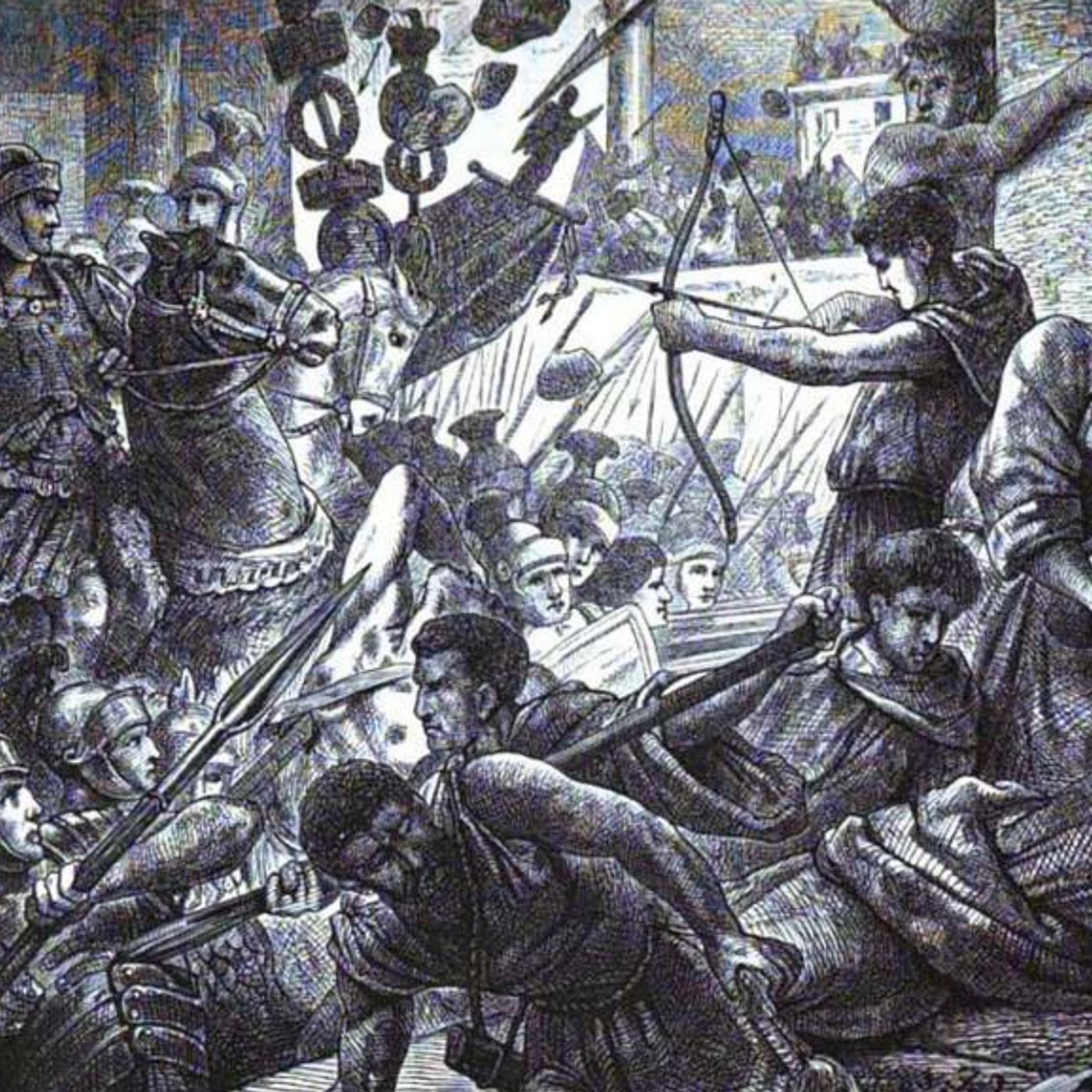
1880 SULLA SACKS ROME Presidential Succession Models and Middle East Gaius and Germanicus compare Roman succession models, from the Julio-Claudian bloodline and the adoptive emperors from Nerva to Marcus Aurelius to Diocletian’s tetrarchy, with modern America, weighing Vice President JD Vance as Emperor Trump’s “adopted son.” Germanicus reads Vance’s reticence on Iran strikes and the midterms as a deliberate projection of independence, contrasting him with Marco Rubio’s hemispheric ambitions in Latin America. On Iran, Germanicus warns that striking its energy infrastructure would invite devastating reprisals on Gulf facilities, and the two note escalating hysteria among European leaders over the Ukraine proxy war. (2)
At the age of 17, Christopher Noel became involved in an extraordinary series of communications with an apparent spirit who claimed to be trapped between life and death and was desperately seeking help. Christopher Noel describes an extraordinary period of spirit communication that began when he was just 17 years old. What started as an investigation into unusual activity at the home of his writing mentor, Catherine, developed into months of communication with an apparent spirit who claimed to be trapped between the physical world and the afterlife. Catherine and her husband had witnessed unexplained phenomena in their home, including small lights appearing above her bed and a mysterious pillar of light in an older part of the building. Those who observed the pillar reported receiving the same mental image of an elderly, sorrowful man. Intrigued by these experiences, Christopher and Catherine decided to attempt communication using a Ouija board. The resulting exchanges were extensive,
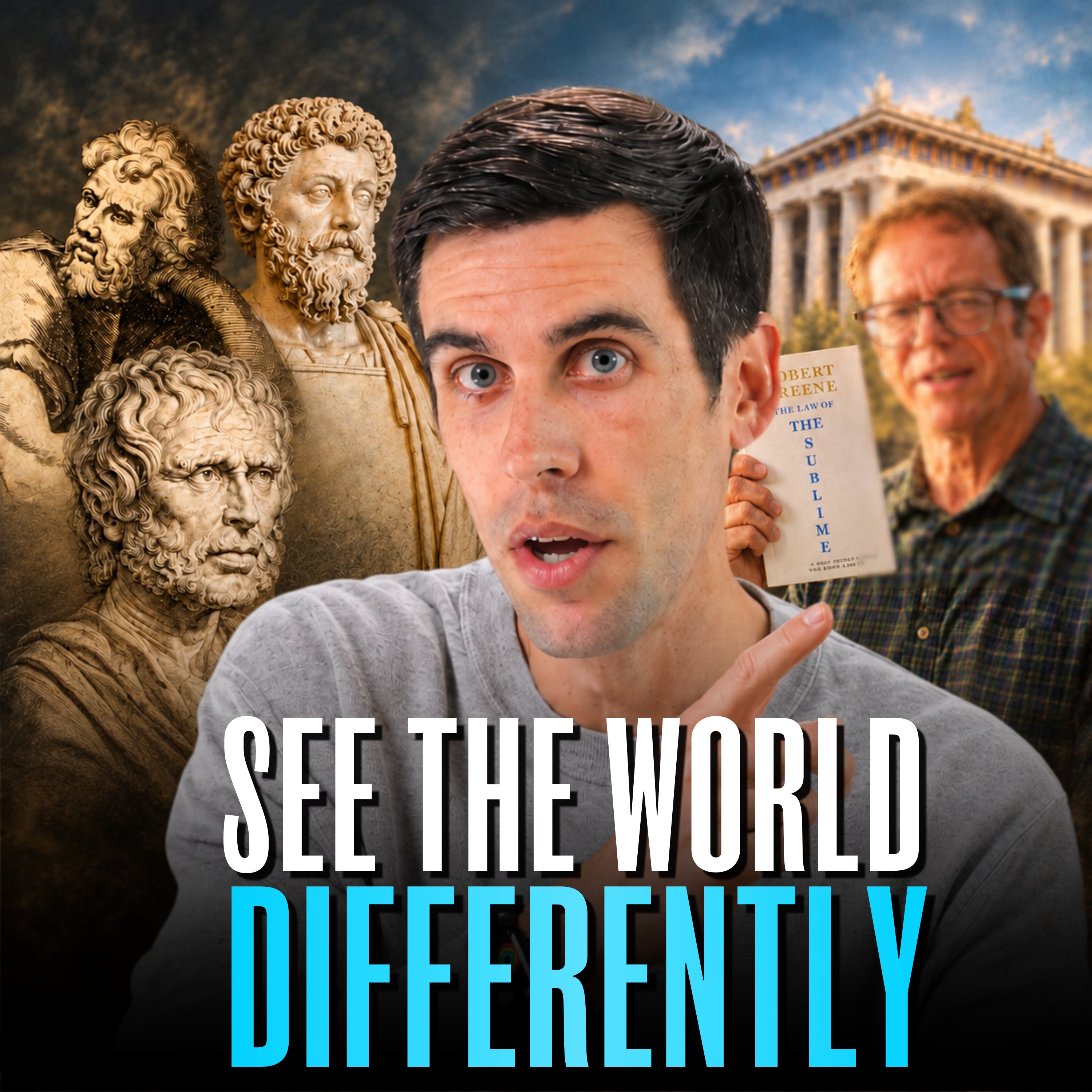
We spend so much time caught up in the demands of everyday life that we forget to appreciate how extraordinary it is to be alive. Inspired by Robert Greene's new book, The Law of the Sublime (https://www.thepaintedporch.com/products/the-law-of-the-sublime?_pos=13&_sid=e0d7a8c03&_ss=r), Ryan explores what the Stoics understood about finding beauty in the ordinary, seeing life from a different perspective, recognizing our connection to something bigger than ourselves, and remembering just how lucky we are to be alive. Watch this episode (https://www.youtube.com/watch?v=eCjqWcbsK1M) on YouTube: https://www.youtube.com/watch?v=eCjqWcbsK1M Watch the NEW Robert Greene Daily Stoic Podcast Episode HERE (https://www.youtube.com/watch?v=Kp_wYiuPD_o): https://www.youtube.com/watch?v=Kp_wYiuPD_o If you want to get your own dedicated privacy specialist and an emergency threat response team who can protect the privacy of you and your family, go to https://incogni.com/dailystoic Hosted on Acast.
It leads with the encounter that sent the story's writer looking into Walking Sam in the first place: the faceless man in the cloak and top hat who walked up to a stopped car at night and banged on it, demanding a ride. "Walking Sam" is the searchable anchor, and the title leaves the reservation's history for the episode to tell. Read more about Walking Sam: https://weirddarkness.com/walking-sam/ READ or DOWNLOAD the full transcript of this episode: https://weirddarkness.tiny.us/mru7wtbv FEATURED STORIES IN THIS EPISODE: An 11-year-old boy experiences the extraterrestrial in his own back yard. *** Floating white mist, pink orbs, ghosts, and more – and they all reside in Fiddletown, California. *** Charles E. Peck was killed instantly in a horrible 2008 Metrolink commercial train accident, but before anyone knew he was dead, his family members received 35 calls from his phone for several hours following the disaster. *** A museum has hung a chair from the ceiling, specifically to keep p
Join NCI University today to master human behavior and influence: Uploaded 05-11-21 This is a dive to discover the possibilities, not the case itself. Sirhan Sirhan, in full Sirhan Bishara Sirhan, (born March 19, 1944, Jerusalem), Palestinian-born Jordanian citizen who was convicted (1969) of fatally shooting U.S. Sen. Robert F. Kennedy on June 5, 1968. He received the death penalty, but the sentence was later commuted to life. Sirhan, a Christian Palestinian, was born in Jerusalem. In 1948 Jordan took control of East Jerusalem and what is now the West Bank, and the following year it granted citizenship to people living in those areas. It is believed that this is how Sirhan became a Jordanian citizen. In the 1950s, he and his family moved to the United States and eventually settled in Pasadena, California. There he attended Pasadena City College and later held odd jobs, notably working at a horse stable and later at a health food store. During this time, Sirhan became vocal in his oppo
Imagine if every big change in our lives came with a whole community stepping up beside us… In this episode, I sit down with Dr Arne Rubinstein, former GP and emergency doctor, founder of the Rites of Passage Institute, and a man who's spent more than 30 years walking young people across the threshold into adulthood. Arne's work began around a fire at his very first men's gathering, listening to a hundred men wrestle with the same handful of wounds. Then in the Emergency Dpt, he kept meeting teenagers who'd pushed it one step too far... kids trying to become adults with nobody there to hold them. He came to believe every young person will go through a rite of passage either way. The question is whether we leave them to create their own, or gather around and help. We talk about why our culture is so good at turning away from the big moments - from first periods to menopause to death - and what opens up when we turn towards them. We explore: Separation, transformation and integration, an
Of all the remarkable successes for the Democratic Party in the US midterm elections, the results in Texas were perhaps the most striking. Not only did they emerge with a new senator (James Talarico) and governor (Gina Hinojosa), they also took control of the state House of Representatives and Board of Education. But despite the jubilation, the Democrats were left facing many questions, not least about the reasons for the landslide. James Butler is joined by Gary Gerstle, an emeritus professor of American history at Cambridge, and Molly Ball, the Washington bureau chief at Time, to consider the ways the party has changed since the Biden era and the reasons it has moved from a policy agenda focused on diversity to a left-populist platform inherited from Bernie Sanders. They also discuss what Trump will still be able to do despite the Republicans’ loss of Congress, and whether the 2028 elections will cement a new political order or bring more volatility. From the LRB Close Readings podca
We’re delighted to announce five new Close Readings series starting in January 2027. Listen to the hosts talk about what to expect from each one. Here’s the line-up: ‘Conversations in Philosophy II’ with Jonathan Rée and James Wood ‘The Everyday’ with David Trotter and Rachel Bowlby ‘Poetry and Place’ with Seamus Perry and Mark Ford ‘Mediterranean Worlds’ with Josephine Quinn and guests ‘Medieval-ish Novels’ with Irina Dumitrescu and Mary Wellesley If you’re not already a subscriber to Close Readings, get 25 per cent off a 12-month subscription with the code ‘AUTUMN25’ at checkout here: https://lrb.me/cr Get ahead on the reading and buy the books from the London Review Bookshop: https://lrb.me/crbooks Works covered in each series: Conversations in Philosophy II Michel de Montaigne, ‘On Pedantry’; John Locke, ‘Of Identity and Diversity’, from Essay concerning Human Understanding; George Berkeley, First dialogue, from Alciphron, or the Minute Philosopher; David Hume, The Natural History
‘Music is both too difficult and too easy to access,’ Nicholas Spice wrote recently in the LRB, ‘and it seems that we have opted to stick with ease over difficulty.’ On this episode he joins Thomas Jones to discuss some of the difficulties: of listening, of understanding, of maintaining the distance necessary for aesthetic contemplation, of playing and how that differs from performing. But engaging with the difficulty of music – learning to attend to it – doesn’t mean rejecting more immediate kinds of response. Keeping music alive, Nicholas also argues, requires an active involvement, an openness of engagement, that’s as likely to be found in a group of schoolchildren singing ‘Over the Rainbow’ as it is in a professional classical performance at a concert hall. Read Nicholas Spice's piece in the LRB: https://lrb.me/spicelrbpod From the LRB Close Readings podcast: https://lrb.me/crlrbpod LRB Audiobooks: https://lrb.me/audiobookslrbpod Bags, binders and more at the LRB Store: https://lrb
Elected representatives should serve people who voted against them as seriously as their supporters.
Share your view, then see how readers voted. No sign-in required. This poll is shared across stories.
Do you agree or disagree?
Common Quandary
A Common Quandary to discuss
Another conversation to explore, separate from this news story.
Your family connection could get your child into their dream school. Do you use it?
A university argues that considering family ties builds loyalty and encourages donations that fund scholarships. Critics say the preference preserves inherited advantage and takes places from stronger applicants.
Can benefits to the whole institution justify an unequal admissions advantage?