Listen through the publisher, then discuss the episode here or arrange an in-person Roundtable. Your city determines where to meet.
Roundtables are designed for groups of four, with a shared subject and room for everyone to speak. Come for discussion, with no dating expectation.
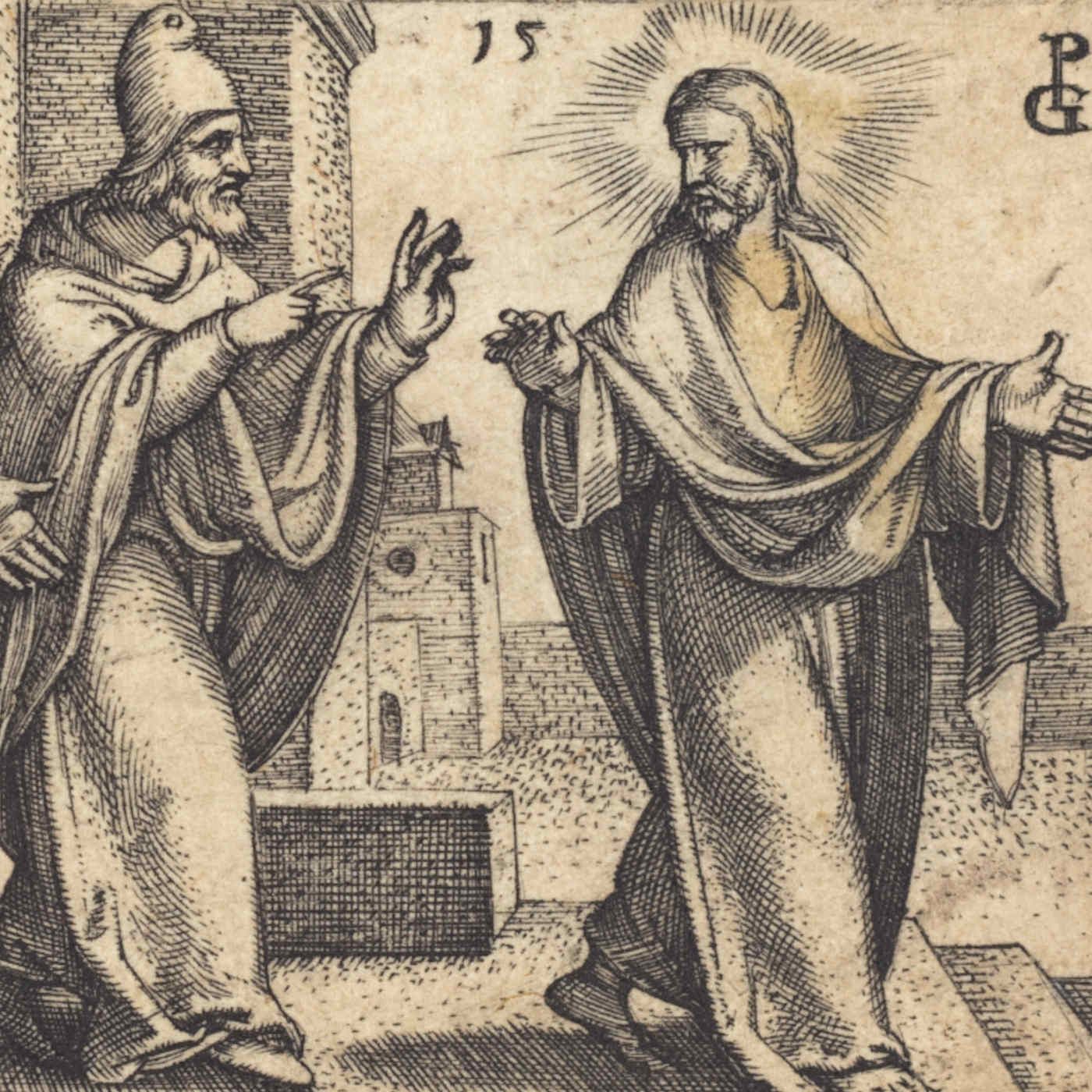
Jesus can read minds and hearts. Mark 12 gives context to many of Jesus’ important parables and teaching. Some of the people questioning Him were sincere; some wanted to trap Him. Jesus read each of their hearts and answered accordingly.
Episode information is provided by the publisher. Listening takes place on the publisher’s service.
Familiarity Makes People Blind to Who You're Becoming When Jesus returned to His hometown of Nazareth, the people who had known Him growing up struggled to accept the authority and wisdom they were witnessing. They recognised Him as the carpenter, Mary's son, and someone whose family they knew. Instead of considering what God was doing through Him, they allowed their familiarity with His past to shape their judgment of His present. But Jesus did not abandon His calling because His hometown misunderstood Him. This passage challenges us not to make other people's limited perception the boundary of what God can do through our lives. Every contribution counts. Thank you for being part of our journey!
Read Online (https://catholic-daily-reflections.com/2026/11/20/questioning-god/) Questioning God Some Sadducees, those who deny that there is a resurrection, came forward and put this question to Jesus, saying, “Teacher, Moses wrote for us, If someone’s brother dies leaving a wife but no child, his brother must take the wife and raise up descendants for his brother. Now there were seven brothers…” Luke 20:27–29 After entering Jerusalem for the Passover and cleansing the Temple, Jesus returned each day to teach within its courts. The people warmly received Him, hanging on His every word. Yet the religious leaders, fearful of His influence, deliberately and methodically sought to trap Him, discredit Him, and destroy Him. First, the chief priests, scribes, and elders challenged His authority, questioning His right to drive out the moneychangers and those selling animals for sacrifice. He declared they had turned His Father’s house into a den of thieves. When that ploy failed, the leaders
Luke 20: 27-40 - 'In God all men are alive.' Catechism of the Catholic Church Paragraphs: - 330 (In 'Who are Angels'?) - As purely spiritual creatures angels have intelligence and will: they are personal and immortal creatures, surpassing in perfection all visible creatures, as the splendor of their glory bears witness. - 575 (In 'Jesus and Israel') - Many of Jesus’ deeds and words constituted a “sign of contradiction,” but more so for the religious authorities in Jerusalem, whom the Gospel according to John often calls simply “the Jews,” than for the ordinary People of God. To be sure, Christ’s relations with the Pharisees were not exclusively polemical. Some Pharisees warned him of the danger he was courting; Jesus praises some of them, like the scribe of Mark 12:34, and dines several times at their homes. Jesus endorses some of the teachings imparted by this religious elite of God’s people: the resurrection of the dead, certain forms of piety (almsgiving, fasting, and prayer), the c
In this meditation, I explore how something as ordinary as drinking a cup of coffee can become a contemplative practice. As a Capuchin Franciscan, I can even claim a particular connection with coffee through Blessed Mark of Aviano, whose story became associated with the cappuccino. You can practise this meditation with coffee, tea or another warm drink, either holding a real cup or simply visualising the experience. We begin by feeling the warmth and weight of the cup in our hands. We notice its texture, the steam, the fragrance and the anticipation of taking a drink. As we take each sip, we pay attention to sensations that usually pass unnoticed: the cup against the lips, the warmth of the liquid, its movement through the mouth and throat, and the memories or stories awakened by taste and smell. By attending closely to an ordinary action, we begin to see how rich even the simplest moment can be. Towards the end of the meditation, we reflect with gratitude on everything that has allowe
The universe is so vast that a single grain of sand can represent more stars than we can comprehend, yet the God who made it all knows His people by name. Ray, Mark, Oscar, and Eric Hovind begin by looking at the breathtaking scale of creation through James Webb telescope images and the sheer number of stars in the universe. But creation isn't meant to impress us with size alone. The guys explain that the heavens point beyond themselves to the glory of their Creator and consider how that truth shapes conversations with people who reject God. That leads to the difficult question: what happens to people who have never heard of Jesus? The guys challenge the idea that people are simply neutral toward God, explaining that our problem is not merely a lack of information but a tendency to suppress the truth we already know. They discuss how our presuppositions shape how we interpret evidence and why evangelism must go beyond winning an intellectual argument. People need to understand both the
Do you ever feel named but unknown? Like you are invited but not necessarily included? You have a seat at the table, but you rarely speak? Let me tell you something, the behind the scenes people are needed. Jesus could have chosen a king to be in his inner circle. He could have chosen a military leader. He could have chosen a prominent business man. But instead, he chose James the son of Alphaeus, known as James the Less. For real, that was his title – James the Less. Why? Because there was already a James chosen for Jesus’ inner circle. Remember James the fisherman and brother of John? That James was given the title James the Great, so now we have this James known as James the Less. Maybe sometimes you feel like your name comes with the title “lesser than” too. You’re not as smart. You’re not as pretty. You’re not as successful. You’re not the first one everyone chooses. You’re named but mostly just unknown. Oh girl, how you are needed!!!!! This James, James the Less, is named but pre
We fill our lives with so much noise. Somewhere amid the chaos of our busy lives, peace becomes an afterthought. In Leviticus 3, the peace offering is a symbol of Christ as a person and our fellowship with Him. Follow along as Dr. McGee shows us how the person of Christ enables us to fellowship together as believers and to commune with God through Jesus Christ.
Life is about to get sweeter for the children of Israel. The meal offering found in Leviticus 2 represents Christ in His perfect humanity. God calls it “a sweet smelling savor unto the Lord.” This is how God sees Christ and, therefore, how He sees us when we put our faith in Him. That’s pretty sweet!
Worship is not just a feeling—it’s a picture. The first part of Leviticus outlines the burnt offerings and their significance. Every detail is incredibly important, as each instruction serves a unique purpose. Think of Leviticus as a Divine tapestry. Every mundane, lonely thread of instruction is carefully woven by God’s hand. In the end, the picture will be more beautiful than you could have imagined.
Independent oversight bodies need real investigatory powers, not only advisory roles.
Share your view, then see how readers voted. No sign-in required. This poll is shared across stories.
Do you agree or disagree?
Common Quandary
A Common Quandary to discuss
Another conversation to explore, separate from this news story.
A stray cat adopts you—and starts killing birds. Do you keep feeding it?
A stray cat visits your yard daily and appears to depend on the food you leave out. Neighbors complain that outdoor cats kill birds and say feeding it encourages the problem without taking responsibility for the animal.
Does caring for one visible animal excuse harm to less visible ones?