Medina Escobar v. Blanche, et al. — 9th Cir. (Nov 16, 2026)
32 min
Listen through the publisher, then discuss the episode here or arrange an in-person Roundtable. Your city determines where to meet.
Roundtables are designed for groups of four, with a shared subject and room for everyone to speak. Come for discussion, with no dating expectation.
The Ninth Circuit considers whether a court order temporarily stopping deportation also changes the rules governing a person's continued detention. The petitioner is a Mexican citizen who had previously been deported and returned to the United States. In 2025, after he posted bond in a separate criminal case, immigration officers took him into custody and reinstated an old removal order. The criminal case was dismissed, but immigration detention continued. He said he feared persecution or torture in Mexico. An immigration judge upheld an adverse initial decision on that fear, and he sought review in the Ninth Circuit. The court temporarily stopped his removal, but he remained in custody. He also sought release on bond and then brought a habeas case, asking a federal court to review the legality of his detention. The district judge denied that petition. The dispute turns on two statutory frameworks. Section twelve twenty-six generally governs detention while a decision on removal is pending and can allow release on bond. Section twelve thirty-one governs people already ordered removed. The district judge concluded that his reinstated order placed him in that second framework. His lawyer will argue that the court's stay and alleged defects in reinstating the old order entitle him to seek release under the other framework. The government will argue that the earlier removal order remains final for detention purposes even while the separate fear-related challenge is pending. Listen for exactly what he challenged: the old removal decision, its reinstatement, or the fear determination. The judges will also ask whether he first needed to appeal the immigration judge's bond ruling to the immigration appeals board. Medina Escobar v. Blanche, et al. (No. 26-1495) — United States Court of Appeals for the Ninth Circuit, argued November 16, 2026. Sources: Official Ninth Circuit oral argument: First habeas denial, February 19, 2026 (Doc. 9): Detention pending a removal decision (8 U.S.C. 1226): Detention of persons ordered removed (8 U.S.C. 1231):
Episode information is provided by the publisher. Listening takes place on the publisher’s service.
Six decisions in the Federal Courts edition for Wednesday 18 November 2026: one from the Full Court of the Federal Court and five from the Federal Court of Australia. The opening story: a contract claim founded on the same agreement as Fair Work Act claims is part of the same matter, and the Federal Court has no general discretion to decline it. Then the Full Court on particulars, directors' declarations and audit opinions in a securities class action, a company that wanted to run its case without a lawyer, a lease and the consumer law, and the registry. The Full Court ruling also features in today's Courts of Appeal brief. Practice and Procedure Desk (opening story). Liebovitz v Golden Steel International Pty Ltd t/a Ariston Wire [2026] FCA 1739 (Goodman J, 18 November 2026) - Signal: Practice and Procedure. A breach of contract claim for restraint payments joined with Fair Work Act 2009 (Cth) claims (alleged sham contracting and employee entitlements, accepted as bona fide for the ap
“By a process of elimination, he didn't die from a natural cause. He didn't die from old age in his cell, and he didn't die from an accident. So the only option that we have is that he died as a result of a homicide.” BBC Newsnight presenter Victoria Derbyshire speaks to forensic medicine expert Michael Freeman, who says he's reviewed Jeffrey Epstein's autopsy records and contends Epstein's death in jail was the result of homicide rather than suicide. Epstein was a wealthy American financier and convicted sex offender, with links to prominent figures around the world. He died in a New York jail in 2019 while awaiting trial on charges of sex trafficking involving underage girls. His death was ruled a suicide by New York City's medical examiner. A subsequent FBI investigation found no evidence of criminal activity connected to his death, while the US Department of Justice’s Inspector General also concluded there was no evidence of foul play. In an interview with BBC Newsnight, Freeman ch
**SOCIAL SECURITY BEFORE AGE 62? YES! YOU COULD QUALIFY AT 43, 53, 60, OR EVEN YOUNGER!** Think you have to wait until age 62 to start receiving Social Security benefits? **Think again!** Millions of Americans know about Social Security retirement benefits, but many don't realize that certain people can receive monthly Social Security payments years, or even decades, before reaching retirement age. Need help with Medicare? Contact our friends at Chapter Medicare for FREE HELP!! 352-841-0632 **Could YOU qualify for Social Security benefits earlier than you think?** In today's video, **Dr. Ed Weir, a former Social Security Administration District Manager**, explains the often-overlooked Social Security rules that allow certain individuals to qualify for benefits in their 40s, 50s, and even younger. You may be surprised by who's eligible, which benefits are available, and what circumstances could allow you to start receiving payments. **IN THIS VIDEO, WE'LL ANSWER:** Can you really start
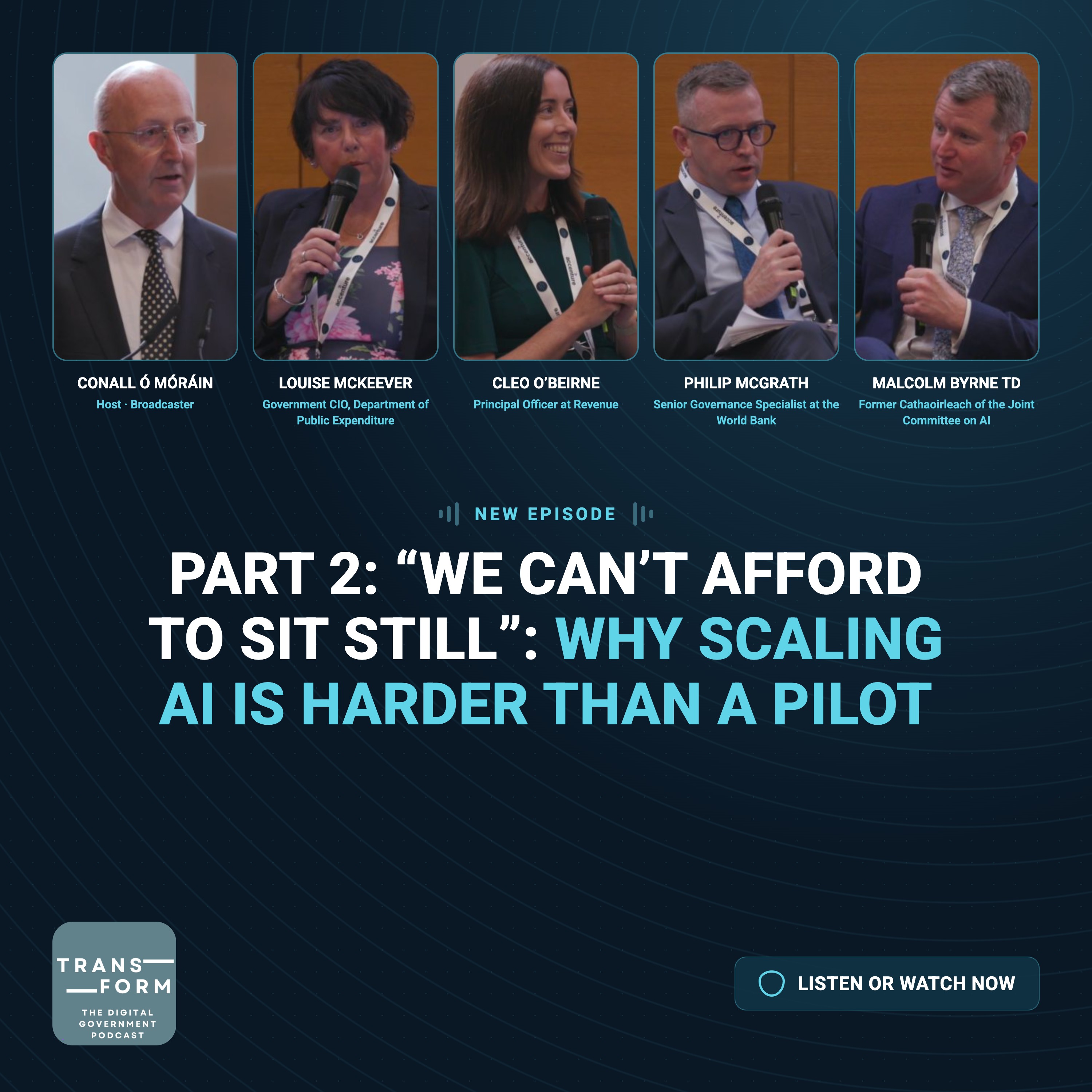
The pilot worked. Now what? In Part 2 of this panel discussion, four leaders explain how they're taking AI from pilot to scale, and what it takes to get data and governance right. This panel discussion took place at the Ireland eGovernment Awards and Leadership Summit 2026 on 24 September 2026 at UCD's O'Reilly Hall. We bring together Louise McKeever, Government CIO; Cleo O'Beirne, Principal Officer at Revenue; Philip McGrath, Senior Governance Specialist at the World Bank; and Malcolm Byrne TD, former Cathaoirleach of the Joint Committee on AI. The panel is chaired by Conall Ó Móráin. If you're taking AI beyond the pilot, here's what to do: Start small, prove it, then scale. Revenue tested agentic AI on a small application first, stage by stage. Redesign the whole process, not one stage. Individual productivity gains only go so far. Plan for lost knowledge, and recovered knowledge. As AI scales, people may know less, but AI can also capture knowledge that has already been lost. Reuse
This week, Scott was joined by his Lawfare colleagues Senior Editors Anna Bower, Michael Feinberg, and Molly Roberts to talk through the week’s big national security news stories, including: “Occam’s Router.” It’s been a rough week for the systems that keep the country running. On Friday, the FAA ordered a rare nationwide ground stop after a communications failure disrupted radar and radio links at air traffic control centers across the country—just a day after a global Microsoft outage knocked Outlook and Teams offline. On Monday, customers at Chase and other big banks found themselves unable to log in or move money. And on Tuesday, the NSA’s classified internal network went dark, forcing the agency to stagger employees’ arrivals at Fort Meade. Officials insist none of these incidents was a cyberattack, and the explanations offered so far—a misbehaving router, a latent software bug, a routine patch gone wrong—are decidedly mundane. But the clustering has fueled plenty of anxiety and s
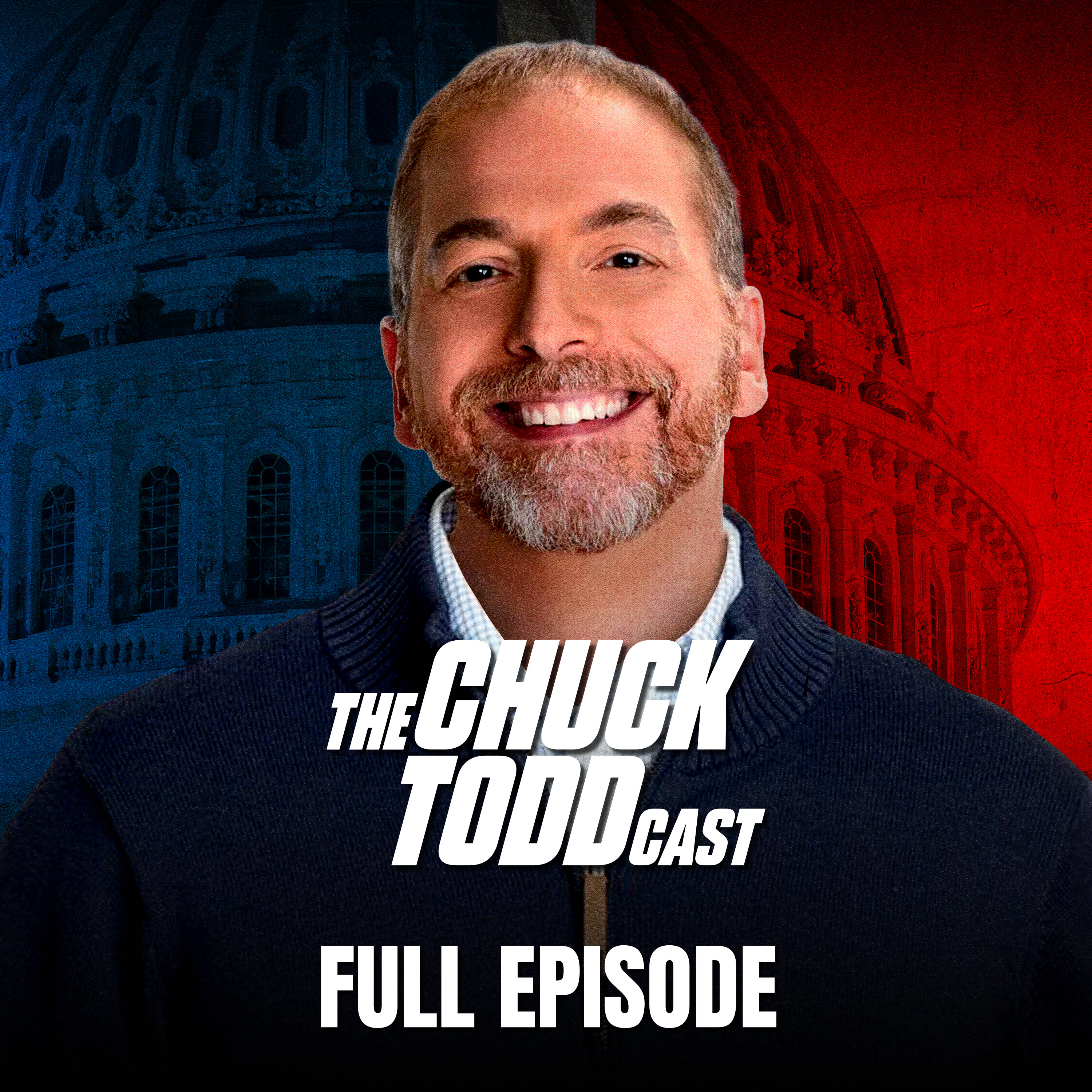
Chuck Todd argues the country is living through two crises at once — competence and confidence — and the second one may be harder to fix. Trump’s answer to a week of cascading outages was “it’s life… it’s fine,” which Todd says lands exactly like his Covid-era shrugs, from a president who has never wanted the part of the job that involves managing a crisis rather than cutting a ribbon. The speculation about AI integration remains unproven, but what isn’t in dispute is that CISA lost nearly a third of its workforce in 2025 and still has no confirmed director, and the test of a functioning government isn’t preventing every failure — it’s containing and recovering from them. Chuck also sees Trump shrinking: Quad leaders visibly annoyed, Vance publicly breaking with him, Rubio distancing himself from Iran, and Republican senators finally criticizing the administration — though mostly by screaming at each other, as when Cornyn told Cruz “I don’t find you credible, I’m mad at you” on the Sen
The Ninth Circuit considers a shareholder's challenge to disclosures used to sell UserTesting. During negotiations, Thoma Bravo reduced a proposed ten-dollar-a-share offer to seven dollars and fifty cents. The board initially rejected that lower price, but later recommended a deal at that price to shareholders. The shareholder alleges that the merger's proxy statement wrongly made the company's revenue performance look worse than it was. The disputed sentence grouped revenue with calculated billings and said both had fallen short of expectations. Her theory is that this depressed picture helped persuade shareholders to accept too little for their stock. That is an allegation, not a finding that the deal was unfair. The district court dismissed the revised complaint. Although it had treated the disputed sentence as false or misleading, it said the allegations still sounded in fraud and failed the stricter requirements for pleading the executive's responsibility. The shareholder will arg
The Second Circuit considers a plan to help homebuyers who need mortgages compete with cash offers. Canandaigua National Corporation, a New York financial holding company, wanted to guarantee purchases arranged through its mortgage subsidiary. If a preapproved customer failed to obtain final mortgage approval, the company would buy the home itself and later resell it. The proposal capped the value of homes held at any one time at five million dollars and promised resale within two years. Canandaigua says those safeguards make the risk small. The Federal Reserve Board rejected the plan on safety-and-soundness grounds, looking beyond the risk to this particular company. It did not finally decide the remaining statutory factors. Canandaigua will argue that the Board ignored the limits in its actual application. The Board will defend considering what could happen if financial holding companies generally began buying property under such guarantees. This is a dispute over permission for a pr
The Ninth Circuit hears a dispute over a proposed waste-processing project in California. Nortech already operated the Western Placer Waste Management Authority's facility. It worked with EcoHub on a proposal for the facility's future, first seeking a contract extension and then preparing for competitive bidding. The collaboration broke down. Nortech ended discussions after EcoHub failed to produce a requested financing commitment. EcoHub says the financing demand was a pretext, and that Recology pushed Nortech to abandon their joint effort. EcoHub and Nortech eventually submitted separate bids. Neither won. EcoHub nevertheless says their work together had already created a legal partnership, with duties Nortech could not simply walk away from. The district court ruled against EcoHub before trial, finding insufficient evidence of shared control. It also found EcoHub's interference claims against Recology were brought too late. EcoHub will argue that the companies' conduct and board dis
Vocational training should receive the same respect as university education.
Share your view, then see how readers voted. No sign-in required. This poll is shared across stories.
Do you agree or disagree?
Common Quandary
A Common Quandary to discuss
Another conversation to explore, separate from this news story.
A private joke from years ago goes public. How long should it follow the person who wrote it?
Someone shares a screenshot of a tasteless joke made years ago in a private friends' chat. The person who wrote it says they were performing for a small audience, have changed, and never agreed to have the message made public.
How private should speech remain when it reveals something troubling?