Monday of the Thirty-third Week in Ordinary Time - Calling Out for Mercy!
Listen through the publisher, then discuss the episode here or arrange an in-person Roundtable. Your city determines where to meet.
Roundtables are designed for groups of four, with a shared subject and room for everyone to speak. Come for discussion, with no dating expectation.
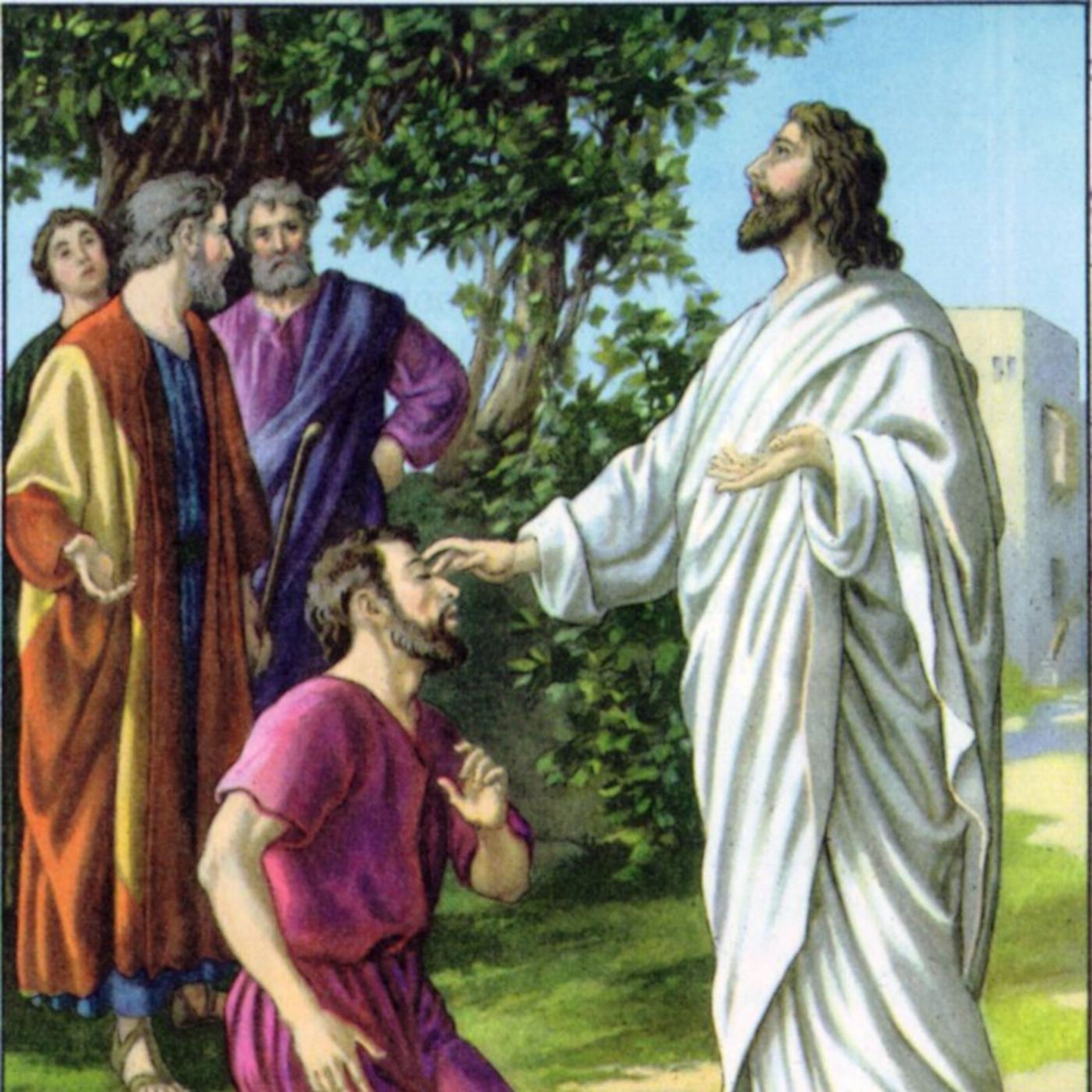
Read Online (https://catholic-daily-reflections.com/2026/11/15/calling-out-for-mercy-3/) Calling Out for Mercy! As Jesus approached Jericho a blind man was sitting by the roadside begging, and hearing a crowd going by, he inquired what was happening. They told him, “Jesus of Nazareth is passing by.” He shouted, “Jesus, Son of David, have pity on me!” The people walking in front rebuked him, telling him to be silent, but he kept calling out all the more, “Son of David, have pity on me!” Luke 18:35–39 In many cultures today, those who are blind, disabled, sick, or suffering are treated with care and dignity. Societies have developed laws and structures to ensure that those who suffer physical disabilities have opportunities to live full lives. In biblical times, the opposite was often true. Physical afflictions such as blindness or paralysis were seen as signs of divine punishment. Many believed such conditions resulted from the sins of the afflicted, or those of their parents or grandparents. Within this context, Jesus’ treatment of the blind man was not only compassionate, it was shocking. The dignity He gave this man made him a powerful symbol of the Messiah’s mission. Imagine the scene. Jesus approaches the wealthy city of Jericho, and the blind man sits by the roadside, ignored and marginalized. Most passersby likely dismissed him without a thought. But spiritually, this blind man represents each one of us. We are all afflicted with spiritual blindness. We are all born into the poverty of Original Sin, dependent upon God’s mercy. In Mark’s Gospel, the man is named Bartimaeus, the son of Timaeus. But Luke omits his name, perhaps intentionally, so that we might more easily see ourselves in him—nameless, helpless, yet full of hope. In contrast, many of the religious leaders of Jesus’ time—scribes, Pharisees, elders—saw themselves as spiritually superior. They relied on their own perceived righteousness and looked down on others. This contrast between the blind beggar and the religious elite invites each of us to ask ourselves with whom we identify. Do I see myself as poor in spirit, aware of my need for mercy? Or do I imagine myself self-sufficient and holy without grace? Only when we recognize our spiritual poverty can we cry out with sincerity, “Jesus, Son of David, have pity on me!” By invoking Jesus as “Son of David,” the blind man professed his faith in Jesus as the promised Messiah. It was a bold act of belief from one who had never seen a miracle but trusted nonetheless. Perhaps the most compelling moment in this encounter is the resistance Bartimaeus faces: “The people walking in front rebuked him, telling him to be silent.” These voices symbolize the many obstacles we face when turning to God—voices from the world, from our own disordered desires, from habitual sin, and even from the demonic. They discourage us from believing in our worth, from trusting that God hears us, and from persevering in prayer. Yet Bartimaeus “kept calling out all the more.” His persistence in the face of rebuke is a beautiful model of prayer. When we are tempted to doubt, to grow weary, or to believe that God is not listening, is exactly when we should pray all the more. True faith is unyielding. It does not give up in the face of adversity but grows stronger. When Jesus stops and calls for the blind man, everything changes. That moment reveals that our Lord’s Sacred Heart is attentive, responsive, and full of mercy. It teaches us that every sincere, humble, and persistent prayer touches the heart of God and provokes a response. Though Jesus’ visible response was to heal the man, the deeper response was the interior invitation to follow Him, which the blind man embraced wholeheartedly: “He immediately received his sight and followed him, giving glory to God.” When the others saw this, they too rejoiced and glorified God. Reflect today on this blind beggar and seek to identify with him. Do not see yourself as one who is healthy, prominent, or wealthy, but as poor and needy. From that humility, cry out with conviction, “Jesus, have mercy!” Do so relentlessly and await the interior invitation to greater faith, so that you may see, follow Jesus more faithfully, and become a witness to God’s glory by your life—touched by the Messiah, the Son of David. Jesus, Son of David, have pity on me! Lord, may this become my constant cry for myself and for all people. Remove all pride and self-righteousness from me, and help me to see myself in this blind beggar, crying out for Your mercy. As I respond to Your invitation to grace, may I follow You fervently, give You glory, and draw others into the joy of walking in Your light. Jesus, I trust in You. Image via Adobe Stock (https://stock.adobe.com/images/london-great-britain-september-19-2017-the-jesus-heals-blind-bartimaeus-on-the-stained-glass-in-st-mary-abbot-s-church-on-kensington-high-street/180915902?isa0=1&prev_url=detail&state=%7B%22ac%22%3A%22stock.adobe.com%22%7D) Inc. All rights reserved.
Episode information is provided by the publisher. Listening takes place on the publisher’s service.
Listen at the source ↗