Listen through the publisher, then discuss the episode here or arrange an in-person Roundtable. Your city determines where to meet.
Roundtables are designed for groups of four, with a shared subject and room for everyone to speak. Come for discussion, with no dating expectation.
On June 3, 2023, twelve-year-old Lori Paige was reported missing from her home in Tallahassee, Florida. She had just finished sixth grade. Police initially classified her as a runaway, but as the months passed, the search for Lori crossed state lines. It would take nearly two years to find her, and evidence uncovered during the search would point investigators to the person they believed had killed her. In this episode of Black Girl Gone, I tell Lori’s story and look at what can be overlooked when a missing child is labeled a runaway. Thank you to this episode’s sponsors, EarnIn, Shopify, Lola Blankets, and BetterHelp. Use code GIRLGONE with any of these sponsors to support our show.
Episode information is provided by the publisher. Listening takes place on the publisher’s service.
Long before missing children and murder headlines, Alex Cox and Lori Vallow were just brother and sister. Through new interviews with their family, host Nate Eaton explores the siblings’ upbringing, Lori’s early marriages and Alex’s fiercely protective role in her life. But a troubling allegation from Alex’s ex-wife also raises questions about their bond and whether warning signs went unrecognized.
Long before missing children and murder headlines, Alex Cox and Lori Vallow were just brother and sister. Through new interviews with their family, host Nate Eaton explores the siblings’ upbringing, Lori’s early marriages and Alex’s fiercely protective role in her life. But a troubling allegation from Alex’s ex-wife also raises questions about their bond and whether warning signs went unrecognized. Want to listen ad-free and get next week's episode early?
As we continued with the trial of Naresh Bhatt for the murder of his wife, Mamta Kafle, we saw Naresh’s story evolve. First, they were getting a divorce, she smashed her phone and went to either New York or Texas. Then they were fine, and he just assumed she had gone to work. He told Detective Ventura that they stayed at home and cleaned the bathroom, but when police pulled his credit card info, then suddenly he had gone to the grocery store. Naresh Bhatt did go to the grocery store. In fact, he went to several. He bought knives, heavy-duty trash bags, and a cart full of cleaning supplies. It was these purchases that really began to turn the tide in the investigation into Naresh Bhatt and made it clear that investigators were dealing with something much darker than a missing person. Find us everywhere (https://linktr.ee/attwgpod) Merch store (https://www.andthentheyweregone.com/merch-store) Our Sponsors: Privacy & Opt-Out: https://redcircle.com/privacy
In this remastered Crime Analyst series, Laura Richards puts the women back at the centre of the story. For decades, the women murdered and attacked by Peter Sutcliffe (known as PS in this series) were overshadowed by the man who targeted them. In this episode, Laura interviews author, journalist, campaigner and survivor Julie Bindel, who was living in Leeds during PS's reign of terror. The day before Jacqueline Hill was murdered, and close to where Jacqueline was killed, Julie was followed home from the pub by a man fitting PS's description. Julie shares what happened that night, what it was like living under the threat of male violence in West Yorkshire, and the police response. Laura and Julie also explore the terminology surrounding prostitution versus sex work, societal attitudes towards women, and what needs to change to prevent male violence. Julie has written extensively on rape, domestic violence, sexually motivated murder, prostitution and trafficking, child sexual exploitati
The murder of Julie Jensen is one of the most extraordinary cases in modern American crime. In the autumn of 1998, in Pleasant Prairie, Wisconsin, Julie Jensen, a devoted mother of two, sealed a letter and handed it to a neighbour with a chilling instruction: if anything happened to her, give it to the police. Weeks later she was dead, poisoned with antifreeze, and her letter named the person she feared would kill her, her husband, Mark Jensen. The case that followed turned on a question the law had never quite answered: can the dead give evidence? Julie's words from beyond the grave would convict her husband, then very nearly set him free, in a battle that reached the United States Supreme Court. On Crime at Bedtime, settle in, get comfortable, and let us tell you the story of the murder of Julie Jensen. All the details here Hosted on Acast.
On June 19, 2026, a park ranger approached a black BMW parked illegally near Philadelphia's Independence Hall. The woman in the passenger seat said she was afraid of the driver. She was also carrying the ID of Blair Tonzelli, a woman who had been missing since 2023. That encounter led investigators to a rowhouse on West Chew Avenue in the Olney neighborhood, and to one of the most disturbing cases in the country. The house belonged to Eugene Horsch and his late father, Raymond “R.C.” Horsch, a pornographic filmmaker and novelist whose work blurred the line between staged violence and reality for decades. Inside, investigators reportedly found 50 hard drives containing hundreds of thousands of images and videos, a 55-gallon drum connected to the home's plumbing, five urns, and an unsigned letter ending with the words “it was fun.” Police have linked seven missing women to the house. None have been found. Jonathan and Cooper break down what investigators have uncovered so far, including
In this episode of Afterthoughts, Amara and Jason discuss the murder of twelve-year-old Lori Paige, the warning signs before her disappearance, and how being labeled a runaway shaped the response to her case. They also reflect on the questions left unanswered after her father, who was charged with her murder died before trial.
Rebuilding after a disaster should sometimes mean changing where or how people live.
Share your view, then see how readers voted. No sign-in required. This poll is shared across stories.
Do you agree or disagree?
Common Quandary
A Common Quandary to discuss
Another conversation to explore, separate from this news story.
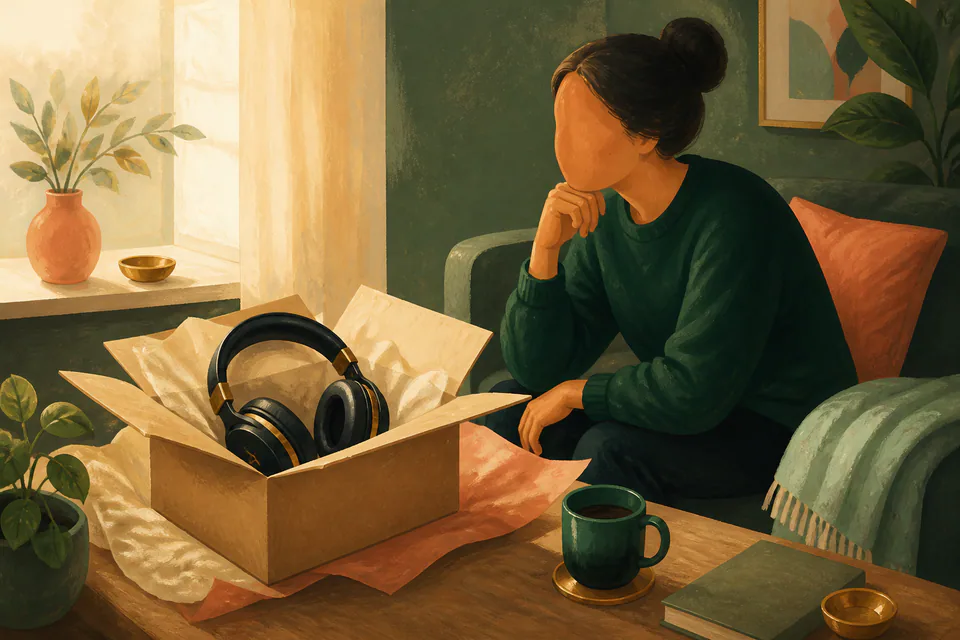
A $300 package lands at your door by mistake. Do you keep it?
A package containing expensive headphones arrives with your address but another person's name. The retailer says it has already replaced the order and does not ask you to return it.
If no one appears to lose, what still makes keeping it right or wrong?