Nature in Crisis: ‘The Co-Creation: How Earth Made Life and Life Made Earth’ by Olivia Judson
20 min
Listen through the publisher, then discuss the episode here or arrange an in-person Roundtable. Your city determines where to meet.
Roundtables are designed for groups of four, with a shared subject and room for everyone to speak. Come for discussion, with no dating expectation.
What is life? In recent years, biologist have decided it’s better not to try to answer that question. But in The Co-Creation (2026) Olivia Judson breaks with this approach to offer a definition of life determined by energy: life is not matter organised in certain configurations, but rather energy flows that give rise to certain configurations that ultimately serve energy. In this episode, Meehan and Peter consider what it might mean for life to be defined and shaped by energy, and talk through the epic sweep of Judson’s book, starting with the origins of life around deep ocean vents to the transformational moment when humans started to cook with fire. Non-subscribers will only hear an extract from this episode. Directly in Apple Podcasts: https://lrb.me/applecrnature (https://lrb.me/applecrna) In other podcast apps: https://lrb.me/closereadingsnature (https://lrb.me/closereadingsna) Read more in the LRB on the origins of life: Peter Godfrey-Smith: https://lrb.me/nicep1201 Philip Kitcher: https://lrb.me/npep1202 James Hamilton-Paterson: https://lrb.me/npep1203
Episode information is provided by the publisher. Listening takes place on the publisher’s service.
How would you describe your 2026 year so far? Around us, there seems to be so much happening in the world today, with wars, a shaky economy, and political issues in the government. Personally, you might have had something unexpected happen like a sudden death or a serious health crisis. A friend of mine used this word to describe how things felt around her. She said things felt ‘uncertain’. I couldn’t agree more. In some ways, it seems remarkable that we have even made it this far! Well, if things have been feeling stressful and uncertain for you, let’s take a DEEP breath together now. In this episode, let’s look back on this year and have a moment of quiet reflection. I’ll also share some top thanksgivings from my clients who are eating plant-powered to inspire and encourage you. I hope you’ll see that our health doesn’t need to suffer or get sidelined, despite the external circumstances. So, if you’re ready to pause for a moment of reflection and gratitude with me, pull up a chair wi
Viewers like you help make PBS (Thank you ) . Support your local PBS Member Station here: https://to.pbs.org/DonateSPACE Uploaded 18-07-18 Entropy and the second law of thermodynamics has been credited with defining the arrow of time. You can further support us on Patreon at https://www.patreon.com/pbsspacetime Get your own Space Time t-shirt at http://bit.ly/1QlzoBi Tweet at us! @pbsspacetime Facebook: facebook.com/pbsspacetime Email us! pbsspacetime [at] gmail [dot] com Comment on Reddit: http://www.reddit.com/r/pbsspacetime Help translate our videos! Previous Episode: Quantum Invariance and The Origin of The Standard Model Entropy is surely one of the most intriguing and misunderstood concepts in all of physics. The entropy of the universe must always increase – so says the second law of thermodynamics. It’s a law that seems emergent from deeper laws – it’s statistical in nature – and yet may ultimately be more fundamental and unavoidable than any other law of physics. Hosted by Ma
... Not the story I was expecting. Fracking made it possible to get and burn much, much more oil and natural gas. To do it, companies drill into rock deep beneath the Earth's surface and pump in fluid at high enough pressure to crack that rock open, allowing the trapped oil and gas to escape into their pipes. But the fossil fuels they released have directly contributed to climate change, and we're all now paying the price. But here's the hopeful twist: It turns out that this technology - the same one perfected to squeeze every drop of dirty fossil fuels out of the earth - might be the key to unlocking an even bigger source of energy. One that's actually... clean. This video explains how fracking is now being used in geothermal to get more clean energy out of the ground, in the hope of moving away from fossil fuels. Along the way, we'll meet Professor Mukul Sharma, aka the "Frack King," and longtime energy reporter David Roberts. Oh, and my parents (thanks, Mom and Dad!). Chapters: 00:0
Send us a voice note with your School Can't lived experience at https://schoolcantvoicenotes.org/ or record it your usual way and email it to [email protected] This week's question: what's your strategy for getting through to the end of the school year? Send your voice note by Friday 27 November and it could be part of next week's episode with Barb Cook. This episode is the start of an experiment: bringing more voices from the School Can't community into the podcast. Parents from the School Can't Australia peer support network recorded these voice notes in whatever quiet moments they could find. They talk about how hard School Can't is to see when you're in it, and how often the parent gets the blame. We hear about advice that made things worse, from schools increasing attendance too fast to a psychologist recommending making home uncomfortable. One mum describes the morning she found herself standing in the ocean, fully dressed, after hours of getting her daughter to
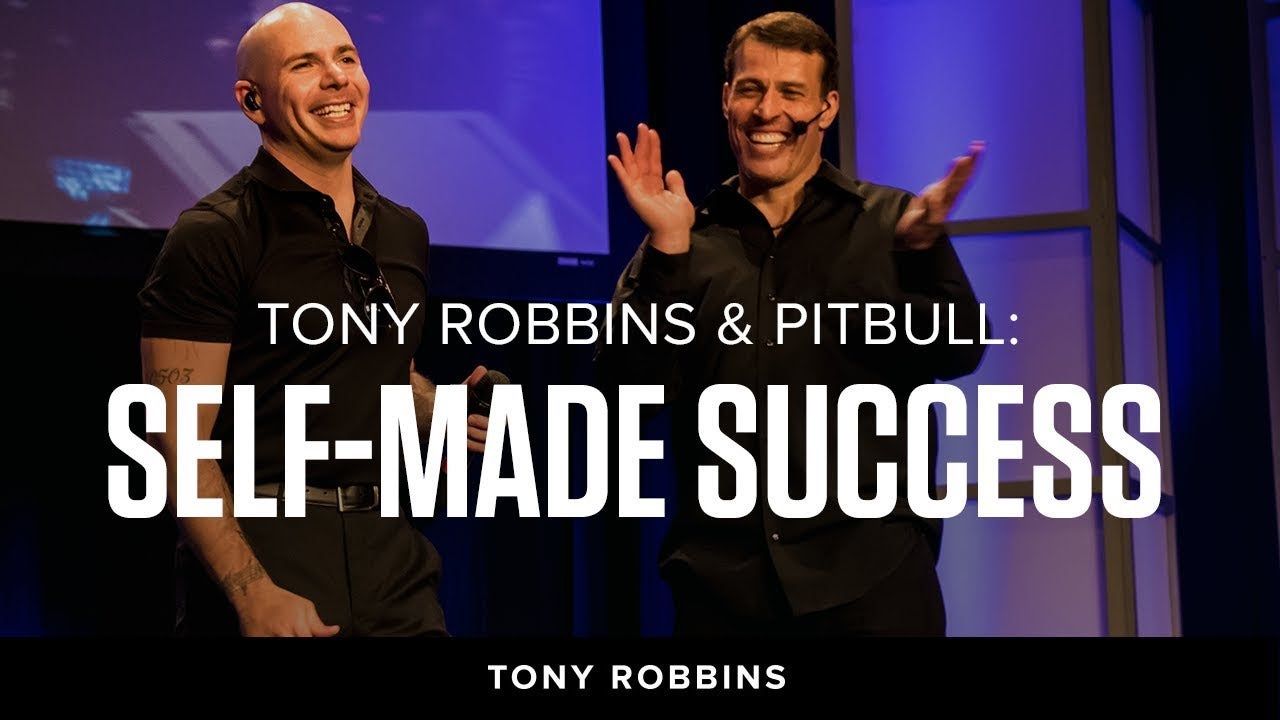
Tony Robbins and Pitbull: Self-Made Success | Tony Robbins Podcast Uploaded 04-06-19 What does real wealth mean to you? Is it having your dream home? Buying an expensive car? Is it when you’re rich enough to have your own private plane? If you ask Armando Christian Perez – who you most likely know as the musician, Pitbull – wealth has absolutely nothing to do with money – it has only to do with happiness. In this episode, Tony sits down with Pitbull to talk about his journey to achieving success. Because today, Pitbull is on top of the world. He is a world-renowned musician, performer, business entrepreneur, fashion icon and actor whose career sales have exceeded 5 million albums and over 60 million singles worldwide. He’s had #1 hits in more than 15 countries, his videos have over 5 billion views, and his social reach matches audiences of some television networks around the world. But none of this came easily. Tony and Pitbull discuss the power of failure and why our biggest setbacks
Free NCI Masterclass — How to Dominate in a DECAYING World. [Click here to join] https://nci.university/opt-in-page-page Uploaded 05-09-25 ⸻ Every creature has a place in nature. Remove it, and it gets sick. Shorter life. Weaker body. Broken mind. Humans aren’t different. Cities, screens, and concrete have become the perfect conditions for disease — mental and physical. Some researchers call them psychopath factories. This video looks at what happens when we drift too far from the environment we were built for. Why disconnection from nature doesn’t just make us stressed — it changes who we are. And why the longer we wait, the harder it becomes to return. If you’ve felt that something about modern life is making us unwell, you’re not imagining it. The evidence is all around us.
We’re delighted to announce five new Close Readings series starting in January 2027. Listen to the hosts talk about what to expect from each one. Here’s the line-up: ‘Conversations in Philosophy II’ with Jonathan Rée and James Wood ‘The Everyday’ with David Trotter and Rachel Bowlby ‘Poetry and Place’ with Seamus Perry and Mark Ford ‘Mediterranean Worlds’ with Josephine Quinn and guests ‘Medieval-ish Novels’ with Irina Dumitrescu and Mary Wellesley Get ahead on the reading and buy the books from the London Review Bookshop: https://lrb.me/crbooks Works covered in each series: Conversations in Philosophy II Michel de Montaigne, ‘On Pedantry’; John Locke, ‘Of Identity and Diversity’, from An Essay concerning Human Understanding; George Berkeley, First Dialogue from Alciphron, or the Minute Philosopher; David Hume, The Natural History of Religion; Denis Diderot, Rameau’s Nephew; Immanuel Kant, ‘A renewed attempt to answer the question: “Is the human race continually improving?”’; G.W.F. He
A common feature of realist writing since the 19th century has been what Viktor Shklovsky called ‘defamiliarisation’. For Shklovsky, the classic example of this could be found in War and Peace, when Natasha goes to the opera and is bemused by the site of people shouting in front of painted cardboard. In Afternoon Raag (1993) which describes the experiences of a young Bengali man coming to England to study literature, Amit Chaudhuri uses the aesthetics of defamiliarisation to depict a foreigner’s attempt to understand a strange country. As in Nabokov, this approach can often seem to take the novel a long way from the realist tradition of Flaubert. But in this episode, James Wood looks at the ways in which Chaudhuri’s book spans the full spectrum of realist style available to writers in the late 20th century, from a delight in mundane detail to a transfiguration of the mundane through different formalist techniques. Non-subscribers will only hear an extract from the episode. Apple Podcas
When Fanny Burney’s Evelina arrives in London for the first time, despite being disappointed by the state of the paths in St James’s Park, she marvels at being able to obtain a full suite of linen in less than a day, measured and cut by teams of men who seem to know more about women’s underwear than she does. In the second half of the 18th century, London became the centre of a new pastime, ‘shopping’, aided by streetlights, pavements and an openness that amazed foreign visitors. This is the era of ‘improvement’, with new institutions from the Royal Academy to the British Museum encouraging public learning and new building legislation bringing regularity (or monotony) to the landscape. For this episode Rosemary is joined again by Markman Ellis, professor of 18th-century studies at Queen Mary, to look at the features of London’s so-called Georgian golden age, and the ways in which this apparently harmonious world was disturbed by the shock of the American Revolutionary War. Reading by F
Health technologies should demonstrate better patient outcomes before widespread adoption.
Share your view, then see how readers voted. No sign-in required. This poll is shared across stories.
Do you agree or disagree?
Common Quandary
A Common Quandary to discuss
Another conversation to explore, separate from this news story.
You are training the software that may replace your team. Do you warn them?
A manager is asked to help test software that could eliminate several jobs on their team. Leadership insists the project is uncertain and confidential, while employees are making major financial decisions.
When does loyalty to colleagues override professional confidentiality?