Listen through the publisher, then discuss the episode here or arrange an in-person Roundtable. Your city determines where to meet.
Roundtables are designed for groups of four, with a shared subject and room for everyone to speak. Come for discussion, with no dating expectation.
Tom interviews therapist and author Nicole Sachs about recovering from severe back pain diagnosed at 19 as degenerative spondylolisthesis. After learning surgery wouldn’t guarantee pain relief, she discovered Dr. John Sarno’s TMS model: chronic symptoms can stem from nervous-system dysregulation driven by repressed emotions and trauma. Sachs describes her work helping people worldwide, including Michael Porter Jr. and Steve Kerr, emphasizing three pillars: belief in brain science, doing “JournalSpeak” to make the unconscious conscious, and self-compassion. She explains symptoms as an “alarm,” not the “fire,” urges curiosity over fear, and directs listeners to resources at nicolesachs.com. 00:00 Meet Nicole Sachs 00:44 Back Pain Diagnosis Shock 03:03 Surgery Doubts Spark Curiosity 05:01 Discovering Sarno TMS 07:15 Recovery Stories Proof 09:47 Sarno Visit Trash Can 15:17 Growing Reach Younger Fans 20:39 Steve Kerr Turnaround 23:35 Pain Despair Hope 26:54 Mind Body Basics Explained 34:50 Fire Alarm Analogy 39:12 JournalSpeak Breakthrough 46:33 How To Start Today 47:19 Closing Curiosity Message ========= My Linktree: https://linktr.ee/tomanelson1
Episode information is provided by the publisher. Listening takes place on the publisher’s service.
🇺🇸 TWO NAVY SEALS. TWO INCREDIBLE JOURNEYS. ONE POWERFUL MISSION TO TRANSFORM YOUR FINANCIAL FUTURE! Michael Jaco welcomes fellow former Navy SEAL Larry Yatch, founder of TruPath Mastery, for an eye-opening conversation about success, leadership, financial trauma, and the hidden subconscious patterns that can keep even the most accomplished people from reaching their full potential. With 24 years as a Navy SEAL and 11 years as a CIA security operative, Michael shares the powerful lessons of mental discipline, intuition, and personal transformation that shaped his extraordinary journey. Larry brings 10 years of Navy SEAL service and an impressive career advising Fortune 50 executives. But despite achieving tremendous professional success, he discovered that the survival patterns that once made him successful were also keeping him trapped in his own business. THE BIG REVELATION: YOUR MONEY HABITS MAY HAVE VERY LITTLE TO DO WITH MONEY! From childhood programming and fear of scarcity to
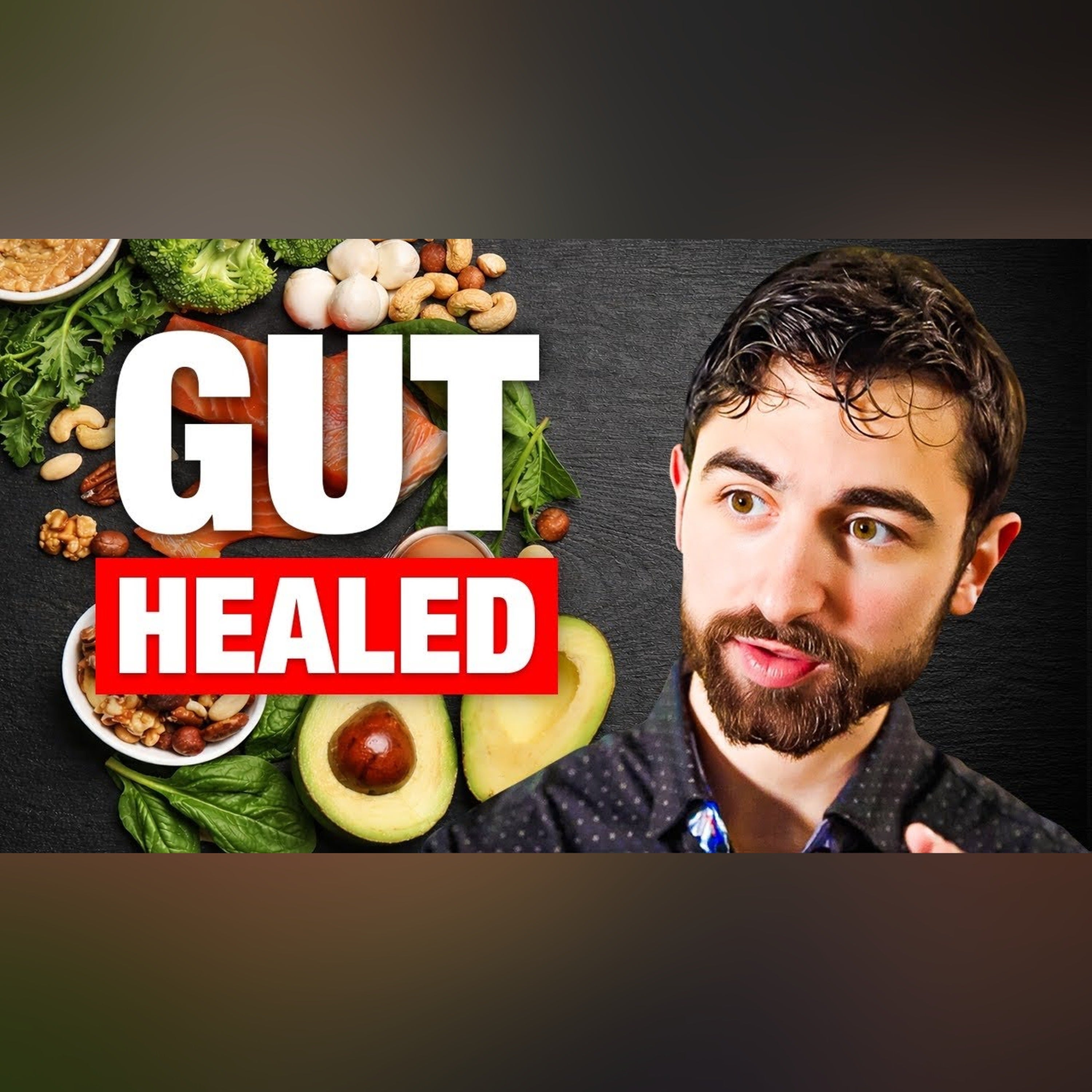
For extra details and all references, see this newsletter: https://staycuriousmetabolism.substack.com/p/a-keto-diet-cured-my-inflammatory?r=40ekz2 Description: There was a time when I was dying from inflammatory bowel disease. It was my rock bottom. Out of desperation, I tried a ketogenic diet—and within a week, everything changed. My symptoms stopped, inflammation markers dropped, and follow-up testing showed no active disease. In this video, I unpack what may have happened biologically. We walk through human and animal data showing how a ketogenic diet reshapes the gut microbiome, suppresses inflammatory TH17 immune cells, and reduces inflammation not just in the intestines, but system-wide. We even look at fecal transplant experiments demonstrating that the ketogenic microbiome itself can transfer anti-inflammatory effects. This isn’t a promise or a prescription. It’s a personal story, grounded in real data, that explores the tension between lived biology and what medicine has—or ha
Dig into the science of how kidney transplants work, how donors are matched and find out how this surgery saves lives. -- In 1954, Joseph Murray attempted a type of kidney swap that no doctor had tried before. The surgery was a success, and the patient would go on to live with the transplanted organ thanks to one key factor: it came from his identical twin. 70 years later, nearly 100,000 kidneys are transplanted annually in the US alone. So how does this surgery work today? Alexander H. Toledo explains the procedure. Lesson by Alexander H. Toledo, directed by Biljana Labović. Support Our Non-Profit Mission ---------------------------------------------- Support us on Patreon: http://bit.ly/TEDEdPatreon Check out our merch: http://bit.ly/TEDEDShop ---------------------------------------------- Connect With Us ---------------------------------------------- Sign up for our newsletter: http://bit.ly/TEDEdNewsletter Find us on Twitter: http://bit.ly/TEDEdTwitter Peep us on Instagram: http://
"Curing cancer," explained. We’re not looking for a “cure for cancer” anymore. Cancer is hundreds of diseases, so we’re really in a multi front fight against all of them. Cancer is a problem for us today in a way it wasn’t for previous generations. But, luckily, we also have more and more ways to fight back. I started this episode with endless questions: What is cancer? What causes it? How do we treat cancer? What are the symptoms? Why are some cancers easier to treat than others? Why is cancer so hard to cure? Why do so many people die of cancer? What I found is an incredible, complex, inspiring effort to treat and stop an insidious killer. In this video, we dive deep into how we treat cancer today. But I also found that we may not be helping the greatest number of people we can. In this episode of Huge If True, I want to make the case that while we have made enormous strides in the fight against cancer we have also largely ignored one of the single best ways to save the most lives. I
"Principle Driven Self-Alignment" and "Preference Ranking Optimization" [Best Alignment Papers!]Episode release date: 16 Jul 2023Spreading awareness about the works of some of the leading educators in the AI revolution. Core Ideas: Metamodernism: Narratives and emergence view of reality - Reduce suffering - Increase prosperity - Increase understanding mantra: Seek knowledge. ELABORATE: Add depth and detail to understanding, weaving comprehensive and nuanced explanations.DISCLAIMER: This is a community-driven show. ----- Keywords: deep learning, prompt engineering, artificial general intelligence, agi, future technology
One evening, a mother was putting her three-year-old son to bed, just as she'd done countless times before. She read him a story, rubbed his back, and waited for him to fall asleep. But for no apparent reason, she suddenly became overwhelmed by sadness. The feeling was so intense that she began to cry. Later that night, she woke to the unmistakable sounds of someone playing with her son's favorite building blocks. When she went to investigate, she found him sound asleep and his toys put away. But something in the room wasn't quite as she'd left it. Over the following nights, that same unexplained sadness returned. It wasn't until she thought about the time of year, and a heartbreaking loss she'd experienced a decade earlier, that she began to wonder whether these strange occurrences might be connected. Could someone she'd lost have found a way to visit? #RealGhostStoriesOnline #TrueGhostStories #SpiritVisitations #AfterDeathCommunication #SignsFromBeyond #ChildSpirit #ParanormalEncount
Tom interviews Chris Morrison about his October-released book Implausible, which argues that mainstream climate, politics, and media narratives over the past 15 years relied heavily on the IPCC’s RCP8.5 “worst case” pathway, later deemed implausible, producing sensational claims such as Gulf Stream collapse and coral reef extinction. Morrison says the issue is political, tied to promoting net zero, and criticizes figures like David Attenborough and institutions like the BBC for amplifying fear without debate, citing Ofcom-related complaint pressures. He discusses organized activist funding, including groups like the Good Law Project and DeSmog, and warns about UK policy efforts to drastically cut hydrocarbons. Morrison also raises concerns about Met Office temperature measurement methods, renewable-grid instability, and potential winter blackouts, and invites public debate on the science and net zero. 00:00 Meet Chris Morrison 00:47 What Implausible Argues 02:10 RCP8.5 Implausibility D
Host Tom interviews Peter Ridd about the Great Barrier Reef, coral bleaching, global coral statistics, and ocean acidification. Ridd describes the reef’s size, protection, and natural variability from cyclones, starfish plagues, and sea-level change. Using Australian Institute of Marine Science data he compiles, he says coral cover hit lows around 2012 but reached record levels in 2022–2024 despite reported bleaching events; he argues scientists now call it “wrong” coral (Acropora) and cites a 2018 Nature letter predicting catastrophic, permanent change. He alleges global and Great Barrier Reef datasets were adjusted to look worse and calls for science audits. On acidification, he says corals use bicarbonate, which increases with CO2, and can regulate pH, making projected pH changes benign. 00:00 Reef Talk Preview 00:43 Where The Reef Is 01:38 Reef Scale And Protection 02:13 How Reefs Form 03:59 Coral Cover Trends 06:21 Bleaching Explained 09:03 Wrong Coral Claim 10:39 Doom Quotes Chal
Tom Kurz promotes his book Why There Is No Climate Crisis, and argues media and politicians wrongly claim warming increases weather catastrophes. He attributes major climate swings to the Atlantic Multidecadal Oscillation and cites satellite-era hurricane data showing fewer hurricanes since 1990, with ACE and PDI declining and no meaningful trend in Category 4–5 storms. He says strong (EF2–EF5) U.S. tornadoes have declined since 1954, while weaker tornado counts rose due to better detection. Paleoclimate evidence (ice cores, dune sands, historical records) is cited to link colder periods to worse storms and droughts. He argues Arctic amplification and upper-troposphere warming weaken storm drivers, claims heatwaves/wildfires track natural cycles, droughts decline, greening and crop yields rise, climate- and famine-deaths fall, and IPCC finds no clear global flood trend. 00:00 Intro and Guest 00:39 Media Fear Claims 02:33 AMO Climate Cycles 07:27 Hurricane Trends Data 11:24 Tornado Stre
Businesses that attract visitors should help reduce the disruption experienced by neighbors.
Share your view, then see how readers voted. No sign-in required. This poll is shared across stories.
Do you agree or disagree?
Common Quandary
A Common Quandary to discuss
Another conversation to explore, separate from this news story.
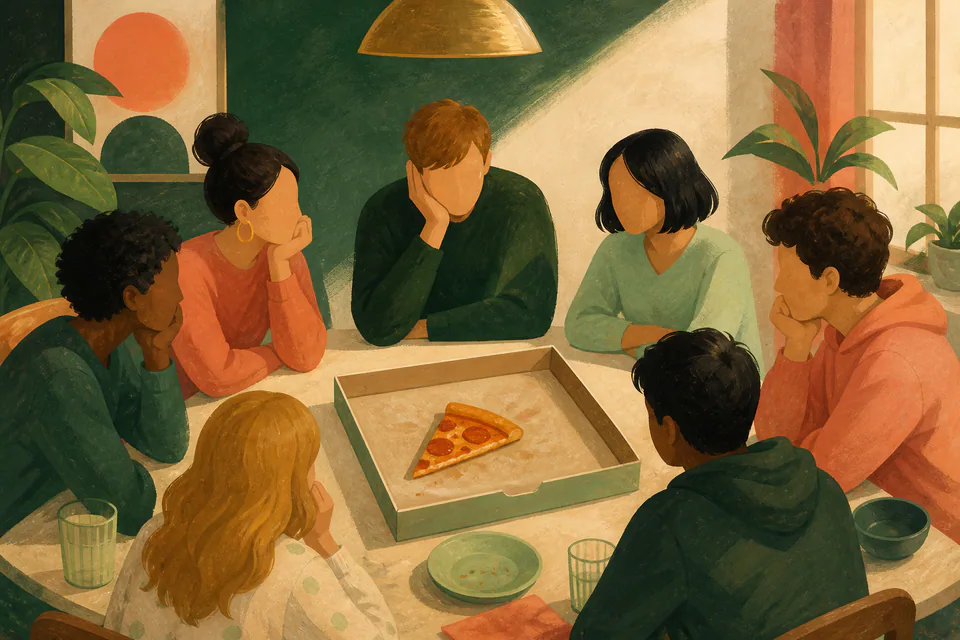
One slice of pizza remains and everyone is pretending not to want it. Can you take it?
Six friends have been circling the last slice of pizza for twenty minutes. Nobody claims it when you ask, yet two people keep glancing at the box. You are still hungry and paid the same share as everyone else.
Does politeness require leaving something that nobody will openly claim?