Listen through the publisher, then discuss the episode here or arrange an in-person Roundtable. Your city determines where to meet.
Roundtables are designed for groups of four, with a shared subject and room for everyone to speak. Come for discussion, with no dating expectation.
View full lesson: http://ed.ted.com/lessons/martin-seligman-on-positive-psychology Uploaded 06-07-13 Martin Seligman talks about psychology -- as a field of study and as it works one-on-one with each patient and each practitioner. As it moves beyond a focus on disease, what can modern psychology help us to become? Talk by Martin Seligman.
Episode information is provided by the publisher. Listening takes place on the publisher’s service.
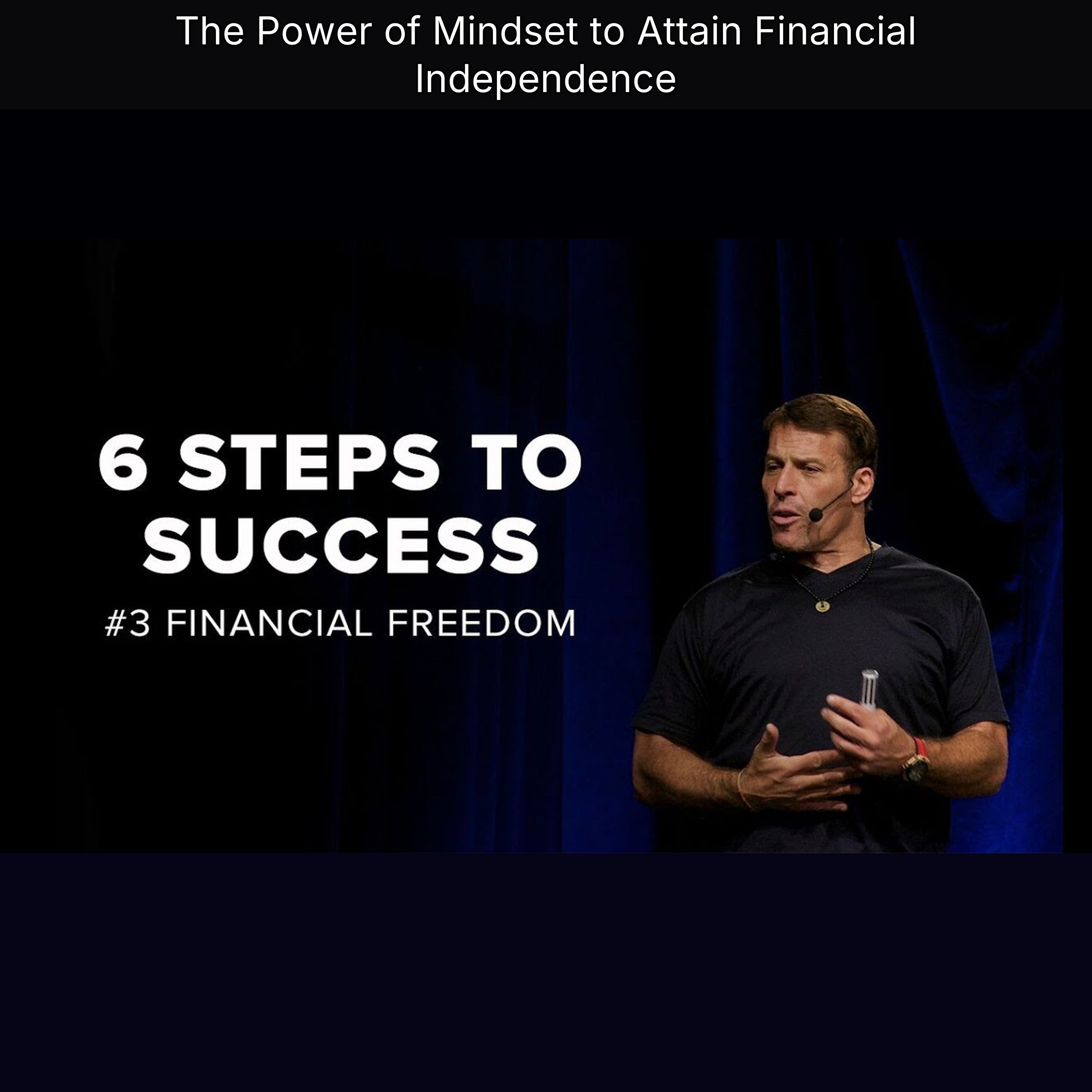
What do you think of when you think about financial freedom? To many, it means having enough money to cover anything you could want – and not having to work to get it. But as Tony Robbins explains in this video, it's not just about creating wealth – ultimately, it's about ENJOYING the wealth you deserve. Watch this clip to learn the secrets to Step #3 of Financial Freedom from his Six Steps to Success: It’s all about your psychology. As Tony says, business is 80 percent psychology and only 20 percent skills. When you cultivate a sense of wealth and abundance, no matter what your financial situation, you’ll also start to experience a sense of joy. When you feel grateful and joyful, it is easier for you to do well financially, because you aren’t operating in a scared and fearful mode. When we operate from a place of fear and scarcity, we make bad decisions – or worse, we don’t take any risks at all. When we operate from a place of abundance, we build resilience that carries us over any o
#JimRohn, #Motivation, #MotivationalSpeech, #SuccessMindset, What if your entire life could start changing with just a few powerful daily habits? What if success, confidence, discipline, and peace were hiding inside the small things you do every single day? Uploaded 20-05-26 In this powerful 35-minute motivational speech inspired by Jim Rohn’s timeless wisdom, you will discover the 10 life-changing habits that can completely transform your mindset, future, discipline, confidence, success, and personal growth. If you feel stuck, lost, unmotivated, lazy, confused, or tired of watching life pass you by… this speech is for you. This isn’t just motivation. This is a wake-up call. A deep lesson about discipline, consistency, regret, self-belief, mindset, personal responsibility, daily habits, success psychology, emotional growth, and becoming the person you were born to become. You’ll learn why: Small daily habits change everything Discipline matters more than motivation Your future depends
What if your child already loves learning... and you’re just looking for it in the wrong place? This week, I’m exploring one of the questions I get asked more than almost any other: “My child used to be so curious. What happened?” In today’s episode, I challenge one of the biggest myths in modern parenting: that a love of learning looks like a child happily reading, sitting at a desk, completing homework without complaint, and engaging enthusiastically with educational activities. I explain what the research actually tells us and walk you through the psychology of curiosity, the science of intrinsic motivation, why children become obsessed with Minecraft, dinosaurs, trains, or random facts, and why those interests may be far more important than they appear. I also unpack why children seem to have a built‑in radar for anything that feels educational, why homework battles happen so often, and what the evidence really says about homework in the primary years. If you've ever worried that y
Instant Download - The Masterclass: https://nci.university/opt-in-page-page Uploaded 25-10-25 Your reactions aren’t random — they’re coded responses running in ancient parts of your brain. Once someone knows how to map those triggers, they can bypass logic and access behavior directly. Understanding this “Trigger Hack” means you’ll finally see how influence really works. A single phrase, delivered at the right moment, can slip past defenses that have been there for decades. Recognize the emotional scripts that control you — or use them to build instant trust. Every connection, sale, and conversation runs on these hidden triggers. Gain the edge: learn how the Safe Haven Trigger disarms resistance and rewires rapport. Operate with precision — use it ethically, or prepare to see how others are using it on you. Don’t just watch. Decode the backdoor to the human brain. KEYWORDS: psychology, neuroscience, persuasion, influence, behavioral science, emotional triggers, subconscious mind, mind
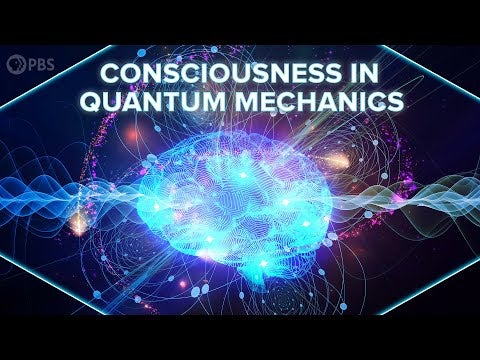
PBS Member Stations rely on viewers like you. To support your local station, go to: http://to.pbs.org/DonateSPACE ↓ More info below ↓ Uploaded 18-02-20 Sign Up on Patreon to get access to the Space Time Discord! Sign up for the mailing list to get episode notifications and hear special announcements! Check out the Space Time Merch Store It’s not surprising that the profound weirdness of the quantum world has inspired some outlandish explanations - nor that these have strayed into the realm of what we might call mysticism. One particularly pervasive notion is the idea that consciousness can directly influence quantum systems - and so influence reality. Today we’re going to see where this idea comes from, and whether quantum theory really supports it. Hosted by Matt O'Dowd Written by Matt O'Dowd Graphics by Leonardo Scholzer and Adriano Leal Post Production: Yago Ballarini, Max Willians, Pedro Osinski Directed by: Eric Brown and Andrew Kornhaber Executive Producers: Eric Brown and Andrew
Dig into the slippery slope fallacy, which assumes that one step will lead to a series of events that lead to an extreme— often bad— scenario. Uploaded 19-08-21 -- It’s 1954. Vietnamese nationalists are on the verge of securing an independent Vietnam under communist leader Ho Chi Minh. U.S. President Eisenhower claims that by virtue of the "falling domino principle," communist control of Vietnam would lead to the global spread of authoritarian communist regimes. Can you spot the problem with this argument? Elizabeth Cox explores the slippery slope fallacy. Lesson by Elizabeth Cox, directed by TOGETHER. Support Our Non-Profit Mission ---------------------------------------------- Support us on Patreon: http://bit.ly/TEDEdPatreon Check out our merch: http://bit.ly/TEDEDShop ---------------------------------------------- Connect With Us ---------------------------------------------- Sign up for our newsletter: http://bit.ly/TEDEdNewsletter Find us on Twitter: http://bit.ly/TEDEdTwitter Pe
View full lesson: http://ed.ted.com/lessons/how-do-we-measure-distances-in-space-yuan-sen-ting Uploaded 09-10-14 When we look at the sky, we have a flat, two-dimensional view. So how do astronomers figure the distances of stars and galaxies from Earth? Yuan-Sen Ting shows us how trigonometric parallaxes, standard candles and more help us determine the distance of objects several billion light years away from Earth. Lesson by Yuan-Sen Ting, animation by TED-Ed.
As machines take on more jobs, many find themselves out of work or with raises indefinitely postponed. Is this the end of growth? No, says Erik Brynjolfsson -- it's simply the growing pains of a radically reorganized economy. A riveting case for why big innovations are ahead of us ... if we think of computers as our teammates. Be sure to watch the opposing viewpoint from Robert Gordon. Uploaded 30-08-13 Talk by Erik Brynjolfsson.
Museums should actively seek histories missing from their existing collections.
Share your view, then see how readers voted. No sign-in required. This poll is shared across stories.
Do you agree or disagree?
Common Quandary
A Common Quandary to discuss
Another conversation to explore, separate from this news story.
The mayor is excellent at the job—and secretly cheating on a spouse. Is that news?
A local official is effective, honest in office, and privately having an affair. A journalist can verify it but finds no misuse of public resources or direct connection to official duties.
Does private dishonesty reveal something citizens are entitled to judge?