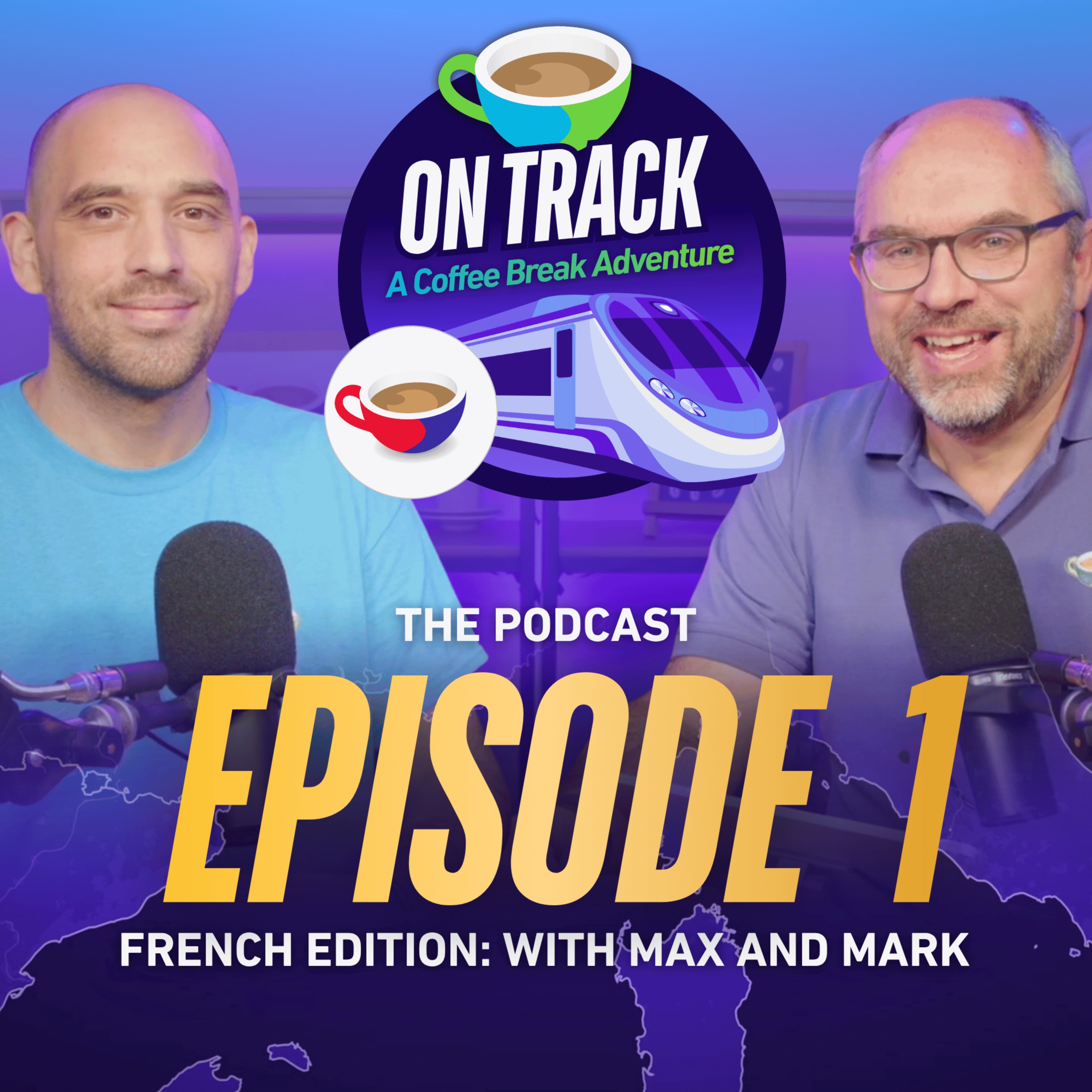
On Track Companion Podcast, Episode 3 (français) | Zurich
20 min
Listen through the publisher, then discuss the episode here or arrange an in-person Roundtable. Your city determines where to meet.
Roundtables are designed for groups of four, with a shared subject and room for everyone to speak. Come for discussion, with no dating expectation.
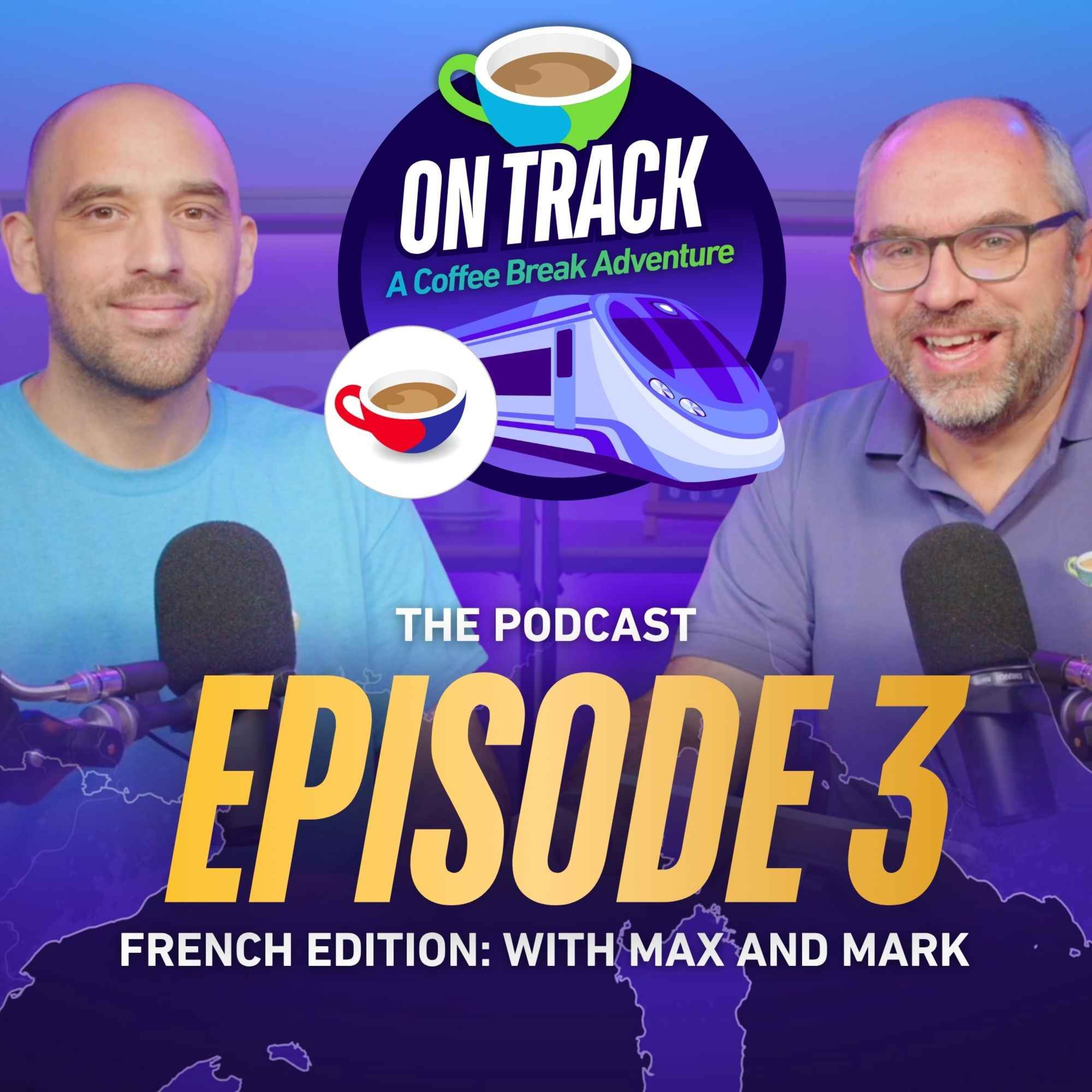
This is the companion podcast to On Track Episode 3: the third day of the race, starting in Zurich. Watch On Track Episode 3 (https://www.youtube.com/watch?index=6&list=PLW9Lq48Nx8eA&v=K6U9Y7E_s_o) Max tells the story of day three from Team Blue's side, in a short French text written for learners. With Thomas as the native speaker, it's Max's turn to take on the German challenges, armed with fewer than twenty words of the language, and there's some very good Swiss cheese along the way. Max says "on était sur un pied d'égalité", we were on an equal footing, and "on n'a pas su résister", we couldn't resist: in the past tense, "savoir" often means "to manage to". He also uses "prendre du retard", to fall behind, which you'll hear about trains as well as people. Can't wait a week? Pick your language here (https://coffeebreaklanguages.com/ontrack) and the code is applied for you: Everything about On Track, including the Companion Courses, is available here (https://coffeebreaklanguages.com/ontrack). On Track is brought to you in collaboration with Teachable. The On Track companion courses are hosted on Teachable. Future course creator? Find out more here (https://www.teachable.com/welcome/coffeebreak). Hosted on Acast.
Episode information is provided by the publisher. Listening takes place on the publisher’s service.
Most people are looking at wealth wrong. They think it comes from doing something big — picking the right stock, starting the right business, inheriting the right money, catching the right break. Uploaded 15-06-26 They're watching for the big move. The dramatic decision. The lucky moment that's going to change their financial life. They're watching in the wrong direction. Wealth doesn't come from a big move. Wealth comes from a thousand small ones, done quietly, every single day, for decades. The people who actually have money — not the people who look like they have money, but the people who actually have it — share a set of habits that are almost embarrassingly quiet. None of these habits would make a good news story. None of them would sell a book. None of them feel like the answer when you first hear them. They are too small, too slow, too unimpressive. But the quiet habits are doing the work. While other people are looking for the big move, the quietly wealthy are running these ha
Uploaded 04-05-25 Are you ready for the AI revolution—or will you get left behind? Tony Robbins breaks down what it really takes to thrive in a world that's changing faster than ever. We're talking AI, robotics, nanotech—disruption at a scale humanity’s never seen before. ---- Tony Robbins AI is a fully interactive experience powered by the proven tools and wisdom of the world’s #1 life and business strategist. It’s like having Tony Robbins as your personal guide, available anytime you need support...in your native language! Get the first 14 days of Tony Robbins AI access for $1 when you subscribe today! Learn more about Tony Robbins AI here: https://tonyr.co/4lSeobA Watch more videos like this "AI Is Changing Healthcare Forever" - Marc Andreessen, Ben Horowitz: https://youtu.be/lqb14Cb17M0 Jordan Peterson - "Most People Learn This TOO LATE In Life": https://youtu.be/6fwrTb3dm5Y 3 Skills You NEED to Prepare Yourself for What's Coming: https://youtu.be/K-jOtLM9c7o The World Is Changing
Explore what makes polio so dangerous, what is causing the 21st century resurgence of cases, and how we can eradicate the disease. -- In 1952, polio was everywhere: killing or paralyzing roughly half a million people annually. Yet just 10 years later, paralytic polio cases in the US dropped by 96% and we were on track to get rid of polio for good. But in recent years, the virus started striking back. So, what’s behind these recent spikes? Explore the dangers of poliovirus and the possibility of eradicating this deadly disease. Directed by Anton Bogaty. This video made possible in collaboration with Gates Ventures Learn more about how TED-Ed partnerships work: https://bit.ly/TEDEdPartner A special thanks to Ananda Bandyopadhyay, Amber Zeddies, and Kathleen O'Reilly who provided information and insights for the development of this video. Support Our Non-Profit Mission ---------------------------------------------- Support us on Patreon: http://bit.ly/TEDEdPatreon Check out our merch: htt
Text me what you thought of the show (https://www.buzzsprout.com/1959372/fan_mail/new) Can working night shifts affect your fertility, ovulation or IVF success? After speaking with numerous women trying to fall pregnant while working shifts, including those undergoing expensive IVF treatment, I wanted to explore what the research actually tells us. In this episode of A Healthy Shift, we discuss how night shifts, disrupted sleep and circadian misalignment may affect reproductive health. We cover: Why the fertile window is so short. Shift work, reproductive hormones and menstrual irregularities. What research says about night shifts, fertility and IVF outcomes. The roles of sleep, stress, nutrition, weight and exercise. Practical steps for women trying to conceive while working shifts. Research links shift work with menstrual irregularities, but evidence that night shifts directly cause infertility or reduce IVF success remains uncertain. If you're trying to get pregnant while working ni
PBS Member Stations rely on viewers like you. To support your local station, go to:http://to.pbs.org/DonateSPACE Sign Up on Patreon to get access to the Space Time Discord! Physics is the business of figuring out the structure of the world. So are our brains. But sometimes physics comes to conclusions that are in direct conflict with concepts fundamental to our minds, such as the realness of space and time. How do we tell who’s correct? Are time and space objective realities or human-invented concepts? Episode Companion Playlist Check out the Space Time Merch Store Search the Entire Space Time Library Here: https://search.pbsspacetime.com/ Hosted by Matt O'Dowd Written by Bahar Gholipour & Matt O'Dowd Post Production by Leonardo Scholzer, Yago Ballarini, Pedro Osinski, Caique Oliveira, Adriano Leal & Stephanie Faria Directed by Andrew Kornhaber Associate Producer: Bahar Gholipour Executive Producers: Eric Brown & Andrew Kornhaber Executive in Charge for PBS: Maribel Lopez Director of P
I’m sure you can imagine a few scenarios in which you might have resisted the need to pee in the past. It may have been due to the toilets being unclean or closed. Sometimes, a little more privacy would be appreciated, especially at work, for example. There are a number of factors which influence the number of times we pee over the course of a day. These include age, bladder size, the weather, any medication we’re taking, what we drink and the amount we drink for example. Pregnant women also tend to pee more often. On average though, we go to the toilet between four and seven times a day. What explains urinating very frequently or infrequently? Can holding in pee lead to a urinary tract infection? What should you do when you have difficulty holding in urine? In under 3 minutes, we answer your questions ! To listen to the latest episodes, click here: What is limb lengthening, the cosmetic procedure going viral on social media? (https://originals.bababam.com/do-you-really-know/2023060203
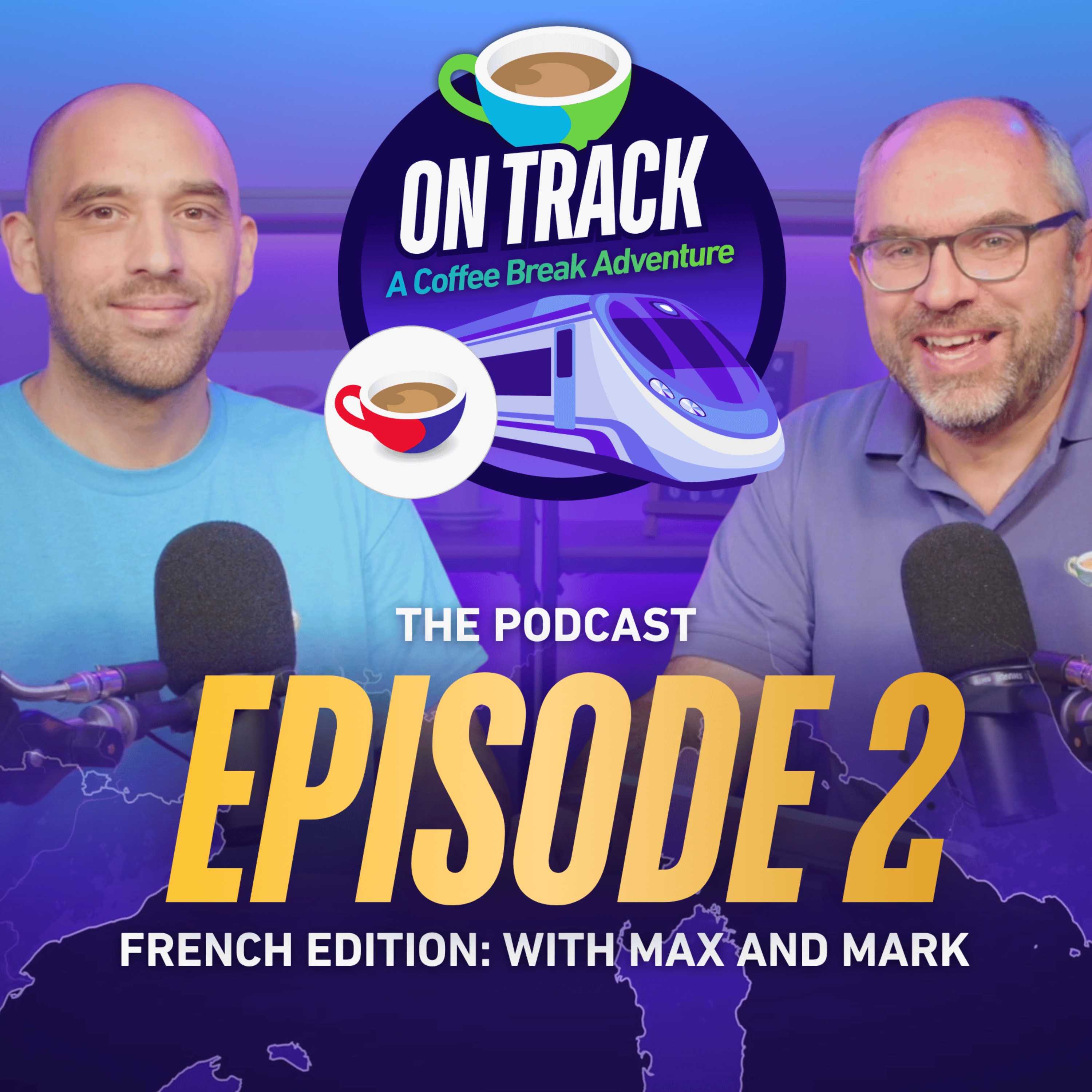
This is the companion podcast to On Track Episode 2: the second day of the race, starting in Milan. Watch On Track Episode 2. (https://www.youtube.com/watch?list=PLW9Lq48Nx8eA&v=uSbK1bfKeh8) Get the free episode 2 handout for your own copy of the text, plus the word list. (https://coffeebreaklanguages.com/2026/11/on-track-companion-podcast-episode-2-francais-milan/) Max tells the story of day two from Team Blue's side, in a short French text written for learners. It starts with a challenge worth plenty of coins, right on the Piazza del Duomo in Milan. Max says "on a démarré en fanfare", we got off to a flying start. And there's "s'en sortir", to cope or to pull through, which you'll hear all the time in everyday French. Can't wait a week? Pick your language here and the code is applied for you. (https://coffeebreaklanguages.com/ontrack) Everything about On Track, including the Companion Courses. (https://coffeebreaklanguages.com/ontrack) On Track is brought to you in collaboration with
This is the companion podcast to On Track Episode 1: the first day of the race, starting in Venice. Watch On Track Episode 1: https://youtu.be/_-_lH0rYCVg Max tells the story of day one from Team Blue's side, in a short French text written for learners. Max uses "on" rather than "nous" all the way through, which is how most French speakers say "we" in everyday conversation. There are a couple of phrases worth taking on your own travels too, like "avoir hâte de" and "rattraper son retard". Can't wait a week? Episode 2 is already on Coffee Break TV: https://coffeebreaktv.com/join?utm_source=acast&utm_medium=podcast&utm_campaign=ontrack&utm_content=podcast-fr-ep1 (https://coffeebreaktv.com/join) Everything about On Track, including the Companion Courses: https://coffeebreaklanguages.com/ontrack?utm_source=acast&utm_medium=podcast&utm_campaign=ontrack&utm_content=podcast-fr-ep1 (https://coffeebreaklanguages.com/ontrack) On Track is brought to you in collaboration with Teachable. The On Tra
Anonymous sources are justified when naming them would prevent important public-interest reporting.
Share your view, then see how readers voted. No sign-in required. This poll is shared across stories.
Do you agree or disagree?
Common Quandary
A Common Quandary to discuss
Another conversation to explore, separate from this news story.
A donor's family wants to hear their loved one's heart beating in you. Do you meet them?
A transplant recipient receives a letter from the donor's family asking to meet. The recipient feels profound gratitude but also discomfort and wants their recovery to remain private and separate from another family's grief.
Can receiving an extraordinary gift create a personal obligation to strangers?