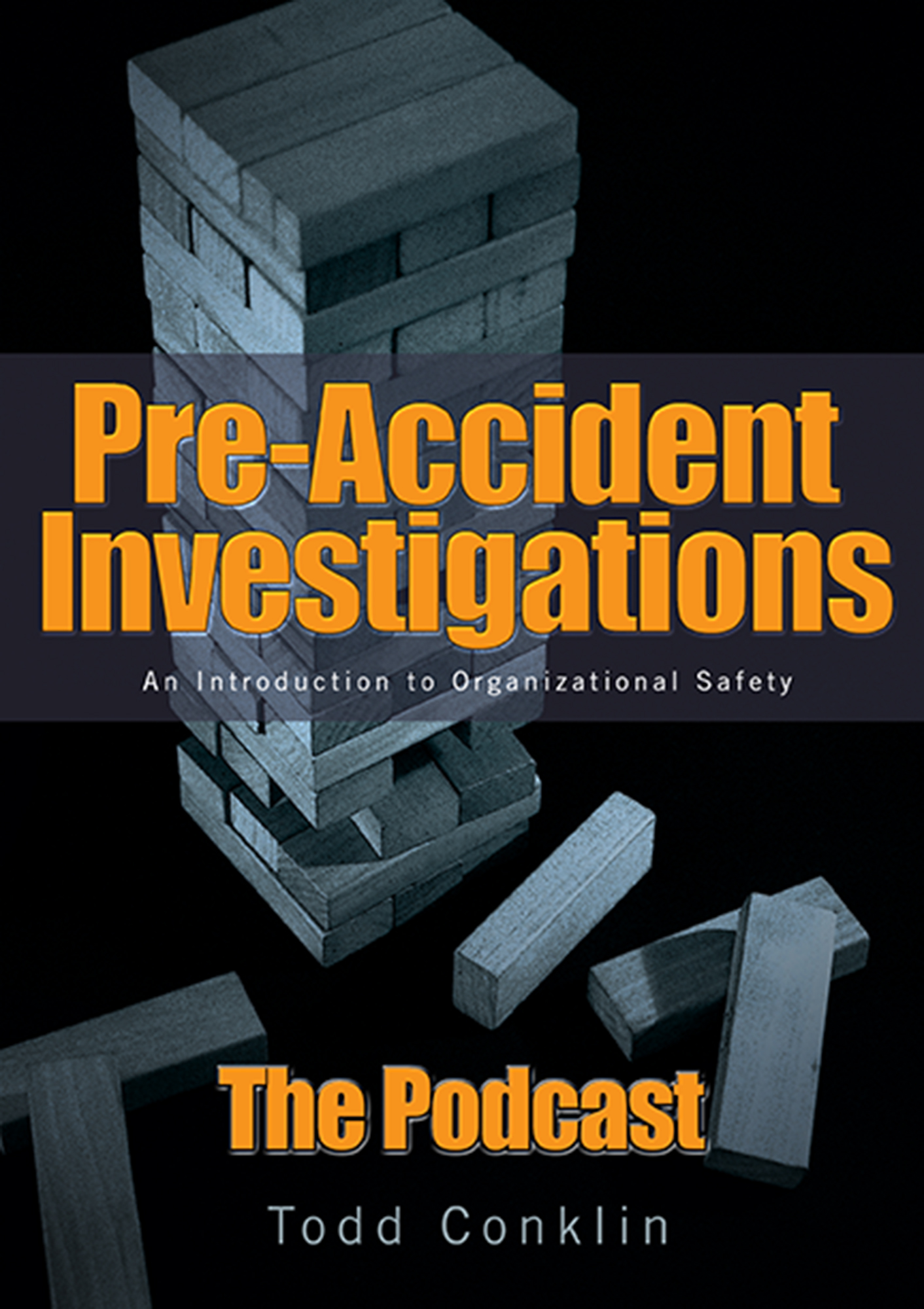
PAPod 623 - When Hard Hats Hide Hurts: Mental Health on the Job
32 min
Listen through the publisher, then discuss the episode here or arrange an in-person Roundtable. Your city determines where to meet.
Roundtables are designed for groups of four, with a shared subject and room for everyone to speak. Come for discussion, with no dating expectation.
Todd Conklin hosts a candid conversation about mental health, substance abuse, and suicide in construction and mining, featuring peers who lead workplace support programs. They discuss startling statistics, the stigma that prevents help, and real peer-based solutions like the MATES and Brassfield-Gore programs. The episode highlights practical steps employers can take: empower peers, provide resources, normalize conversations, and treat these issues as a workplace responsibility to save lives and improve safety.
Episode information is provided by the publisher. Listening takes place on the publisher’s service.
Europe's Little Anarchy: The Rise and Fall of Neutral Moresnet (https://bookshop.org/a/12343/9781501788147)(Cornell UP, 2026) uncovers the history of Neutral Moresnet: a once-forgotten space without borders, nationalism, or a recognized government. Between 1815 and 1919, this square mile of land wedged between Belgium, the Netherlands, and Germany was home to thousands of people living off the grid, free of taxation and oversight. But they also had no political status, police, legal currency, proper law courts, or government presence in sectors like public health, infrastructure maintenance, or education. Meanwhile, practical control over Neutral Moresnet lay in the hands of the local industry: a for-profit, multinational mining company that, because it owned rights to the land, also held a near monopoly on the supply of high-quality zinc to the rest of the world. Dr. Steven Press explores how the residents of Neutral Moresnet sought to improve their quality of life, appealing to Germa
Aaron is Outside The Wire with a quick rundown of three stories that deserve a closer look. First: a forensic expert who reviewed Jeffrey Epstein’s autopsy material says he believes Epstein’s injuries are inconsistent with suicide. But Aaron also highlights the other side of the story: the New York City Medical Examiner continues to stand by its original suicide determination, and the expert’s findings were reportedly rejected by a peer-reviewed journal he approached. The bigger lesson is one Aaron keeps coming back to — stop reading only the headline. Open the underlying source and see what it actually says. Next comes measles. Aaron walks through the loss of measles-elimination status in multiple countries, declining vaccination rates and the political fight over who or what is responsible. He also gives his own personal views and experiences as a parent regarding vaccination. Those portions are presented in the episode as Aaron’s perspective and anecdotal experience rather than medi
The Ninth Circuit hears a challenge by seven former Shriners Hospital employees to the loss of their jobs. They worked at the hospital's Northern California location. When they did not get COVID vaccinations, their employment was terminated. They sued, but the hospital won summary judgment. The employees are appealing that ruling. Summary judgment means the judge resolves the case without a trial because no genuine dispute over an important fact prevents judgment as a matter of law. It does not let the judge simply choose which side's witnesses to believe. You will hear the term undue hardship. In workplace religious-accommodation law, that means a substantial burden in the overall context of the employer's particular business, not just a minor inconvenience. Keep the evidence questions separate from the safety arguments. Which expert opinions may the court consider? And does the admissible evidence leave a real factual dispute for a trial? Listen for how the judges connect those quest
In this episode, Diego Salama discusses his new book on the UN’s peacekeeping work in the Middle East (1967–1982), based on newly declassified archives. He explains why he focused on institutional processes rather than high-level diplomacy and how the UN’s approach accumulated over time. The episode highlights key findings such as interoperation collaboration, structured opportunism, and the central but overlooked role of Finnish general, Ensio Siilasvuo, whose field diplomacy helped create practical, on-the-ground solutions. Salama describes archival research, behind-the-scenes memos, and how UN staff and operations coordinated across borders. Listeners will learn how the UN’s living architecture evolved, what was gained and lost when key figures left, and why preserving institutional memory matters for future multilateral responses in the region. Diego Salama is Research Associate at the Institute for Security and Global Affairs, Leiden University and Managing Editor of Global Govern
The Petal's New Zealand edition for Thursday 19 November 2026 carries 7 decisions newly reported, two from the Supreme Court and five from the High Court, all aired as six items. The thread is substance over labels: youth, mental illness, poverty and a counterclaim each count for what they actually did, not for what they are called. The two Supreme Court decisions arise from the deaths of young children and are reported as legal doctrine only, with no one named on air. Criminal Law Desk (first story). Thompson v The King [2026] NZSC 178 - reported as legal doctrine only. The proposition derived from R v Rapira [2003] 3 NZLR 794 (CA), that manifest injustice under s 104(1) of the Sentencing Act 2002 is extremely difficult to establish, is not good law, nor do personal circumstances displace the 17-year presumption only in rare cases; the threshold is flexible and case by case, and a status-based s 104(1A)(h) circumstance does not automatically make a murder one of the worst. Background,
Discover vital resources for those in need! We explore nonprofits, religious groups, and corporate charities offering assistance. Learn about crowdfunding, labor unions, and homeless organizations. Plus, practical tips on budgeting, transportation, and reducing costs. Reach out and find the support you deserve! #AssistanceNeeded #Nonprofits #Charity #Assistance #CommunitySupport #FinancialHelp #BudgetingTips #TransportationAssistance #Homelessness #Crowdfunding #DebtFree
Todd interviews Matthew Sexton about practicing "engaged presence"—an improv-based approach that trains leaders to listen and connect using simple exercises (like a moving ball) to build cognitive, physical, and emotional engagement. The episode explains how engagement is a learnable skill, shows quick entry-level practices, and highlights why deliberate, repeated practice improves communication and safety at work.
Technology companies should address foreseeable misuse before releasing a new feature.
Share your view, then see how readers voted. No sign-in required. This poll is shared across stories.
Do you agree or disagree?
Common Quandary
A Common Quandary to discuss
Another conversation to explore, separate from this news story.
You ignore a friend's message all day while posting online. Do you owe them an explanation?
A friend sends a message that deserves a thoughtful answer. You lack the energy to respond, but spend the day posting jokes and photos. They can see that you are active and eventually ask whether something is wrong.
Does being visibly online create an obligation to be available?