Phenology and nature's evolving rhythms - Regina Brinker
6 min
Listen through the publisher, then discuss the episode here or arrange an in-person Roundtable. Your city determines where to meet.
Roundtables are designed for groups of four, with a shared subject and room for everyone to speak. Come for discussion, with no dating expectation.
View full lesson: http://ed.ted.com/lessons/phenology-and-nature-s-shifting-rhythms-regina-brinker With rapidly rising global temperatures come seasonal changes. As spring comes earlier for some plant species, there are ripple effects throughout the food web. Regina Brinker explains how phenology, or the natural cycles of plants and animals, can be affected by these changes. Lesson by Regina Brinker, animation by The Leading Sheep Studios.
Episode information is provided by the publisher. Listening takes place on the publisher’s service.
#JimRohnMotivation #JimRohn #JimRohnSpeech In this Jim Rohn Motivation video, learn how instant gratification quietly undermines your goals and erodes the discipline you need to succeed. Discover the mindset shifts and daily choices that build long-term strength, resilience, and unstoppable self-leadership. Key Topics From This Motivational Video: The hidden cost of instant gratification How small decisions shape identity and future Why long-term thinking builds real confidence Rewiring your mind for delayed gratification Creating systems that protect your discipline Instant gratification isn’t just a distraction—it’s a trap. It pulls you away from your potential one compromise at a time. But the good news is, you can reprogram your habits, reclaim your focus, and shift your identity by consistently choosing what aligns with your highest standard, not your momentary impulse. This video shows you how. This Jim Rohn Motivational Video Is Perfect For: Anyone stuck in cycles of procrastina
Abraham Lincoln, Nelson Mandela, Steve Jobs, Oprah Winfrey – some of the greatest leaders of all time. But what makes each of these individuals such a remarkable leader? And how do we define great leadership? Uploaded 15-08-19 We may be apt to hold on to the traditional notion that leadership is defined by rank and order. But your position or title alone does not qualify you as a veritable leader. Think about it, how many CEOs are there in the world that hold a position of great power, but have a nominal impact on their employees? How many managers aren’t even respected by those that they manage? Even brilliant and innovative individuals can stumble when it comes to finding their voice. Because leadership is not defined by a position, nor it is even defined by intellectual prowess or natural talent – leadership is the skill of influence, something that you can use to impact the thoughts, feelings, emotions and actions of others. And it is the most important skill that any one of us can
PBS Member Stations rely on viewers like you. To support your local station, go to:http://to.pbs.org/DonateSPACE Sign Up on Patreon to get access to the Space Time Discord! Superconductive materials seem miraculous. Their resistanceless flow of electricity has been exploited in some powerful ways—from super-strong magnets used in MRIs, particle accelerators and fusion plants. And then there’s, their bizarre ability to levitate in magnetic fields. But the broader use of superconductors is limited because they need to be cooled to extremely low temperatures to work. But what if we could produce superconductivity at room temperature? It would change the world. Check out the Space Time Merch Store Search the Entire Space Time Library Here: https://search.pbsspacetime.com/ Hosted by Matt O'Dowd Written by Matt O'Dowd Post Production by Leonardo Scholzer, Yago Ballarini, Adriano Leal & Stephanie Faria Directed by Andrew Kornhaber Associate Producer: Bahar Gholipour Executive Producers: Eric
Instant Access to the NCI Masterclass: https://nci.university/opt-in-page-808244 Uploaded 26-11-25 IN TIME FOR THE HOLIDAYS: Grab your copy of Chase’s new book, Tongue: A Cognitive Hazard https://a.co/d/5J14Grw You’ve carried more than just your own experiences into this life. Our behaviors, fears, and impulses often come from people we never met. Understanding this crazy inheritance changes how we see “US” forever. Ancient memories, childhood patterns, and generational instincts all shape us. Recognizing these influences helps us break cycles and reclaim our lives. Every one of us is shaped by stories older than our own. Genetic memory is a protective mechanim. Once you see the invisible forces that guide you, you start choosing/acting differently. Deep down, you’re more powerful than the ghosts that run your show. Snatch your copy of Chase’s new book, Tongue: A Cognitive Hazard https://a.co/d/5J14Grw
What if the change you've been asking for is already knocking? In this best-of compilation from The Positive Mindset Podcast, Henry Lawrence pulls together his best moments on letting go and being restored to who God made you to be, from six episodes: the stirring you feel when it's time to change; an opening prayer for anyone who feels alone right now; why your higher self is the true you, the one designed by God, not a more productive version of you; the cast on a broken arm that protected you and now limits you; the old painted-over furniture that gets restored, not rebuilt; why so much of our tiredness comes from holding too tight; how God moves what you couldn't; why everything is borrowed; and choosing to keep believing when it feels like a war broke out around you. It includes a prayer near the start and closes with the rising tide, a blessing and a thank-you. In this episode: • "That stirring is the truth knocking on a door that you've been leaning on with your whole weight." •
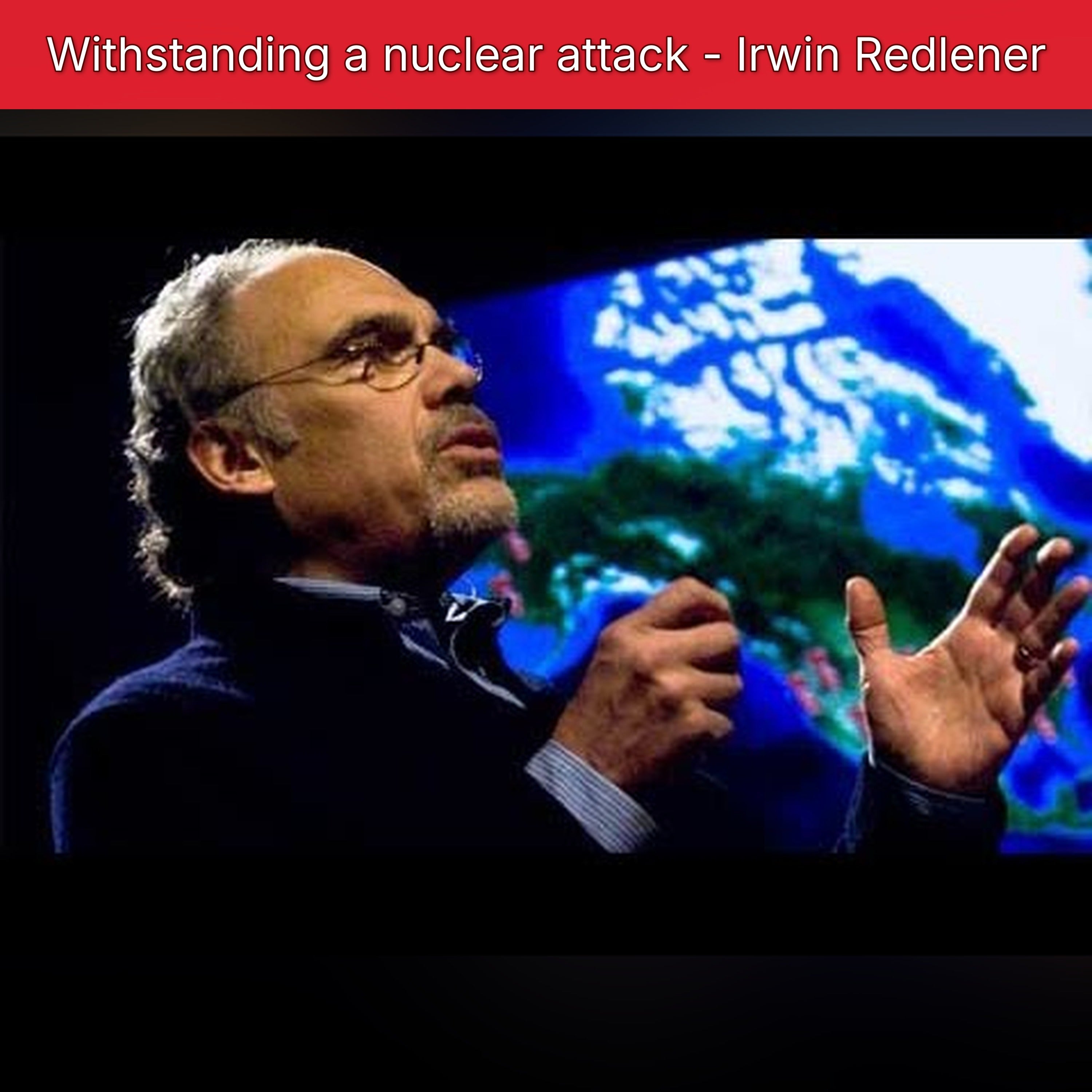
View full lesson: http://ed.ted.com/lessons/surviving-a-nuclear-attack-irwin-redlener The face of nuclear terror has changed since the Cold War, but disaster-medicine expert Irwin Redlener reminds us the threat is still real. He looks at some of history's farcical countermeasures and offers practical advice on how to survive an attack. Talk by Irwin Redlener.
Explore what makes polio so dangerous, what is causing the 21st century resurgence of cases, and how we can eradicate the disease. -- In 1952, polio was everywhere: killing or paralyzing roughly half a million people annually. Yet just 10 years later, paralytic polio cases in the US dropped by 96% and we were on track to get rid of polio for good. But in recent years, the virus started striking back. So, what’s behind these recent spikes? Explore the dangers of poliovirus and the possibility of eradicating this deadly disease. Directed by Anton Bogaty. This video made possible in collaboration with Gates Ventures Learn more about how TED-Ed partnerships work: https://bit.ly/TEDEdPartner A special thanks to Ananda Bandyopadhyay, Amber Zeddies, and Kathleen O'Reilly who provided information and insights for the development of this video. Support Our Non-Profit Mission ---------------------------------------------- Support us on Patreon: http://bit.ly/TEDEdPatreon Check out our merch: htt
Todd Humphreys forecasts the near-future of geolocation when millimeter-accurate GPS "dots" will enable you to find pin-point locations, index-search your physical possessions ... or to track people without their knowledge. And the response to the sinister side of this technology may have unintended consequences of its own. (Filmed at TEDxAustin.) Uploaded 26-06-13 Talk by Todd Humphreys.
Users should have access to human review when a platform restricts their account.
Share your view, then see how readers voted. No sign-in required. This poll is shared across stories.
Do you agree or disagree?
Common Quandary
A Common Quandary to discuss
Another conversation to explore, separate from this news story.
A DNA test reveals a family time bomb. Do you tell relatives who would rather not know?
A genetic test reveals that you carry a serious inherited condition. Your siblings and adult cousins may carry it too, but one has previously said they would rather live without predictions about illnesses that cannot yet be prevented.
Can someone's wish not to know outweigh your responsibility to warn them?