Listen through the publisher, then discuss the episode here or arrange an in-person Roundtable. Your city determines where to meet.
Roundtables are designed for groups of four, with a shared subject and room for everyone to speak. Come for discussion, with no dating expectation.
In this Astrum compilation, we’re exploring Pluto, our solar system’s most loved dwarf planet. We’ll dig into the most important discoveries we've made - from stunning high-resolution images of Pluto’s surface, to mysteries hiding deep inside its core, and the violent origins of its twin moon, Charon. Plus, we'll investigate the burning question: will Pluto’s planetary status ever be restored? ▀▀▀▀▀▀Spend less time searching and more time with the people who matter most. Head to https://zocdoc.com/astrumextra to find and book the care you need. ▀▀▀▀▀▀ The Astrum book is still available in the US!
Episode information is provided by the publisher. Listening takes place on the publisher’s service.
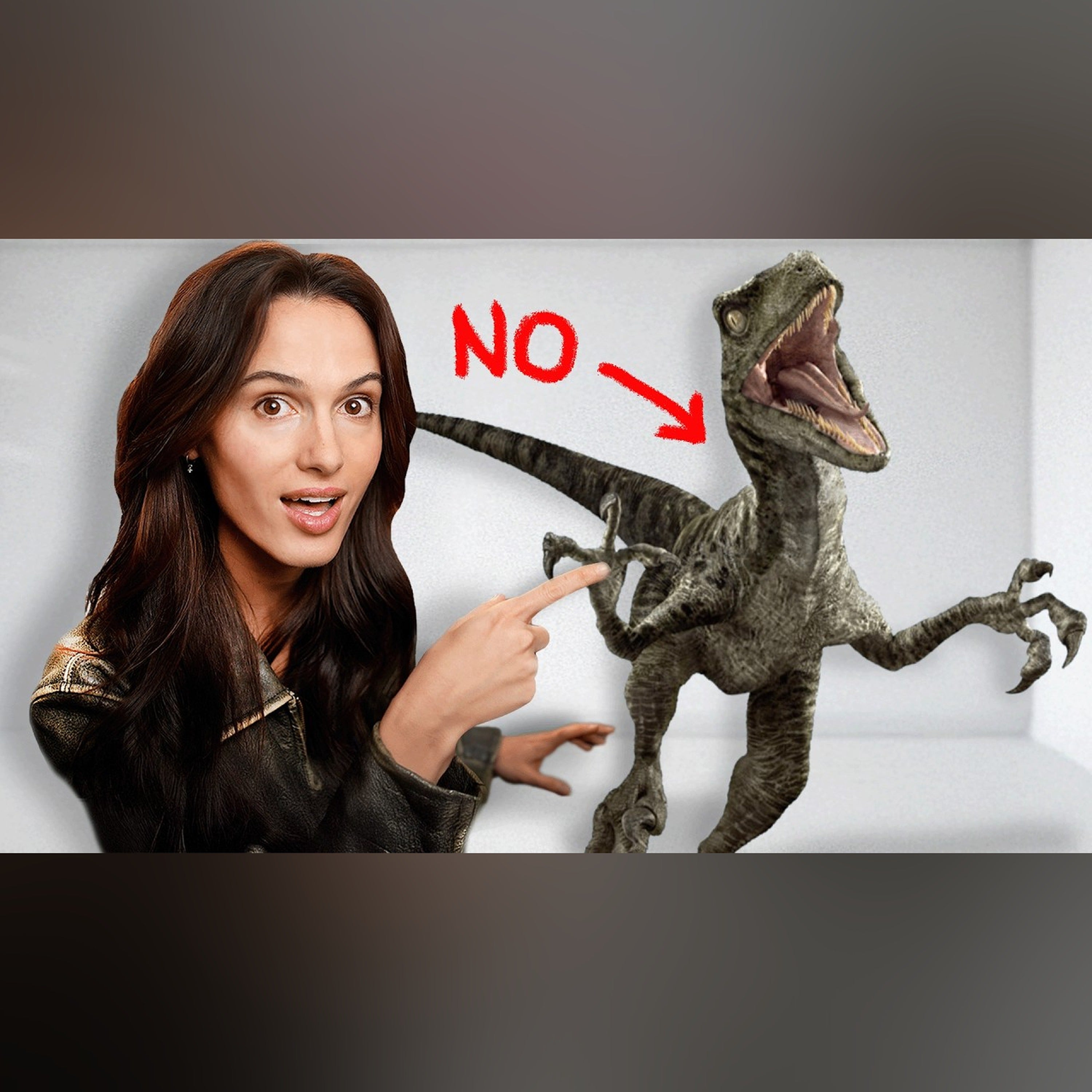
Dinosaurs were not like I thought... Check out https://groundnews.com/Cleo for a data-driven, balanced approach to staying informed. Use my link to save 50 percent on the Vantage plan and see how current events are framed from every perspective. I’m finally learning the truth about dinosaurs. I’ve loved dinosaurs since I was a kid, but it turns out a lot of what I thought I knew is wrong… or at the least outdated. So, in this video, I’m gonna show you the cutting edge of dinosaur discovery. I’ll give you rare access into a warehouse full of dinosaur bones, try to find my own fossil, and show you something new these scientists just discovered… Chapters: 00:00 What were dinosaurs really like? 01:08 Why is today a big deal for dinosaur discovery? 03:31 How big were dinosaurs, really? 05:49 When did dinosaurs actually live? 08:20 How many dinosaurs have we found? 09:26 What was the T-Rex like? 10:39 Did I find a bone?? 11:55 What IS a dinosaur? 14:31 What did dinosaur skin feel like? 15:06
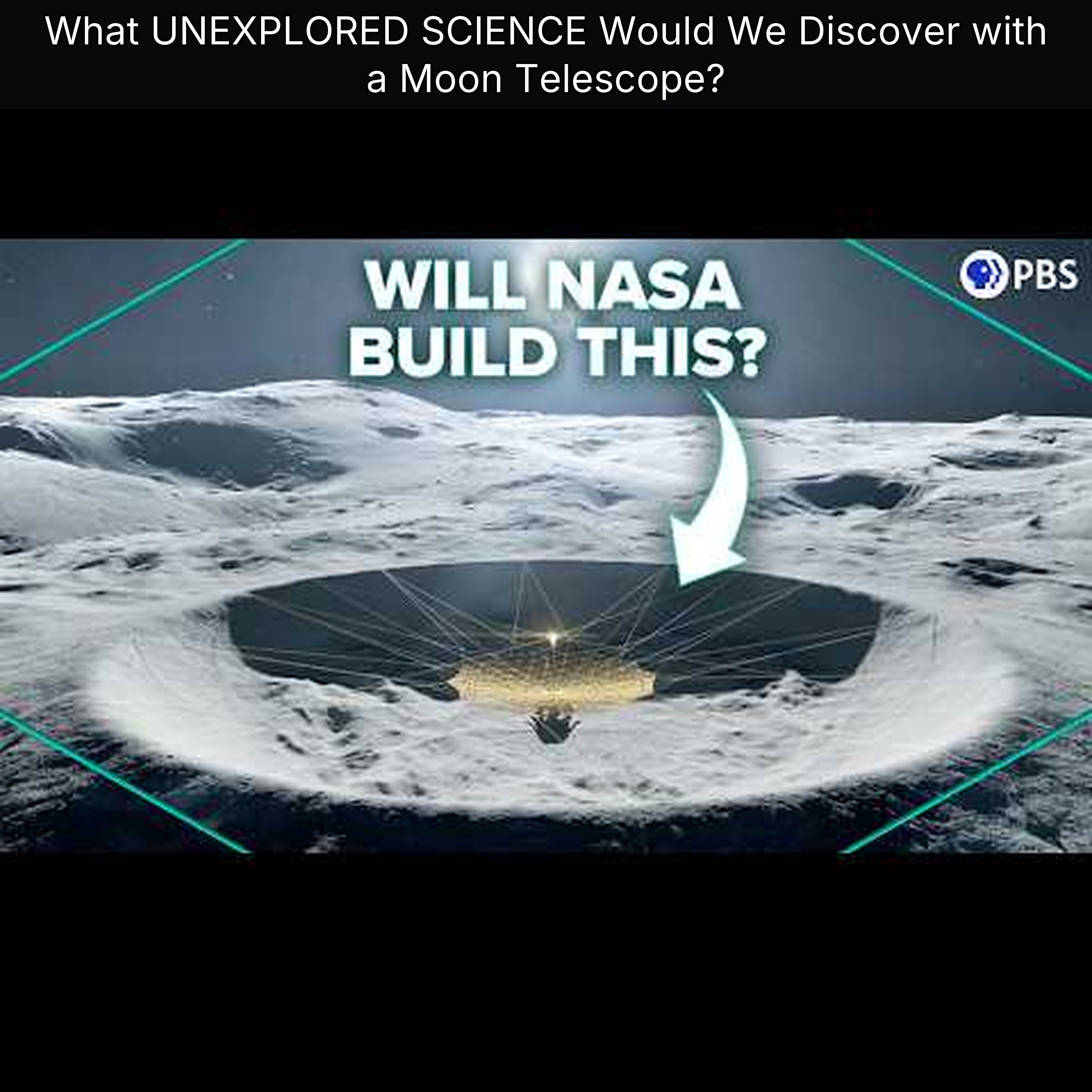
PBS Member Stations rely on viewers like you. To support your local station, go to:http://to.pbs.org/DonateSPACE Sign Up on Patreon to get access to the Space Time Discord! In order to see the faint light from objects in deepest space, astronomers go to the darkest places on the planet. In order to listen to their quite radio signals, they head as far from any radio-noisy humans as possible. But there’s nowhere on the earth, or even orbiting the Earth, that’s far enough to hear to the faint radio hum from the time before stars. In fact, we may need to build a giant radio telescope in the quietest place in the solar system—the far side of the moon. Check out the Space Time Merch Store Sign up for the mailing list to get episode notifications and hear special announcements! Search the Entire Space Time Library Here: https://search.pbsspacetime.com/ Hosted by Matt O'Dowd Written by Matt Caplan & Matt O'Dowd Post Production by Leonardo Scholzer, Yago Ballarini, Adriano Leal & Stephanie Far
In this calm and sleepy facts episode, we journey far beyond our own solar system to explore the thousands of worlds orbiting distant stars, places we have only recently learned to find and are only just beginning to understand. We start with the basics of what an exoplanet is and how astronomers detect them, from the gentle dimming of a star as a planet passes in front of it to the tiny gravitational wobble a hidden world imprints on its sun. We visit the extraordinary harvest of the Kepler space telescope, which revealed that planets are not rare exceptions but the rule, scattered across nearly every star in the Milky Way. Along the way we encounter strange and extreme worlds, gas giants so close to their stars that they complete an orbit in mere days, tidally locked planets with one face locked in permanent daylight and the other in endless night, and rogue planets drifting alone through interstellar space with no star to call home. We explore the habitable zone, the narrow region a
When he was ten years old, a boy made an unusual new friend. She was about his age, had a name, a personality, and stories about her family. For nearly a year, she would appear at his house to play, and during a particularly difficult time in his childhood, she seemed determined to protect him. But there was something different about this little girl. Nobody else appeared to see her, and there were strange limitations on where she could go. Eventually, she told him she had to leave, but promised she would always try to look out for him. As he grew older, he began questioning whether she'd ever existed outside his imagination. Then, more than a decade later, something extraordinary happened that made him reconsider everything he thought he knew about his childhood friend. Could a friendship continue beyond death? And if spirits really exist, do they remain forever the age they were when they died? #RealGhostStoriesOnline #TrueGhostStories #GhostlyFriend #ChildhoodGhosts #ImaginaryFriend
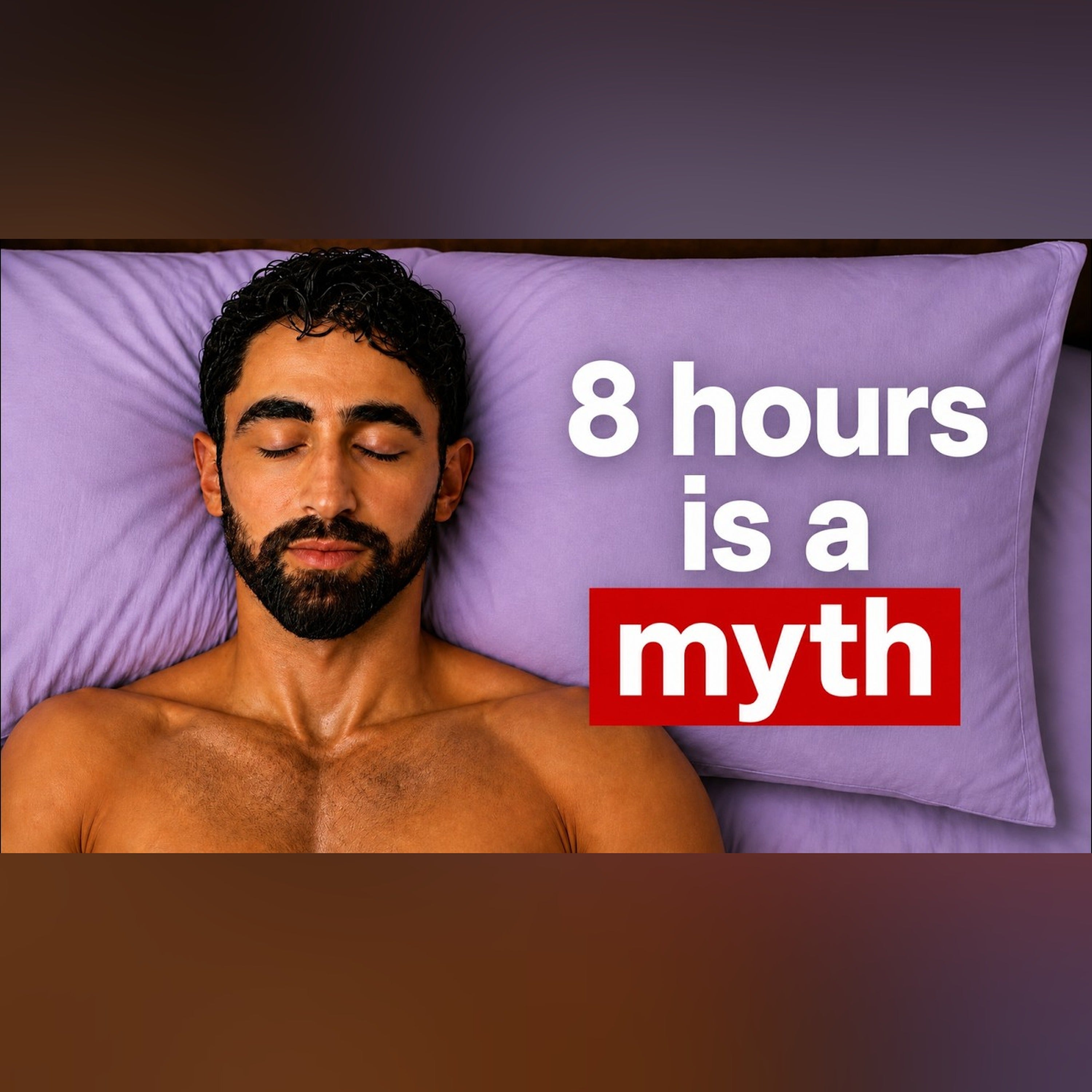
For a written breakdown, early access to content like this, and extra nuances, see the associated StayCurious Metabolism newsletter: https://open.substack.com/pub/staycuriousmetabolism/p/stop-chasing-8-hours-of-sleep?r=40ekz2&utm_campaign=post&utm_medium=web&showWelcomeOnShare=true (https://open.substack.com/pub/staycuriousmetabolism/p/stop-chasing-8-hours-of-sleep?r=40ekz2&showWelcomeOnShare=true) Pinealon Letter: https://staycuriousmetabolism.substack.com/p/why-im-trying-this-peptide-for-sleep?r=40ekz2 No Sleep Letter: https://staycuriousmetabolism.substack.com/p/what-if-you-didnt-need-to-sleep-this?r=40ekz2 Deep Sleep Masterclass: https://staycuriousmetabolism.substack.com/p/how-to-help-your-brain-clean-itself?r=40ekz2 I review several gamma entrainment devices in the Deep Sleep letter, along with the evidence supporting this tool. The only device I have personal experience with is Gamma Light Therapy, which was developed based on some of the early Nature research and is also one of
A kiss can be wonderful. It can create an instant connection, spark romance, or make you feel closer to someone. But a kiss can also have the opposite effect — and sometimes ruin everything. So what makes kissing so powerful, and why can one kiss make such a difference? There's some fascinating science behind it. https://www.scientificamerican.com/article/why-we-kiss/ We spend an enormous amount of time worrying about what's going to change. What's next? What's coming? How do we prepare? But what if we're paying attention to the wrong things? Some of the most important forces shaping our lives never change, and understanding them may be far more valuable than trying to predict the future — something humans are notoriously bad at. Morgan Housel, partner at The Collaborative Fund and author of Same as Ever: A Guide to What Never Changes (https://amzn.to/3SwWn6u) (https://amzn.to/3SwWn6u)), joins me to explain why the things that stay the same may be the most important things to understan
Voyager 1 has just reached a major milestone: one light-day from Earth. It’s the furthest a man-made object has ever travelled, crossing the boundary at the edge of our Solar System and venturing out into interstellar space. In this video, we explore what Voyager 1 has found so far, the discoveries it’s still making, and the hazards it faces out there in deep space. Where is it heading next?▀▀▀▀▀▀ Take your fascination for space to a new level with Black Friday offers coming to DWARFLAB. Scan the QR code or follow the link https://bit.ly/astrum_dwarflab to check the offer available in your market.▀▀▀▀▀▀ The Astrum book is still available in the US!
Earth’s magnetic shield is weakening over the South Atlantic. This mysterious “Bermuda Triangle of Space” is a place where satellites glitch, cosmic radiation spikes, and astronauts see strange flashes of light. But what’s causing this growing hole in the magnetosphere isn’t something in space - it’s coming from inside the planet. Using seismic tomography and ancient volcanic lava, scientists have traced the disturbance back to a continent-sized “blob” sitting on top of the Earth’s core that may be the buried remains of an alien planet… and it might even explain how Hawaii formed… ▀▀▀▀▀▀ ▀▀▀▀▀▀ The Astrum book is still available in the US!
This compilation features Astrum’s best content about asteroids. We’re journeying to the asteroid belt and further, to explore the intriguing rocky objects of our solar system. What have we discovered on large asteroids like Ceres and Vesta? Why did NASA's DART mission smash into an asteroid, and what happened next? And what did we find inside the sample from asteroid Bennu? ▀▀▀▀▀▀ The Astrum book is still available in the US!
Residents should have a practical way to appeal decisions made by unelected public bodies.
Share your view, then see how readers voted. No sign-in required. This poll is shared across stories.
Do you agree or disagree?
Common Quandary
A Common Quandary to discuss
Another conversation to explore, separate from this news story.
A private joke from years ago goes public. How long should it follow the person who wrote it?
Someone shares a screenshot of a tasteless joke made years ago in a private friends' chat. The person who wrote it says they were performing for a small audience, have changed, and never agreed to have the message made public.
How private should speech remain when it reveals something troubling?