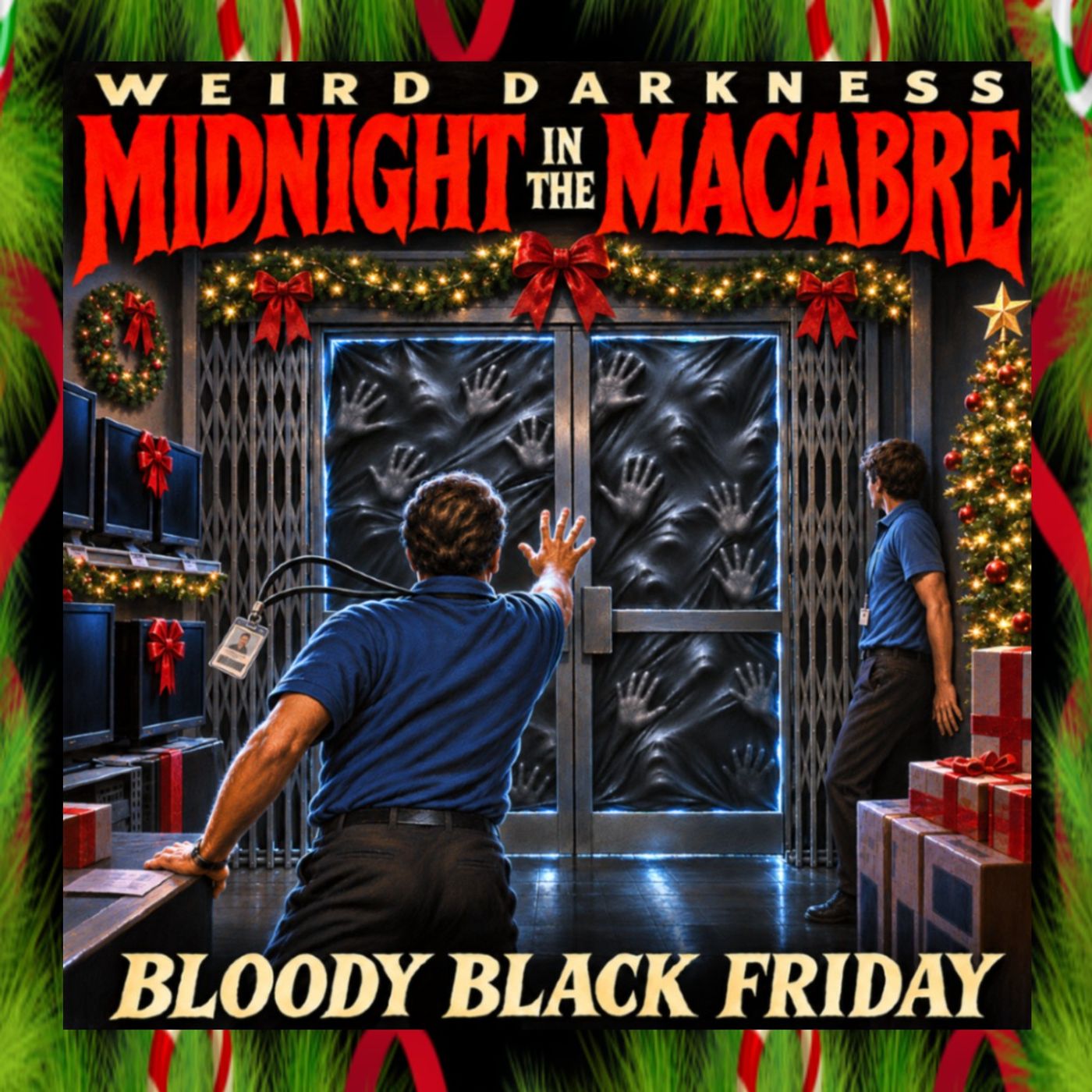
What happens when a police SWAT sniper puts a .308 round into something prowling near Bray Road, and it gets back up? Tony is joined by Harry, who grew up outside Elkhorn, Wisconsin, in the shadow of the Beast of Bray Road. As a boy, he watched a massive jet-black dog terrorize the horses at the farm where his mother boarded them. His father, a SWAT sniper, took the shot. There was blood. There was fur. The animal rolled, got back up and vanished into the woods, and no body was ever found. Years later, Harry watched a black shape keep pace with his car across a moonlit field while he was doing thirty over the limit, then came face to face with a pair of eyes staring down at him from seven or eight feet off the ground. Tony, who walked these same back roads at night while filming a documentary, compares notes, and the two realize how close their paths came. Then the conversation takes a darker turn. Harry recounts the haunted Army barracks where he trained as a tank crewman, the night s
Sharing a meal at the same table, a practice known as commensality, helps families and communities build trust and connect across generations. While many people believe the 1621 harvest feast shared by the Pilgrims and the Wampanoag people started an unbroken annual tradition, American Thanksgiving history actually followed a much more uneven path. Indigenous peoples held seasonal harvest and gratitude ceremonies for generations before 1621, and the Plymouth meal was largely forgotten for about 200 years. George Washington issued the first national Thanksgiving proclamation for Thursday, November 26, 1789, and magazine editor Sarah Josepha Hale later persuaded Abraham Lincoln to set a regular November date in 1863. The holiday did not become federal law until 1941, after public confusion over a date change. When gathering for a holiday dinner, Harvard research shows that asking open-ended follow-up questions makes conversations more engaging and boosts likability. Keeping a few neutral
In June 2006, seven-year-old Angelica Livingston and her 54-year-old grandmother, Portia Washington, vanished from West Columbia, South Carolina. What began as an ordinary Saturday turned into a disturbing mystery when Portia’s boyfriend, Kenneth Lynch, was discovered traveling across the country in her car. His conflicting statements, a history of domestic violence allegations, and the discovery of Angelica’s blood inside the apartment led investigators to believe something horrific had happened. Join Mike and Gibby as they discuss the murders of Angelica Livingston and Portia Washington. Prosecutors faced the daunting challenge of proving two murders without the victims’ bodies, while questions arose about missed opportunities and potential sightings that investigators failed to pursue. Although Lynch was ultimately convicted of both murders, twenty years later, the whereabouts of Angelica and Portia remain a mystery, leaving their loved ones without the closure they desperately dese
Richard Allen didn’t confess to anything while he sat in the Carroll County jail. An investigator said so under oath at his trial. Then a judge signed an order sending Allen, who hadn’t been tried, to Westville Correctional Facility, a state prison. He stayed in an isolation cell there for 13 months, and that’s where the confessions to the Delphi murders began. Tony Brueski, Bob Motta and Todd Michaels join me to go back through the record: what investigators said in their depositions, the police interview tapes, and the papers now in front of the Indiana Court of Appeals. We compare the affidavit that got police a search warrant for Allen’s house with what the witnesses on the trail first told them. Allen’s lawyers say the two don’t match. We also get into what the FBI’s profilers reportedly concluded early on, the Purdue professor police consulted about the sticks found at the scene, and how closely anyone checked the men the defense wanted to point to. Allen was convicted of killing
My special guest tonight is Dr. Stephen Flowers who's here to discuss the history of Mazdan magic from his book called Original Magic: The Rituals and Initiations of the Persian Magi (https://www.amazon.com/Original-Magic-Rituals-Initiations-Persian/dp/1620556448/ref=sr_1_2?dchild=1&keywords=ancient+Persian+magic&qid=1604461378&sr=8-2)c A complete guide to the theory, practice, and history of Mazdan magic, the first organized system of magic • Provides a complete curriculum of magical study and initiation centered on exercises keyed to the sacred Zoroastrian calendar • Details advanced magical rituals and practices based on archaic Persian formulas, including fire rituals and divine invocations • Explores the history and lore of Persian magic, explaining how the author reconstructed the original Mazdan system of magic Stephen Flowers explores the history, theory, practice, rituals, and initiations of the Mazdan magical system practiced by the Magi of ancient Persia, who were so skilled
Happy Thanksgiving, all! I'm at my dad's celebrating (that's the same musician dad who writes the music for my ads and created the COTC theme, by the way) so I can't record an intro to this episode, but here's the info: I accidentally uploaded a Catalyst episode called The Steward when I meant to upload this one, The Samaritan. This one was supposed to accompany the Genene Jones main feed episode, for reasons that will become clear once you listen. Someone finally alerted me to the mixup, and I figured that rather than replace this in the original file, I'd give this as another bonus since The Steward has been out for a full week now. It's not the cheeriest Thanksgiving gift, but maybe some of you will appreciate it as you're traveling for the holiday. Best to you all! Reminder: The Catalyst is a monthly offering available ONLY to subscribers at www.grabbagcollab.com (http://www.grabbagcollab.com/). We have ~60 episodes so far. - Amber
This week, we’re doing something a little different. After exploring the horrifying crimes of nurse Genene Jones, we’re sharing an episode of The Catalyst, another true-crime podcast hosted by Amber Hunt. The twist? We don’t tell you the killer’s name until the very end. Instead, we explore their upbringing, their lives and their crimes, leaving you to piece together their identity as the story unfolds. Today’s mystery involves another professional who betrayed the trust of the very people they were supposed to protect, so it seemed an appropriate bonus episode to accompany Jones' case. Think you can figure out who it is? The Catalyst is available exclusively at GrabBagCollab.com (http://grabbagcollab.com/), either as a standalone monthly subscription or as part of the Everything GBC tier for $7.99 a month, which includes all of Grab Bag Collab’s exclusive shows and ad-free episodes of Crimes of the Centuries.
In the early 1980s, babies in a San Antonio pediatric ICU started dying at a rate no one could explain. They seized. They stopped breathing. Their hearts just quit. Colleagues began to whisper and one doctor got obsessed, warning the hospital's administrators that the same nurse had been bedside for most of the deaths. And still, nurse Genene Jones walked out the front door, straight into another job caring for kids. Crimes of the Centuries (https://www.centuriespod.com/) is a podcast from Grab Bag Collab (https://www.patreon.com/grabbagcollab) exploring forgotten crimes from times past that made a mark and helped change history. You can get early and ad-free episodes and more over at www.grabbagcollab.com (http://www.grabbagcollab.com/) Order the Crimes of the Centuries book at your favorite bookstore or at (http://todayatwww.centuriespod.com/book)http://www.centuriespod.com/bookwww.centuriespod.com/book (http://www.centuriespod.com/book)! (http://www.centuriespod.com/book!Follow) Epi
News organizations should disclose major financial relationships that could influence their coverage.
Share your view, then see how readers voted. No sign-in required. This poll is shared across stories.
Do you agree or disagree?
Common Quandary
A Common Quandary to discuss
Another conversation to explore, separate from this news story.
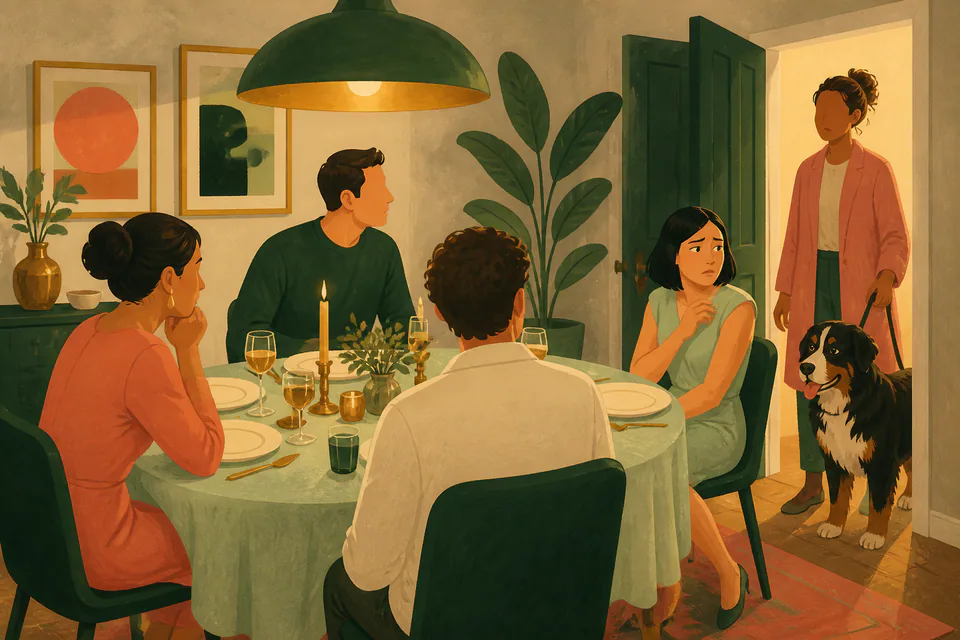
Your dinner guest arrives with their dog. Do you let both of them in?
A friend appears at your carefully planned dinner with a large dog they never mentioned. They say the dog becomes anxious when left alone and will sit quietly. Another guest is uneasy around animals, and your lease forbids pets.
Whose needs should an unexpected accommodation displace?