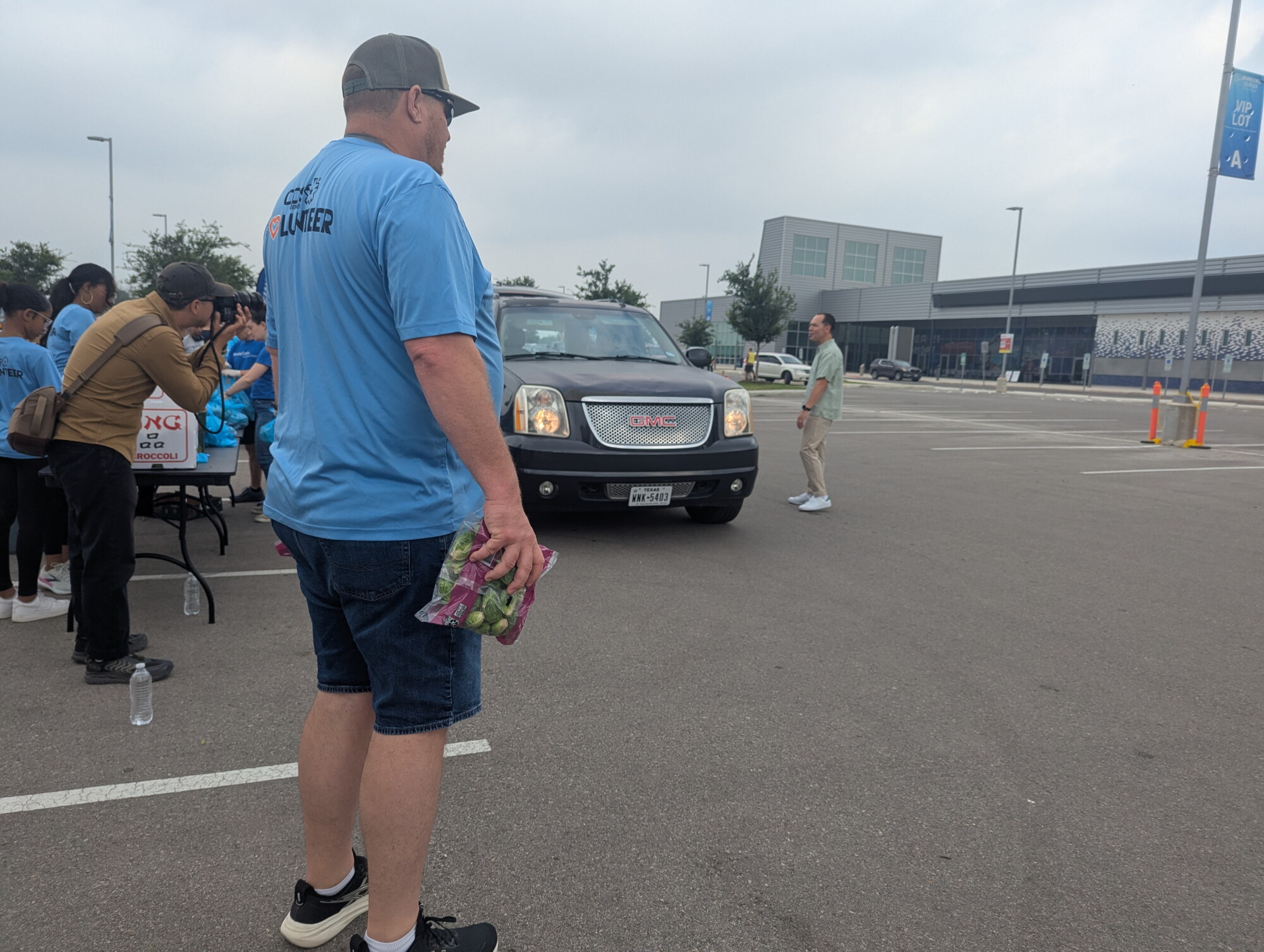
San Antonio poverty remains stubbornly high as more seniors struggle to make ends meet
50 min
Listen through the publisher, then discuss the episode here or arrange an in-person Roundtable. Your city determines where to meet.
Roundtables are designed for groups of four, with a shared subject and room for everyone to speak. Come for discussion, with no dating expectation.
Roughly a quarter million San Antonio residents — 17% of the population — live in poverty. That’s according to the latest U.S. Census data. That rate has been stuck for the last decade. The poverty average for Texas is much lower at just under 14%, and nationally it’s 12.5%. Why hasn’t San Antonio been able to lift more people out of poverty? What would it take to make the city less poor?
Episode information is provided by the publisher. Listening takes place on the publisher’s service.
The Petal's New Zealand edition for Thursday 19 November 2026 carries 7 decisions newly reported, two from the Supreme Court and five from the High Court, all aired as six items. The thread is substance over labels: youth, mental illness, poverty and a counterclaim each count for what they actually did, not for what they are called. The two Supreme Court decisions arise from the deaths of young children and are reported as legal doctrine only, with no one named on air. Criminal Law Desk (first story). Thompson v The King [2026] NZSC 178 - reported as legal doctrine only. The proposition derived from R v Rapira [2003] 3 NZLR 794 (CA), that manifest injustice under s 104(1) of the Sentencing Act 2002 is extremely difficult to establish, is not good law, nor do personal circumstances displace the 17-year presumption only in rare cases; the threshold is flexible and case by case, and a status-based s 104(1A)(h) circumstance does not automatically make a murder one of the worst. Background,
Training Wednesday is back, and Aaron, Trent, and Peaches spend the live answering Air Force Special Warfare candidate questions — but first, there is an update from the current SWAS class. According to the numbers discussed on the live, 78 candidates failed the initial IFT and 52 still failed the refire. The guys try to understand how that happens after months of development and preparation, discuss reports that some candidates struggled with the swim and high-volume masks, and once again return to the same message they keep giving candidates: you need to arrive ready. From there, the live turns into a full candidate-training clinic. The guys talk about periodizing strength and endurance work, building Zone 2 capacity, gradually increasing mileage, why running with a weighted vest is probably not solving the problem you think it is, preparing for A&S, training with the equipment you will actually use, and why the goal is not simply to pass a minimum standard. They also answer question
The Ninth Circuit hears Kluwe versus the Huntington Beach Union High School District. Christopher Kluwe coached football at Edison High School. In February 2025, he protested a proposed library plaque that he viewed as promoting the Make America Great Again movement. His coaching job ended days later. He alleges retaliation for political speech. The district pointed to a social media post it said suggested violence; Kluwe says he was calling for complaints, not violence. He sued the district and school officials over his constitutional rights. The trial court dismissed the claims against the district on sovereign-immunity grounds. This appeal therefore begins with who can be sued, not whether the firing violated free-speech protections. The lawyers will debate whether the district is legally part of California itself or a separate public body. Kluwe's lawyer will seek a fresh assessment under recent Supreme Court guidance; the district will argue that older Ninth Circuit decisions stil
This week on The Necessary Conversation, it's Chad, Haley, and Mary Lou. Bob is still recovering but sent in a video message about Trump calling Putin his friend that we watch together. 🇷🇺 Trump held the first-ever three-way talks with Putin and Xi, called it a "12 out of 10," and produced nothing. Then at a press conference he called Putin his friend — and when asked if Putin is a friend to America, the president of the United States said, "I can't speak to America." That same day, Trump's friend Putin launched massive strikes into Ukraine, hit Poland with two missiles — an act of war against a NATO ally — then struck near a Ukrainian restaurant and drone-bombed the first responders, killing a 7-year-old child and a 20-year-old paramedic. We watch Bob's video and ask Mary Lou: is Russia our friend? 🇨🇳 The House Foreign Affairs Committee revealed Trump's Commerce Department approved nearly 880,000 advanced AI chips for Chinese military-linked companies including Alibaba, Tencent, a
Rebuilding the government after Trump and DOGE will take more than rehiring the people they fired last year. The Supreme Court enabled the administration’s assault on services and protections millions of Americans rely upon, and it could still block the rebuilding, too. On this week’s Amicus, Dahlia Lithwick talks with Cornell law professor and former Biden administration official K. Sabeel Rahman about his new book, Remaking the State: A New Blueprint for American Democracy (https://www.amazon.com/dp/1967190208?tag=slatmaga-20&th=1), about why restoring the old machinery of the administrative state won’t be enough. Rahman connects DOGE’s slash-and-burn campaign to a much longer legal project. He explains why doctrines that constrain regulation remain a threat to future policymaking, even as the high court supercharges Trump’s executive power grabs. But this is not just a damage assessment. From stronger consumer protections to easier access to public benefits and a meaningful democrat
Europe's Little Anarchy: The Rise and Fall of Neutral Moresnet (https://bookshop.org/a/12343/9781501788147)(Cornell UP, 2026) uncovers the history of Neutral Moresnet: a once-forgotten space without borders, nationalism, or a recognized government. Between 1815 and 1919, this square mile of land wedged between Belgium, the Netherlands, and Germany was home to thousands of people living off the grid, free of taxation and oversight. But they also had no political status, police, legal currency, proper law courts, or government presence in sectors like public health, infrastructure maintenance, or education. Meanwhile, practical control over Neutral Moresnet lay in the hands of the local industry: a for-profit, multinational mining company that, because it owned rights to the land, also held a near monopoly on the supply of high-quality zinc to the rest of the world. Dr. Steven Press explores how the residents of Neutral Moresnet sought to improve their quality of life, appealing to Germa
We think of the surrender of Robert E. Lee as the end of the Civil War, but the end really wasn’t clear at the time. The Galveston News reported Lee’s surrender as a positive development for the Confederacy and encouraged Texans to fight on. How did Lincoln’s peace take hold? How did a divided nation come together? Michael Vorenberg’s new book is Lincoln’s Peace: The Struggle to End the American Civil War.
As many Texans struggle to pay their power utility bills, a new analysis projects that federal energy policy changes will cost Texas households an additional $96 billion through 2040. What can be done to keep electricity bills affordable for Texans?
Governor-elect Gina Hinojosa says expanding Medicaid is a priority. And many other elected Democratic lawmakers are on board. In the state with the highest number of uninsured people, what does this mean? When Medicaid expands coverage in Texas who benefits? And how this is not the solution for the state's health care crisis.
Local communities should share directly in the benefits of large energy projects.
Share your view, then see how readers voted. No sign-in required. This poll is shared across stories.
Do you agree or disagree?
Common Quandary
A Common Quandary to discuss
Another conversation to explore, separate from this news story.
Your neighbor keeps playing music at midnight. How many friendly warnings do they get?
A neighbor regularly plays music late enough to disturb your sleep. Friendly requests help briefly, but a formal complaint could threaten their lease in a building with few affordable options.
How far should empathy extend when someone repeatedly ignores your needs?