Solomon Btesh v. Isaac Btesh — 11th Cir. (Nov 3, 2026)
45 min
Listen through the publisher, then discuss the episode here or arrange an in-person Roundtable. Your city determines where to meet.
Roundtables are designed for groups of four, with a shared subject and room for everyone to speak. Come for discussion, with no dating expectation.
The Eleventh Circuit hears Solomon versus Isaac Btesh. The brothers are disputing their interests in a family bank in Panama and the proceeds of its sale. A family agreement referred disputes to procedures used by a Jewish congregation there. Solomon began arbitration in Panama, then pursued proceedings in Miami. A Miami rabbinical panel issued an award against Isaac, who did not participate in that arbitration. Solomon asked a Florida federal court to confirm the award, meaning turn it into an enforceable court judgment. The judge dismissed the petition for lack of personal jurisdiction: the court's power over Isaac. That differs from the arbitrators' authority under the family agreement. One route discussed here is Rule 4(k)(2), a federal rule for federal claims when no state's courts can exercise jurisdiction over the defendant. It looks beyond a single state, but exercising jurisdiction must still be constitutional. Another route, quasi in rem jurisdiction, concerns specified property, with recovery limited to that property rather than a general personal judgment. The judges also discuss dicta: observations in an earlier opinion that were not necessary to decide that case. Listen for the distinction between agreeing to arbitrate, choosing a particular tribunal, and giving an American court authority to enforce an award. Solomon Btesh v. Isaac Btesh (No. 25-11265) — U.S. Court of Appeals for the Eleventh Circuit, argued November 3, 2026. Sources: Argument audio — official Eleventh Circuit recording: Argument date — official Eleventh Circuit recordings listing: Argument calendar — official Eleventh Circuit panel release: Case background and prior dismissal — district-court order, public copy hosted by A&O Shearman: Federal jurisdictional route — Federal Rule of Civil Procedure 4(k)(2): Confirmation provision discussed — 9 U.S.C. § 9: Property-based jurisdiction — Supreme Court opinion in Shaffer: Legal vocabulary — Cornell Wex definition of dicta:
Episode information is provided by the publisher. Listening takes place on the publisher’s service.
Eight decisions from four appellate courts in the Court of Appeal edition of Thursday 19 November 2026, with the New South Wales, Victoria, Western Australia and ACT editions of the same day folded in. Commercial Law Desk (opening story). R and N Hunter Pty Ltd ATF The Hunter Family Superannuation Fund v Count Financial Limited [2026] FCAFC 143 - financial adviser and client is not an accepted fiduciary category; any duty is tethered to an occasion of advice; silence implies a recommendation to retain only on an obligation, representation or expectation; fiduciary questions unsuited to Pt IVA common questions; s 1041H claims fail. Appeal dismissed (Derrington, Anderson and Feutrill JJ). JADE (https://jade.io/article/1305143) A word from JADE (house spot). Practice and Procedure Desk. AGL Retail Energy Limited v Australian Energy Regulator (No 2) [2026] FCAFC 146 - costs follow the overall event, no issue-by-issue apportionment; the r 39.04(2) Federal Court Rules variation power is exce
In this episode, we break down the latest updates to Other Transaction (OT) authorities, including the 2026 Guide to Prototype OTs, self-certification rules for non-traditional defense contractors, and the rollout of new facility construction OTs under 10 USC 2808A. The hosts also explore practical guidance for legal advisors navigating non-FAR agreements and examine recent court developments in the Bluewater Autonomy case regarding Court of Federal Claims jurisdiction over OT competition down-selects.. Learn more about The Quill & Sword series of podcasts by visiting our podcast page at https://tjaglcs.army.mil/thequillandsword. The Quill & Sword show includes featured episodes from across the JAGC, plus all episodes from our four separate shows: “Criminal Law Department Presents” (Criminal Law Department), “NSL Unscripted” (National Security Law Department), “The FAR and Beyond” (Contract & Fiscal Law Department) and “Hold My Reg” (Administrative & Civil Law Department). Connect with
In this episode, we break down the latest updates to Other Transaction (OT) authorities, including the 2026 Guide to Prototype OTs, self-certification rules for non-traditional defense contractors, and the rollout of new facility construction OTs under 10 USC 2808A. The hosts also explore practical guidance for legal advisors navigating non-FAR agreements and examine recent court developments in the Bluewater Autonomy case regarding Court of Federal Claims jurisdiction over OT competition down-selects.. Learn more about The Quill & Sword series of podcasts by visiting our podcast page at https://tjaglcs.army.mil/thequillandsword. The Quill & Sword show includes featured episodes from across the JAGC, plus all episodes from our four separate shows: “Criminal Law Department Presents” (Criminal Law Department), “NSL Unscripted” (National Security Law Department), “The FAR and Beyond” (Contract & Fiscal Law Department) and “Hold My Reg” (Administrative & Civil Law Department).
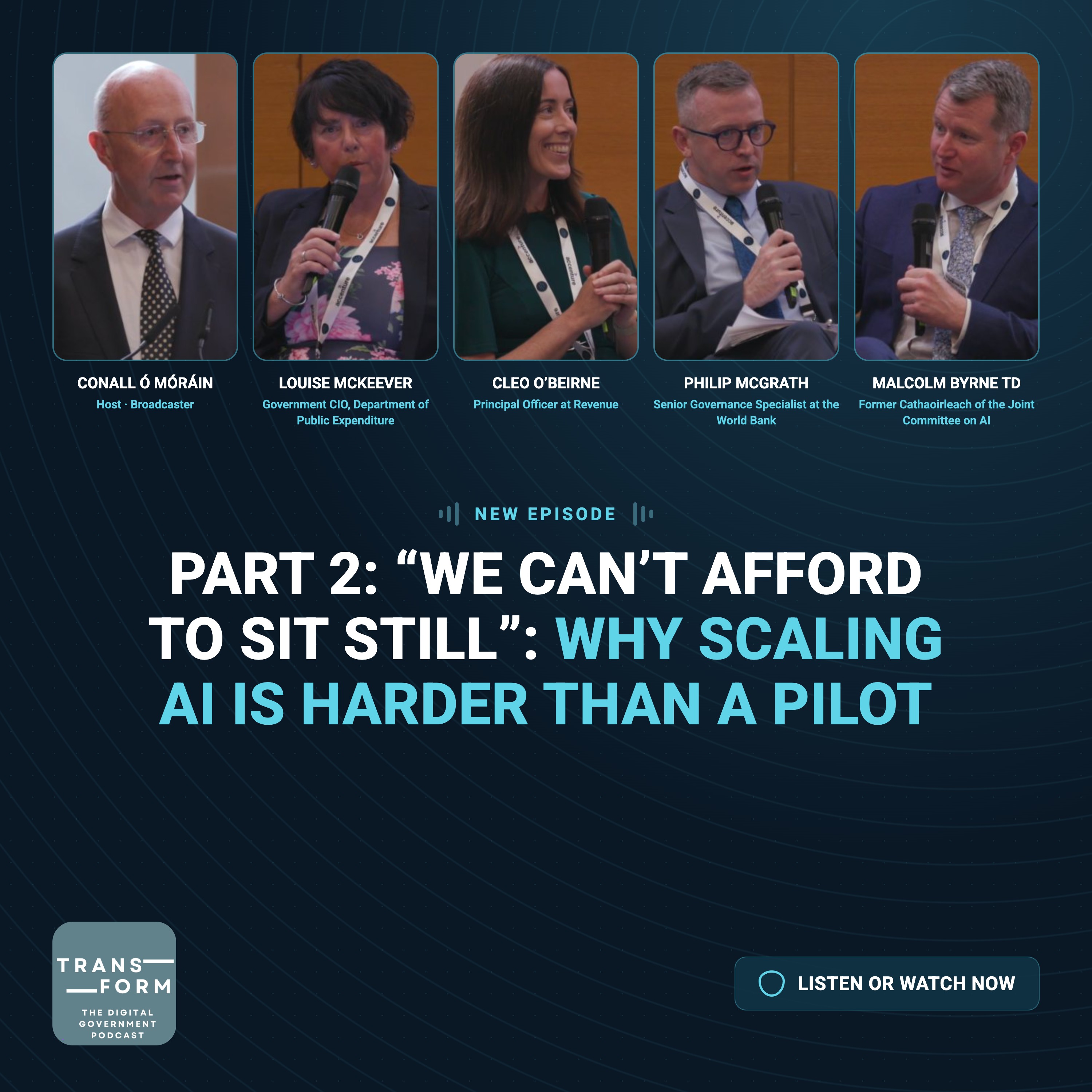
The pilot worked. Now what? In Part 2 of this panel discussion, four leaders explain how they're taking AI from pilot to scale, and what it takes to get data and governance right. This panel discussion took place at the Ireland eGovernment Awards and Leadership Summit 2026 on 24 September 2026 at UCD's O'Reilly Hall. We bring together Louise McKeever, Government CIO; Cleo O'Beirne, Principal Officer at Revenue; Philip McGrath, Senior Governance Specialist at the World Bank; and Malcolm Byrne TD, former Cathaoirleach of the Joint Committee on AI. The panel is chaired by Conall Ó Móráin. If you're taking AI beyond the pilot, here's what to do: Start small, prove it, then scale. Revenue tested agentic AI on a small application first, stage by stage. Redesign the whole process, not one stage. Individual productivity gains only go so far. Plan for lost knowledge, and recovered knowledge. As AI scales, people may know less, but AI can also capture knowledge that has already been lost. Reuse
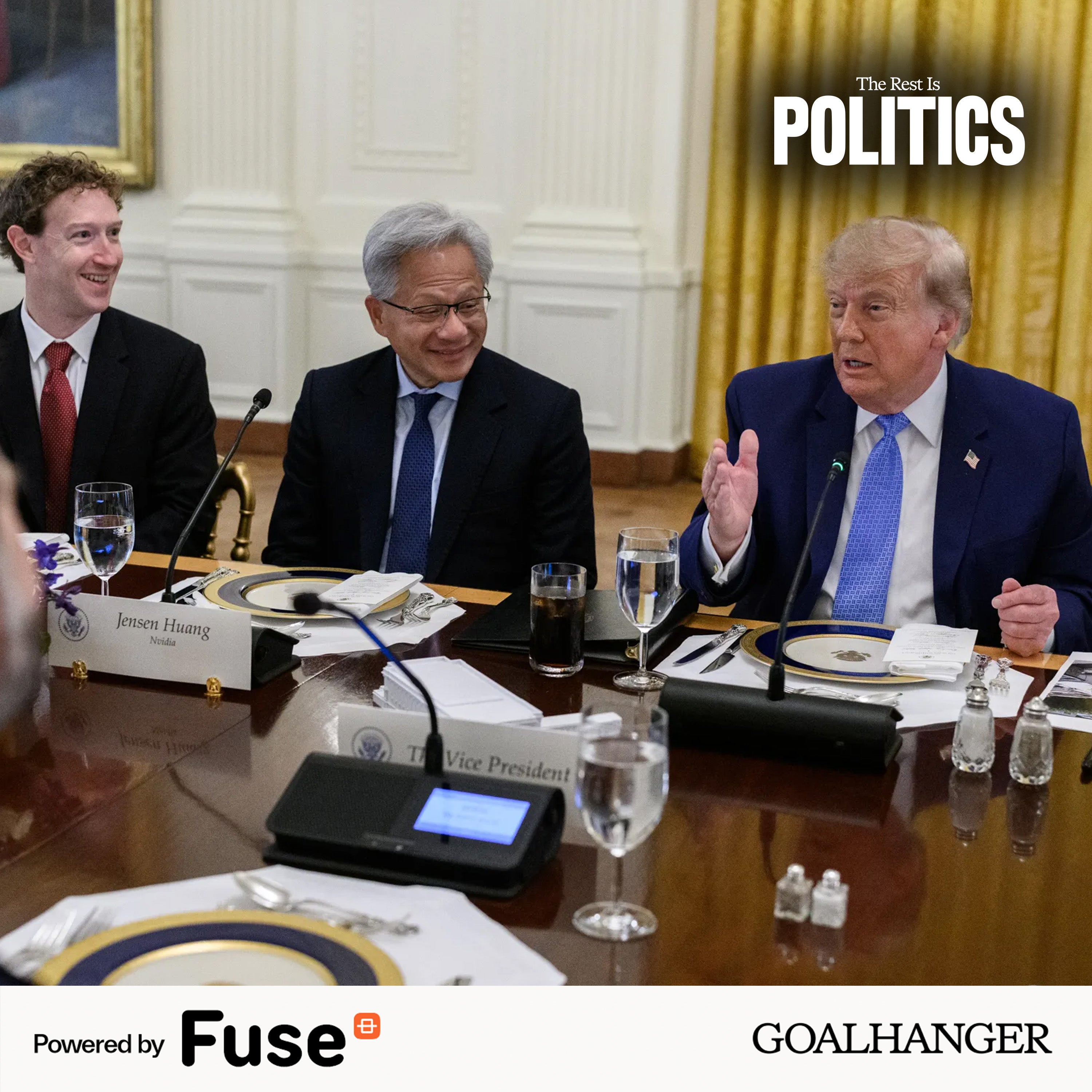
Despite a growing public backlash against AI and data centres, are the American tech bros still beyond control? What makes a political figure resonate with voters, and in the age of social media, do the best political communicators need to become internet personalities? Who would make the perfect cast for the Real Housewives of Westminster? Join Rory and guest host Marina Hyde as they answer all these questions and more in this week's edition of Question Time. __________ Enjoy Rory and Alastair’s interview with Mariana Mazzucato by searching ‘Leading’ on Spotify, Apple, or YouTube. Join The Rest Is Politics Plus. Give The Rest Is Politics Plus this Christmas. Treat yourself or a fellow fan to a membership: bonus episodes, ad-free listening, early access, a members’ newsletter, and more. Annual gifts come with a special edition T-shirt. (https://therestispolitics.com/gifts) Always On is home to Marina’s original writing and YouTube show. Each week she’ll be covering politics, culture, s
What should a veteran carry after the uniform comes off? In this episode, John and Victor unpack everyday carry (EDC) as a practical system rather than a collection of gadgets. They discuss the pocket, bag, vehicle, and desk gear that helps them stay organized, prepared, and comfortable in civilian life. The conversation covers durable belts and wallets, military IDs, phone and camera mounts, notebooks, iPad note-taking, and pens that are actually enjoyable to use. John and Victor also compare analog watches, pocket knives, flashlights, open-ear audio, Ryobi tools, action cameras, hydration gear, and vehicle emergency equipment. This is a veteran-focused discussion of adapting military habits to civilian constraints, including California carry considerations. It also looks beyond gear: cooking, LEGO building, and wood whittling as hands-on ways to decompress, plus a reminder to check in on fellow veterans during the holiday season. Episode Timestamps 00:04:35 Introducing everyday carry
The Ninth Circuit considers a shareholder's challenge to disclosures used to sell UserTesting. During negotiations, Thoma Bravo reduced a proposed ten-dollar-a-share offer to seven dollars and fifty cents. The board initially rejected that lower price, but later recommended a deal at that price to shareholders. The shareholder alleges that the merger's proxy statement wrongly made the company's revenue performance look worse than it was. The disputed sentence grouped revenue with calculated billings and said both had fallen short of expectations. Her theory is that this depressed picture helped persuade shareholders to accept too little for their stock. That is an allegation, not a finding that the deal was unfair. The district court dismissed the revised complaint. Although it had treated the disputed sentence as false or misleading, it said the allegations still sounded in fraud and failed the stricter requirements for pleading the executive's responsibility. The shareholder will arg
The Second Circuit considers a plan to help homebuyers who need mortgages compete with cash offers. Canandaigua National Corporation, a New York financial holding company, wanted to guarantee purchases arranged through its mortgage subsidiary. If a preapproved customer failed to obtain final mortgage approval, the company would buy the home itself and later resell it. The proposal capped the value of homes held at any one time at five million dollars and promised resale within two years. Canandaigua says those safeguards make the risk small. The Federal Reserve Board rejected the plan on safety-and-soundness grounds, looking beyond the risk to this particular company. It did not finally decide the remaining statutory factors. Canandaigua will argue that the Board ignored the limits in its actual application. The Board will defend considering what could happen if financial holding companies generally began buying property under such guarantees. This is a dispute over permission for a pr
The Ninth Circuit hears a dispute over a proposed waste-processing project in California. Nortech already operated the Western Placer Waste Management Authority's facility. It worked with EcoHub on a proposal for the facility's future, first seeking a contract extension and then preparing for competitive bidding. The collaboration broke down. Nortech ended discussions after EcoHub failed to produce a requested financing commitment. EcoHub says the financing demand was a pretext, and that Recology pushed Nortech to abandon their joint effort. EcoHub and Nortech eventually submitted separate bids. Neither won. EcoHub nevertheless says their work together had already created a legal partnership, with duties Nortech could not simply walk away from. The district court ruled against EcoHub before trial, finding insufficient evidence of shared control. It also found EcoHub's interference claims against Recology were brought too late. EcoHub will argue that the companies' conduct and board dis
Protecting natural places can justify limiting visitor numbers.
Share your view, then see how readers voted. No sign-in required. This poll is shared across stories.
Do you agree or disagree?
Common Quandary
A Common Quandary to discuss
Another conversation to explore, separate from this news story.
You love the free sample but will never buy it. How many times may you circle back?
A warehouse store is offering delicious samples. You have no intention of purchasing the product, but the employee seems bored and has trays to spare. After taking two, you consider removing your jacket and returning for a third.
Is exploiting generosity wrong when the giver appears not to care?