Sonos, Inc. v. Google LLC — Fed. Cir. (Nov 5, 2026)
34 min
Listen through the publisher, then discuss the episode here or arrange an in-person Roundtable. Your city determines where to meet.
Roundtables are designed for groups of four, with a shared subject and room for everyone to speak. Come for discussion, with no dating expectation.
The Federal Circuit hears Sonos versus Google. Sonos challenged Google's patent on using one wireless device to help another join a wireless network. Claim six adds a message sent over that network indicating that the new device has successfully joined. The Board rejected Sonos's obviousness challenge to that claim, and Sonos appealed. Sonos will contend that older network-setup technology made the message obvious to a skilled person, and that the Board overlooked or misread its evidence. Google will defend the Board's distinction between obtaining network credentials and actually joining the network, as well as the need to explain the challenge in the original petition. Listen for what the older technology taught, and whether Sonos's petition gave a good reason to add the message. This is a patentability review, not a trial over product infringement. Sonos, Inc. v. Google LLC (No. 25-1338) — U.S. Court of Appeals for the Federal Circuit, argued November 5, 2026. Sources: Argument audio — official Federal Circuit recording; all advocacy complete; original administrative closing-word tail is clipped and preserved; levels balanced: Case and argument date — official Federal Circuit archive: Prior Patent Trial and Appeal Board decision — IPR2023-00806, Paper 20, November 1, 2024; not the outcome of this appeal: Patent technology and actual claims — issued U.S. Patent 11,050,615 B2, public text copy; not a current patent-status determination:
Episode information is provided by the publisher. Listening takes place on the publisher’s service.
Twelve decisions in the Federal Courts edition for Thursday 19 November 2026: two from the Full Court of the Federal Court and ten from the Federal Court of Australia. The opening story: a car rental licence fee set at the greater of a turnover share and a passenger-based minimum offended the Northern Territory's retail tenancy law, but void did not mean a refund: the lease still provides for a review, and market rent applies. Then an urgent hearing without an interpreter, a child's best interests claim recorded but never considered, a template for liquidators of a trustee company, and the registry. Both Full Court rulings were covered in today's Courts of Appeal brief and are listed below. Commercial Desk (opening story). Kingmill Pty Ltd v Darwin International Airport Pty Ltd [2026] FCA 1747 (Charlesworth J, 19 November 2026) - Signal: Doctrine. Under s 28 of the Business Tenancies (Fair Dealings) Act 2003 (NT), the rent review mechanism is identified by its substantive operation: in
Artificial intelligence is already finding its way into ambulances, patient care reports and EMS operations — but do agency leaders actually know what technology their people are using? This week on EMS One-Stop, host Rob Lawrence welcomes back EMS attorneys Doug Wolfberg and Ryan Stark of Page, Wolfberg & Wirth (PWW) to explore the rapidly emerging challenge of shadow AI and shadow IT. From smart glasses and personal recording devices, to ambient listening applications and generative AI platforms, the discussion examines how well-intentioned clinicians may be putting protected health information at risk without realizing it. Wolfberg and Stark explain why HIPAA hasn't fundamentally changed in the AI era, why business associate agreements and organizational oversight matter, and why simply banning technology is unlikely to be an effective long-term solution. Instead, EMS leaders must understand the tools being used, update their policies, educate their workforces and establish safeguar
Training Wednesday is back, and Aaron, Trent, and Peaches spend the live answering Air Force Special Warfare candidate questions — but first, there is an update from the current SWAS class. According to the numbers discussed on the live, 78 candidates failed the initial IFT and 52 still failed the refire. The guys try to understand how that happens after months of development and preparation, discuss reports that some candidates struggled with the swim and high-volume masks, and once again return to the same message they keep giving candidates: you need to arrive ready. From there, the live turns into a full candidate-training clinic. The guys talk about periodizing strength and endurance work, building Zone 2 capacity, gradually increasing mileage, why running with a weighted vest is probably not solving the problem you think it is, preparing for A&S, training with the equipment you will actually use, and why the goal is not simply to pass a minimum standard. They also answer question
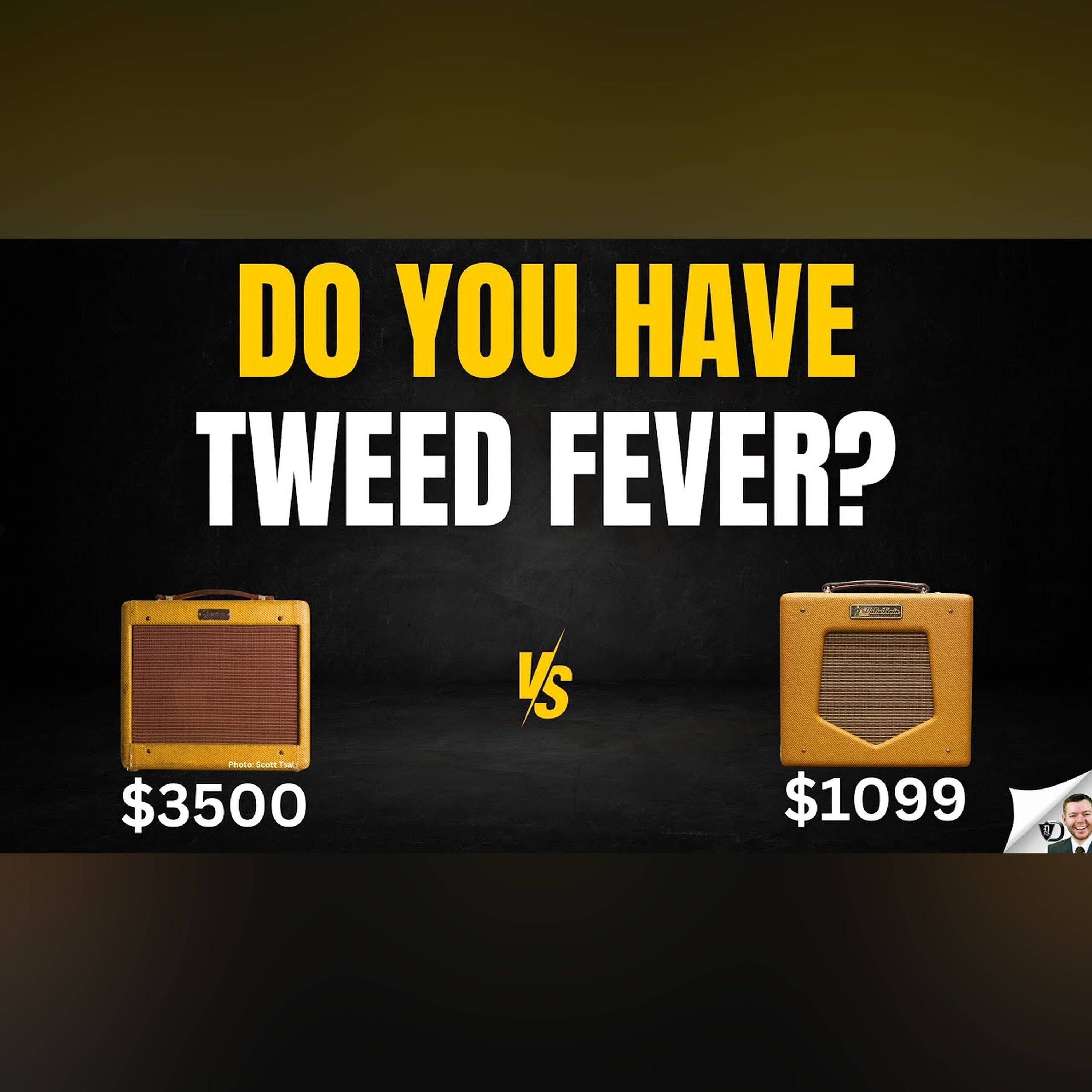
In this video, Disability Attorney Walter Hnot of the Disability Resolution Law Firm goes over a comparison between an original 1959 Fender tweed champ, and the ValveTrain 205c tweed amp. America’s Most Viewed Social Security Disability Attorney Like the content? Review us here: https://g.page/r/CcwyektC7nCPEAg/review . If the link does not work, Google: Disability Resolution, P.A. Welcome to the largest Social Security Disability Tutorial Video Library On Earth. PRIVATE ONE HOUR SESSION PHONE CALL THIS IS HOW YOU CAN GIVE BACK TO HELP GROW THE CAUSE: Option 1: Leave 5 |==================5 STAR REVIEWS==================| Google (Search Disability Resolution Orlando, FL)- https://www.google.com/search?authuse... (https://www.google.com/search?authuse...=) AVVO (Search Walter Hnot) - https://www.avvo.com/attorneys/32817-... BBB (Search Disability Resolution Orlando, FL)- https://www.bbb.org/us/fl/orlando/pro... MARTINDALE (Search Walter Hnot Orlando, FL) - https://www.martindale.com/atto
**BREAKING MEDICARE 2027 NEWS: THE OFFICIAL NUMBERS ARE OUT! HOW MUCH MORE WILL YOU PAY?** The Centers for Medicare & Medicaid Services (CMS) has just announced the new **2027 Medicare premiums, deductibles, and hospital costs**. But what do these changes mean for YOUR Medicare coverage, your monthly expenses, and the Social Security check you actually receive? Need help with your Medicare plan? Contact our friends at Chapter Medicare: 352-841-0632 In today's video, **Dr. Ed Weir, former Social Security Administration District Manager**, breaks down the newly announced Medicare 2027 costs and explains what you need to know before the new year. Some costs are increasing. Others depend on your income, coverage choices, and the type of Medicare plan you have. And with the **December 7, 2026 Medicare Open Enrollment deadline approaching**, now is an important time to review your options. **IN THIS VIDEO, YOU'LL LEARN:** What's changing with Medicare Part B premiums in 2027. How the new Med
For review: 1. Iraq has reached a compromise with the powerful Iran-backed militia Kataeb Hezbollah, three senior security officials said, after Prime Minister Ali al-Zaidi readied security forces to move against the group. Reflecting the gravity of the situation, Iraqi Shiite political sources said Esmail Qaani, commander of Iran’s elite Revolutionary Guards’ Quds Force, arrived in Baghdad late on Monday to help defuse tensions with Kataeb Hezbollah, Tehran’s most powerful militia ally in Iraq. 2. Lebanese President Joseph Aoun launched a lengthy rebuke of Iran in an Independence Day address, arguing that the Islamic Republic does not have the right to interfere in Lebanon’s internal affairs, as it long has via support for its local terror proxy, Hezbollah. 3. Yemen’s Houthis launched strikes on the Saudi capital Riyadh on Saturday, after vowing reprisals for a “special operation” by the Saudi-led coalition fighting them. The coalition later said it had “intercepted and destroyed” thr
The Ninth Circuit considers a shareholder's challenge to disclosures used to sell UserTesting. During negotiations, Thoma Bravo reduced a proposed ten-dollar-a-share offer to seven dollars and fifty cents. The board initially rejected that lower price, but later recommended a deal at that price to shareholders. The shareholder alleges that the merger's proxy statement wrongly made the company's revenue performance look worse than it was. The disputed sentence grouped revenue with calculated billings and said both had fallen short of expectations. Her theory is that this depressed picture helped persuade shareholders to accept too little for their stock. That is an allegation, not a finding that the deal was unfair. The district court dismissed the revised complaint. Although it had treated the disputed sentence as false or misleading, it said the allegations still sounded in fraud and failed the stricter requirements for pleading the executive's responsibility. The shareholder will arg
The Second Circuit considers a plan to help homebuyers who need mortgages compete with cash offers. Canandaigua National Corporation, a New York financial holding company, wanted to guarantee purchases arranged through its mortgage subsidiary. If a preapproved customer failed to obtain final mortgage approval, the company would buy the home itself and later resell it. The proposal capped the value of homes held at any one time at five million dollars and promised resale within two years. Canandaigua says those safeguards make the risk small. The Federal Reserve Board rejected the plan on safety-and-soundness grounds, looking beyond the risk to this particular company. It did not finally decide the remaining statutory factors. Canandaigua will argue that the Board ignored the limits in its actual application. The Board will defend considering what could happen if financial holding companies generally began buying property under such guarantees. This is a dispute over permission for a pr
The Ninth Circuit hears a dispute over a proposed waste-processing project in California. Nortech already operated the Western Placer Waste Management Authority's facility. It worked with EcoHub on a proposal for the facility's future, first seeking a contract extension and then preparing for competitive bidding. The collaboration broke down. Nortech ended discussions after EcoHub failed to produce a requested financing commitment. EcoHub says the financing demand was a pretext, and that Recology pushed Nortech to abandon their joint effort. EcoHub and Nortech eventually submitted separate bids. Neither won. EcoHub nevertheless says their work together had already created a legal partnership, with duties Nortech could not simply walk away from. The district court ruled against EcoHub before trial, finding insufficient evidence of shared control. It also found EcoHub's interference claims against Recology were brought too late. EcoHub will argue that the companies' conduct and board dis
Public bodies should publish the evidence behind important decisions.
Share your view, then see how readers voted. No sign-in required. This poll is shared across stories.
Do you agree or disagree?
Common Quandary
A Common Quandary to discuss
Another conversation to explore, separate from this news story.
A likable but unreliable former employee lists you as a reference. How honest are you?
A former employee who was unreliable but personally likable lists you as a reference without asking. Their prospective manager calls and asks only whether you would hire them again.
How much truth do you owe a stranger when it may cost someone a fresh start?