English-language podcasts

PBS Space Time

Sound Waves from the Beginning of Time

23 min

Listen through the publisher, then discuss the episode here or arrange an in-person Roundtable. Your city determines where to meet.

Roundtables are designed for groups of four, with a shared subject and room for everyone to speak. Come for discussion, with no dating expectation.

PBS Member Stations rely on viewers like you. To support your local station, go to: http://to.pbs.org/DonateSPACE ↓ More info below ↓ Uploaded 07-02-19 You can check out Google's Science Journal app at http://g.co/ScienceJournal Check out the new Space Time Merch Store! Support Space Time on Patreon Email your answers to: [email protected] With the subject heading: Negative Mass Challenge Question Invisible to the naked eye, our night sky is scattered with the 100s of billions of galaxies the fill the known universe. Like the stars, these galaxies form constellations – hidden patterns that echo the reverberations of matter and light in an epoch long before galaxies ever formed. These are the baryon acoustic oscillations, and they may hold the key to understanding the nature of dark energy. Tweet at us! @pbsspacetime Facebook: facebook.com/pbsspacetime Email us! pbsspacetime [at] gmail [dot] com Comment on Reddit: http://www.reddit.com/r/pbsspacetime Help translate our videos! Previous Episode: Why String Theory Is Wrong Hosted by Matt O'Dowd Written by Matt O'Dowd Graphics by Luke Maroldi Directing by Andrew Kornhaber The field of cosmology – the study of the universe on its largest scales – was once the least precise in all of astrophysics. The impossibly vast distances made accurate measurements near impossible. But as our telescopes and our techniques improved over the past few decades, things are now different. We live in the era of precision cosmology, in which we know to stunning detail the properties that govern the very birth, evolution, and end of our universe. We talked about one of those properties in a recent episode – the Hubble constant – and about a growing conflict in its measured value which hints at strange new physics. Today we’ll talk about another measurement that may help resolve this crisis: the baryon acoustic oscillations. They the fossils of the first sound waves in the universe, imprinted in the distribution of galaxies on the sky. And in these patterns we can read the expansion history of the universe. Special thanks to our Patreon Big Bang, Quasar and Hypernova Supporters: Big Bang: Anton Lifshits coolascats David Nicklas Fabrice Eap Juan Benet Justin Lloyd Tim Davis Quasar: James Flowers Mark Rosenthal Tambe Barsbay Vinnie Falco Hypernova: chuck zegar Danton Spivey Donal Botkin Edmund Fokschaner Jens Theisen John Hofmann Jordan Young Joseph Salomone kkm Mark Heising Matthew O'Connor Thanks to our Patreon Gamma Ray Burst Supporters: Alexey Eromenko Antonio Ruiz Bradley Jenkins Brandon Labonte Buruk Aregawi Carlo Mogavero Daniel Lyons David Behtala David Crane David Schmidt Dustan Jones Geoffrey Short Greg Weiss Jack Frosch James Hughes James Quintero Jinal Doshi JJ Bagnell John Webber Jon Folks Jonah Joseph Emison Josh Thomas Kenneth F Leonard Kevin Warne Kyle Hofer Malte Ubl Mark Vasile Nathan Hitchings Nicholas Rose Nick Virtue Ratfeast Richard Broman Scott Gossett Sigurd Ruud Frivik Tim Crookham Tim Stephani Tommy Mogensen سلطان الخليفي

Episode information is provided by the publisher. Listening takes place on the publisher’s service.

Listen at the source ↗

Featured places to meet in Palo Alto, CA

Explore these places and arrange a conversation through ThinkMatch.

City guide for Palo Alto, CA

More from PBS Space Time

PBS Space Time

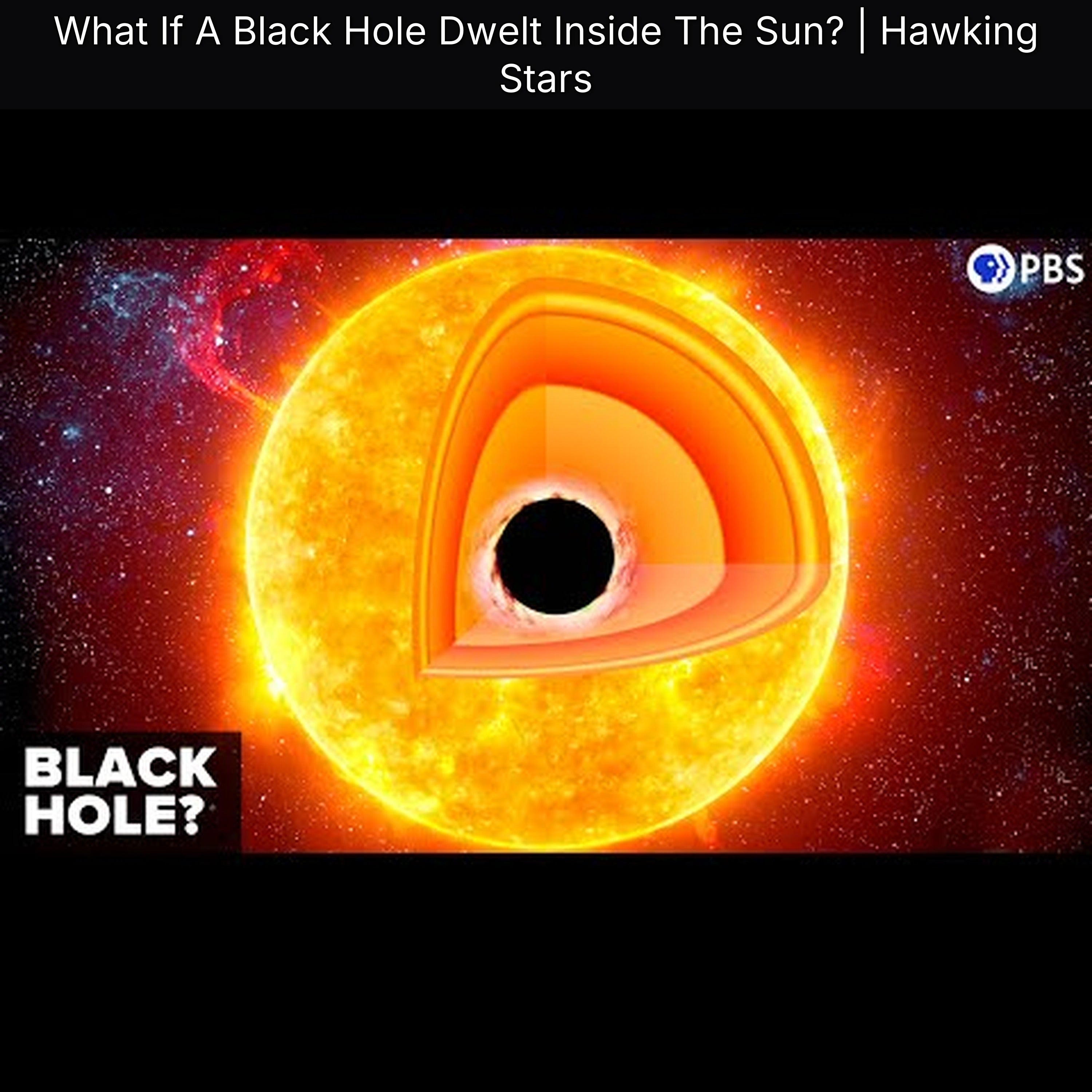
What If A Black Hole Dwelt Inside The Sun? | Hawking Stars

24 min

PBS Member Stations rely on viewers like you. To support your local station, go to:http://to.pbs.org/DonateSPACE Sign Up on Patreon to get access to the Space Time Discord! A fun nightmare sci-fi scenario is the sun being consumed by a black hole. Fortunately the chance of a black hole randomly wandering into our solar system is pretty tiny. That’s good news. But what if it’s already here, hiding in the core of the Sun and slowly eating it from the inside out? Hawking Stars Journal Papers: Search the Entire Space Time Library Here: https://search.pbsspacetime.com/ Hosted by Matt O'Dowd Written by Matt Caplan & Matt O'Dowd Post Production by Leonardo Scholzer, Yago Ballarini & Stephanie Faria Directed by Andrew Kornhaber Associate Producer: Bahar Gholipour Executive Producers: Eric Brown & Andrew Kornhaber Executive in Charge for PBS: Maribel Lopez Director of Programming for PBS: Gabrielle Ewing Assistant Director of Programming for PBS: John Campbell Spacetime is produced by Kornhaber

Discuss this episode

PBS Space Time

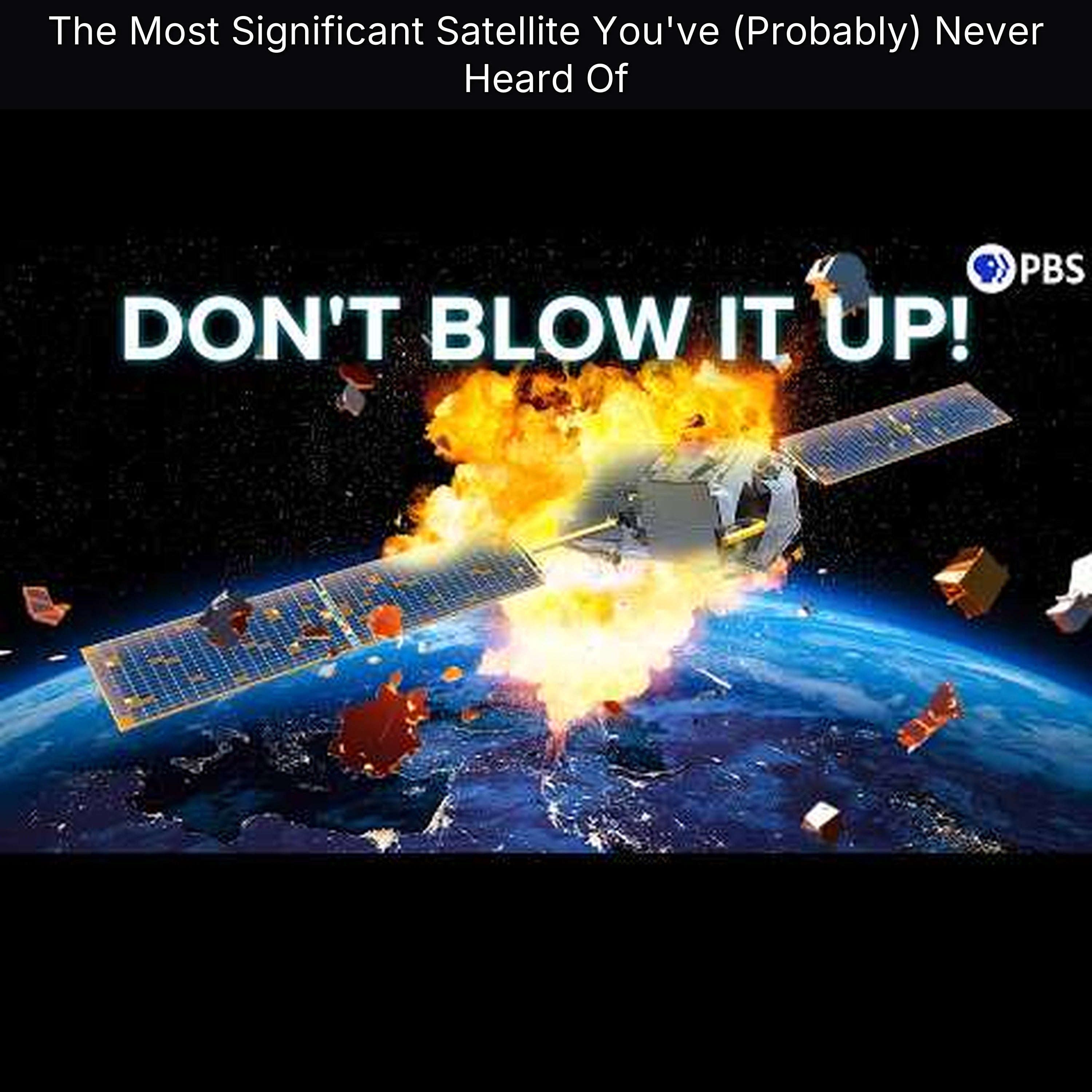
The Most Significant Satellite You've (Probably) Never Heard Of

20 min

Remove your personal information from the web at https://joindeleteme.com/SPACETIME One of the most important reasons we go to space is to know our own planet better. Today I'm going to tell you about an orbiting facility that literally watches Earth's biosphere breath and grow and die with incredible resolution. I'll talk about its profound existential and economic importance, and about why it's in danger of being lost. PBS Member Stations rely on viewers like you. To support your local station, go to:http://to.pbs.org/DonateSPACE Sign Up on Patreon to get access to the Space Time Discord! Check out the Space Time Merch Store Pale Blue Dot By Carl Sagan Search the Entire Space Time Library Here: https://search.pbsspacetime.com/ Hosted by Matt O'Dowd Written by Fernando Franco Félix & Matt O'Dowd Post Production by Leonardo Scholzer, Yago Ballarini & Stephanie Faria Directed by Andrew Kornhaber Associate Producer: Bahar Gholipour Executive Producer: Andrew Kornhaber Executive in Charge

Discuss this episode

PBS Space Time

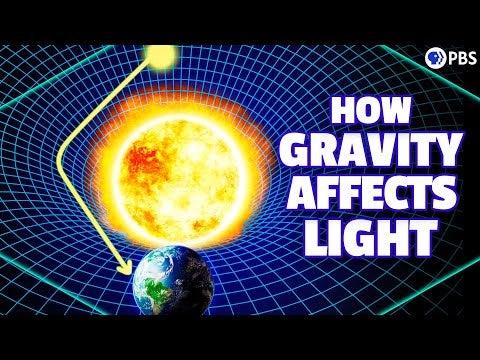
How Does Gravity Affect Light?

18 min

PBS Member Stations rely on viewers like you. To support your local station, go to: http://to.pbs.org/DonateSPACE ↓ More info below ↓ Uploaded 09-03-21 We know that gravity exerts its pull on light, and we have an explanation for why. Actually, we have multiple explanations that all predict the same thing. And at first glance, these explanations seem to describe completely different causes. So what is the true connection between light and gravity, or is truth, in fact, entirely relative? Sabine Hossenfelder's episode "Do we travel through time at the speed of light?" Check out the Space Time Merch Store Hosted by Matt O'Dowd Written by Matt O'Dowd Graphics by Leonardo Scholzer, Yago Ballarini, Pedro Osinski, Adriano Leal and Stephanie Faria GFX Visualizations: Katherine Kornei Directed by Andrew Kornhaber Assistant Producer: Setare Gholipour Executive Producers: Eric Brown and Andrew Kornhaber "FREE GMC Motorhome reimagined low poly" (https://skfb.ly/6XxAN) by Karol Miklas is licensed

Discuss this episode

Community Poll

Local gatherings should prioritize relationships over attendance numbers.

Share your view, then see how readers voted. No sign-in required. This poll is shared across stories.

Do you agree or disagree?

Choose one answer

Common Quandary

A Common Quandary to discuss

Another conversation to explore, separate from this news story.

You are vegetarian, but the leftover steak is headed for the trash. Do you eat it?

A vegetarian avoids buying meat because of animal welfare concerns. At work events, untouched meat is routinely thrown away, and eating it would neither increase demand nor cause another animal to be harmed.

Should a moral practice be judged by its consequences or its consistency?

Explore this quandary