Listen through the publisher, then discuss the episode here or arrange an in-person Roundtable. Your city determines where to meet.
Roundtables are designed for groups of four, with a shared subject and room for everyone to speak. Come for discussion, with no dating expectation.
Alabama Upland Game Bird Coordinator Caleb Blake joins us to share insights into the state's trends, research, and management of the wild turkey. Resources: Eastern Wild Turkey Research | Outdoor Alabama (https://www.outdooralabama.com/research/eastern-wild-turkey-research) Our lab is primarily funded by donations. We've launched our second online wild turkey course ! Enroll now: https://tinyurl.com/WildTurkeyManagerBio Earn up to 20.5 CFE hours! Enroll Now! (https://tinyurl.com/WildTurkeyManager) Dr. Dr. Want to help wild turkey conservation? Do you have a topic you'd like us to cover? Check out the DrDisturbance YouTube channel! DrDisturbance YouTube (https://www.youtube.com/@DrDisturbance) Want to help support the podcast? Thank you in advance for your support! Music by Artlist.io Produced & edited by Charlotte Nowak
Episode information is provided by the publisher. Listening takes place on the publisher’s service.
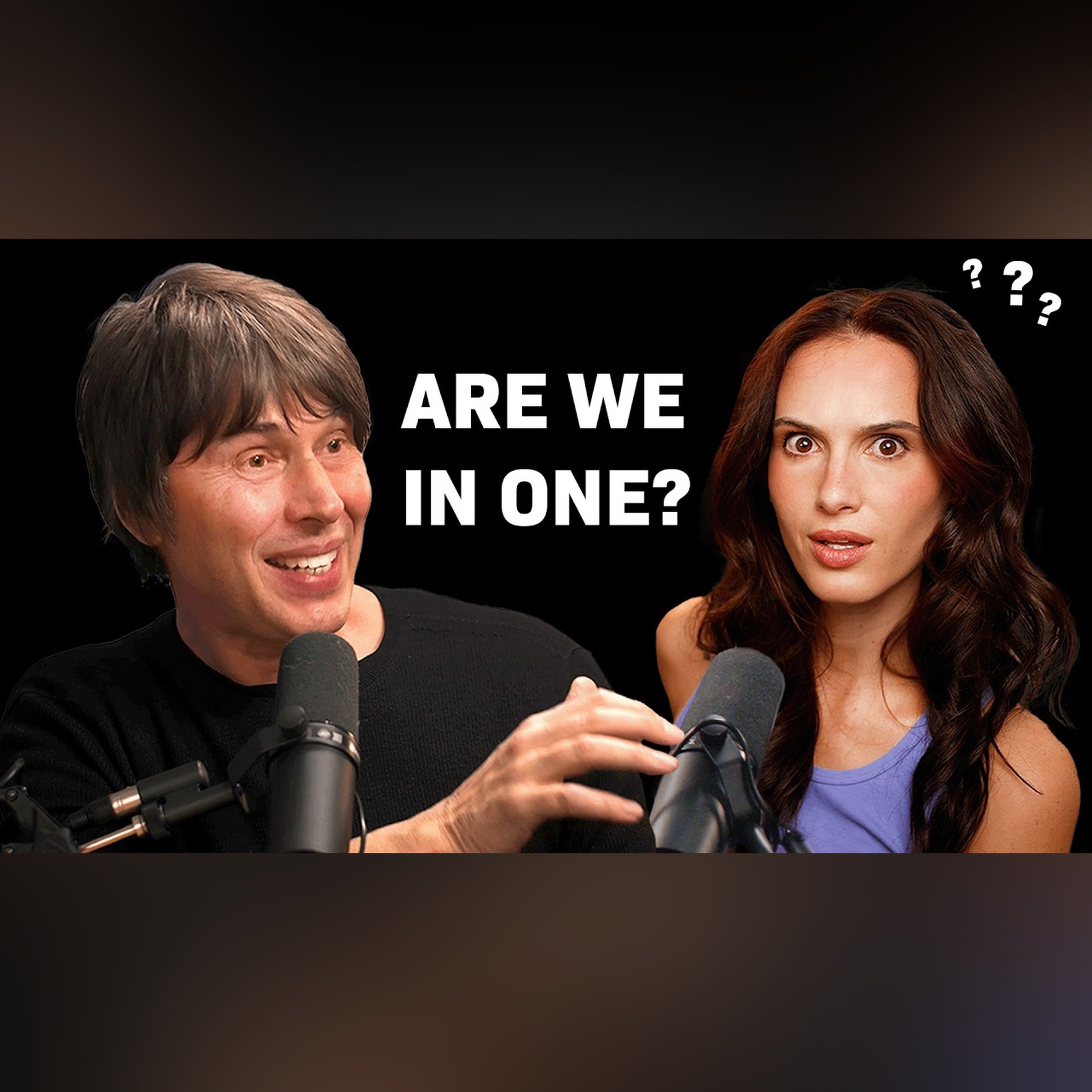
Black holes reveal something astonishing about our universe. Take your personal data back with Incogni. This extended cut is a deep dive into cutting edge research about black holes. It’s an interview with famous physicist Dr. Brian Cox. We start with “what if you fell into a black hole?” and end on the cutting edge research that had me questioning my whole reality. I interviewed Dr. Cox originally for a shorter Huge If True episode all about what would happen if you fell into a black hole. Watch our Huge If True episode about “What If You Fell Into A Black Hole?” here: https://youtu.be/BKIkTKqWMfg?si=bTde4QxUeN6bN1Io But there was SO much weird and mind bending stuff about the cutting edge of black holes that didn't fit into that shorter episode, and we knew you'd want to hear it. So we decided we had to release the full conversation. It's just too cool and I think you'll love it. Now, strap in, because the cutting edge of black holes is absolutely WILD. As always, if you want more op
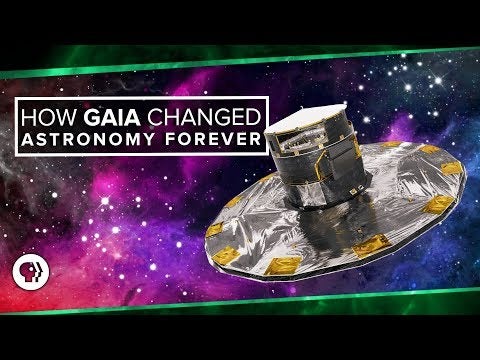
Viewers like you help make PBS (Thank you ) . Support your local PBS Member Station here: https://to.pbs.org/DonateSPACE Uploaded 09-05-18 The great advances in any science tend to come in sudden leaps. April 25th of 2018 marks the beginning of just such a leap for much of astronomy. In the early hours of the morning, the Gaia mission’s second data release dropped. Our understanding of our own galaxy will never be the same again. You can further support us on Patreon at https://www.patreon.com/pbsspacetime Get your own Space Time t-shirt at http://bit.ly/1QlzoBi Tweet at us! @pbsspacetime Facebook: facebook.com/pbsspacetime Email us! pbsspacetime [at] gmail [dot] com Comment on Reddit: http://www.reddit.com/r/pbsspacetime Help translate our videos! https://www.youtube.com/timedtext_cs_panel?tab=2&c=UC7_gcs09iThXybpVgjHZ_7g (https://www.youtube.com/timedtext_cs_panel?c=UC7_gcs09iThXybpVgjHZ_7g&tab=2) Previous Episode: The Star at the End of Time The Gaia satellite was launched in late
This is a Grave Talks CLASSIC EPISODE! PART TWO Most people think they know the story of Lizzie Borden: two brutal axe murders in 1892, a sensational trial, and an acquittal that still fuels debate more than a century later. Today, the former Borden family home stands as a popular haunted bed and breakfast, often portrayed as a site of mischievous spirits and lingering tragedy. But what if the real horror didn’t begin—or end—with Lizzie? Sam Baltrusis, who shares his firsthand investigations inside the infamous Borden house. According to Sam, some of what he encountered felt far too intelligent, far too oppressive, and far too dark to be explained as simple residual hauntings. Could a malevolent entity have influenced the family long before the murders occurred? Is it possible something far more sinister was at work behind closed doors? #TheGraveTalks #LizzieBorden #BordenHouse #HauntedMassachusetts #TrueCrimeMeetsParanormal #IntelligentHaunting #DarkEntity #HauntedHistory #FallRiver #
That’s the sound of the planet Uranus. It was produced from observations made by Voyager 2 when it flew past Uranus in 1986. Scientists used those observations to measure the planet’s rotation – the length of its day. But a decade of work by Hubble Space Telescope has revealed that the Voyager numbers were a little off. Precise timing is important for understanding what’s going on inside Uranus. It’s hard to measure the planet’s day. It doesn’t have a solid surface, so there are no landmarks to rotate in and out of view. The clouds that top the planet rotate at different rates, and they’re pushed by high-speed winds, so they’re no help. The best way to find the rotation rate is by studying the planet’s magnetic field. Hubble’s done that by watching auroras. They’re created by interactions between the magnetic field and the solar wind. As Uranus turns, the auroras change. The timing of those changes reveals how fast the planet’s interior is turning. The new work shows that a day is 17 h
New podcast episode between Ege Erdil and Daniel Kokotajlo. I thought this was going to be a debate, but they ended up agreeing on a lot more than I expected. Their main point of disagreement is how likely it is that we get some intelligence explosion that gives us AIs more competent than any human expert before 2029. Ege puts this possibility at around 20%, whereas Daniel thinks it’s higher than 50%. They agree that there is not a huge difference in probability, and that, in either case, the situation is crazy enough that our civilization really needs to grapple with how the world might be transformed, and we need a plan that actually makes sense. In particular, we should stop antagonizing China if we think some kind of global treaty will be needed to make superintelligence go well. There was another important crux about how well we should expect future AIs (that swamp humans in population size and cognitive power) to treat us, and how relevant it is that current AIs, by and large, se
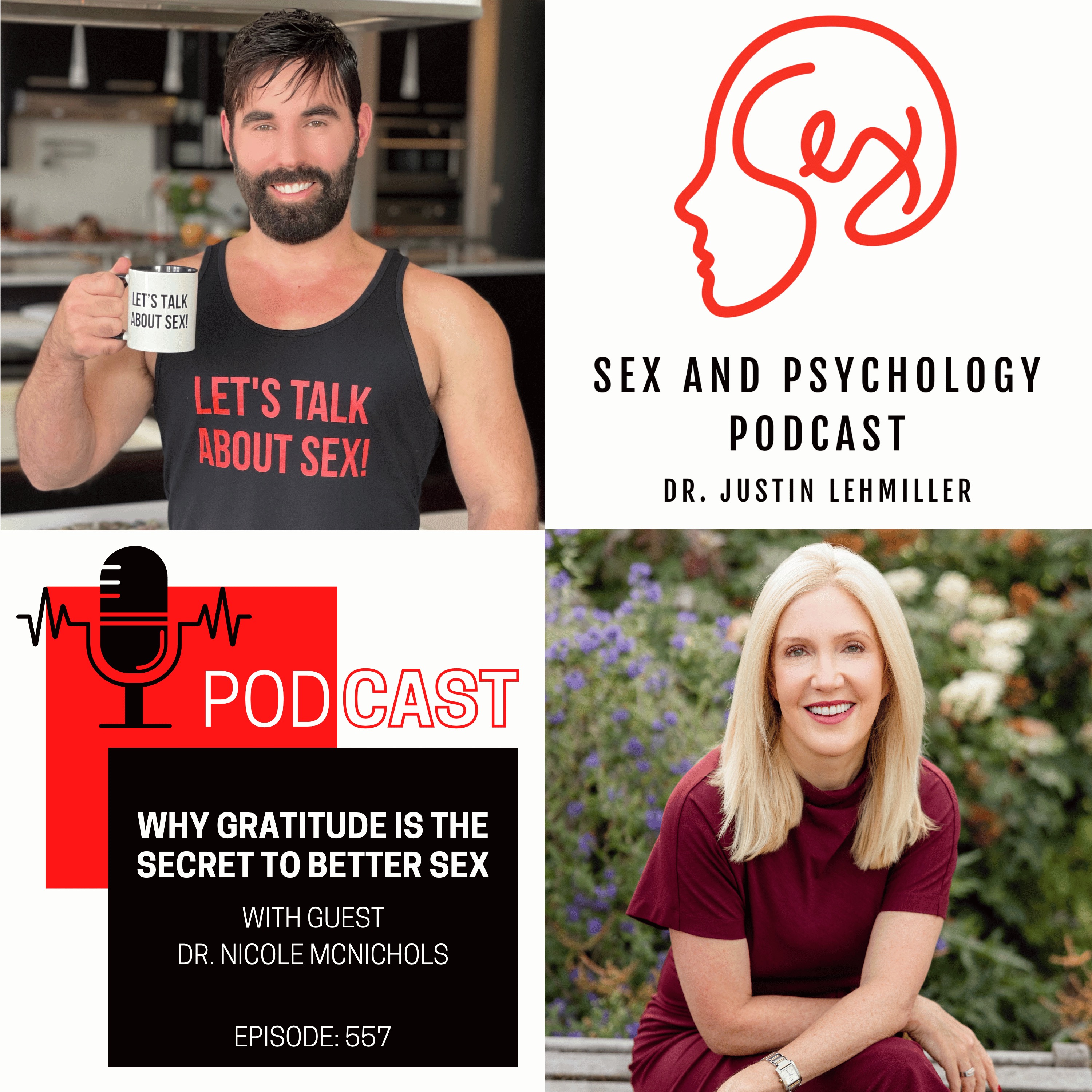
Thanksgiving is a time to reflect on the things we're grateful for, but when was the last time you stopped to appreciate your sex life? In this episode, we're exploring the surprising connection between gratitude and sexual desire. We'll discuss how feeling appreciated can strengthen intimacy, why gratitude can motivate us to be more attentive to our partners' needs, and simple ways to bring more appreciation into our sex lives without turning it into another obligation. I am joined once again by Dr. Nicole McNichols (https://nicolethesexprofessor.com/about-nicole/), an Associate Teaching Professor in the Department of Psychology at the University of Washington. Nicole's course, "The Diversity of Human Sexuality," is the largest and most popular course in the university's history with four thousand enrolled students each year. Nicole is author of the book You Could Be Having Better Sex. (https://link.amazon/B0iYWx0Q4) Some of the specific topics we cover include: What does it mean to p
In this episode, we discuss how deer browsing helps or harms plant communities and how you can balance cover, food plots, and wildlife objectives. Resources: The Skinny Hen Hypothesis | #206 (https://sites.libsyn.com/453219/WildTurkeyScience/the-skinny-hen-hypothesis-206) Turner, M. A., et al. (2026). Management scale and intensity limit forage availability on properties managed for white‐tailed deer. The Journal of Wildlife Management, 90(5), e70223. (https://pdfhost.io/v/TyUrKmVMFp_Turner) Turner, M.A., et al. (2026). Vegetation composition and structure influences female wild turkey survival during incubation. Journal of Wildlife Management. (https://pdfhost.io/v/neYCn8Q3fp_Turner) Westlake, S. M., et al. (2020). The magnet effect of fire on herbivores affects plant community structure in a forested system. Forest Ecology and Management, 458, 117794. (https://www.sciencedirect.com/science/article/pii/S0378112719318821) Our lab is primarily funded by donations. We've launched our sec
If you're wondering which oaks to plant for turkeys, you'll want to tune into this recycled episode with Dudley Phelps, Mossy Oak Nativ Nurseries plant expert and co-host of the Gamekeeper Podcast, to learn about his go-to species and successful strategies for planting trees to attract turkeys. Mossy Oak Nativ Nurseries (https://www.nativnurseries.com/?srsltid=AYCX9vLwP_BD7957Vb9oacpsNxhwJaVONc6fi0ZBZUtRx1lm0WDlw-Lm) Our lab is primarily funded by donations. Resources: Boggess, C. M., et al. (2021). Facultative seed predators drive community-level indirect effects of mast seeding. Forest Ecology and Management, 502, 119713. (https://pdfhost.io/v/YbJ6e9bLcT_Boggess) Harper, C. A., et al. (2021). Plant community response and implications for wildlife following control of a nonnative perennial grass. Wildlife Society Bulletin, 45(4), 618-629. (https://pdfhost.io/v/Zp8OOC~xW_Plant_Community_Response_and_Implications_for_Wildlife_Following_Control_of_a_Nonnative_Perennial_Grass) Mossy Oak N
Public sports funding should prioritize everyday participation over elite competition.
Share your view, then see how readers voted. No sign-in required. This poll is shared across stories.
Do you agree or disagree?
Common Quandary
A Common Quandary to discuss
Another conversation to explore, separate from this news story.
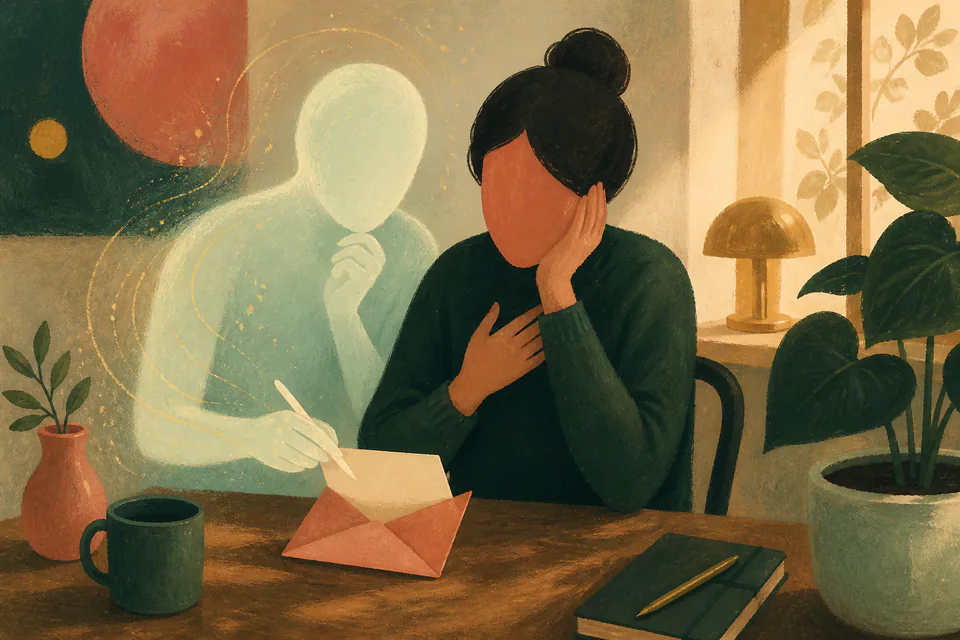
An AI wrote the perfect condolence message for you. Is it still from the heart?
Your friend is grieving. You want to reach out, but words fail you, so you ask an AI to draft a condolence message. It expresses exactly what you feel. You revise it and send it without mentioning the help.