Listen through the publisher, then discuss the episode here or arrange an in-person Roundtable. Your city determines where to meet.
Roundtables are designed for groups of four, with a shared subject and room for everyone to speak. Come for discussion, with no dating expectation.
1920 FORD MOTOR COMPANY The provided sources feature a conversation between John and Jim regarding the historical patterns of economic booms and busts. The speakers analyze previous market crashes, such as the dotcom bust of 2000 and the 1987 stock market crash, drawing comparisons to the current artificial intelligence and data center speculation. They discuss how speculative bubbles often attract uninformed retail investors—referred to as sheep—before ultimately triggering corrections, tighter regulations, or severe recessions. Furthermore, the discussion touches upon modern economic anomalies like the wealth effect, where household stock holdings exceed housing values, and how local communities are increasingly pushing back against the disruptive infrastructure demands of data centers.
Episode information is provided by the publisher. Listening takes place on the publisher’s service.
Until a little under two weeks ago, Silicon Valley Bank was the sixteenth largest bank in the United States, the favoured choice of tech startups due to the tailored services it provided. But by 10th March 2023, American authorities were taking control of SVB following its collapse. It had assets of over $200bn, making for the second biggest bank failure in US history. There were a number of factors behind the collapse, and it’s causing concern as it’s common for one bank collapse to be followed by another, due to what’s called financial contagion. Indeed, just a few days later it was the turn of New York-based Signature Bank to collapse. And over in Europe, Switzerland’s second largest bank Crédit Suisse had to take out a $54bn to stay afloat, before then being bought out by the country’s largest bank UBS, in a bid to halt the crisis. Why did Silicon Valley Bank collapse? How do stock market crashes happen? In under 3 minutes, we answer your questions! To listen to the last episodes,
On this episode Tim and the crew are joined by Brian Shapiro to discuss: Mamdani delays plan to shut down Rikers jail in NYC Trump announces ban on data centers outside US Food Supply in Jeopardy after USDA cyberattack GTA 6 getting negative reviews Hosts: Rebeka @RebekaZeljko (everywhere) Phil @PhilThatRemains (X) | https://allthatremains.komi.io/ Tate @realTateBrown (everywhere) Lisa @Lisaelizabeth (X) Guest: Brian Shapiro Brian Shapiro is a longtime Las Vegas radio and podcast host of Pushing the Limits, airing weekdays on KSHP 1400 AM / 107.1 FM and streaming widely online. He has been on the air in Las Vegas for over 20 years, blending news, politics, sports, and entertainment while interviewing high-profile guests (including politicians and celebrities) and engaging in lively, often heated debates with callers from across the political spectrum.
In 1976, the world was introduced to the underdog boxer Rocky Balboa. The film, which pitted an unknown challenger against the heavyweight champion of the world, made its star and writer, Sylvester Stallone, a household name. Stallone had written the script in three and a half days, but despite enthusiasm from producers for the story, he struggled to convince them to give him the part. Made with a small budget and on a tight deadline, the movie won three Academy Awards, including best picture. Produced by Tim O’Callaghan using interviews Sylvester Stallone has given to the BBC.
Billions in taxpayer dollars allegedly lost to fraud, Chinese-backed efforts to undermine American energy production, and a growing wave of AI-powered cyber threats. Is America doing enough to protect itself? John Solomon and Amanda Head are joined by Minnesota Congressman Pete Stauber, who discusses the expanding welfare fraud scandal, efforts to hold those responsible accountable, and allegations that Chinese-funded organizations are working to obstruct American mining and energy projects. Stauber also addresses permitting reform and the battle over America's critical mineral independence. Then, American Energy Institute CEO and former Texas state representative Jason Isaac warns that proposed electricity price controls could discourage investment, threaten grid reliability, and ultimately drive energy costs even higher. He also examines China's influence over global oil markets, America's growing energy production, and how AI data centers could generate their own electricity rather
Can artificial intelligence replace the voices of rock’s greatest singers? And if it can, what happens to the musicians who spent decades developing those unmistakable sounds? On this episode of CHRIS AKIN PRESENTS, Chris welcomes Danny Vaughn of TYKETTO for a revealing conversation about the band’s latest release, CLOSER TO THE SUN, the changing music industry, and the growing influence of AI-generated music. Get Tyketto's CLOSER TO THE SUN on Vinyl while supplies last! https://link.amazon/B0c4HJfbA Danny doesn’t hold back when discussing artificial intelligence. From computer-generated singers that sound eerily similar to established rock vocalists to technology that can imitate an artist’s unique phrasing, he raises serious questions about where creativity ends and exploitation begins. Could AI eventually produce new AC/DC albums without AC/DC? And who should profit when technology recreates a musician’s signature sound? But there’s much more to this interview than AI. Danny takes u
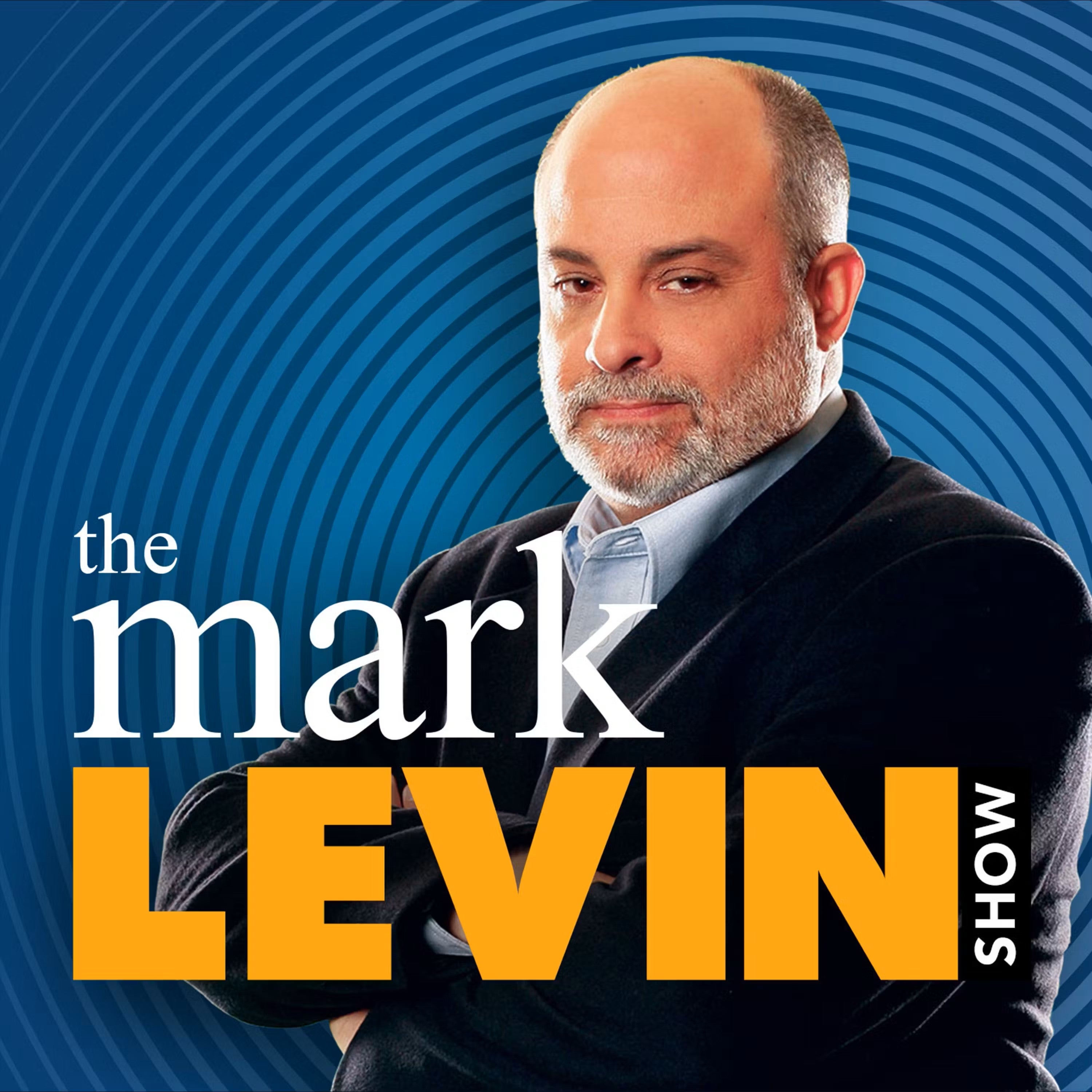
On Friday’s Mark Levin Show, Alabama residents are speaking out over plans to expand the Auburn Islamic Center and build a mosque. Residents argued their opposition was not political or based on religious hatred, but on concerns about an ideology which threatens American society. These local governments are treating mosques the same as other houses of worship under zoning rules, but officials should use regulatory and ordinance processes to scrutinize such projects. This Auburn Islamic Center is about a foreign power attempting to extend its influence deeper into America. Local zoning boards should put a stop to this. Meanwhile, Texas Governor-elect Gina Hinojosa, despite campaigning as a centrist focused on the American Dream, is pursuing policies that favor migrants and H-1B visa holders over American citizens by expanding migrant hiring in schools and state jobs. These policies will lower wages, reduce job opportunities for citizens, increase housing costs, and weaken public infrast
2014 GANYMEDE CONTENTS JOHN BATCHELOR SHOW 11-20-2026 California Storms Train Robberies City Politics — Part One Jeff Bliss reports that severe Pacific storms are dumping heavy snow across Lake Tahoe while driving massive coastal surges against the sand berms protecting beaches. Meanwhile, Los Angeles Mayor-elect Nithya Raman faces mounting criticism over thousands of missed votes, and police have apprehended a gang that stole twenty million dollars in goods from moving freight trains. (1) Beatles Vegas Historic Atomic Tests Formula — Part Two Jeff Bliss recalls how, in August 1964, the Beatles transformed Las Vegas entertainment by moving from the small Congo Room to the Convention Center for sixteen thousand fans. Archival footage from 1957 shows unwitting spectators on Fremont Street watching atmospheric nuclear tests, while today's Las Vegas hosts thrilling Formula Oneraces. (2) Iranian Conflict Regime Change War Powers — Part One Richard Epstein analyzes the military clashes betwe
1945 LIMA APEC Summit Pacific Rim Regional Diplomacy — Part Two Professor Evan Ellis analyzes the APEC summit in Shenzhen, where President Xi Jinping engaged Latin American leaders. Peru’s Keiko Fujimori advanced the landmark Chancay port project, Chile’s José Antonio Kast addressed economic contraction through mining and Antarctic collaboration, and Mexico’s Claudia Sheinbaum sought balanced trade and biotech exchanges. (16)
1928 FALKLANDS Argentina Economic Reforms Milei China Relations — Part One Professor Evan Ellis, returning from Argentina, reviews President Javier Milei’s artificial intelligence investment drive alongside his political difficulties, including thirty-six percent approval and high poverty. Despite doubled trade with China in soy and lithium, Argentina has enacted telecom security laws limiting Chinese vendors while navigating cryptocurrency controversies. (15)
Punishments should be evaluated by their effect on future harm, not only their severity.
Share your view, then see how readers voted. No sign-in required. This poll is shared across stories.
Do you agree or disagree?
Common Quandary
A Common Quandary to discuss
Another conversation to explore, separate from this news story.
Your coworker bends a dumb rule to help people. Do you report it?
An underpaid coworker quietly bends a company rule to help colleagues receive benefits they were technically denied. No customer is harmed, but the records are inaccurate and you are asked to certify them.
Where should loyalty end when a rule seems unjust?