Listen through the publisher, then discuss the episode here or arrange an in-person Roundtable. Your city determines where to meet.
Roundtables are designed for groups of four, with a shared subject and room for everyone to speak. Come for discussion, with no dating expectation.
Taiwan faces mounting questions about its ability to defend itself, a bitter fight over defense spending, and uncertainty about Washington's commitment to its security. Michael Hunzeker (George Mason University), Amanda Hsiao (RAND), and Peter Mattis (Jamestown Foundation) join Ryan to examine whether Taiwan is preparing fast enough for a possible war, what's holding up a major U.S. arms package, and whether warmer relations between Washington and Beijing could come at Taipei's expense. They also turn to Taiwan's Nov. 28 local elections, where the results could shake up the island's political landscape and spell trouble for the KMT ahead of the 2028 presidential race. This episode is sponsored by Kibu, which ensures you always know who's on the other end of every conversation, wherever it happens. Learn more about Kibu at warontherocks.com/kibu (https://warontherocks.com/kibu).
Episode information is provided by the publisher. Listening takes place on the publisher’s service.
On this week’s edition of “Happy Hour,” Emily Jashinsky tackles whether America’s political system is irreparably broken, the growing distrust of political institutions, and why voters are increasingly fed up with corruption and self-serving politicians. She discusses Thomas Massie’s political future, the possibility of breaking up the two-party system, why she generally distrusts ProPublica’s reporting, and the ethics of the Supreme Court. She also weighs in on the dangers of authoritarian communism, foreign influence in Washington, and why maintaining faith in elections is so important. Emily addresses the political risks of embracing artificial intelligence, which careers might survive the technological revolution, and why she struggles to unplug from work. Finally, she shares her favorite time to visit Washington, D.C., her thoughts on Robert Pattinson as the next James Bond, and more… Hosted by Simplecast, an AdsWizz company.
Runaway government spending, rising costs, and a new wave of legal battles over constitutional rights. With Democrats preparing to take control of Congress and several state governments, Republicans are confronting a very different political landscape. John Solomon and Amanda Head welcome Montana Senator-elect Kurt Alme, who says Washington must get serious about reining in spending, lowering inflation, and making everyday life affordable again. Already preparing for his arrival in the Senate, Alme discusses his priorities for protecting Montana's way of life, keeping taxes low, creating good-paying jobs, and working across party lines when possible. He also addresses the challenges Republicans face in the minority, the remaining lame-duck session, and concerns about efforts to expand the Supreme Court and eliminate the filibuster. Then, Southeastern Legal Foundation President Kimberly Hermann joins the show with a warning about potential policy reversals in states where Democrats have
Newsround Part 2. Lewis Aspinall returns for the final section of Newsround on Anfield Index, focusing on Ronald Araújo's Liverpool future and why the Reds should make his move from Barcelona permanent. With Araújo enjoying his time at Anfield, the defender has spoken positively about the welcome he has received from Liverpool's players, staff and supporters. However, the Uruguay international remains cautious about his future, admitting that any permanent transfer will depend on several parties reaching an agreement. Lewis examines Barcelona's position, including comments from sporting director Deco, and explains why Liverpool could have an opportunity to secure a defender who has quickly become an important part of Andoni Iraola's system. From his physicality and aerial dominance to his ability to operate at right-back and drop into a back three, Lewis believes Araújo offers Liverpool something their defence has been missing. But what happens when Conor Bradley returns? Lewis explain
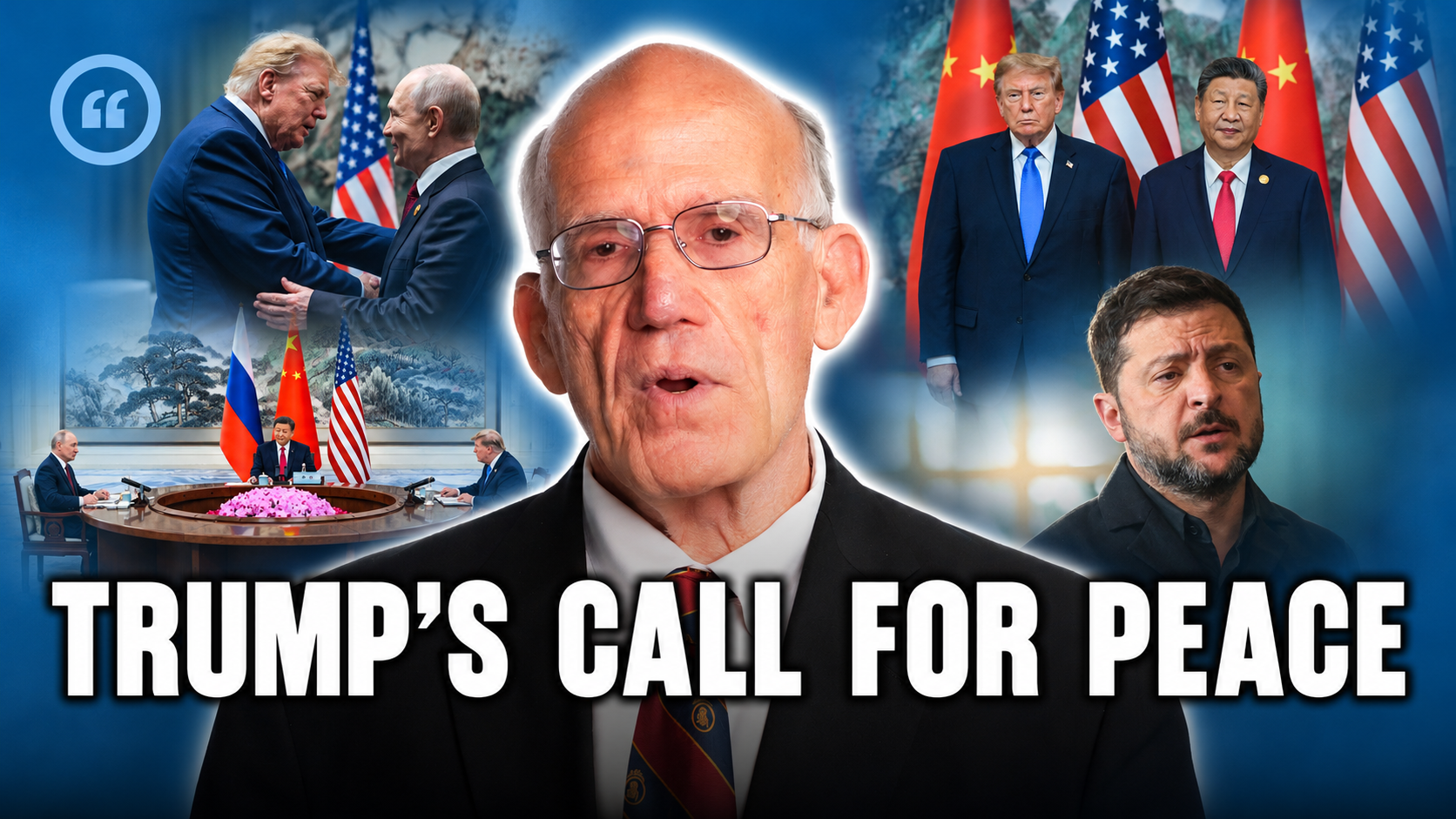
President Donald Trump's first ever trilateral summit with Vladimir Putin and Xi Jinping raises questions about the future of the war in Ukraine and whether a peace agreement could finally be within reach. Victor Davis Hanson and Sami Winc examine the summit on today’s edition of “Victor Davis Hanson: In His Own Words,” discussing Russia's declining influence, potential territorial concessions in Ukraine, and Europe's frustration over Trump's peace negotiations. Hanson criticizes Hillary Clinton's attacks on Trump's diplomacy; he also argues that European leaders have weakened their influence by neglecting defense spending and relying on American military protection. They discuss Elon Musk's shifting political allegiances, and Hanson warns that distancing himself from MAGA may not protect him from Democrat investigations. They also discuss the potential economic benefits of artificial intelligence and the challenges facing Hakeem Jeffries as Democrats prepare to take control of the Hou
2014 GANYMEDE CONTENTS JOHN BATCHELOR SHOW 11-20-2026 California Storms Train Robberies City Politics — Part One Jeff Bliss reports that severe Pacific storms are dumping heavy snow across Lake Tahoe while driving massive coastal surges against the sand berms protecting beaches. Meanwhile, Los Angeles Mayor-elect Nithya Raman faces mounting criticism over thousands of missed votes, and police have apprehended a gang that stole twenty million dollars in goods from moving freight trains. (1) Beatles Vegas Historic Atomic Tests Formula — Part Two Jeff Bliss recalls how, in August 1964, the Beatles transformed Las Vegas entertainment by moving from the small Congo Room to the Convention Center for sixteen thousand fans. Archival footage from 1957 shows unwitting spectators on Fremont Street watching atmospheric nuclear tests, while today's Las Vegas hosts thrilling Formula Oneraces. (2) Iranian Conflict Regime Change War Powers — Part One Richard Epstein analyzes the military clashes betwe
All the latest Leeds United news for Friday 20th November, as Leeds get ready for Stamford Bridge. Calvert-Lewin’s future. The Man Utd interest appears to have cooled, Leeds are planning talks over a new deal (possibly to 2030), and the striker is reported to be happy and “thoroughly enjoying his football”. Farke: “It’s always our plan we want to keep our best players.” Chelsea preview: the set-piece battle. Five of Leeds’ 10 league goals have come from dead balls, and no side has conceded more from set pieces than Chelsea. With Rodon back and Calvert-Lewin rested, could corners decide Saturday? Tanaka contract talks. Leeds are reportedly preparing to open talks with Ao Tanaka, who has just over 18 months left on his deal. Plenty of clubs are said to be watching, but he’s settled and loving life at Elland Road. How much room do Leeds have to spend? Independent estimates put Leeds sixth-lowest in the Premier League under the new Squad Cost Ratio rules, with around £42m of headroom befor
How the Army makes decisions, communicates orders, coordinates forces, and keeps operations moving toward a common goal is undergoing a revolution. It's called Next Generation Command and Control. Two of its architects — Lt. Gen. Matthew W. McFarlane, commanding general of I Corps, and Maj. Gen. Patrick J. Ellis, commanding general of the 4th Infantry Division — joined us to discuss this important set of organizational and technological innovations. Our thanks to AeroVironment for sponsoring the event at which this episode was recorded.
Environmental marketing claims should require independent verification.
Share your view, then see how readers voted. No sign-in required. This poll is shared across stories.
Do you agree or disagree?
Common Quandary
A Common Quandary to discuss
Another conversation to explore, separate from this news story.
You are training the software that may replace your team. Do you warn them?
A manager is asked to help test software that could eliminate several jobs on their team. Leadership insists the project is uncertain and confidential, while employees are making major financial decisions.
When does loyalty to colleagues override professional confidentiality?