Listen through the publisher, then discuss the episode here or arrange an in-person Roundtable. Your city determines where to meet.
Roundtables are designed for groups of four, with a shared subject and room for everyone to speak. Come for discussion, with no dating expectation.
How the Army makes decisions, communicates orders, coordinates forces, and keeps operations moving toward a common goal is undergoing a revolution. It's called Next Generation Command and Control. Two of its architects — Lt. Gen. Matthew W. McFarlane, commanding general of I Corps, and Maj. Gen. Patrick J. Ellis, commanding general of the 4th Infantry Division — joined us to discuss this important set of organizational and technological innovations. Our thanks to AeroVironment for sponsoring the event at which this episode was recorded.
Episode information is provided by the publisher. Listening takes place on the publisher’s service.
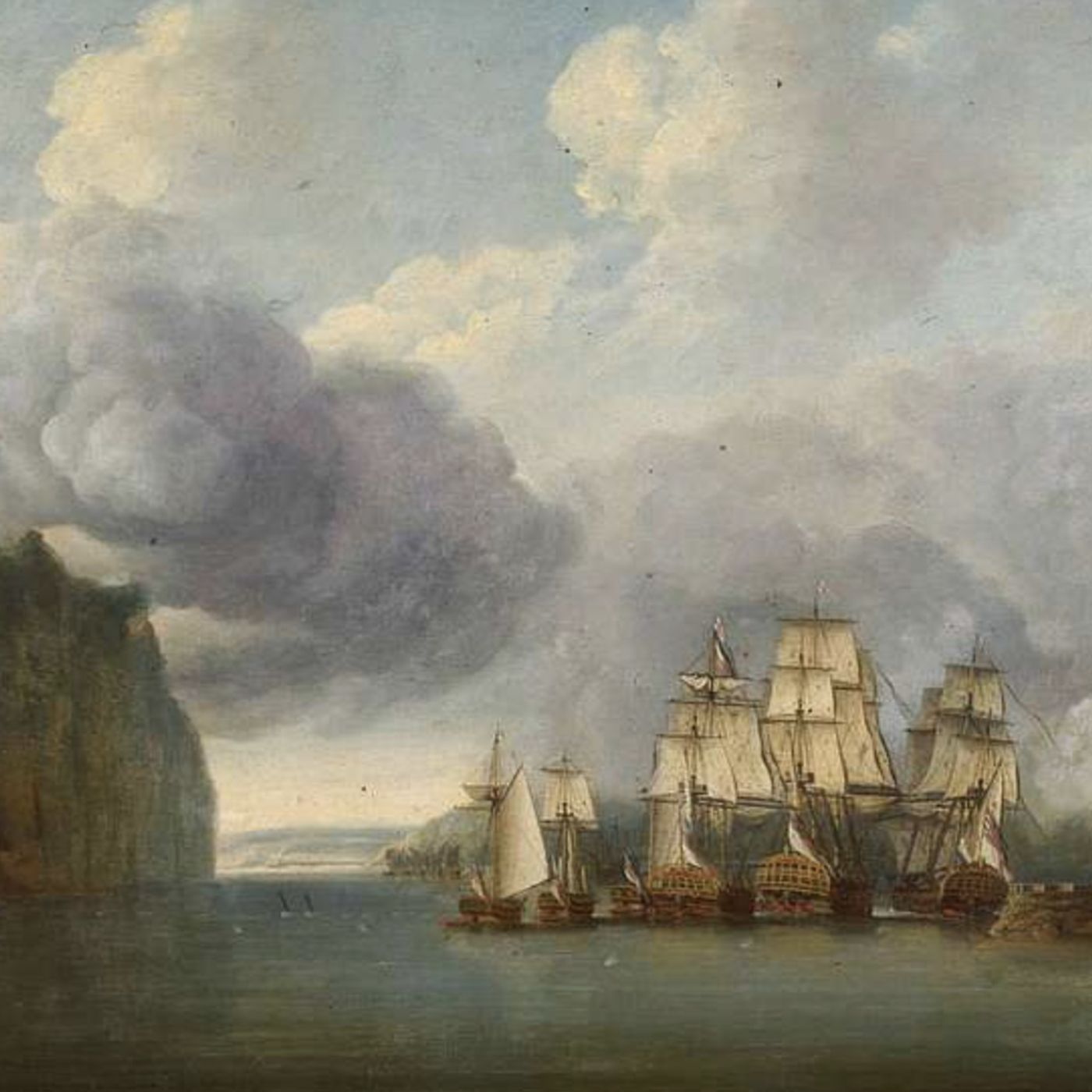
1799 ROYAL NAVY ON THE HUDSON 1777 Battle of Bemis Heights General Fraser Death — Part Two Patrick K. O’Donnell, author of Revolutionary Snipers: Washington’s Frontier Commandos Whose Marksmanship Forged a New Way of War and Helped Win the Revolution, recounts the Battle of Bemis Heights on October 7, 1777, when British forces launched a reconnaissance in force across a wheatfield. Morgan’s riflemen and Henry Dearborn’s infantry flanked the British right, and sniper Timothy Murphy mortally wounded General Simon Fraser, shattering enemy morale and breaking the British line. (10)
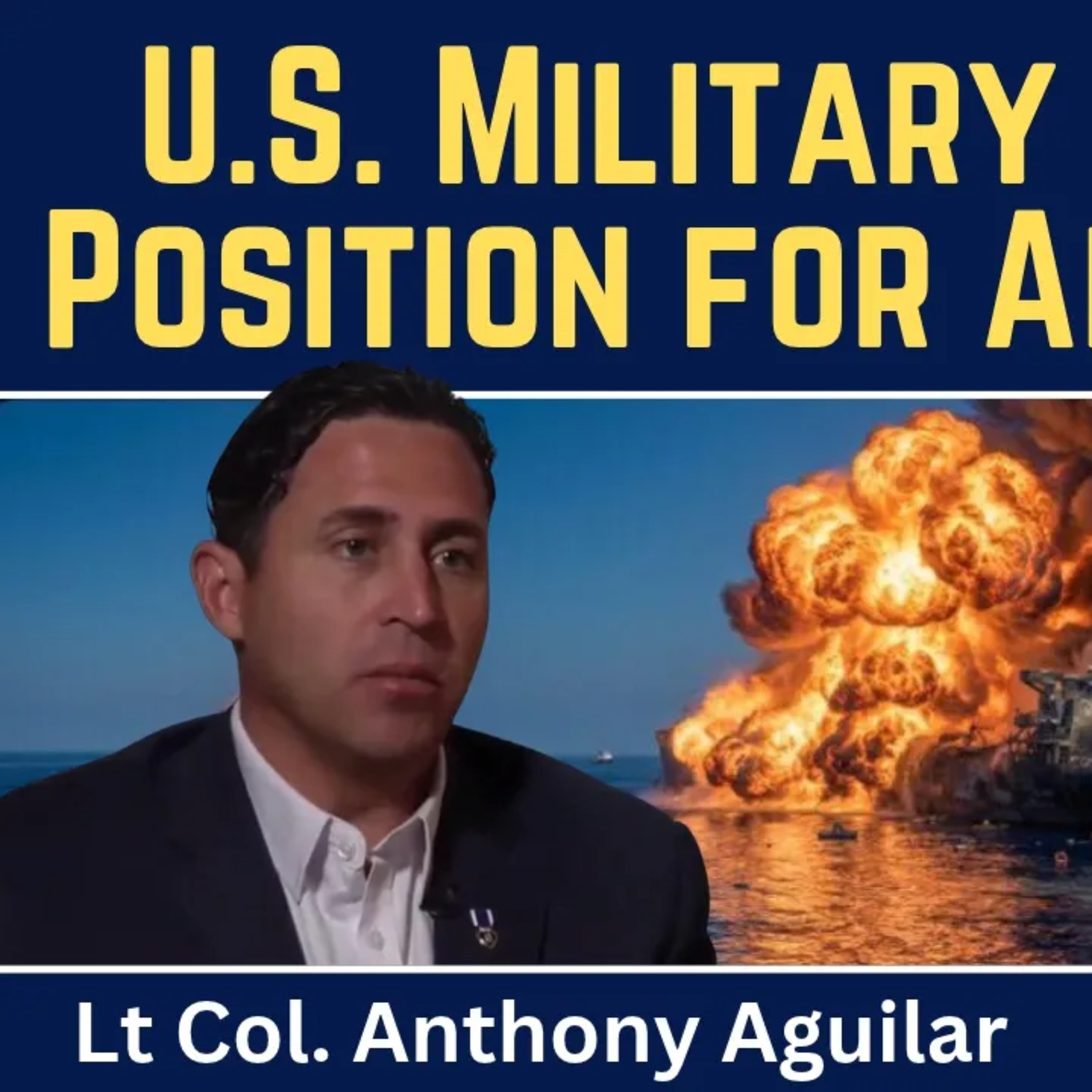
Anthony Aguilar is a retired Lieutenant Colonel in the U.S. Army, a Special Forces Green Beret who served as a combat infantry officer for 25 years in Afghanistan, Iraq, Syria, Jordan, the Philippines, Thailand, Malaysia, Cambodia, Vietnam, Kazakhstan, and Tajikistan. Aguilar worked as an aid contractor for Gaza Humanitarian Foundation (GHF), and became a whistleblower as he exposed the atrocities.Follow Prof. Glenn Diesen: Substack: https://glenndiesen.substack.com/ X/Twitter: https://x.com/Glenn_DiesenPatreon: https://www.patreon.com/glenndiesen Buy Diesen merchandise: https://diesen-shop.fourthwall.com/en-nokSupport the research by Prof. Glenn Diesen: PayPal: https://www.paypal.com/paypalme/glenndiesenBuy me a Coffee: buymeacoffee.com/gdiesengGo Fund Me: https://gofund.me/09ea012fBooks by Prof. Glenn Diesen: https://www.amazon.com/stores/author/B09FPQ4MDL00:00 Introduction to Military Tensions in the Middle East01:06 US Military Build-Up and Strategic Messaging10:24 Iran's Counterac
Until a little under two weeks ago, Silicon Valley Bank was the sixteenth largest bank in the United States, the favoured choice of tech startups due to the tailored services it provided. But by 10th March 2023, American authorities were taking control of SVB following its collapse. It had assets of over $200bn, making for the second biggest bank failure in US history. There were a number of factors behind the collapse, and it’s causing concern as it’s common for one bank collapse to be followed by another, due to what’s called financial contagion. Indeed, just a few days later it was the turn of New York-based Signature Bank to collapse. And over in Europe, Switzerland’s second largest bank Crédit Suisse had to take out a $54bn to stay afloat, before then being bought out by the country’s largest bank UBS, in a bid to halt the crisis. Why did Silicon Valley Bank collapse? How do stock market crashes happen? In under 3 minutes, we answer your questions! To listen to the last episodes,
What is really happening behind the explosive Nvidia controversy? Has Washington used a personal scandal to wage an even bigger war against China's technological rise? In this conversation, Carl Zha joins Rachel Blevins to unpack the controversy that surrounds Nvidia CEO Jensen Huang. Carl explains why Chinese technology companies increasingly turn toward domestic semiconductor manufacturers such as Huawei and SMIC, why Beijing wants its major tech companies not to purchase Nvidia chips, and how American export restrictions accelerate China's drive toward technological self-reliance. China's open-source AI models now challenge Silicon Valley's business model, which depends on control over expensive computer infrastructure and proprietary AI systems. Does America's semiconductor blockade actually help China become stronger? In This Interview we Discuss the Nvidia controversy: what is behind the allegations that involve Jensen Huang and Alice Wong? Observe Alibaba's AI Ambitions: Chinese
After a deluge of speculation, the next James Bond has been chosen: British actor Robert Pattinson will be the next face of the franchise. The public response has been overwhelming, if somewhat divided. To celebrate, we’re revisiting an episode from June, about a behind-the-scenes David and Goliath battle between the family business which has held creative control of the franchise since the 1960s and its new owners, Amazon. It is now up to Jeff Bezos’s tech conglomerate to decide how to run the series. In an era when Hollywood studios are desperate to eke out every last dollar from movie franchises, can James Bond retain its mystique and appeal to a new generation of cinema-goers? We speak to Wall Street Journal enterprise reporter Erich Schwartzel. Producers: Xandra Ellin and Lucy Pawle Video producers: Richard Kenny and Jem Westgate Mixed by: Travis Evans Executive producers: James Shield and Martine Powers Senior news editor: China Collins Photo: Robert Pattinson as James Bond. Jaap
On this week’s edition of “Happy Hour,” Emily Jashinsky tackles whether America’s political system is irreparably broken, the growing distrust of political institutions, and why voters are increasingly fed up with corruption and self-serving politicians. She discusses Thomas Massie’s political future, the possibility of breaking up the two-party system, why she generally distrusts ProPublica’s reporting, and the ethics of the Supreme Court. She also weighs in on the dangers of authoritarian communism, foreign influence in Washington, and why maintaining faith in elections is so important. Emily addresses the political risks of embracing artificial intelligence, which careers might survive the technological revolution, and why she struggles to unplug from work. Finally, she shares her favorite time to visit Washington, D.C., her thoughts on Robert Pattinson as the next James Bond, and more… Hosted by Simplecast, an AdsWizz company.
Taiwan faces mounting questions about its ability to defend itself, a bitter fight over defense spending, and uncertainty about Washington's commitment to its security. Michael Hunzeker (George Mason University), Amanda Hsiao (RAND), and Peter Mattis (Jamestown Foundation) join Ryan to examine whether Taiwan is preparing fast enough for a possible war, what's holding up a major U.S. arms package, and whether warmer relations between Washington and Beijing could come at Taipei's expense. They also turn to Taiwan's Nov. 28 local elections, where the results could shake up the island's political landscape and spell trouble for the KMT ahead of the 2028 presidential race. This episode is sponsored by Kibu, which ensures you always know who's on the other end of every conversation, wherever it happens. Learn more about Kibu at warontherocks.com/kibu (https://warontherocks.com/kibu).
Officials should distinguish confirmed facts from uncertainty during developing incidents.
Share your view, then see how readers voted. No sign-in required. This poll is shared across stories.
Do you agree or disagree?
Common Quandary
A Common Quandary to discuss
Another conversation to explore, separate from this news story.
A better public school is one borrowed address away. Would you use it?
Your child is struggling at the assigned school. A grandparent lives inside the boundary of a much stronger public school and offers to let you use their address. The desired school has limited places and verifies residency unevenly.
Can a parent's duty justify taking an opportunity allocated by an unfair boundary?