Palantir Forward Deployed Engineer Chad Wahlquist explains how Palantir deploys sovereign AI infrastructure—including edge models on ships and modular data centers—so countries and enterprises maintain control over their IP and compute. He discusses why massive data centers face local backlash, how small modular setups and “compute co-ops” could shift the industry, and how forward deployed engineers bridge executive vision with on-the-ground execution. -- MTS chronicles the singularity, live. Monitoring the situation of tech and AI. Follow MTS: Spotify |https://open.spotify.com/show/4HUNNmV1pjV7CW6Lphm1rM Apple |https://podcasts.apple.com/us/podcast/mts/id1891088763 – Brought to you by: Mongo DB - Anyone can prototype an agent. Lovable - Turn ideas into software people love with Lovable. Start today at https://lovable.dev/ Visithttps://factory.com/ Neon (by Databricks) - Scale your startup on Neon. The Postgres backend for apps and agents. Head over to http://getvcx.com (http://getvcx.
What if your computer could organize files, browse websites, manage spreadsheets, and complete everyday tasks without you ever touching your mouse or keyboard? Google Gemini is bringing AI-powered computer automation to Mac, but Apple is preparing its own response in a growing battle over the future of personal computing. In this episode of techdaily.ai, host David and AI expert Sophia explore the rise of autonomous AI agents and the competition between Google, Apple, OpenAI, Anthropic, and Meta. As artificial intelligence moves beyond traditional chatbots, tech companies are developing systems capable of interacting directly with desktop applications, managing workflows, and performing complex tasks on behalf of users. Google's Gemini computer-use capabilities represent a major shift in how people could interact with their computers. Instead of simply generating answers, AI agents can navigate applications, organize documents, and automate repetitive work. Meanwhile, Apple is reported
Understanding the Latest Q* Leak: The "Blanket Topology" Analogy for Energy-Based ModelsEpisode release date: 22 Mar 2024Spreading awareness about the works of some of the leading educators in the AI revolution. Core Ideas: Metamodernism: Narratives and emergence view of reality - Reduce suffering - Increase prosperity - Increase understanding mantra: Seek knowledge. ELABORATE: Add depth and detail to understanding, weaving comprehensive and nuanced explanations.DISCLAIMER: This is a community-driven show. ------------------------Understanding the Latest Q* Leak: The "Blanket Topology" Analogy for Energy-Based ModelsEpisode release date: 22 Mar 2024Spreading awareness about the works of some of the leading educators in the AI revolution. Core Ideas: Metamodernism: Narratives and emergence view of reality - Reduce suffering - Increase prosperity - Increase understanding mantra: Seek knowledge. ELABORATE: Add depth and detail to understanding, weaving comprehensive and nuanced explanatio
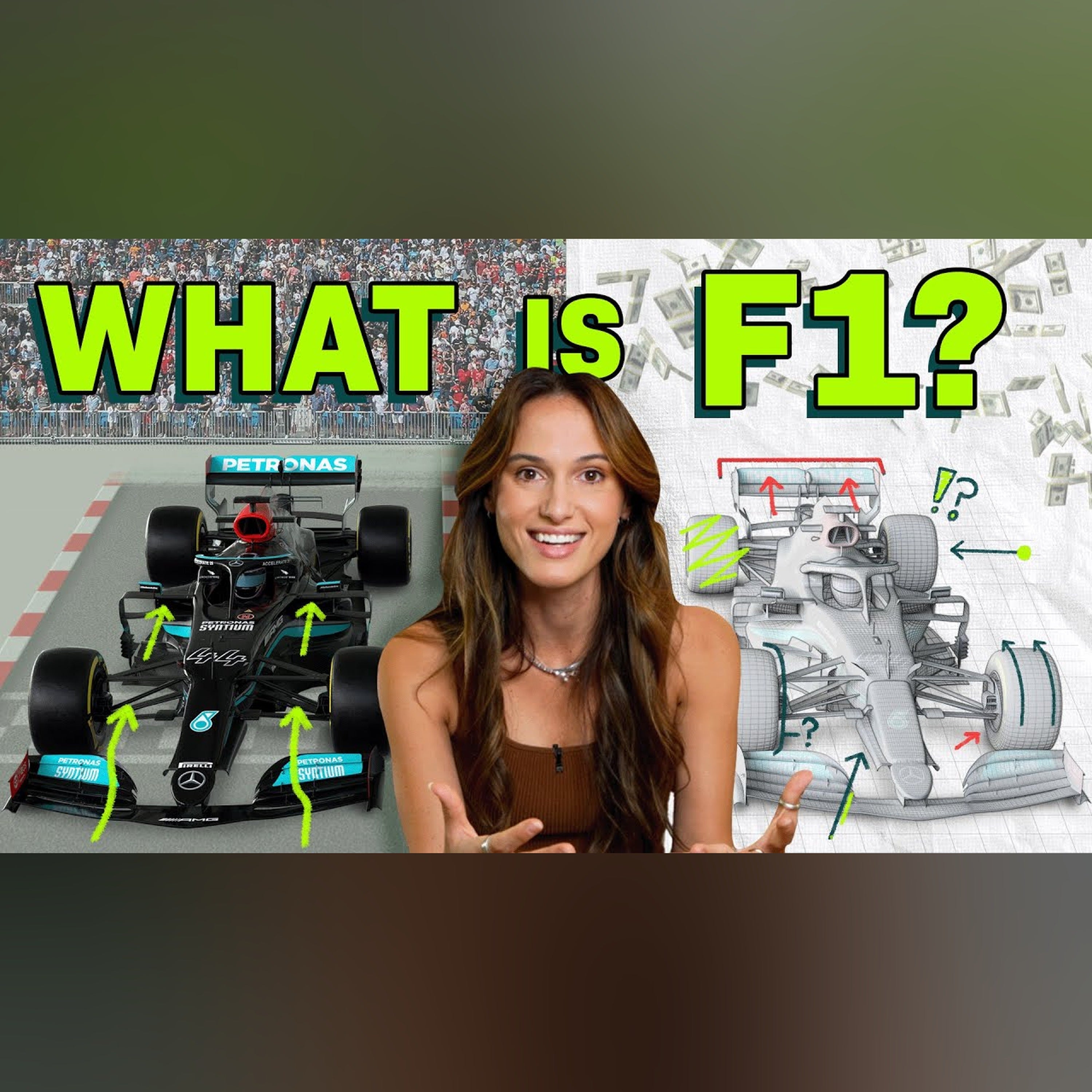
F1 isn’t just a car race. It’s a science experiment. You’ve been hearing about F1 too, right? Formula 1 is skyrocketing in popularity in the US, driven in part by the Netflix series Drive To Survive. In this video, we’ll break down exactly what you need to know to keep up with this crazy, expensive sport everyone’s suddenly obsessed with. But we’ll also take a deeper look at the big (HUGE*!) question here, which is: Why do this? Why pour so much money, so many bright minds, so much technological effort into F1… into entertainment? The answer is in what we get in return. Formula 1 is much more than a car race. It’s a space program, for the road. Chapters: 00:00 Why is F1 so popular right now? 01:32 Is F1 worth it? 02:09 WTF is F1? 04:15 How does an F1 race work? 04:57 How does F1 scoring work? 05:36 How does an F1 car work? 07:39 What does an F1 team cost? 08:44 Do F1 teams make money? 09:40 Is F1 wasteful? 10:15 Why is F1 a science experiment? 11:23 Does F1 tech help road cars… really?
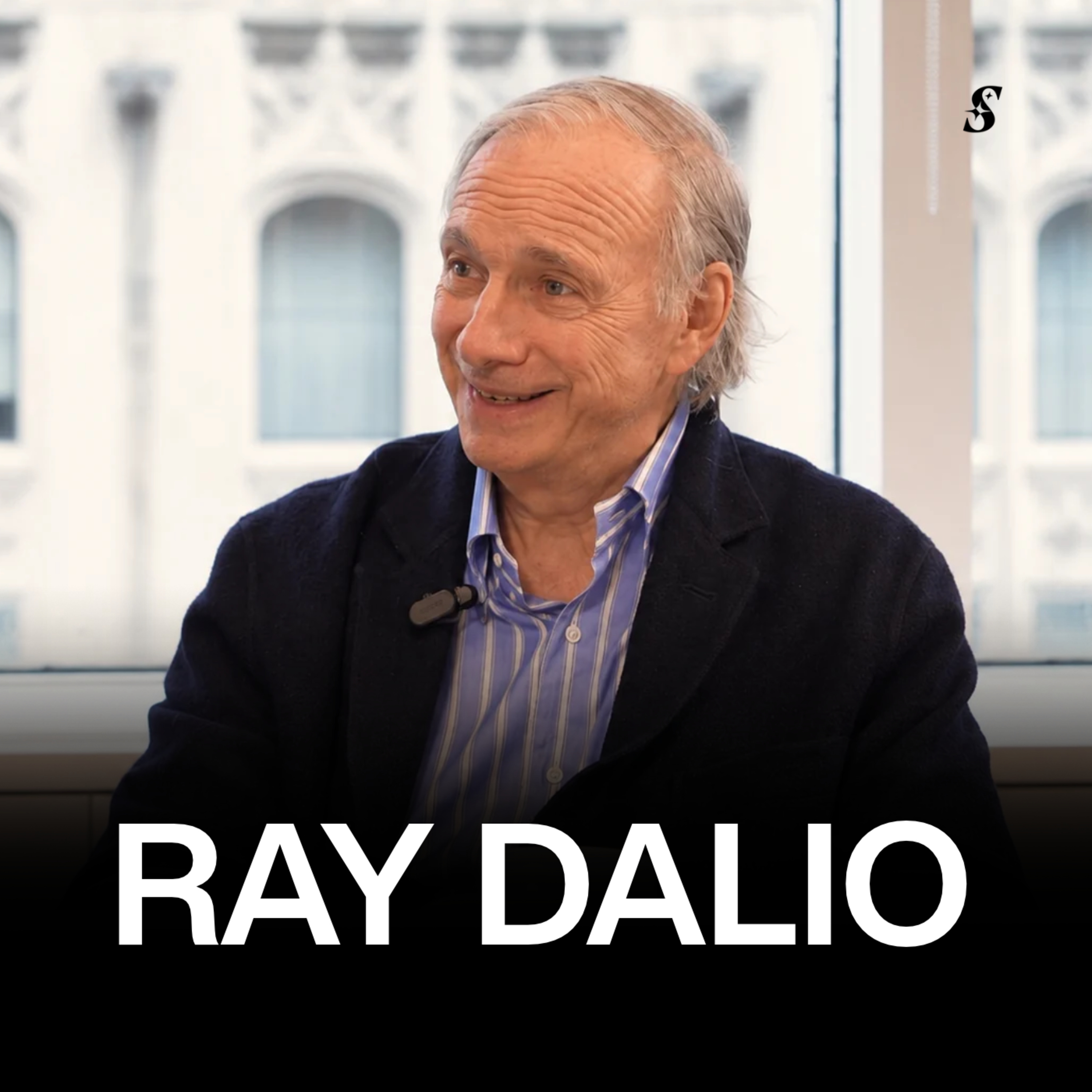
Ray Dalio has been on my top 100 dream guest list since I started Sourcery. I finally had the opportunity to sit down with him for a conversation that went well beyond markets. With the next shift in America's political leadership underway and AI creating extraordinary wealth, we discuss the forces reshaping the global economy and what comes next. Ray explains why great technologies don't always make great investments, what actually causes financial bubbles to burst, and why the difference between wealth and money matters more than most investors realize. We also explore the growing wealth divide, Anthropic and SpaceX's trillion-dollar valuations, and the AI system he's building to automate his own investment principles and decision-making. We also go inside Bridgewater's unconventional approach to hiring, radical transparency, and evaluating talent, including the firm's Dot system and the traits Ray believes distinguish exceptional leaders. Beyond investing, Ray shares his views on in
Interview with Jeremiah Grossman Once again, we're discussing the state of vulnerability discovery and vulnerability management with Jeremiah Grossman, the CEO and co-founder of Root Evidence. For this interview, I’m calling our topic the “commons dilemma”, which is related to the tragedy of the commons. To quote Wikipedia: the commons dilemma is a specific class of social dilemma in which people’s short-term selfish interests are at odds with long-term group interests and the common good. We discuss the disconnect between vulnerability discovery, defenders, and attackers. Some find vulns for clout, some do it for marketing, while others are honestly trying to get dangerous bugs fixed to make the Internet more secure. Topic Segment Our topic segment comes from Mike Privette's Security, Funded newsletter (https://www.returnonsecurity.com/subscribe). Which security category makes a resurgence in Q4 2026? AI SOC API security Email security Security awareness training Other (tell me) Mike’
Take a Network Break! Virtual donuts are up, but everything else seems to be going down. This week’s show covers Red Alerts for Oracle and OpenJDK. In the news, outages were everywhere, from Microsoft to the FAA to US banks to the NSA and Apple. Palo Alto Networks acquires AI service provider Applied Compute, Arista... Read more » (https://packetpushers.net/podcasts/network-break/nb601-breakdowns-abound-amazon-leo-constellation-catastrophe/)
In this sponsored episode, Drew and Ethan are joined by Bob Friday of HPE for a look at their agentic AI strategy as the company continues its pursuit of the self-driving network. They discuss how the company is integrating an agentic AI framework into its existing AI ops capabilities, explore service level experience monitoring and... Read more » (https://packetpushers.net/podcasts/heavy-networking/hn852-agentic-ai-operations-merge-with-hpes-self-driving-network-sponsored/)
Bill Graham joins Scott Robohn to discuss why automation is essential for managing the increasing number of cybersecurity threats and technical debt in modern IT environments. Together they explore strategies for leveraging local AI tools for network configuration and addressing the challenges of securing legacy IoT devices. Graham also shares valuable career insights, reflections on... Read more » (https://packetpushers.net/podcasts/total-network-operations/tno080-automation-youre-our-only-hope/)
Wider communities should help fund hazard protection even when only some properties directly benefit.
Share your view, then see how readers voted. No sign-in required. This poll is shared across stories.
Do you agree or disagree?
Common Quandary
A Common Quandary to discuss
Another conversation to explore, separate from this news story.
Your family wants an AI to settle an old argument. Would you hand over the group chat?
A recurring family dispute has reached the point where nobody agrees on what was actually said. Your cousin proposes uploading five years of the family group chat to an AI that can reconstruct events, flag contradictions, and recommend a fair resolution. Nearly everyone agrees—but one relative refuses.
Can a tool make a family argument fair without turning intimacy into evidence?