The 7-Minute Daily Practice That Helps You Break Old Patterns | Seen Session: Dr Dan Siegel
13 min
Listen through the publisher, then discuss the episode here or arrange an in-person Roundtable. Your city determines where to meet.
Roundtables are designed for groups of four, with a shared subject and room for everyone to speak. Come for discussion, with no dating expectation.
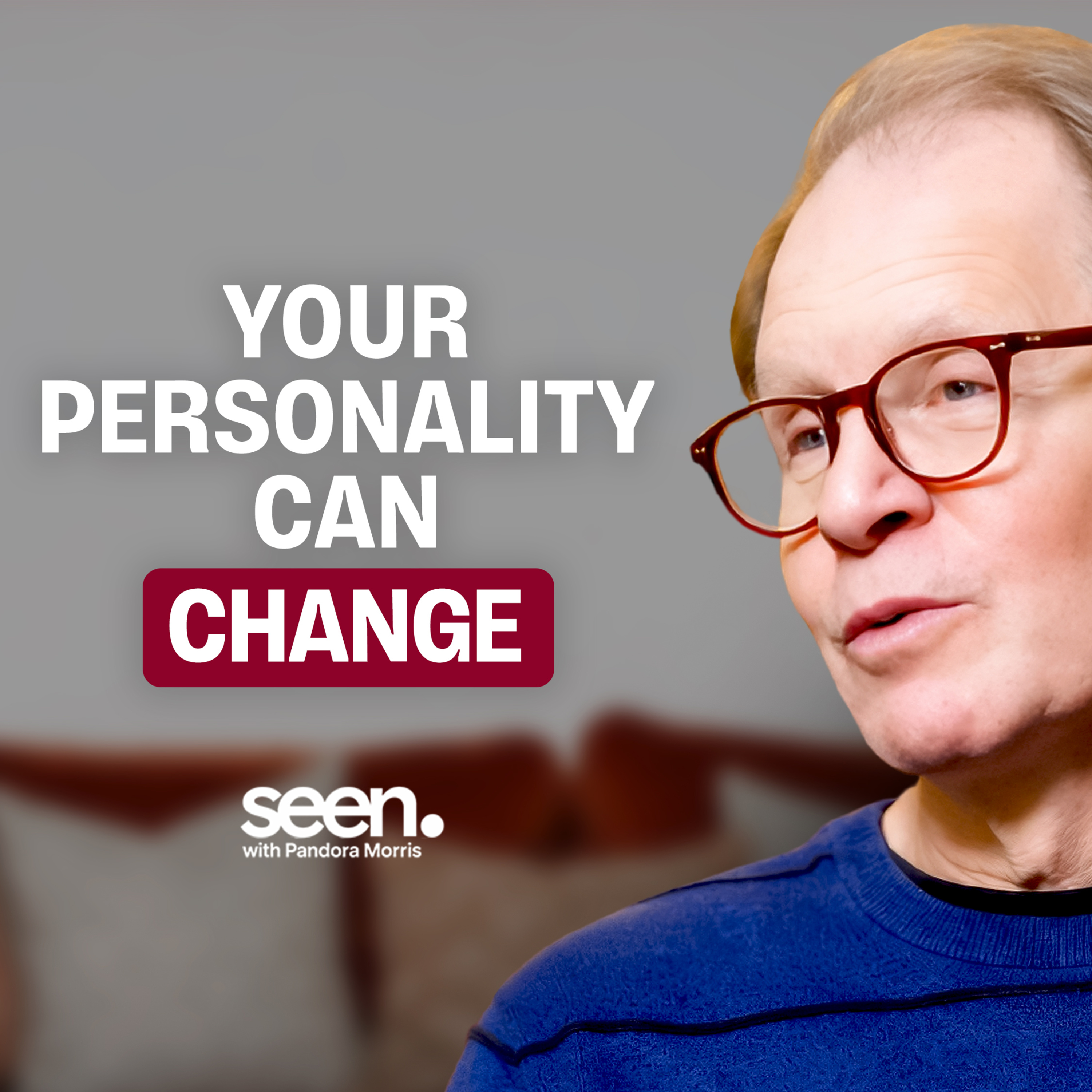
Do you know exactly why you do what you do, but still can't change it? In this Seen session, I'm joined again by psychiatrist Dr Dan Siegel to talk about how to recognise when your nervous system is overwhelmed, why understanding yourself isn't always enough to change, and the small things we can do every day to look after our minds. Dan explains the two signs of overwhelm most of us miss, why your personality is a pattern you can change rather than a fixed type, and how his Wheel of Awareness practice builds a bigger container for life's challenges, using a tablespoon of salt to show how. He also shares what a parent should say after losing their temper with their child, and the one thing he would choose to do for five minutes a day. Dan's free Wheel of Awareness practice is on his website, under Resources: https://drdansiegel.com (https://drdansiegel.com/)His books Becoming Aware and Aware guide you through the practice and the science behind it. Join the community: Never miss an episode of SEEN! Listen to the podcast anytime, anywhere. Spotify: https://open.spotify.com/show/1Ku2D90pNwBLM17HvLxlB1?si=fbcad6ff3bb24bfa Apple Podcasts:https://podcasts.apple.com/gb/podcast/seen-with-pandora-morris/id1649515453 Connect with Pandora Morris Website: https://www.seenwithpandoramorris.com/ Instagram: https://www.instagram.com/seenwithpandora/ ABOUT SEEN
Episode information is provided by the publisher. Listening takes place on the publisher’s service.
Everything Feels Urgent — 10-Minute Guided Meditation for Stress & Overwhelm | Box Breathing Does everything feel urgent? You start one thing and remember three others. A message arrives, someone needs an answer, and even when you sit down your mind keeps telling you to hurry. This 10-minute guided meditation for stress and overwhelm helps you step out of that rush, breathe comfortably and ease the pressure of trying to attend to everything at once. For calm whenever the day speeds up, download Anchored, my app for panic and anxiety. Over 2,500 of my sessions in one place, plus Books at Bedtime, an ambient night light and box breathing, and it plays with the screen off. iPhone: https://apps.apple.com/us/app/anchored-panic-anxiety/id6785035669 | Android: https://play.google.com/store/apps/details?id=com.martinhewlett.anchored Together we practise a gentle box breathing technique: in for three, hold for three, release for three and rest for three, softening the jaw and shoulders and brea
Activate your feminine energy with this 11-minute guided meditation designed to help you reconnect with your intuition, softness, and inner strength. Whether you’re feeling disconnected, overwhelmed, or out of balance, this practice will guide you gently back to your natural feminine essence — a place of grace, love, and magnetic presence. Through mindful breathwork, affirmations, and gentle visualization, you'll awaken the qualities of receptivity, compassion, and divine flow within you. This is more than a meditation — it’s a spiritual reset, a chance to return to the beauty of who you are. Perfect to start or end your day, or anytime you need to recharge your feminine power. Put on your headphones, close your eyes, and allow yourself to receive. You are worthy. You are powerful. You are radiant. #FeminineEnergy #GuidedMeditation #DivineFeminine #MeditationForWomen #Empowerment #11MinuteMeditation #FemininePower #HealingMeditation #InnerGoddess #SelfLove feminine energy guided medita
Free 21-Day Large Sums of Money Challenge: one session every morning, one every night, sent to your inbox. Join me at https://largesumsofmoney.com ⠀ Everything you want is available to you, and this activation is built to make the universe answer in real time. ⠀ Your wish is the universe's command. Not your hope. Not your prayer. Not your request. Your command. And the reason it has not been obeyed yet in the exact form you wanted is because almost no one on this planet is still speaking in the mood of command. They are speaking in the mood of the unreal. Of wanting. Of wishing while already deciding in advance that the thing stays out of reach. ⠀ This activation strips that away. In the next forty minutes your nervous system gets rewired to speak the way the field was built to receive. The hesitation that has sat in front of every one of your wishes gets dissolved. The sealed room in you, the one William James described in 1906 and almost everyone forgot about, opens. And the sentence
A hypnosis session for people pleasers who want to live life on their own terms, not on what family or other people expect of them. In this session: Why the permission to live your own way has to come from you Letting go of the resentment that builds up after a lifetime of seeking other people's opinions and approval Using your cautious side as an editor or adviser, not a brake Crossing the invisible wall to a future you want by giving yourself permission Asking "is this what I really want?" before you take the next step FREE STUFF AND DISCOUNTS: Get $25 to Spend at The Hypnotist Store Find the Hypnosis Session You Need No more scrolling through hundreds of podcast episodes. What's Your Hypnotic Type? About 4 minutes. Take the test (https://adamcox.co.uk/suitability-test/) Work With Adam Directly Trusted by CEOs, celebrities, and royalty worldwide. Connect With Adam All links (https://adamcox.co.uk/links/) | [email protected] | @adamcoxofficial (https://www.instagram.com/adamcoxoffici
Hey Team! This week I'm talking with Rebecca Challoner, co-founder of the PEKE Centre in Australia and author of the book Rejection Sensitive Dysphoria: Understanding Rejection Sensitive Dysphoria in ADHD and Neurodivergent Children and Adults. Rebecca has worked alongside many organizations, including consulting to Special Olympics Australia, the Victorian Institute of Teaching, and the Department of Health. In the episode we get into how her experiences as a parent led her to help create a place where children could get support and be celebrated for who they are. But also how her own rejection sensitivity impacts her, including winning silver at the Australian National Karate Championships and feeling like she'd lost, and how interpreting silence as criticism kept her from singing for years. We also explore five responses Rebecca associates with RSD, from perfectionism to avoiding trying altogether, and talk about demand avoidance, including how the tone of a request can matter just
Dan Sheridan was drinking 18 cans of Stella a day, with ten pints as well, when alcoholism had taken over his life. Diagnosed with cirrhosis of the liver at just 40, he was told that if he carried on drinking, he might have only two years to live. His response was to walk straight to Sainsbury’s and buy another 36 cans. This is a powerful story of alcohol addiction, liver failure, a near-death experience, organ transplantation and the difference between simply stopping drinking and finding recovery. For years, Dan hid behind “Big Dan”, the funny, larger-than-life character who could make everyone laugh and seemed to be the life and soul of the party. Behind that persona was a man struggling with loneliness, low self-esteem and a deep sense that he never fitted in. Alcohol offered escape and, at first, a way to feel accepted. Over time, it became something he needed just to stop the shakes. In 2019, Dan was diagnosed with cirrhosis. Despite being warned that continued drinking could kil
Why does addiction so often begin with the feeling that you’re never enough? And what does it take to stop when you’ve tried, and failed, every single day? On this episode of Seen, I’m joined by author Sarah Hiscox, whose memoir The Beginning and End of Everything tells the story of her bulimia, heroin addiction and recovery. I devoured it, and I identified with so much of what she wrote. Sarah takes me back to a childhood where she never felt enough, from telling classmates that Björn Borg was her dad to being given sleeping pills at eight. We talk about how bulimia began, why it carries so much shame, and how heroin replaced it almost overnight. She is honest about pregnancy, relapse, rehab that didn’t stick, being separated from her children, and the many rock bottoms that came before recovery finally took hold. Then we get to the part I needed to hear: the voice telling you you’re not good enough isn’t the truth, and you don’t have to lose everything before you ask for help. In thi
Why doesn't understanding your OCD make it go away? On this episode of Seen, I'm on my own to talk about OCD and self-awareness, and why knowing exactly what you're doing doesn't stop you doing it. I've had years of treatment for my eating disorder and OCD, and I've interviewed many psychologists and therapists on this podcast. I'm not a therapist, but I've learned the hard way that understanding a problem is not the same as changing it. I share what happened when I went into inpatient treatment for anorexia in South Africa at 24 and my OCD was left untreated, the NHS OCD unit I signed up for that closed when COVID hit, and the point where I was exercising eight or nine hours a day, locked in what felt like an OCD jail, while people told me how much insight I had. Then I go through the three things that actually help. In this episode, you'll learn: - How to spot when insight has become a hiding place - What to ask a therapist, from which type of therapy they practise (CBT, EMDR, DBT, I
What’s the difference between everyday dissociation and DID, and can you heal from trauma without ever confronting the person who caused it? In this Seen Session, I’m joined again by therapist Sally Maslansky, author of A Brilliant Adaptation, for some quick true or false questions on dissociation, what helps us feel safe after trauma, and how to let go of coping mechanisms that no longer serve us, without hating the part of you that needed them. Sally also shares her favourite piece of parenting advice, and the words that remind her it’s never too late. Join the community: Never miss an episode of SEEN! Listen to the podcast anytime, anywhere. Spotify: https://open.spotify.com/show/1Ku2D90pNwBLM17HvLxlB1?si=fbcad6ff3bb24bfa Apple Podcasts:https://podcasts.apple.com/gb/podcast/seen-with-pandora-morris/id1649515453 Connect with Pandora Morris Website: https://www.seenwithpandoramorris.com/ Instagram: https://www.instagram.com/seenwithpandora/ ABOUT SEEN
Institutional reforms should be judged by measurable changes in people's experiences.
Share your view, then see how readers voted. No sign-in required. This poll is shared across stories.
Do you agree or disagree?
Common Quandary
A Common Quandary to discuss
Another conversation to explore, separate from this news story.
Everyone loves the group photo except you. Can you forbid them from posting it?
At a reunion, someone takes a joyful group photo that captures the night perfectly. Everyone looks wonderful except you, caught at an awful angle. The group wants to post it publicly and promises nobody else will care.
How much control should one person have over a memory shared by many?