The Akune brothers: Siblings on opposite sides of war - Wendell Oshiro
7 min
Listen through the publisher, then discuss the episode here or arrange an in-person Roundtable. Your city determines where to meet.
Roundtables are designed for groups of four, with a shared subject and room for everyone to speak. Come for discussion, with no dating expectation.
View full lesson: http://ed.ted.com/lessons/the-akune-brothers-siblings-on-opposite-sides-of-war-wendell-oshiro Uploaded 21-07-15 There are many stories that can be told about World War II, from the tragic to the inspiring. But perhaps one of the most heart-rending experiences was that of the Akune family, divided by the war against each other, and against their own identities. Wendell Oshiro tells the surprising story of this family split apart by war. Lesson by Wendell Oshiro, animation by Brandon Denmark.
Episode information is provided by the publisher. Listening takes place on the publisher’s service.
Charlie Kirk’s assassination will dominate the headlines—but before the truth is even clear, the disinformation machine is already spinning. This video exposes how suppression, radicalization, and division are weaponized—not by ideology, but by systems designed to keep you outraged, divided, and distracted. Uploaded 11-09-25 We’ll reveal: • Why suppression is the biggest red flag in history—and why it always signals weakness, not strength. • How highly suggestible people are radicalized—not by one side or the other, but through media outrage loops, algorithmic echo chambers, and deliberate manipulation. • The illusion of “left vs. right”—a distraction designed to pit neighbors against each other while corruption, corporate power, and elites escape untouched. • The common ground we all share: freedom, safety, stability, fairness—and what none of us want: corruption, endless wars for profit, elites with different rules, surveillance states, and justice systems that bend for the powerful
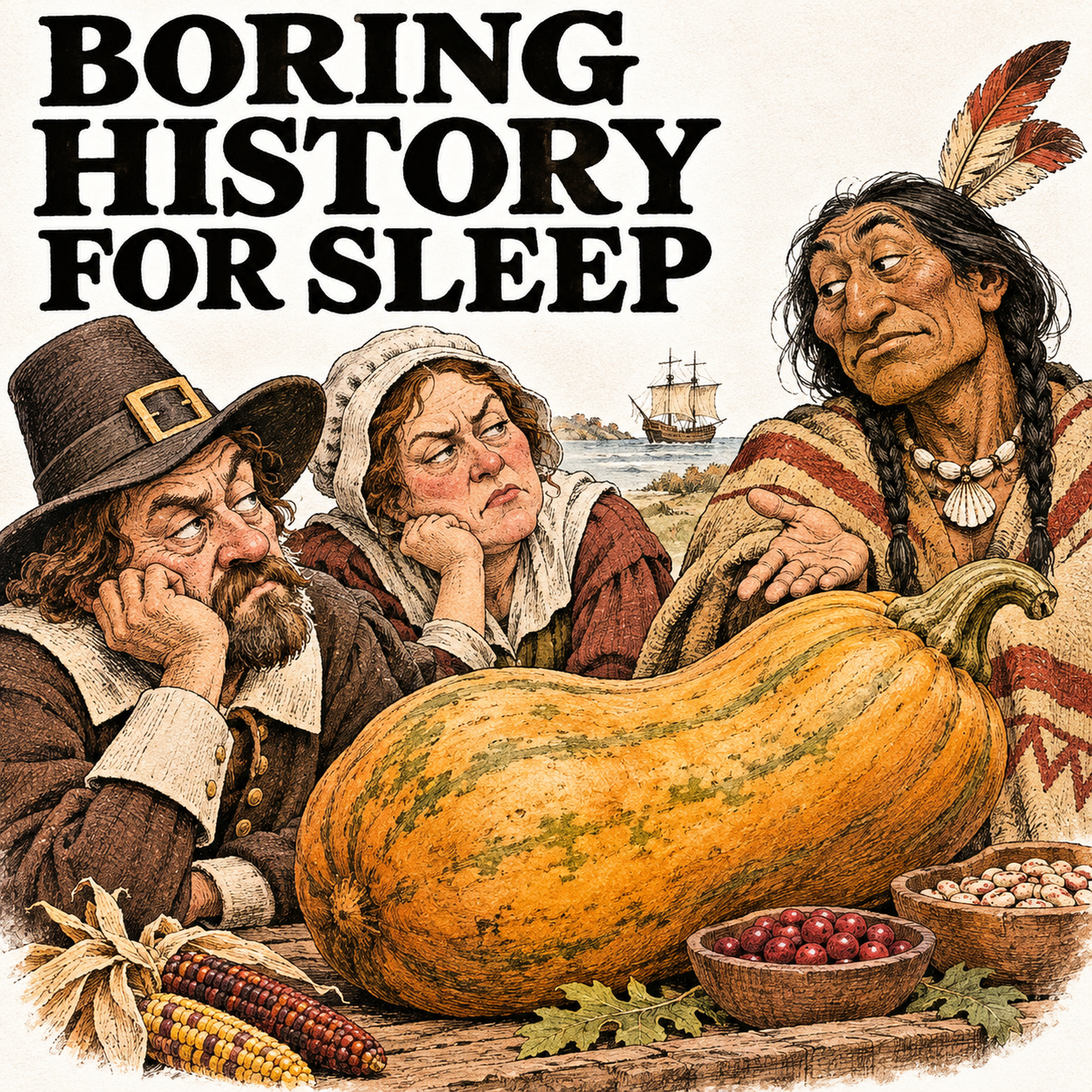
In 1620, a small ship called the Mayflower crossed the Atlantic carrying English settlers in search of a new life. Their arrival in North America became one of the most familiar stories in American history, but the reality behind the legend was far more complicated than the traditional Thanksgiving tale suggests. Discover why the Pilgrims left England, what their dangerous voyage was really like, and how they survived their first winter in an unfamiliar land. Explore their encounters with the Wampanoag people, the role of Tisquantum, also known as Squanto, and the assistance that helped the struggling settlers establish their colony. Uncover what happened at the harvest gathering of 1621, who actually attended, what was served, and how this event became connected to the modern Thanksgiving holiday. Follow the history beyond the familiar celebration and discover the people, cultural encounters, and historical realities behind the Mayflower story. Boring History for Sleep — Soft stories
Watch where your mind goes in that first raw second, before you've had time to compose yourself. When things fall apart, that instinctive reach tells you almost everything about the direction your life is headed. Uploaded 14-09-26 For most people, the mind goes outward. To the economy. To the boss who didn't recognize them. To the parents, the partner, the timing, the luck that never came. And some of it may be entirely true. But here is the truth: an excuse can be one hundred percent accurate and still be one hundred percent useless. The moment you assign the cause of your problem to something outside yourself, you have also assigned the solution to something outside yourself — and then you wait, helpless, for a world that is in no hurry to change on your behalf. This seminar unpacks the single mechanic behind why some people rise from the exact same wreckage that keeps others stuck: where they point their mind on that first difficult day. CHAPTERS 0:00 Intro — where your mind goes fi
Sometimes, all it takes is one powerful Islamic reminder to bring your heart closer to Allah ﷻ and change the way you see your life. In a world filled with distractions, taking even a few moments to remember Allah can help us reconnect with our faith, reflect on our purpose, and find peace through the beautiful teachings of Islam. These short but meaningful Islamic reminders share timeless lessons inspired by the Holy Quran and the Sunnah of Prophet Muhammad ﷺ, offering spiritual motivation, wisdom, and encouragement in less than a minute. Whether you are searching for inner peace, struggling with life's challenges, or simply looking to strengthen your Iman, these reminders invite you to reflect on what truly matters. Discover the beauty of trusting Allah, practising Sabr, expressing gratitude, seeking forgiveness, and living each day with greater faith and purpose. Every reminder is an opportunity to pause, reflect, and remember that our ultimate success lies in pleasing Allah and pre
Happy Sunday! Welcome to Heal Squad’s The Sunday Set Up. Life lessons to help you start the week. How much of success comes down to simply showing up? This week, we talk keeping an open mind, taking chances, and recognizing the doors that open along the way. From Olympic athletes appearing on national television alongside Mercedes Moné to performers who keep showing up week after week hoping for their big break, we explore why success isn't always about talent or luck. Sometimes it's about making connections, putting in the effort, and being willing to try without knowing what we'll get in return. We talk knowing when to stop investing time in people who aren't willing to help themselves, and why even experiences that don't work out can teach us something valuable. The takeaway: don't wait for the perfect moment or expect someone else to make things happen. Be willing to take a chance, walk through the doors that open, and remember that half of life is just showing up. Plus, a little b
"Curing cancer," explained. We’re not looking for a “cure for cancer” anymore. Cancer is hundreds of diseases, so we’re really in a multi front fight against all of them. Cancer is a problem for us today in a way it wasn’t for previous generations. But, luckily, we also have more and more ways to fight back. I started this episode with endless questions: What is cancer? What causes it? How do we treat cancer? What are the symptoms? Why are some cancers easier to treat than others? Why is cancer so hard to cure? Why do so many people die of cancer? What I found is an incredible, complex, inspiring effort to treat and stop an insidious killer. In this video, we dive deep into how we treat cancer today. But I also found that we may not be helping the greatest number of people we can. In this episode of Huge If True, I want to make the case that while we have made enormous strides in the fight against cancer we have also largely ignored one of the single best ways to save the most lives. I
View full lesson: http://ed.ted.com/lessons/surviving-a-nuclear-attack-irwin-redlener The face of nuclear terror has changed since the Cold War, but disaster-medicine expert Irwin Redlener reminds us the threat is still real. He looks at some of history's farcical countermeasures and offers practical advice on how to survive an attack. Talk by Irwin Redlener.
Explore what makes polio so dangerous, what is causing the 21st century resurgence of cases, and how we can eradicate the disease. -- In 1952, polio was everywhere: killing or paralyzing roughly half a million people annually. Yet just 10 years later, paralytic polio cases in the US dropped by 96% and we were on track to get rid of polio for good. But in recent years, the virus started striking back. So, what’s behind these recent spikes? Explore the dangers of poliovirus and the possibility of eradicating this deadly disease. Directed by Anton Bogaty. This video made possible in collaboration with Gates Ventures Learn more about how TED-Ed partnerships work: https://bit.ly/TEDEdPartner A special thanks to Ananda Bandyopadhyay, Amber Zeddies, and Kathleen O'Reilly who provided information and insights for the development of this video. Support Our Non-Profit Mission ---------------------------------------------- Support us on Patreon: http://bit.ly/TEDEdPatreon Check out our merch: htt
Todd Humphreys forecasts the near-future of geolocation when millimeter-accurate GPS "dots" will enable you to find pin-point locations, index-search your physical possessions ... or to track people without their knowledge. And the response to the sinister side of this technology may have unintended consequences of its own. (Filmed at TEDxAustin.) Uploaded 26-06-13 Talk by Todd Humphreys.
Youth sport should prioritize lasting participation over early selection of elite performers.
Share your view, then see how readers voted. No sign-in required. This poll is shared across stories.
Do you agree or disagree?
Common Quandary
A Common Quandary to discuss
Another conversation to explore, separate from this news story.
A stranger takes an emotional call in the quiet car. Do you shush them?
On a crowded train's designated quiet car, a passenger answers a call and begins discussing an apparent family emergency. They are speaking softly but continuously, and everyone nearby is listening despite trying not to.
Do public rules make room for private emergencies?