Alexander Vučić is out. Now Serbia's student movement has to prove it can govern. After two years of protests, marches and grassroots organising, a student-backed electoral list has swept to power in Serbia, ending Alexander Vučić's 14-year grip on government. What began after the deadly collapse of a newly renovated railway station in Novi Sad became a nationwide revolt against corruption, secrecy and state capture. Investigative journalist Miloš Teodorović, director of Radio Free Europe's Balkan Service, explains how students outmanoeuvred one of Europe's most entrenched populist leaders. From viral social media campaigns to hundreds of kilometres of marches across Serbia, the movement built support where traditional opposition parties failed. But victory is only the beginning. The new government has promised corruption investigations, judicial reform and a restoration of the rule of law. It must also navigate some of Serbia's biggest foreign policy challenges, including Kosovo, rela
Mary Katherine Ham, Outkick Columnist, co-author of the book "End of Discussion," and best friend of the program, joined us on the Guy Benson Show today for a conversation on Minnesota fraud and waste— specifically in the state’s Paid Family Medical Leave, which has become a poster child for Government fraud. Ham and Benson argued that the program, which currently has 41% of emergency commutation staff out, lacks proper verification to confirm a legitimate need for leave, and can quit upon their return without consequences. Later, Ham and Benson discussed a viral moment at a Georgia Tech game involving a male and female student, an inspiring exchange between comedian Jimmy Carr and a young audience member, and more. Listen to the full interview with Mary Katherine and Benson here!
Restless sleep, a hollow feeling inside and the sting of heartbreak; most of us have been through that kind of ordeal at least once in our lives. Let’s be honest: when it comes to your career and work life, a breakup doesn’t exactly bring out the best in your productivity. And at work, you can’t always afford to be distracted. Earlier in 2024, a Filipino lawmaker proposed an unexpected solution: a proposal to introduce a period of so-called “heartbreak leave”. How would heartbreak leave work? Is that a bit much for just a breakup? What exactly happens to the body? In under 3 minutes, we answer your questions! To listen to the last episodes, you can click here : What is broken heart syndrome? (https://originals.bababam.com/do-you-really-know/202406300259-what-broken-heart-syndrome) What are the secrets to a long lasting relationship? (https://originals.bababam.com/do-you-really-know/202412260359-what-are-secrets-long-lasting-relationship) What are the four types of attachment in our rel
Hackers breach the CIA’s OSINT platform, cybersecurity firm Radware gets hacked, the US investigates Iran over 50 ship hacks and threat actors exploit an Azure API bug to access cloud environments. Show notes Risky Bulletin: Card stealer found on 80 major US news sites (https://risky.biz/risky-bulletin-card-stealer-found-on-80-major-us-news-sites/)
P.M. Edition for Nov. 24. WSJ chief political correspondent Josh Dawsey (https://www.wsj.com/news/author/josh-dawsey?mod=WSJ_WNPOD) takes us inside the frantic 48-hour push to put Huang back in charge of Nvidia (https://www.wsj.com/business/nvidia-jensen-huang-white-house-9ad03961?mod=author_content_page_1_pos_1%3Fmod%3DWSJ_WNPOD). Plus, turmoil at the chip maker has renewed attention on just how dependent the U.S. economy is on the AI sector. Economics reporter Konrad Putzier (https://www.wsj.com/news/author/konrad-putzier?mod=WSJ_WNPOD) explains what an AI bust might look like. And the U.S. government is expected to unveil new tariffs (https://www.wsj.com/economy/trade/u-s-prepares-to-raise-tariffs-on-china-and-other-countries-37981740?mod=author_content_page_1_pos_1%3Fmod%3DWSJ_WNPOD) on countries including China and the European Union. Pierre Bienaimé hosts. Further Listening: The Staggering Financial Toll of Caring for Aging Parents (https://www.wsj.com/podcasts/your-money-matters
Ian Collins discusses the news that domestic energy bills are expected to soar in January for millions of households, with regulator Ofgem to announce the precise increase shortly. A typical annual bill is predicted to rise by 26% in the new year, according to consultancy Cornwall Insight, in a forecast made ahead of the official announcement. The government will make a £100 payment to millions of households to help cover winter costs, in addition to an ongoing VAT cut on electricity. Also Andy Burnham is under pressure from Labour MPs to make it easier to claim sickness and disability benefits. A report on the Personal Independence Payment (Pip) that Sir Stephen Timms, the social security minister, published on Tuesday called for the system to be easier to access. He said Pip was “a valued and important benefit” but warned the system that delivers it is “no longer fit for purpose”. This 12 month report has been branded a farce because it reveals NO savings, NO end to PIP and might eve
Prime Minister Mark Carney (https://www.theglobeandmail.com/topics/mark-carney/) came to power at a time when Canada was facing a hostile U.S. under President Donald Trump. Carney was elected to lead the country through this moment, where threats to Canada’s sovereignty and a tariff war have left many on edge. According to some scholars, one side effect of crisis moments is that leaders don’t face the same level of scrutiny (https://www.theglobeandmail.com/politics/opinion/article-mark-carney-and-canadas-no-question-period/) as they would in calmer times. Shannon Proudfoot (https://www.theglobeandmail.com/authors/shannon-proudfoot/) is a feature writer and columnist for The Globe, based in Ottawa. She’s on the show to tell us why she thinks Mark Carney’s government is not facing the heat, and what questions people should be asking. Questions? Comments? Ideas? Email us at [email protected] Hosted by Simplecast, an AdsWizz company.
The gender disparity of Canadian teachers (https://www.theglobeandmail.com/life/article-men-become-k-12-teachers-gender-gap-education-male/) is real – less than a quarter of educators in elementary and secondary schools are male, with the number dropping lower in younger grades. Teachers talk amongst themselves about why so few men are entering the profession and what that means for a generation of students without male role models in the classroom. Dave McGinn (https://www.theglobeandmail.com/authors/dave-mcginn/), The Globe’s education reporter, is here to discuss the cultural stigmas about male teachers, why the number of educators have continued to drop and why unequal representation is hurting students and the education system. Questions? Comments? Ideas? E-mail us at [email protected] Hosted by Simplecast, an AdsWizz company.
It’s been a big week for the AI (https://www.theglobeandmail.com/topics/artificial-intelligence/) world, with Anthropic launching its blockbuster IPO (https://www.theglobeandmail.com/investing/article-anthropics-historic-debut-to-put-ais-promise-and-peril-to-wall-street/), and Nvidia releasing its first earnings report (https://www.theglobeandmail.com/business/article-nvidia-shares-jensen-huang-earnings/) since the resignation of its co-founder and now former CEO Jensen Huang (https://www.theglobeandmail.com/business/article-nvidia-after-jensen-huang-will-big-techs-key-man-ethos-live-on/). These two events are being watched closely as litmus tests (https://www.theglobeandmail.com/business/article-jensen-huang-nvidia-ceo-downfall-ai-bubble/) for where the AI sector is going, as concerns loom about how the industry is being financed. The Globe’s tech and AI reporter Joe Castaldo (https://www.theglobeandmail.com/authors/joe-castaldo/) is here today. He’ll explain how the AI industry is be
Officials should investigate credible environmental concerns before harm is conclusively proven.
Share your view, then see how readers voted. No sign-in required. This poll is shared across stories.
Do you agree or disagree?
Common Quandary
A Common Quandary to discuss
Another conversation to explore, separate from this news story.
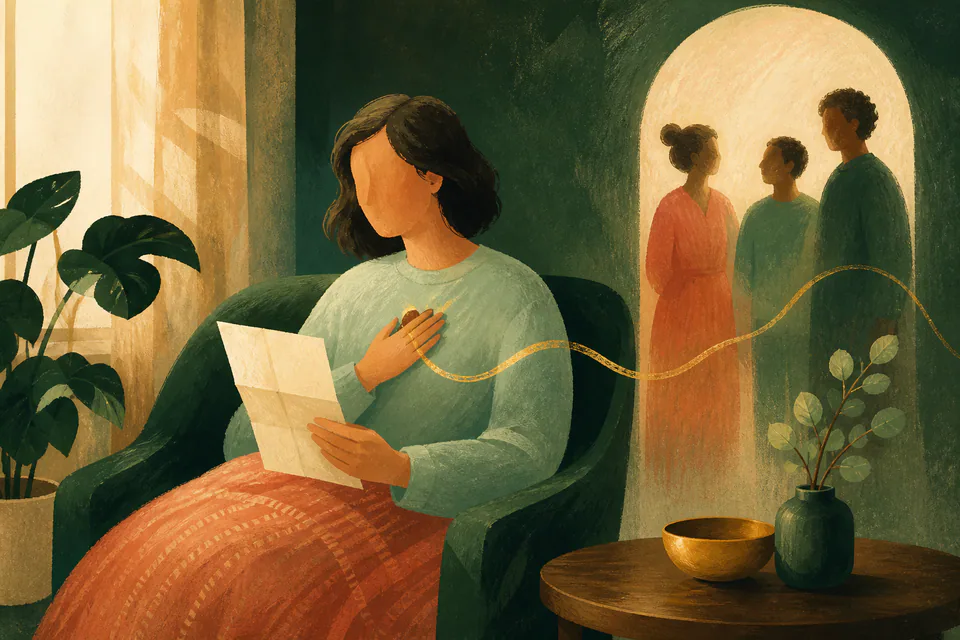
A donor's family wants to hear their loved one's heart beating in you. Do you meet them?
A transplant recipient receives a letter from the donor's family asking to meet. The recipient feels profound gratitude but also discomfort and wants their recovery to remain private and separate from another family's grief.
Can receiving an extraordinary gift create a personal obligation to strangers?