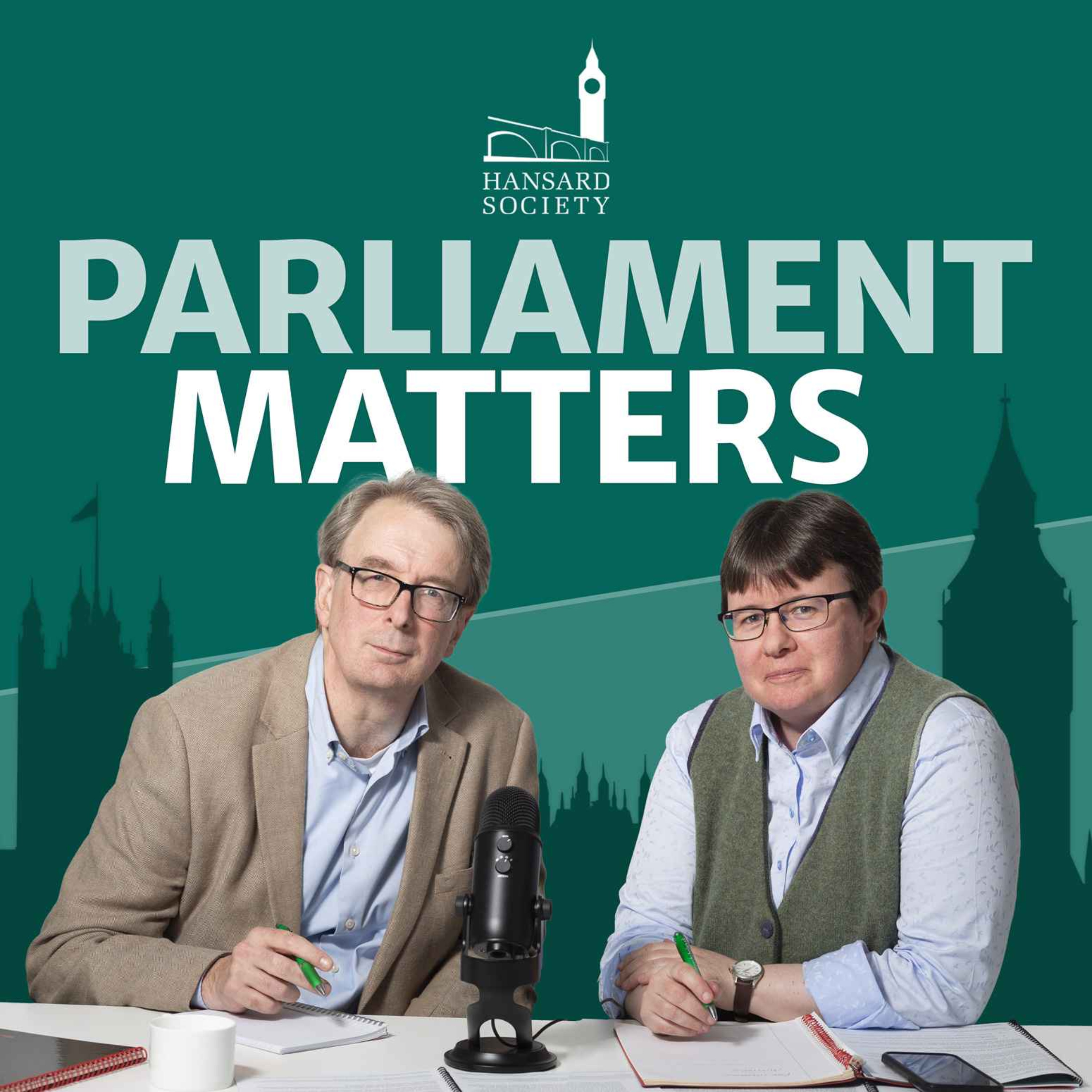
Listen through the publisher, then discuss the episode here or arrange an in-person Roundtable. Your city determines where to meet.
Roundtables are designed for groups of four, with a shared subject and room for everyone to speak. Come for discussion, with no dating expectation.
Britain is promising a major increase in defence spending. But when and where will the money come from in the next Spending Review, can the Ministry of Defence convert the cash into military capability quickly enough, and can Parliament make sure it is well spent? Tan Dhesi MP, Labour MP for Slough and Chair of the House of Commons Defence Committee, joins us to discuss the battle over defence spending, readiness and accountability. He explains why the Committee says 3% of GDP by 2030 should be treated as a staging post, why delay risks higher costs and weaker capability, and what MPs are learning from allies, including Ukraine, about faster procurement. Dhesi also describes how the Committee handles classified briefings and secure material, and why he believes a major scrutiny gap remains around the Defence Nuclear Enterprise. We then turn to the newly published European Partnership Bill. We examine its Henry VIII powers, the implications of dynamic alignment with EU rules, and what the Bill could mean for parliamentary control of future UK–EU agreements. Finally, during UK Parliament Week, Aisling Munnelly from Parliament’s Education and Engagement Team explains how the campaign reaches 2.9 million participants, why this year focuses on media and political literacy, and how Parliament tries to measure whether public engagement actually works. ___ Chapters and timecodes 00:00 Introduction 01:00 Tan Dhesi and the battle over defence spending 04:00 Russia, resilience and defence readiness 07:00 The 3% target, allies and capability gaps 13:00 Spending Review urgency and value for money 17:00 MoD procurement and the explosives controversy 20:00 What Britain can learn from Ukraine 23:00 Classified briefings and the limits of secrecy 25:00 The Defence Nuclear Enterprise scrutiny gap 29:00 Armed Forces Commissioner and pre-appointment scrutiny 31:00 The pathway to 3% and 3.5% - Labour’s defence-spending dilemma 38:00 A new Commons committee for nuclear defence? 44:00 European Partnership Bill and dynamic alignment 48:00 Henry VIII powers and Orders in Council 53:00 Parliamentary control and delegated legislation 58:00 UK Parliament Week: a record 2.9 million participants 61:00 Political and media literacy 63:00 Measuring impact and working with MPs 65:00 Parliament’s year-round education work ____ Learn more using our resources (https://www.hansardsociety.org.uk/news/parliament-matters-podcast-e166) for the issues mentioned in this episode. Presenters: Mark D’Arcy and Ruth Fox Producer: Richard Townsend Hosted on Acast.
Episode information is provided by the publisher. Listening takes place on the publisher’s service.
John McConnell joins The Signal Brothers for a special conversation that begins with the practical realities of military retirement and transition. John, a 25-year U.S. Army veteran and the creator of the Military Retirement Podcast, explains why service members should begin preparing years before separation—not simply for benefits, but for where they will live, what work they may pursue, and what purpose will guide the next chapter. John and the panel discuss how retirement and transition needs differ for 20-year retirees, Reserve and Guard retirees in the Gray Area, medically separated service members, and those leaving service before a traditional retirement. They also cover the Military Retirement Group private Facebook community, the podcast’s partnership with Victor Delaflor and The Green Log, and transition-related topics including TAP, SkillBridge, VA benefits, TRICARE, Space-A travel, and the BDD program. The conversation then broadens into a candid panel discussion of Venezue
CASTLE LAW! Ontario Premier Doug Ford says people should use whatever means necessary to protect their families and even reveals that he owns a gun. Today's episode of Scott Fox After 9 breaks down the Premier's remarks and the growing debate surrounding Canada's self-defence laws. Also today: Rebel News is coming to prime time in 2027! Scott discusses the announcement and what it could mean for the Canadian media landscape. Former Conservative MP Lisa Raitt shares her family's experience with dementia and raises important concerns about advance requests for Medical Assistance in Dying (MAID). Hear Pierre Poilievre explain why he believes the Conservatives are now the party of working people and why his party won't support Bill C-39. Quebec's new Premier doubles down on refusing to swear an oath to the King, and Canada's Immigration Minister avoids directly answering questions about the gender imbalance resulting from recent immigration activity. It's also Friday Listener DM's! Listene
The Lakers & Spurs are set to square off in the final game of NBA Cup group play, in a big early season test. The guys preview the game, including the potential return of Austin, the growth of the bench units in his absence, why Luka’s jumper is especially important tonight, and how the Lakers’ recent turn toward more zone defense may help them keep Kessler around the basket against the Spurs. . LFR pod on YouTube: https://www.youtube.com/@lfrpod Pete’s Patreon: https://www.patreon.com/lakerfilmroom Pete’s Buy Me a Coffee: https://buymeacoffee.com/lakerfilmroom Pete’s YouTube: https://www.youtube.com/@LakerFilmRoom For Feedback or Questions: [email protected]
Homelessness is one of Canada's most pressing challenges, and Alberta is at the centre of an increasingly urgent conversation. What's driving the crisis, why are so many people still living on the streets, and are we actually making any meaningful progress toward solutions? We get Real with Johanna Knettig of Bissell Centre, Tim Pasma of Hope Mission, and Sandra Clarkson of Calgary Drop-In Centre in our feature interview (7:00) presented by Mercedes-Benz Edmonton West. Plus, a major constitutional decision announced midway through this episode, as Canada's Supreme Court upholds Quebec's Bill 21, the province's secularism law, with a limited exception. Jespo breaks down the ruling (1:20:30) at first glance, including what it means for religious freedoms and constitutional rights, and the broader implications for the notwithstanding clause and Canadian Confederation. 1:31:00 | Real Talkers Mena, Natalie, Chelsea, and Scott are fired up over Alberta's changes to high school graduation req
Claudia, Slopcore, and Humanoid Robots: AI Culture, Open Source Art, and the Coming Acceleration The hosts discuss viral AI-generated music videos featuring the open-source character Claudia and related acts like Astro Blue, including the song "Wait Till You See It," and explain how claudia.gallery shares models, tools, and costs ($95–$400) so anyone can create. They describe "slopcore" as AI-made music openly from an AI perspective, often with optimistic messages about the future, automation, and income distribution, while debating authenticity in art and parallels to past tech backlash (electric guitar, Milli Vanilli). The conversation shifts to humanoid robots, highlighting XPeng's Iron robot interacting onstage and claims of autonomous Q&A, projected production of one robot every 2.5 minutes by early 2027, and expected EV-level pricing. They connect robots to elder care and healthcare access, then broaden to AI acceleration, citing AI progress in mathematics (including discussion o
Trent and Peaches go Outside The Wire to discuss the reported postponement of the Macy's Thanksgiving Day Parade, American traditions, risk aversion, and whether there's more to the story than bad weather. Naturally, that leads to politicians who struggle to bench 135 pounds, JT's upcoming cartoons, and questions surrounding a reported military munitions disposal operation in Iowa involving degraded lead. The guys question government transparency, environmental accountability, political campaign promises, and why we're expected to take everything at face value. Nothing about Special Warfare. You've been warned. LINKS https://onesready.com (https://onesready.com/) https://operatortrainingsummit.com (https://operatortrainingsummit.com/) CHAPTERS 00:00 - Outside The Wire 00:43 - Thanksgiving Recap 01:27 - What Happened to the Macy's Parade? 02:51 - The World War II Cancellations 04:29 - Weather or Something Else? 07:08 - American Traditions and Risk Aversion 08:45 - New York Politics 10:1
Who’s in charge of fixing the Palace of Westminster? With projected costs potentially running into tens of billions of pounds and a parliamentary decision still awaited, Conservative Shadow Leader of the House of Commons Jesse Norman MP tells us why he thinks the Restoration and Renewal project needs an urgent rethink. He blames successive failures of political leadership for allowing the scope and costs to grow. He calls for a three-month review to pin down what work is essential, what it should cost and who should be accountable for delivering it. Ruth and Mark press him on what another review would achieve, the Conservatives’ share of responsibility for past delays and whether a project that could span several parliaments needs a government minister to drive it forward. They also discuss why comparisons with the renovation of the Cathedral of Notre Dame and Buckingham Palace only go so far. The conversation also turns to what happens inside the Commons chamber. Norman argues that sp
As the Government prepares to strike new deals with the EU, will Parliament help shape the future relationship or simply rubber-stamp decisions already taken? We explore a new House of Lords report calling for stronger parliamentary oversight of the EU reset. Drawing extensively on Hansard Society evidence, the European Affairs Committee argues that MPs and peers need the information, resources and opportunities to hold ministers to account as the UK moves towards closer alignment with EU rules. What should Parliament know before approving a deal? Could the promised legislation give ministers sweeping powers over future agreements? And does Parliament need its own eyes and ears in Brussels? We explain why the arrangements established now could determine Parliament’s influence for years to come and why ministers must be candid about costs as well as benefits. Then, MPs prepare to examine new planning rules for data centres. How should national ambitions for AI be balanced against local
How do you turn a campaign into law when some of the world’s richest companies are determined to stop you? Filmmaker and crossbench peer Baroness Beeban Kidron joins us to discuss the art of legislating for the digital world. From protecting children online to defending creators’ copyright against AI companies, she explains how she built support, won amendments and persuaded reluctant ministers to act. But winning a vote is only part of the battle. Kidron contrasts her experience of the children’s privacy code with Ofcom’s implementation of the Online Safety Act, arguing that Parliament needs stronger powers to hold regulators to its intentions. She also describes Big Tech’s tactics for resisting regulation, the pressure to back down during parliamentary “ping-pong”, and why she rejects the claim that technology moves too fast for lawmakers. Her new book is Users: How Big Tech Took Control and How to Fight Back. ___ Chapters 00:00 Introduction 01:00 From filmmaking to campaigning 04:00
Officials should publicly explain serious mistakes that affect a competition's outcome.
Share your view, then see how readers voted. No sign-in required. This poll is shared across stories.
Do you agree or disagree?
Common Quandary
A Common Quandary to discuss
Another conversation to explore, separate from this news story.
Your friend is forty minutes late. Can the restaurant give away their chair?
A busy restaurant seats your group only after everyone arrives. One friend is forty minutes late and keeps texting that they are almost there. A couple waiting nearby could use the empty place, and the server asks your group to order without them.
How long should one person's delay control everyone else's evening?