Listen through the publisher, then discuss the episode here or arrange an in-person Roundtable. Your city determines where to meet.
Roundtables are designed for groups of four, with a shared subject and room for everyone to speak. Come for discussion, with no dating expectation.
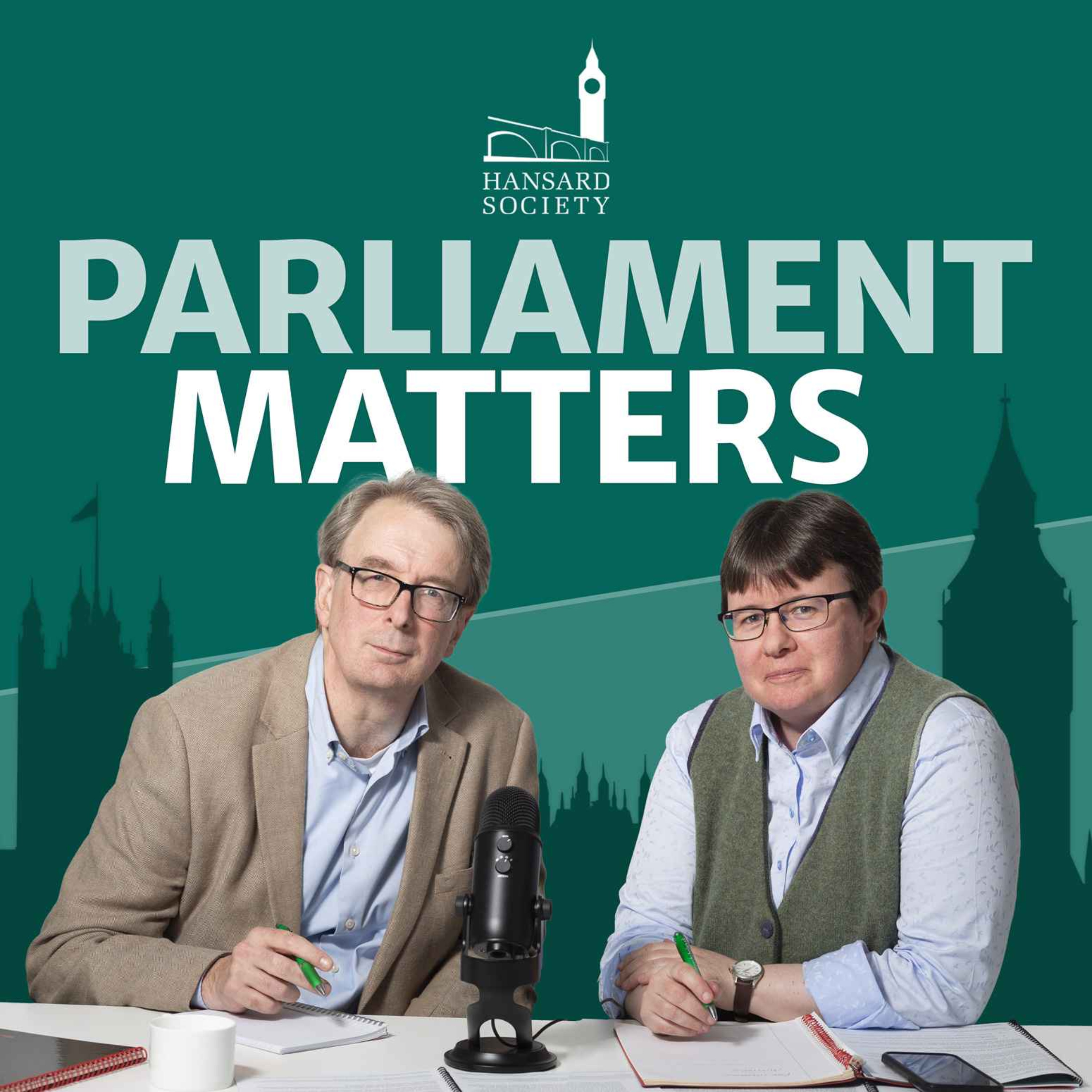
As the Government prepares to strike new deals with the EU, will Parliament help shape the future relationship or simply rubber-stamp decisions already taken? We explore a new House of Lords report calling for stronger parliamentary oversight of the EU reset. Drawing extensively on Hansard Society evidence, the European Affairs Committee argues that MPs and peers need the information, resources and opportunities to hold ministers to account as the UK moves towards closer alignment with EU rules. What should Parliament know before approving a deal? Could the promised legislation give ministers sweeping powers over future agreements? And does Parliament need its own eyes and ears in Brussels? We explain why the arrangements established now could determine Parliament’s influence for years to come and why ministers must be candid about costs as well as benefits. Then, MPs prepare to examine new planning rules for data centres. How should national ambitions for AI be balanced against local pressures on electricity, water and the landscape? And could AI become a defining issue at the next general election? Finally, could Parliament Square become a more welcoming place to explore Britain’s constitutional heart? With pedestrianisation proposals under consideration, we discuss how a wider vision could bring together a redesigned square, Parliament’s restoration and a World Heritage visitor centre, making the most of one of the world’s great civic spaces. Chapters 00:00 Introduction 00:45 EU reset: Will Parliament get a say? 07:00 Ministers, missing evidence and honest trade-offs 10:00 The EU reset bill: How much power for ministers? 14:00 Parliament’s eyes and ears in Brussels 17:00 Rebuilding Parliament’s EU oversight 21:45 Data centres: National ambitions, local costs 29:30 Will the next election be an AI election? 32:15 Parliament Square: A place for people? 40:00 A visitor centre for Britain’s constitutional heart 43:00 Improving visitor access to Parliament through the Restoration and Renewal Programme 47:00 Closing remarks ____ Learn more using our resources (https://www.hansardsociety.org.uk/news/parliament-matters-podcast-e164) for the issues mentioned in this episode. Presenters: Mark D’Arcy and Ruth Fox Producer: Richard Townsend Hosted on Acast.
Episode information is provided by the publisher. Listening takes place on the publisher’s service.
President Donald Trump's first ever trilateral summit with Vladimir Putin and Xi Jinping raises questions about the future of the war in Ukraine and whether a peace agreement could finally be within reach. Victor Davis Hanson and Sami Winc examine the summit on today’s edition of “Victor Davis Hanson: In His Own Words,” discussing Russia's declining influence, potential territorial concessions in Ukraine, and Europe's frustration over Trump's peace negotiations. Hanson criticizes Hillary Clinton's attacks on Trump's diplomacy; he also argues that European leaders have weakened their influence by neglecting defense spending and relying on American military protection. They discuss Elon Musk's shifting political allegiances, and Hanson warns that distancing himself from MAGA may not protect him from Democrat investigations. They also discuss the potential economic benefits of artificial intelligence and the challenges facing Hakeem Jeffries as Democrats prepare to take control of the Hou
Runaway government spending, rising costs, and a new wave of legal battles over constitutional rights. With Democrats preparing to take control of Congress and several state governments, Republicans are confronting a very different political landscape. John Solomon and Amanda Head welcome Montana Senator-elect Kurt Alme, who says Washington must get serious about reining in spending, lowering inflation, and making everyday life affordable again. Already preparing for his arrival in the Senate, Alme discusses his priorities for protecting Montana's way of life, keeping taxes low, creating good-paying jobs, and working across party lines when possible. He also addresses the challenges Republicans face in the minority, the remaining lame-duck session, and concerns about efforts to expand the Supreme Court and eliminate the filibuster. Then, Southeastern Legal Foundation President Kimberly Hermann joins the show with a warning about potential policy reversals in states where Democrats have
The Second Circuit considers a plan to help homebuyers who need mortgages compete with cash offers. Canandaigua National Corporation, a New York financial holding company, wanted to guarantee purchases arranged through its mortgage subsidiary. If a preapproved customer failed to obtain final mortgage approval, the company would buy the home itself and later resell it. The proposal capped the value of homes held at any one time at five million dollars and promised resale within two years. Canandaigua says those safeguards make the risk small. The Federal Reserve Board rejected the plan on safety-and-soundness grounds, looking beyond the risk to this particular company. It did not finally decide the remaining statutory factors. Canandaigua will argue that the Board ignored the limits in its actual application. The Board will defend considering what could happen if financial holding companies generally began buying property under such guarantees. This is a dispute over permission for a pr
Matthew Farwell’s conviction settled the federal case against him. It did not settle what may have happened to evidence, what other officers knew, or how many cases depended on his work as a Stoughton police detective. Tony Brueski is joined by retired FBI agents Jennifer Coffindaffer and Robin Dreeke to connect two questions that belong together: could there be more arrests in the Sandra Birchmore case, and should prosecutors review the cases Farwell once investigated? These are not the same question, and neither has an automatic answer. William Farwell, Matthew’s twin, testified under federal immunity. Former Stoughton deputy chief Robert Devine has contested an oversight board’s findings concerning the “Marty Riggs” Facebook account, saying he was hacked. Neither has been charged in Sandra’s death. Coffindaffer lays out what investigators would need: corroborated communications, authenticated account access, consistent timelines and proof of each person’s conduct. Knowing somebody i
November 20, 2026 On November 19, Trump met with Xi Jinping and Vladimir Putin in Shenzhen, China, The fact that the president of the US would meet with leaders of China and Russia was bizarre since both China and Russia have been helping Iran in its current fight against the US, Trump appeared to want the fanfare and President Xi played that up, Putin wanted the meeting because it would suggest that Russia was a great power, although it is far from being so and Putin’s war on Ukraine is going poorly, The meeting’s purpose seemed to be to produce propaganda for each of the three leaders, Beyond the propaganda is the larger story of the destruction of the post-World War II rules-based international order, In its place is the idea of dividing the world into spheres of influence, The three leaders met for 90 minutes and issued only a vague "joint declaration toward peace," which vowed to reform the UN and weaken the International Criminal Court, where Putin is already under indictment for
This week on The Necessary Conversation, it's Chad, Haley, and Mary Lou. Bob is still recovering but sent in a video message about Trump calling Putin his friend that we watch together. 🇷🇺 Trump held the first-ever three-way talks with Putin and Xi, called it a "12 out of 10," and produced nothing. Then at a press conference he called Putin his friend — and when asked if Putin is a friend to America, the president of the United States said, "I can't speak to America." That same day, Trump's friend Putin launched massive strikes into Ukraine, hit Poland with two missiles — an act of war against a NATO ally — then struck near a Ukrainian restaurant and drone-bombed the first responders, killing a 7-year-old child and a 20-year-old paramedic. We watch Bob's video and ask Mary Lou: is Russia our friend? 🇨🇳 The House Foreign Affairs Committee revealed Trump's Commerce Department approved nearly 880,000 advanced AI chips for Chinese military-linked companies including Alibaba, Tencent, a
Who’s in charge of fixing the Palace of Westminster? With projected costs potentially running into tens of billions of pounds and a parliamentary decision still awaited, Conservative Shadow Leader of the House of Commons Jesse Norman MP tells us why he thinks the Restoration and Renewal project needs an urgent rethink. He blames successive failures of political leadership for allowing the scope and costs to grow. He calls for a three-month review to pin down what work is essential, what it should cost and who should be accountable for delivering it. Ruth and Mark press him on what another review would achieve, the Conservatives’ share of responsibility for past delays and whether a project that could span several parliaments needs a government minister to drive it forward. They also discuss why comparisons with the renovation of the Cathedral of Notre Dame and Buckingham Palace only go so far. The conversation also turns to what happens inside the Commons chamber. Norman argues that sp
How do you turn a campaign into law when some of the world’s richest companies are determined to stop you? Filmmaker and crossbench peer Baroness Beeban Kidron joins us to discuss the art of legislating for the digital world. From protecting children online to defending creators’ copyright against AI companies, she explains how she built support, won amendments and persuaded reluctant ministers to act. But winning a vote is only part of the battle. Kidron contrasts her experience of the children’s privacy code with Ofcom’s implementation of the Online Safety Act, arguing that Parliament needs stronger powers to hold regulators to its intentions. She also describes Big Tech’s tactics for resisting regulation, the pressure to back down during parliamentary “ping-pong”, and why she rejects the claim that technology moves too fast for lawmakers. Her new book is Users: How Big Tech Took Control and How to Fight Back. ___ Chapters 00:00 Introduction 01:00 From filmmaking to campaigning 04:00
Winning the election is one thing. Making Congress work is another. How will the Democrats now turn electoral success into effective congressional power to constrain Donald Trump and advance their own policy agenda? Daniel Schuman of the American Governance Institute joins us to explain how the new Congress will organise itself between election day and January, when the new House of Representatives and Senate are sworn in. The outgoing “lame duck” Congress faces the prospect of last-minute confirmation battles and an urgent funding deadline if a government shutdown before Christmas is to be avoided. Next year will bring fresh battles over the budget and spending. Meanwhile, incoming representatives must recruit staff, establish offices and learn the ropes of an unfamiliar institution. For Democrats, there are decisions to be made about leadership positions, who gets coveted committee places, and agree the rules that will govern the House. Their choices will shape whose priorities advan
Athletes should have more influence over schedules affecting their health.
Share your view, then see how readers voted. No sign-in required. This poll is shared across stories.
Do you agree or disagree?
Common Quandary
A Common Quandary to discuss
Another conversation to explore, separate from this news story.
Your adorable child could pay for college by becoming an influencer. Do you start filming?
Parents post cheerful videos of their young child and earn enough to fund the child's education. The child enjoys filming now but cannot understand what it means for strangers to watch those moments years later.
Can parents consent to a permanent public identity on a child's behalf?