The Coming Battles Over American Foreign Policy: A Conversation With Kori Schake and Thomas Wright
65 min
Listen through the publisher, then discuss the episode here or arrange an in-person Roundtable. Your city determines where to meet.
Roundtables are designed for groups of four, with a shared subject and room for everyone to speak. Come for discussion, with no dating expectation.
The Democrats’ sweeping victory in the midterm elections this week marks not only the start of a new phase for Donald Trump’s foreign policy. It also kicks off a more intensive discussion among both Democrats and Republicans about the future of American foreign policy beyond Trump. Dan Kurtz-Phelan spoke with two foreign policy veterans who have participated in these debates inside and outside government, including in Foreign Affairs. Kori Schake, the director of foreign and defense policy studies at the American Enterprise Institute, served in the State Department and on the National Security Council under George W. Bush. Tom Wright was senior director for strategic planning at the National Security Council under Joe Biden and is now a senior fellow at the Brookings Institution. All of these debates will have to contend with big questions about specific policies, from China and the Middle East to AI and defense spending. They also involve deep and often bitter fissures between and within parties. Meanwhile, the war in Iran is far from resolved and the specter of an already unpredictable president’s lame-duck period introduces even more uncertainty about what the world will look like when Trump leaves the White House for good in January 2029. You can find sources, transcripts, and more episodes of The Foreign Affairs Interview at https://www.foreignaffairs.com/podcasts/foreign-affairs-interview.
Episode information is provided by the publisher. Listening takes place on the publisher’s service.
Runaway government spending, rising costs, and a new wave of legal battles over constitutional rights. With Democrats preparing to take control of Congress and several state governments, Republicans are confronting a very different political landscape. John Solomon and Amanda Head welcome Montana Senator-elect Kurt Alme, who says Washington must get serious about reining in spending, lowering inflation, and making everyday life affordable again. Already preparing for his arrival in the Senate, Alme discusses his priorities for protecting Montana's way of life, keeping taxes low, creating good-paying jobs, and working across party lines when possible. He also addresses the challenges Republicans face in the minority, the remaining lame-duck session, and concerns about efforts to expand the Supreme Court and eliminate the filibuster. Then, Southeastern Legal Foundation President Kimberly Hermann joins the show with a warning about potential policy reversals in states where Democrats have
Following President Trump’s trip to Asia and a first-ever trilateral meeting with the leaders of China and Russia, foreign policy experts are weighing what was accomplished on the world stage. Former national security advisor to Vice President Dick Cheney and Heritage Foundation senior research fellow Stephen Yates joins The Rundown to analyze the summit’s outcomes on Taiwan, Ukraine, Iran, and strategic arms talks. Yates also explains how new rare-earth agreements with U.S. allies and export controls on AI chips balance Trump’s warmer rhetoric toward Beijing. Later, widespread tech outages across major platforms and government systems raise urgent questions about whether U.S. digital infrastructure is prepared for the artificial intelligence era. Former Cybersecurity and Infrastructure Security Agency (CISA) director Bridget Bean breaks down how rapid software patching can trigger cascading system failures, the growing cyber threats posed by China and Iran, and how organizations can d
For review: 1. Iraq has reached a compromise with the powerful Iran-backed militia Kataeb Hezbollah, three senior security officials said, after Prime Minister Ali al-Zaidi readied security forces to move against the group. Reflecting the gravity of the situation, Iraqi Shiite political sources said Esmail Qaani, commander of Iran’s elite Revolutionary Guards’ Quds Force, arrived in Baghdad late on Monday to help defuse tensions with Kataeb Hezbollah, Tehran’s most powerful militia ally in Iraq. 2. Lebanese President Joseph Aoun launched a lengthy rebuke of Iran in an Independence Day address, arguing that the Islamic Republic does not have the right to interfere in Lebanon’s internal affairs, as it long has via support for its local terror proxy, Hezbollah. 3. Yemen’s Houthis launched strikes on the Saudi capital Riyadh on Saturday, after vowing reprisals for a “special operation” by the Saudi-led coalition fighting them. The coalition later said it had “intercepted and destroyed” thr
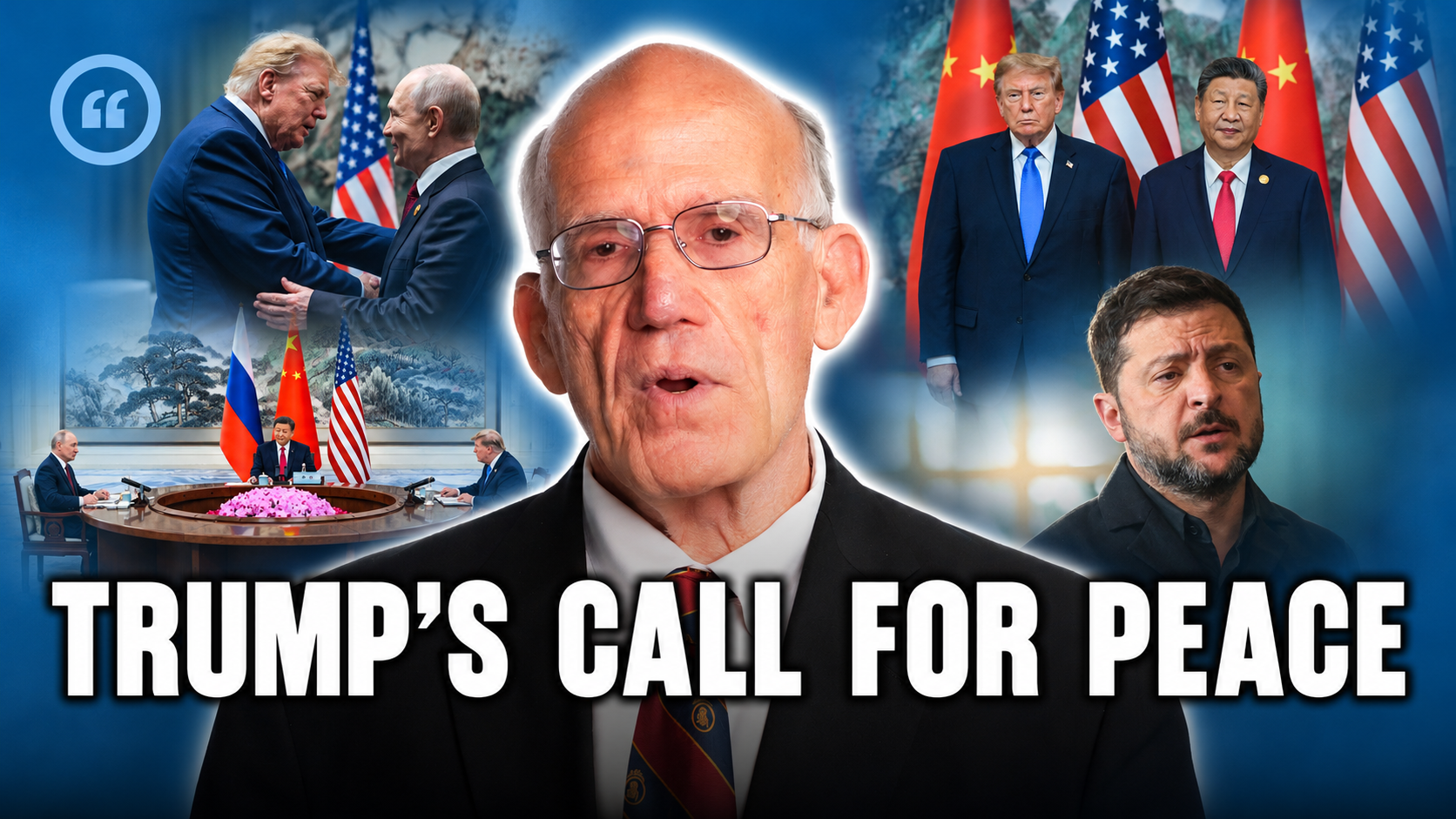
President Donald Trump's first ever trilateral summit with Vladimir Putin and Xi Jinping raises questions about the future of the war in Ukraine and whether a peace agreement could finally be within reach. Victor Davis Hanson and Sami Winc examine the summit on today’s edition of “Victor Davis Hanson: In His Own Words,” discussing Russia's declining influence, potential territorial concessions in Ukraine, and Europe's frustration over Trump's peace negotiations. Hanson criticizes Hillary Clinton's attacks on Trump's diplomacy; he also argues that European leaders have weakened their influence by neglecting defense spending and relying on American military protection. They discuss Elon Musk's shifting political allegiances, and Hanson warns that distancing himself from MAGA may not protect him from Democrat investigations. They also discuss the potential economic benefits of artificial intelligence and the challenges facing Hakeem Jeffries as Democrats prepare to take control of the Hou
On Friday’s Mark Levin Show, Alabama residents are speaking out over plans to expand the Auburn Islamic Center and build a mosque. Residents argued their opposition was not political or based on religious hatred, but on concerns about an ideology which threatens American society. These local governments are treating mosques the same as other houses of worship under zoning rules, but officials should use regulatory and ordinance processes to scrutinize such projects. This Auburn Islamic Center is about a foreign power attempting to extend its influence deeper into America. Local zoning boards should put a stop to this. Meanwhile, Texas Governor-elect Gina Hinojosa, despite campaigning as a centrist focused on the American Dream, is pursuing policies that favor migrants and H-1B visa holders over American citizens by expanding migrant hiring in schools and state jobs. These policies will lower wages, reduce job opportunities for citizens, increase housing costs, and weaken public infrast
After some life updates (which is all the people really want to hear anyway), Jonah Goldberg turns his hand to ruminating on Trump’s villainous stupidity, the trilateral summit with Vladimir Putin and Xi Jinping, nuclear policy, New York City’s supermarkets, socialist contempt for the middle class, GDP, Ro Khanna, the Bulwark squabble, recent tech failures, the National Popular Vote Interstate Compact, and magical thinking about politics. Show Notes: —LFG AO Pod (https://thedispatch.com/podcast/advisoryopinions/should-lame-ducks-hibernate/) —Special Event: Advisory Opinions: Live! (https://www.capcitycomedy.com/shows/393484) —Mamdani on supermarkets (https://x.com/MorePerfectUS/status/2123188786926391338/video/1) —Irving Kristol in The Public Interest: “Rationalism in Economics” (https://www.nationalaffairs.com/public_interest/detail/rationalism-in-economics) —American Compass’ postelection survey (https://americancompass.org/post-midterm-survey/) —Dan Senor Remnant (https://thedispatc
In 2021, China’s population hit a peak of 1.4 billion and then rapidly started to decline. This demographic picture presents enormous challenges in its own right. But Carl Minzner stresses in a new essay in Foreign Affairs that what makes China’s future “especially bleak” is the convergence of a demographic decline and political paralysis. This, Minzner argues, is the real story of twenty-first-century China. That convergence will define Chinese foreign policy, threaten Chinese stability, and call into question the future of Chinese Communist Party rule. Dan Kurtz-Phelan spoke with Minzner, a scholar of China at Fordham University and the Council on Foreign Relations, about the drivers of these demographic trends; about how and why Xi Jinping and Chinese policymakers are making the problem worse rather than better; about what those problems portend for Chinese power in the decades ahead; and about why all of this should serve as a warning for the United States. You can find sources, tr
Local communities should have more freedom to set their own rules.
Share your view, then see how readers voted. No sign-in required. This poll is shared across stories.
Do you agree or disagree?
Common Quandary
A Common Quandary to discuss
Another conversation to explore, separate from this news story.
The company allows an $80 dinner. Is ordering the lobster fair game?
During work travel, company policy permits an expensive dinner. A modest option is nearby, but colleagues choose the nicest restaurant because the company can easily afford it and everyone is within the stated limit.
Is following a rule enough when you are spending someone else's money?