The Digital Euro: Building Europe’s Digital Payments Sovereignty
34 min
Listen through the publisher, then discuss the episode here or arrange an in-person Roundtable. Your city determines where to meet.
Roundtables are designed for groups of four, with a shared subject and room for everyone to speak. Come for discussion, with no dating expectation.
Europe’s payments landscape is increasingly digital, yet much of the infrastructure supporting everyday transactions is operated by international providers, and no European digital payment solution is accepted across the entire euro area. This dependence raises questions about resilience, economic security, and Europe’s strategic autonomy. A digital euro could offer a secure and accessible form of public money for digital payments, complementing cash and existing private-sector services. This panel, moderated by Anne Marie McKiernan, Director of Financial Operations at the Central Bank of Ireland, explore whether the digital euro can strengthen European monetary sovereignty while supporting competition, innovation, and consumer choice. The panel also examine the role banks and payment providers can play in its distribution and adoption. Panellists include: Joseph Meichenitsch, Executive Director and Member of the Governing Board of the Oesterreichische Nationalbank (Austrian Central Bank) Eamonn Crowley, CEO of PTSB
Episode information is provided by the publisher. Listening takes place on the publisher’s service.
In this paid subscriber-only edition of The Roundtable, Rudyard Griffiths and Sean Speer examine Quebecor’s proposed takeover of Telus and what it reveals about Canada’s economic model. They trace the history of the “fourth carrier” policy, debate whether this merger signals the end of telecom competition, and explore how government regulation creates what they call “Laurentian capitalism”—a system where state power and corporate interests intertwine. The discussion also addresses sovereignty arguments, media consolidation, and whether Canada is abandoning market-based competition for state-managed oligopolies across key industries. If you are enjoying free versions of the Hub Roundtable, subscribe to become a Hub Hero or Fellow to access the full version every week: https://thehub.ca/join/ The Hub is Canada’s fastest growing independent digital news outlet. https://tinyurl.com/3a7zpd7e (Apple) https://tinyurl.com/y8akmfn7 (Spotify) Watch a video version on YouTube: https://www.youtube
When will your Social Security check arrive in December 2026—and will the holidays affect your payment date? Get the December 2026 Social Security payment schedule, SSI and SSDI updates, and answers to your questions about Medicare, Medicaid, and your benefits. Need help with your Medicare plan, contact our friends at Chapter Medicare: 352-841-0632 I’m Dr. Ed Weir, a former Social Security insider. In this LIVE update and Q&A, I’ll explain which payment schedule applies to you, what to watch for around the holidays, and important benefits updates as we head into 2027. We’ll discuss: - December payment dates for Social Security retirement, disability (SSDI), and survivors benefits. - Supplemental Security Income (SSI) payment dates and holiday schedule adjustments. - Why an early payment changes when you receive your money—it doesn’t create an extra benefit. We’ll review the [official SSA payment calendar](https://www.ssa.gov/pubs/EN-05-10031-2026.pdf). - Social Security Administration
Europe's Little Anarchy: The Rise and Fall of Neutral Moresnet (https://bookshop.org/a/12343/9781501788147)(Cornell UP, 2026) uncovers the history of Neutral Moresnet: a once-forgotten space without borders, nationalism, or a recognized government. Between 1815 and 1919, this square mile of land wedged between Belgium, the Netherlands, and Germany was home to thousands of people living off the grid, free of taxation and oversight. But they also had no political status, police, legal currency, proper law courts, or government presence in sectors like public health, infrastructure maintenance, or education. Meanwhile, practical control over Neutral Moresnet lay in the hands of the local industry: a for-profit, multinational mining company that, because it owned rights to the land, also held a near monopoly on the supply of high-quality zinc to the rest of the world. Dr. Steven Press explores how the residents of Neutral Moresnet sought to improve their quality of life, appealing to Germa
Behind an ordinary website visit can lie a sophisticated intelligence operation designed to collect sensitive information without the target’s knowledge. Security researchers uncovered a mobile espionage campaign linked to APT29, a Russian intelligence-associated hacking group known for conducting covert cyber operations. This episode examines the operational planning, infrastructure, and deception involved in targeting smartphones, including the use of compromised websites to reach unsuspecting users. We explore how digital infiltration has become an important component of modern covert intelligence operations.
Defense Secretary Pete Hegseth has been accused of breaking federal laws, defying Congress, and overseeing military operations that have killed hundreds of civilians. Republican Congressman Thomas Massie laid out the case against him in eight articles of impeachment. In this episode, we'll examine the laws Hegseth is accused of breaking, the deadly consequences, and how Congress responded when given the opportunity to hold him accountable. View the show notes on our website at https://congressionaldish.com/the-case-against-pete-hegseth-cd350 Please Support Congressional Dish – Quick Links Contribute monthly or a lump sum via PayPal Support Congressional Dish via Patreon (donations per episode) Send Zelle payments to: [email protected] Send Venmo payments to: @Jennifer-Briney Send Cash App payments to: $CongressionalDish or [email protected] Use your bank's online bill pay function to mail contributions to: 5753 Hwy 85 North, Number 4576, Crestview, FL 32536. P
Episode #169 of the Irregular Warfare Podcast examines what happens to women who take part in rebel groups once the fighting stops. The conversation considers why women are so often central to rebel logistics, legitimacy, and governance during war, yet are frequently sidelined in peace negotiations and post-conflict settlements. We explore the many pathways women take into armed groups, from coercion and capture to ideology and social pressure, and unpack what cases like the Tigray People's Liberation Front in Ethiopia and the FARC in Colombia reveal about why rebel promises to women so often go unfulfilled. Our guests close by discussing what practitioners and policymakers most misunderstand about women in conflict settings, and how tokenistic participation can undermine efforts to reintegrate female ex-combatants. This episode is anchored in the book After Liberation (https://www.sup.org/books/politics/after-liberation) by Dr. Hilary Matfess. Dr. Hilary Matfess (https://www.hilarymat
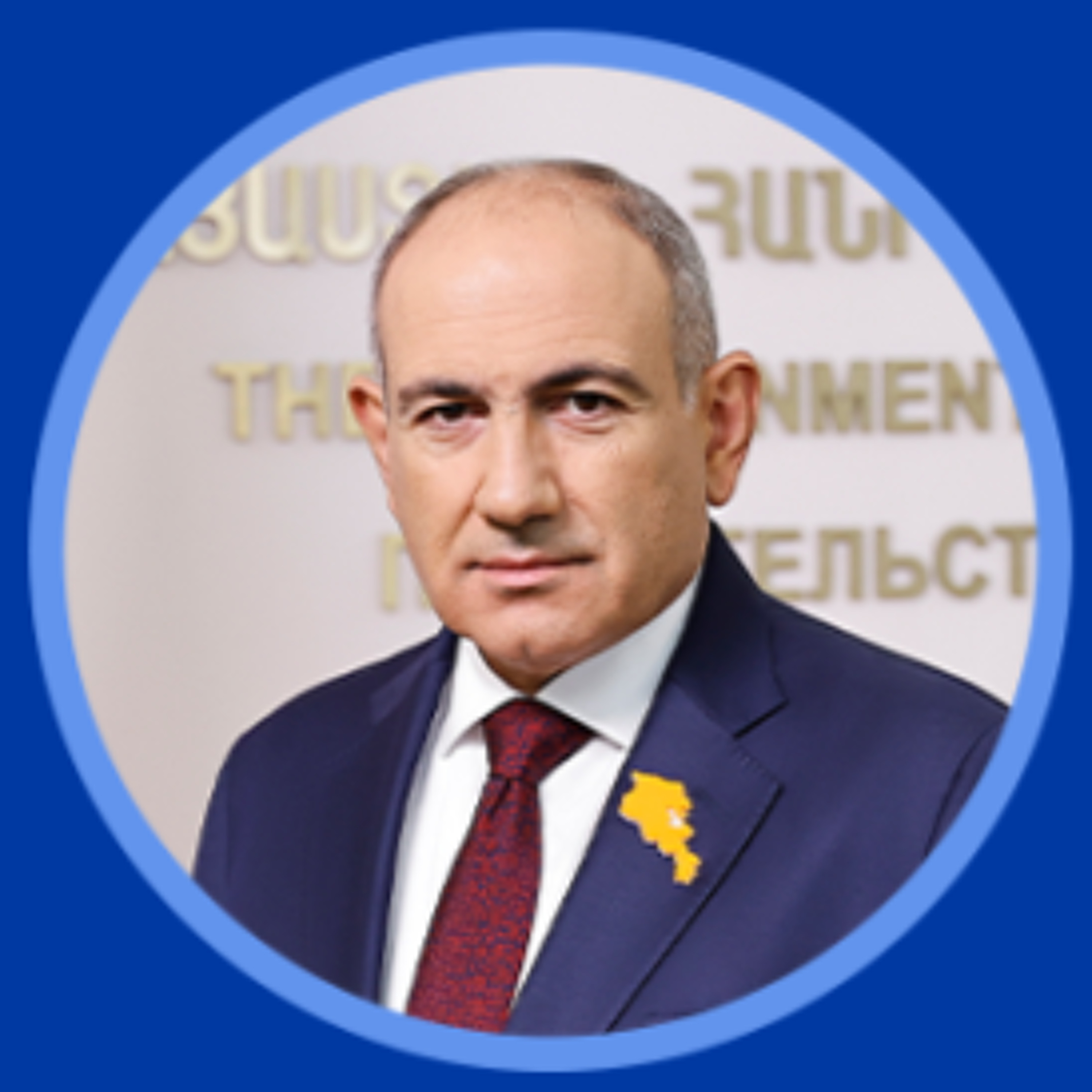
Nikol Pashinyan has served as Prime Minister of the Republic of Armenia since May 2018, leading the country through a period of significant political, economic, and social transformation. He entered parliamentary politics in 2012, when he was elected to the National Assembly as a representative of the Armenian National Congress Alliance. In 2018, he initiated the My Step movement, which led to Armenia’s peaceful Velvet Revolution. On May 8, 2018, he was elected Prime Minister by the National Assembly. His Civil Contract party won the 2021 elections, leading to his reappointment as Prime Minister. In 2026, Civil Contract won the elections, and Nikol Pashinyan was appointed Prime Minister for another term. Among his international honors are the Knight Grand Cross of the Order of Pope Pius IX, awarded by Pope Francis in 2023; the Gold Medal of the Hellenic Parliament in 2024; Kazakhstan’s Order of the Altyn Qyran in 2025; the Zayed Award for Human Fraternity in 2026; and the Gernika Award
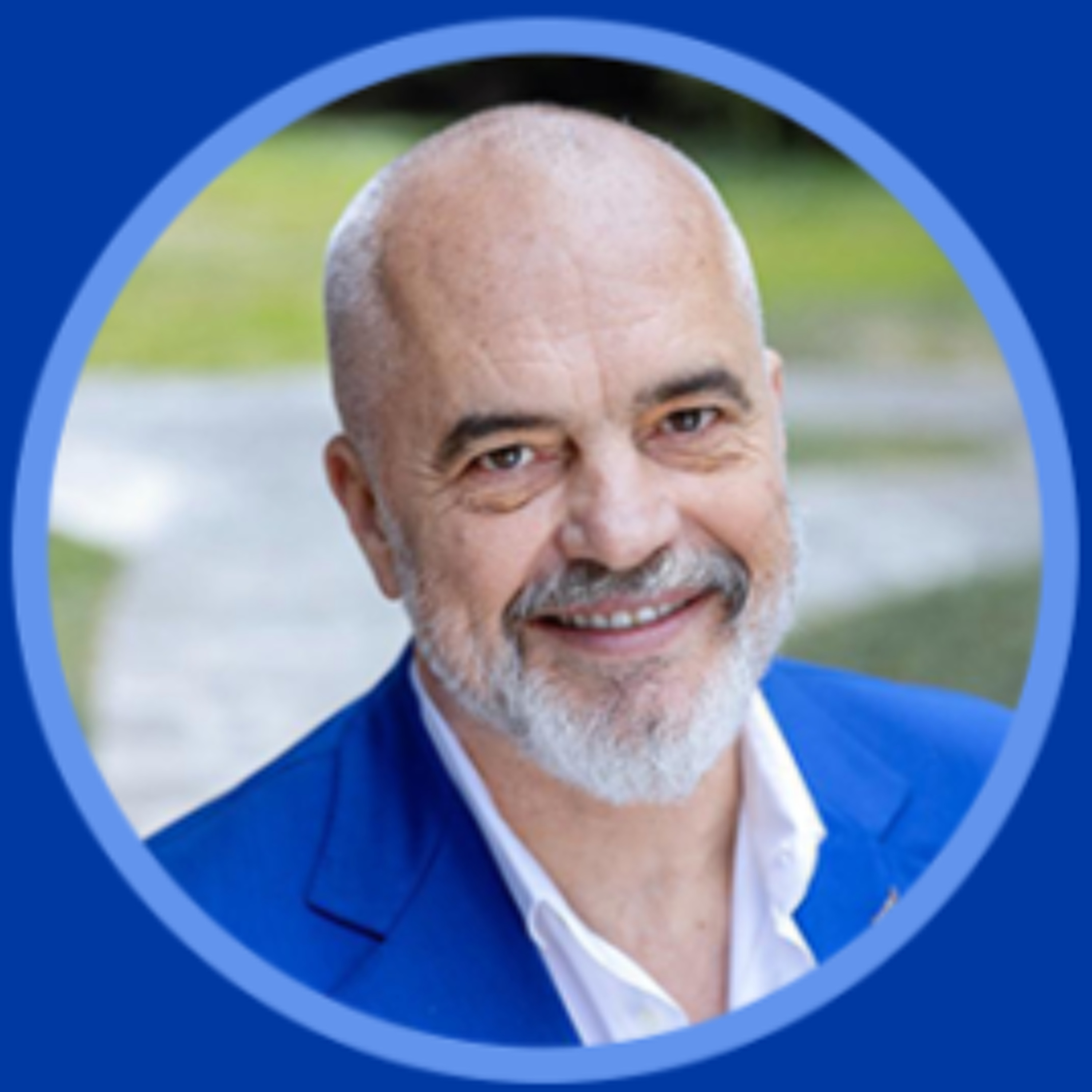
Edi Rama is the Prime Minister of the Republic of Albania and Chairman of the Socialist Party of Albania. Before entering politics, Edi Rama established himself as a painter, professor, writer and public intellectual. He has served as Prime Minister since 2013 and is currently serving his fourth consecutive term in office. His fourth government, sworn in in September 2025, continues to place European Union membership, economic development, institutional modernization, digital transformation and Albania’s Euro-Atlantic partnerships among its central priorities. Albania is undergoing a period of significant institutional, economic and social transformation, with a strong focus on justice reform, public services modernisation, public administration, as well as citizen centric and social welfare reforms. Albania obtained EU candidate status in 2014 and formally opened accession negotiations in 2022. Between mid-2022 and 2026, Albania made remarkable progress in its EU accession process. Th
Since declaring independence in 2008, Kosovo has made significant progress in consolidating its statehood, strengthening democratic institutions, and advancing its European agenda. However, this pathway has been met with domestic and geopolitical challenges. In his first ever address at the IIEA, the Prime Minister of Kosovo, H.E. Mr. Albin Kurti, reflects upon the country's reform efforts, especially during his time in office. The Prime Minister also considers Kosovo's MR. opportunities and ongoing challenges, while outlining the country’s aspirations to transition from being one of Europe's most pro-European countries to becoming a full member of the EU. H.E. Mr. Albin Kurti was elected Prime Minister of the Republic of Kosovo for the fourth time in September 2026, being elected first in February 2020. Before his time as prime minister, Mr. Kurti led the massive student protests in 1997 against the repressive Milosevic regime. Having been politically active during the war and serving
Sports venues should actively welcome first-time visitors and people attending alone.
Share your view, then see how readers voted. No sign-in required. This poll is shared across stories.
Do you agree or disagree?
Common Quandary
A Common Quandary to discuss
Another conversation to explore, separate from this news story.
Your anonymous review could cost a coworker a promotion. Do you sign your name?
A company requests anonymous feedback about a colleague being considered for promotion. You have serious concerns based on direct experience, but anonymity prevents them from asking questions or understanding the context of your criticism.
Does honest criticism require accepting personal accountability for it?