Listen through the publisher, then discuss the episode here or arrange an in-person Roundtable. Your city determines where to meet.
Roundtables are designed for groups of four, with a shared subject and room for everyone to speak. Come for discussion, with no dating expectation.
View full lesson: http://ed.ted.com/lessons/deb-roy-the-birth-of-a-word MIT researcher Deb Roy wanted to understand how his infant son learned language -- so he wired up his house with video cameras to catch every moment (with exceptions) of his son's life, then parsed 90,000 hours of home video to watch "gaaaa" slowly turn into "water." This astonishing, data-rich research has deep implications for how we learn. Talk by Deb Roy.
Episode information is provided by the publisher. Listening takes place on the publisher’s service.
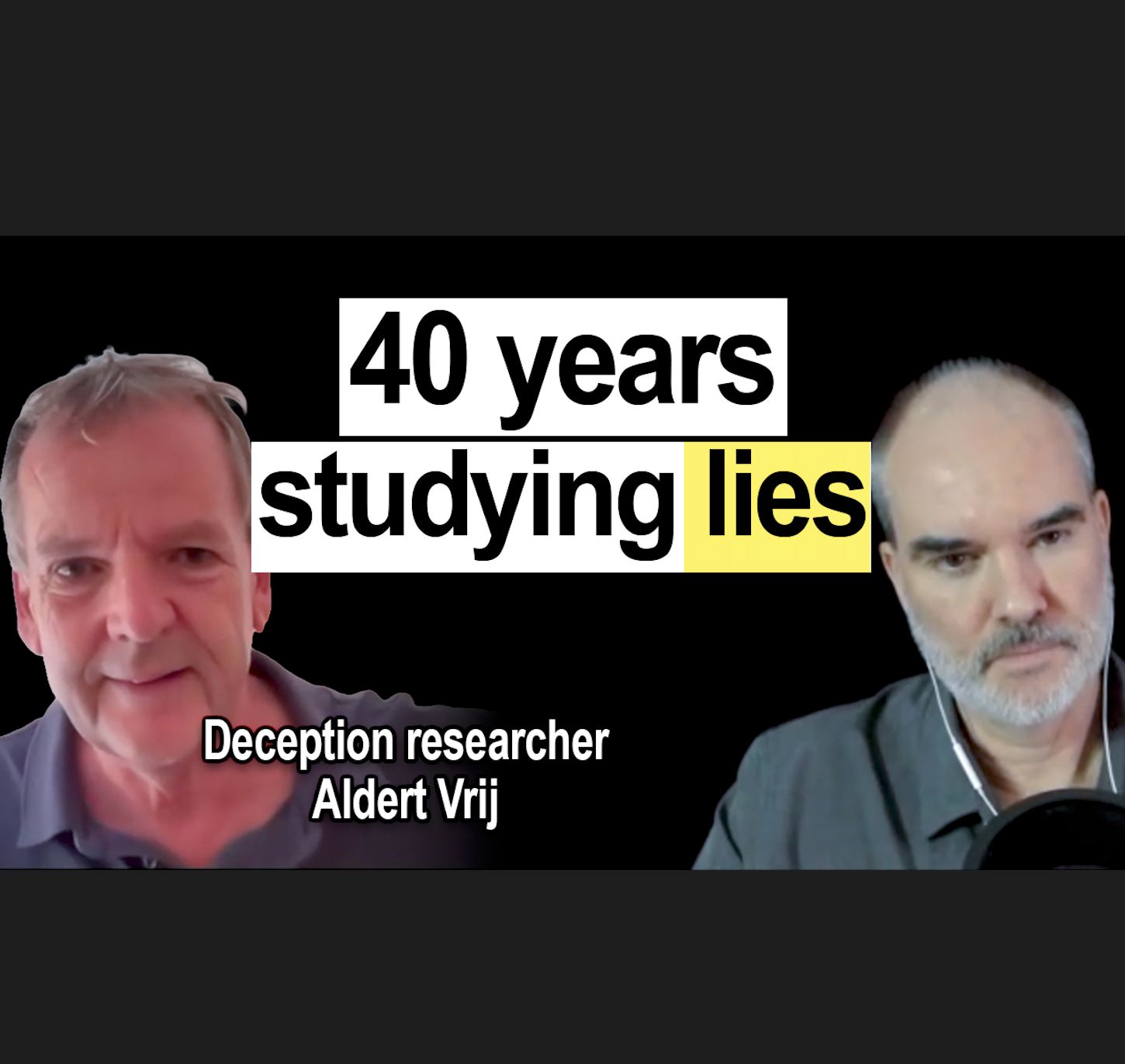
What actually works when it comes to detecting lies, and why are so many popular ideas about reading people and nonverbal behavior at odds with the scientific research? I talk with Aldert Vrij, one of the world's leading deception-detection researchers, who has spent almost four decades studying these topics. We discuss why what people say is far more revealing than their body language; why the perceived “sexiness” of reading nonverbal behavior has contributed to widespread myths and misconceptions; whether vocal behaviors like pitch, volume, and hesitation contain meaningful clues; and whether there's value in analyzing minor word choices and turns of phrase, as is done in so-called “statement analysis.” We discuss Paul Ekman's legacy as a source of faulty ideas about deception, micro-expression-based deception detection training, and the strategies that popular “body language experts” use to appear scientifically credible while simultaneously promoting ideas that conflict with the sc
Have you ever told someone, "Thanks a million!" or claimed you have "a million toys to clean up"? We use the word "million" all the time to mean "a whole lot," but have you ever stopped to wonder just how big a real million actually is? Join Mira and Finn on a mind-blowing math adventure as they discover the quiet power of giant numbers! Imagine counting one number every single second without ever stopping to eat or sleep. It wouldn't take a few hours or a long weekend—it would take you about eleven and a half days just to reach one million! And what about its giant neighbor, the billion? Counting to a billion the exact same way would take a whopping thirty-two years. That's a grown-up's whole life so far! In this amazing episode, we won't just look at numbers on a page; we’ll learn to feel their true size. Find out how much space a million grains of rice would take up, and discover exactly how far a million footsteps would carry you. Get ready to stretch your brain and learn why being
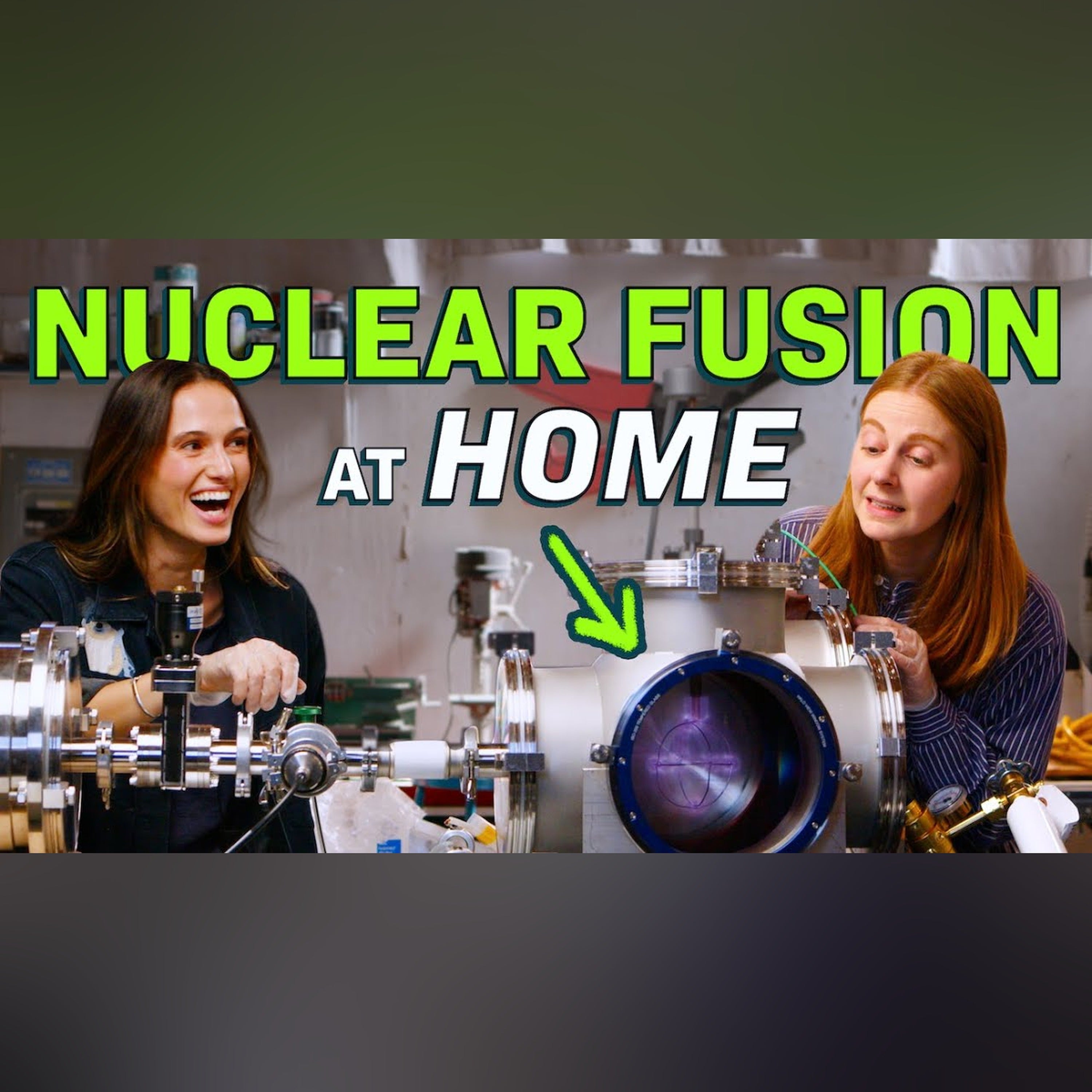
We attempted nuclear fusion. In Simone’s workshop. Disclaimer: This build was supervised by experts at Helion. Do not try this at home. I still can’t believe this video really happened. Back in May, I interviewed Helion CEO David Kirtley. I was trying to understand nuclear fusion: Is nuclear fusion possible now? How does fusion actually work? And most importantly, is nuclear fusion the future? Then, at the end of the interview, I asked David about headlines I’d seen about people building nuclear fusion devices in their backyards - what were they doing? “Oh,” David replied, “you can build one.” What followed is the biggest adventure yet on Huge If True. Together with the team at Helion and my friend fellow YouTuber Simone Giertz, we BUILT A NUCLEAR FUSION DEVICE to show how nuclear fusion works, what the big remaining challenges are, and how it might help us all in the future. Then, the last step was to try to turn it on… WATCH "FUSION, EXPLAINED: PART 1" HERE: https://youtu.be/piPbnKdv
This is a Grave Talks CLASSIC EPISODE! PART TWO Steve and Judy Skinner weren’t searching for a dream home. They were searching for a haunted one. After a paranormal experience in Eureka Springs changed the way they viewed the unexplained, the lifelong skeptics decided they wanted answers. For Steve, a doctor with a scientific mindset, that meant finding a place where paranormal activity could be studied firsthand—without outside influence or manipulation. In 2018, they found exactly what they were looking for in the small town of Brumley: the infamous Haunted Castle House. The home’s violent history, tragic past, and reputation for intense paranormal activity quickly proved this was no ordinary house. Apparitions, unexplained voices, knocks, shadows, and eerie encounters soon became part of everyday life inside what many now call the “Most Haunted House in the Midwest.” Dr. Steve Skinner shares what really happens inside the Haunted Castle House—and why some mysteries refuse to stay bu
In this calm and sleepy facts episode, we spend eight peaceful hours exploring some of the quietest wonders of the natural world. We begin beneath a gathering thunderstorm, following warm air as it rises into towering clouds and learning how a single flash of lightning can briefly heat the air to several times the temperature of the surface of the Sun. From there we settle into the hidden world of hibernation, where animals slow their breathing and their heartbeats to just a few beats a minute and wait out the long winter in stillness. Next, we wander among the trees, discovering how they lift water hundreds of feet into the air without a single moving part and quietly record each passing year in rings of wood. Finally, we cross the deserts, where the heat of the day gives way to cold, clear nights and some dunes hum softly as the sand slides down their slopes. Each story unfolds slowly and gently, with no sudden sounds, so the whole night can pass in calm and quiet wonder. Let these c
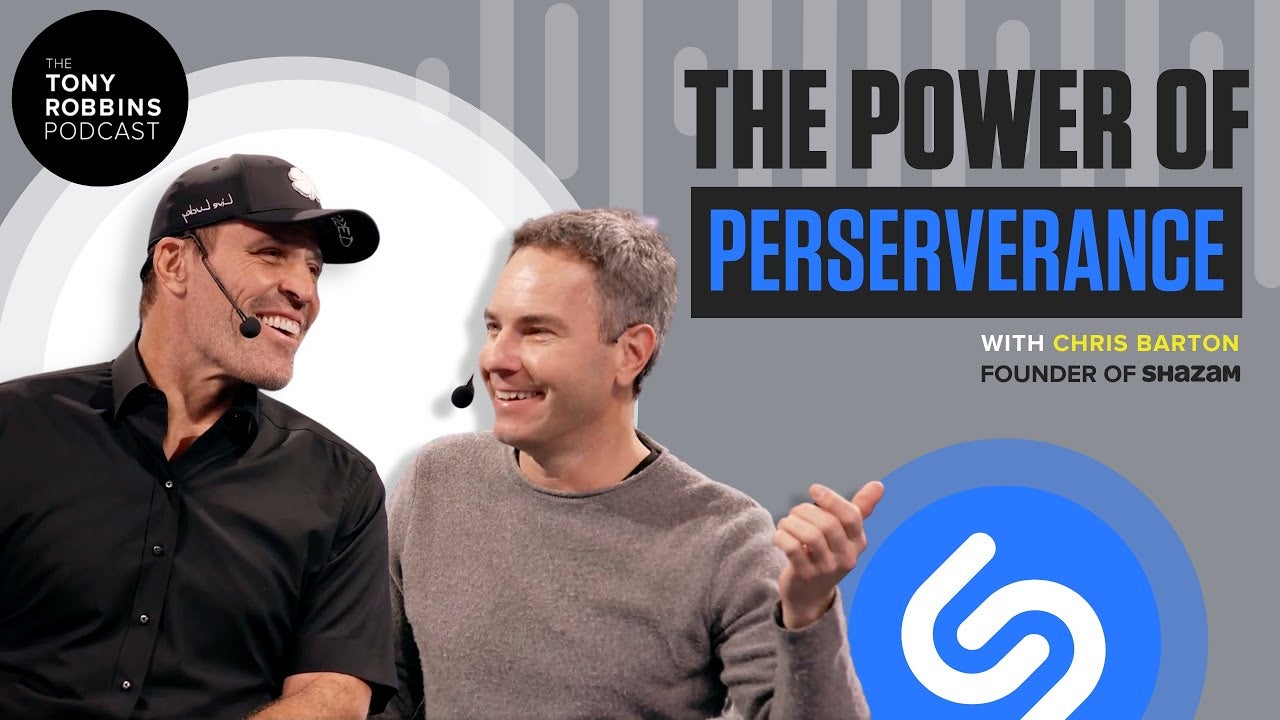
In this video, we drop you inside a Tony Robbins Business Mastery seminar for a 1-hour masterclass in how to take a far-fetched seemingly impossible business idea all the way from your brain to market. Uploaded 30-09-22 You’ll see Tony Robbins in a one-on-one interview with the co-founder of the wildly popular music recognition app, Shazam. Shazam is one of those magic tech innovations that stopped us in our tracks with its astonishing capability the first time we saw it. Launched in the summer of 2002, Shazam just turned 20 years old, and in those 20 years, it has surpassed 70 billion song I.D.s with its 225 million monthly users around the world. All of this began in 1999 when Chris Barton, then an undergrad student at UC Berkeley, founded Shazam Entertainment with his business partner. Watch the video for the whole story of how Chris’s creation led to an Apple acquisition in September 2018 for a reported $400 million. Tony digs into the mindset of a true creative entrepreneur and ex
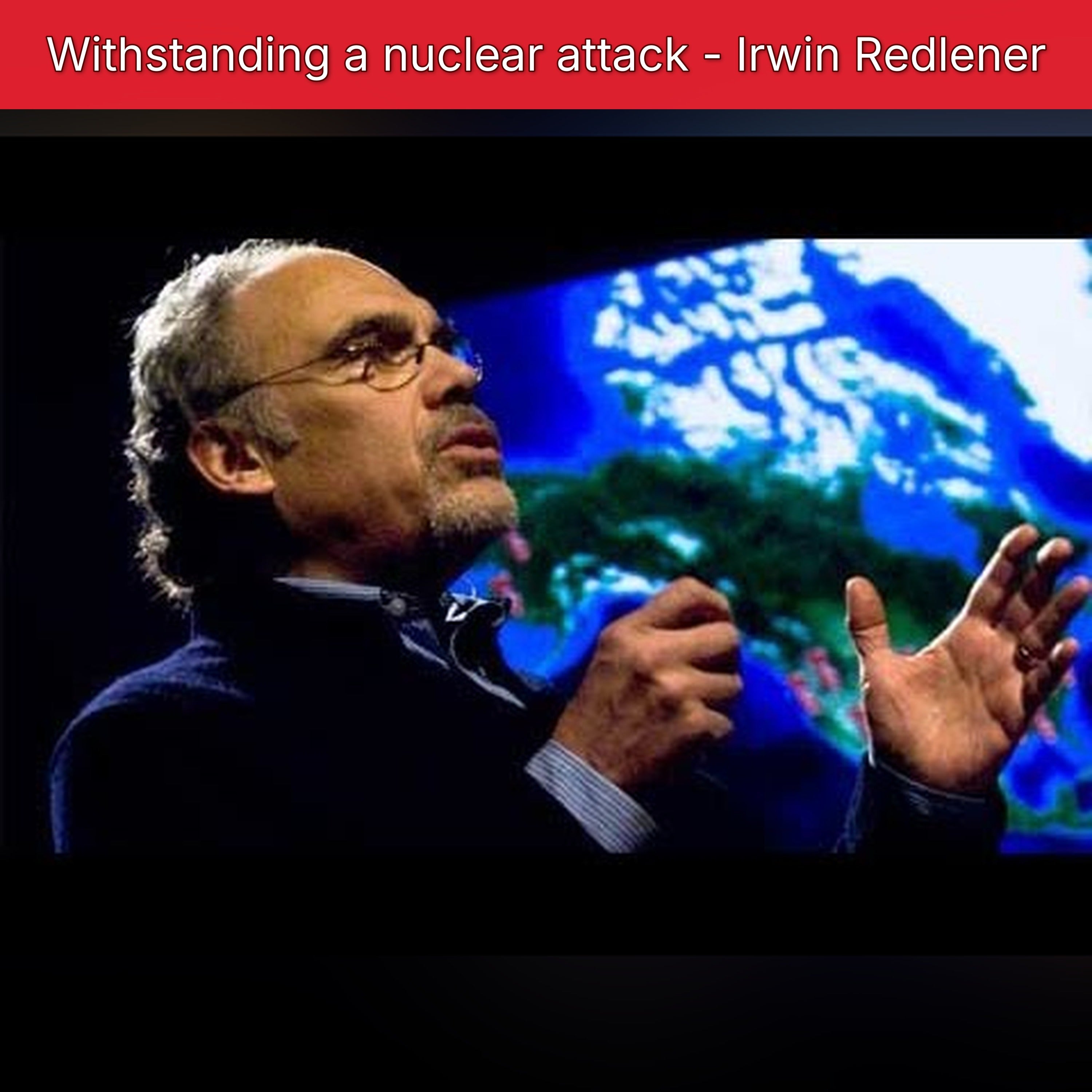
View full lesson: http://ed.ted.com/lessons/surviving-a-nuclear-attack-irwin-redlener The face of nuclear terror has changed since the Cold War, but disaster-medicine expert Irwin Redlener reminds us the threat is still real. He looks at some of history's farcical countermeasures and offers practical advice on how to survive an attack. Talk by Irwin Redlener.
Explore what makes polio so dangerous, what is causing the 21st century resurgence of cases, and how we can eradicate the disease. -- In 1952, polio was everywhere: killing or paralyzing roughly half a million people annually. Yet just 10 years later, paralytic polio cases in the US dropped by 96% and we were on track to get rid of polio for good. But in recent years, the virus started striking back. So, what’s behind these recent spikes? Explore the dangers of poliovirus and the possibility of eradicating this deadly disease. Directed by Anton Bogaty. This video made possible in collaboration with Gates Ventures Learn more about how TED-Ed partnerships work: https://bit.ly/TEDEdPartner A special thanks to Ananda Bandyopadhyay, Amber Zeddies, and Kathleen O'Reilly who provided information and insights for the development of this video. Support Our Non-Profit Mission ---------------------------------------------- Support us on Patreon: http://bit.ly/TEDEdPatreon Check out our merch: htt
Todd Humphreys forecasts the near-future of geolocation when millimeter-accurate GPS "dots" will enable you to find pin-point locations, index-search your physical possessions ... or to track people without their knowledge. And the response to the sinister side of this technology may have unintended consequences of its own. (Filmed at TEDxAustin.) Uploaded 26-06-13 Talk by Todd Humphreys.
A striking scientific discovery should face stronger scrutiny before changing established practice.
Share your view, then see how readers voted. No sign-in required. This poll is shared across stories.
Do you agree or disagree?
Common Quandary
A Common Quandary to discuss
Another conversation to explore, separate from this news story.
Your friend asks for an honest review after every date. Do their dates deserve privacy?
A close friend sends detailed post-date reports and expects your advice about every message, kiss, and awkward silence. One recent date is someone you know professionally, who would be embarrassed to learn how much you have heard.
Where does friendship's need for advice become gossip about an unsuspecting person?