The “godfather of AI” on the risks that worry him most | Geoffrey Hinton
30 min
Listen through the publisher, then discuss the episode here or arrange an in-person Roundtable. Your city determines where to meet.
Roundtables are designed for groups of four, with a shared subject and room for everyone to speak. Come for discussion, with no dating expectation.
Geoffrey Hinton helped create the neural networks behind today’s AI, won a Nobel Prize for it — and has spent the years since warning about where it’s headed. In conversation with journalist Nicholas Thompson, Hinton shares the AI risks he’s worried about, sketches out a best-case future for the technology and explores whether or not chatbots have subjective experience. Plus: hear his thoughts on the one rule we must give superintelligent AI. Hosted on Acast.
Episode information is provided by the publisher. Listening takes place on the publisher’s service.
Today, Mel is taking 58 years of hard-earned life lessons and is packing them into under an hour, to save you some of the time, frustration, and worry it took her to learn them the hard way. In this episode, Mel is fielding real questions from listeners around the world. From making friends and bouncing back from rejection to feeling stuck in life and wondering if it's all going to work out, Mel is sharing the advice she wishes she'd known sooner. And she's not holding back. You'll hear Mel get personal about her own setbacks, and what she's learned about starting over, going after what you want, and trusting yourself when life doesn't go according to plan. You'll learn: -How to stop worrying about the future when nothing feels certain -How to make big life decisions, including whether or not to have kids -How to make new friends as an adult -What to do when you get rejected from your dream job -What to do when a friend ghosts you -How to stop procrastinating and finally follow through
In 1966, Australian novelist Elizabeth Harrower was on the brink of literary fame. Her fourth novel, The Watch Tower, was hailed as one of the year's best Australian books, alongside a novel by her friend Patrick White. White went on to win the Nobel Prize for Literature, but Harrower stopped writing altogether. For the next four decades, she disappeared from the literary world. Now, a new biography aims to unravel the mystery of one of Australia's most elusive writers. Guest: Susan Wyndham, author of Elizabeth Harrower: The Woman in the Watch Tower winner of the Mark and Evette Moran Nib Literary Award.
In May 2015, Eugene Scardifield’s life changed forever when his brother Michael was tragically murdered in Stoke-on-Trent. In this special interview, Eugene joins me to talk about Michael, the impact of his murder on those who loved him and what life has been like for the family in the years since. Eugene is an author, fundraiser and ambassador for SAMM National (Support After Murder and Manslaughter), an organisation supporting people whose lives have been affected by homicide. This is a conversation about loss, the experience of families bereaved by murder and the importance of ensuring that those left behind are not forgotten. 1, Buy Eugene's book: 2, SAMM National (Support After Murder & Manslaughter): I release new episodes of the UK True Crime podcast every Tuesday and Friday - please do join me for the next episode on Tuesday. Find out more about me, Adam Lloyd, & UK True Crime https://uktruecrime.com (https://uktruecrime.com/) Support me at Patreon: Buy Me a Coffee Watch my You
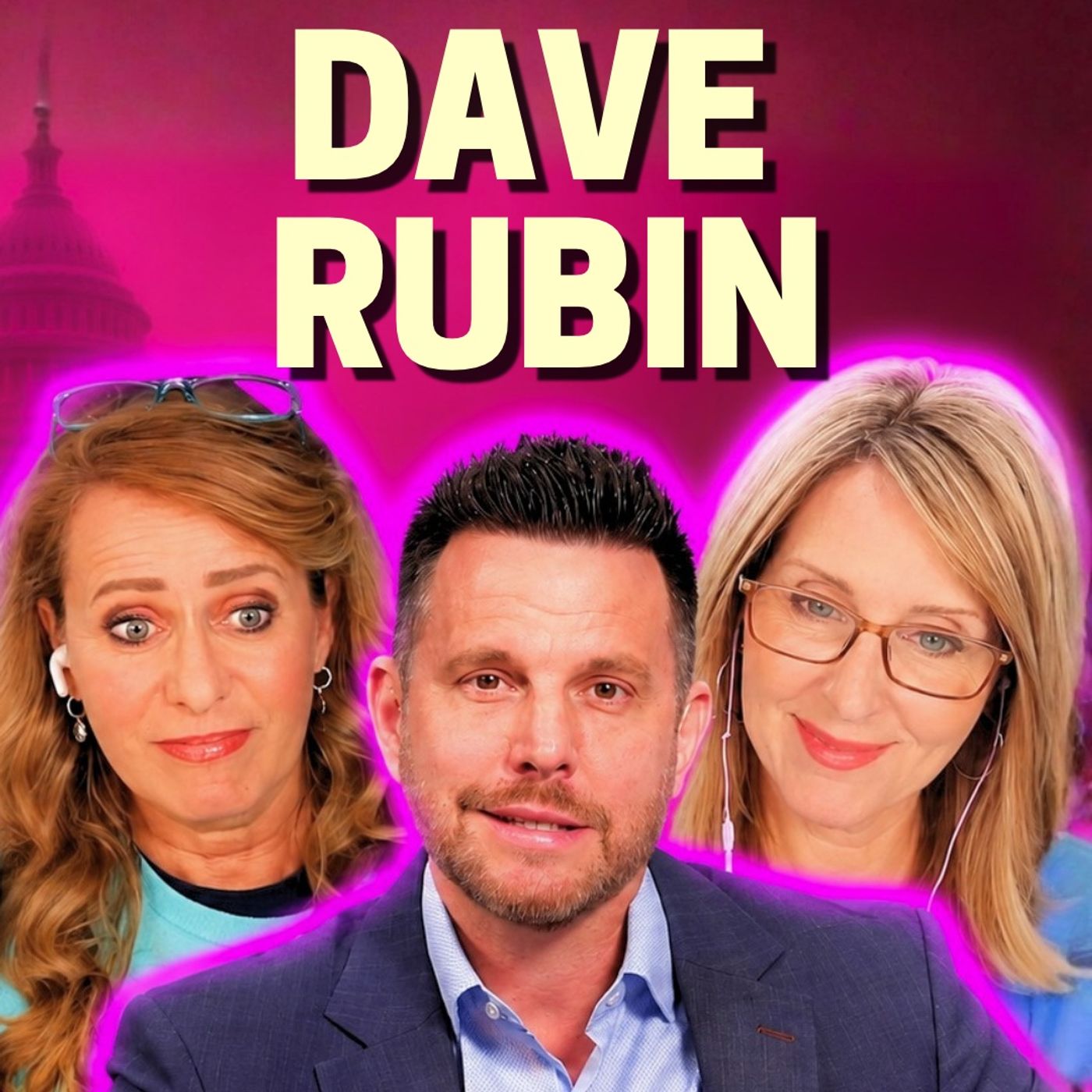
Is the Republican Party heading for a major reckoning in 2028? Dave Rubin joins The Chicks on the Right for a brutally honest conversation about Trump's final two years, the future of the GOP, and the growing divisions threatening conservatives. Dave weighs in on the Republican Party's recent election losses, whether JD Vance, Marco Rubio, or Ron DeSantis can carry Trump's agenda forward, and why he's increasingly concerned about the political direction of America. The conversation heats up as Dave takes on Nick Fuentes, the rise of extremist voices on the right, and the socialist movement gaining influence within the Democratic Party. He also discusses radical Islamism, antisemitism, the dangers of online outrage, and why he believes Western civilization faces serious challenges. Plus, with cyberattacks, banking disruptions, and nationwide outages raising concerns, Dave shares his thoughts on whether Americans should be preparing for more chaos. And don't miss the lighter side of Dave
Unock the free Masterclass: https://nci.university (https://nci.university/) Uploaded 03-07-25 Before you spoke your first word, the world had already assigned you an identity—names, roles, expectations, and limitations. This video is a decoding of that lie. In this 10-minute deep dive, we explore the hidden machinery behind identity—psychologically, philosophically, and socially. With insight from Carl Jung, Plato, and Social Identity Theory, we confront the truth: most of what you think of as “you” was scripted for you. ⸻ In this video: • Carl Jung’s Shadow and the hidden self • Plato’s Allegory of the Cave and waking up to illusion • The roots of identity through memory, tribe, and opposition • How we’re trained to obey, belong, and perform • The psychological cost of not knowing who you are • The path to reclaiming authorship over your life ⸻ For the Seekers: This is not self-help. This is not motivation. This is for those who suspect the story they’re living isn’t their own. ⸻ If
As a young mother preparing for her first baby, she was delighted when her husband's grandparents offered her an old oak rocking chair. After stripping away layers of paint and restoring it, she placed it in the living room, where she spent countless nights rocking her newborn son. But soon, she began hearing the chair's unmistakable creaking long after everyone had gone to bed. Her husband never found anything unusual, yet the sound continued. Then one night, she woke on the couch to hear the chair rocking behind her—and caught a glimpse of something heartbreaking. Unable to live with the experience, she returned the chair to the grandparents. Their strangely unsurprised reaction, followed by something they revealed about its history, raised an unsettling question: Had another mother's grief remained attached to the chair all those years? #RealGhostStoriesOnline #HauntedRockingChair #HauntedAntiques #HauntedObjects #GhostlyApparitions #SpiritAttachments #ParanormalEncounters #HauntedF
The proliferation of dating apps have people thinking romance is dead. But is that what romance really is? In today’s Sunday Pick, we bring you another episode of the TED podcast, Corner Piece, where host Melissa sets out to discover the true definition of romance, and if it’s even achievable in modern life. She interviews Professor Carrie Jenkins to understand the biological and social foundations of romantic love, the core cultural narratives we construct about romance, and whether romance itself is exclusive to relationships. Find more episodes of Corner Piece here: https://link.mgln.ai/u4mZ9C Hosted on Acast.
For guitarist and TED Fellow Fabiola Reyna, music is first and foremost a way of connecting — to ourselves, our ancestors and each other. They take us inside their creative process, discussing why great music starts with intuition, how they turned love and grief into an album and how they’re building space for people who feel stuck between cultures. Hosted on Acast.
AI data centers are popping up across the US — and the people living next to them are increasingly upset. Brian Janous, whose company finds land for some of the biggest data centers, hears those objections firsthand. He proposes a solution that would change who benefits from the AI boom, putting a bigger share of the wealth directly into the hands of local communities. Hosted on Acast.
Technology companies should address foreseeable misuse before releasing a new feature.
Share your view, then see how readers voted. No sign-in required. This poll is shared across stories.
Do you agree or disagree?
Common Quandary
A Common Quandary to discuss
Another conversation to explore, separate from this news story.
Someone you love asks, “Do you think I’ll be okay?” What if you do not?
A relative with a poor prognosis asks whether you think they will recover. They seem to need reassurance, but you believe the odds are very low and do not want to spend the remaining time pretending.
Can preserving hope justify saying more than you believe?