The hidden reason most robots fail on the factory floor
82 min
Listen through the publisher, then discuss the episode here or arrange an in-person Roundtable. Your city determines where to meet.
Roundtables are designed for groups of four, with a shared subject and room for everyone to speak. Come for discussion, with no dating expectation.
Standard Bots CEO Evan Beard joins Mike Oitzman and Gene Demaitre to discuss AI-native robotics and the future of American manufacturing. Beard explains how customer feedback shaped Standard Bots’ easier-to-use robots, including configurable mobile systems, natural-language programming, and learning through demonstration. He also explores robot economics, vertical integration, workforce development, and policies that could strengthen US robotics. The conversation concludes with a look at upcoming software that could scan workspaces, build simulations, and help robots program and improve themselves. ### The future of robotics isn't just about building smarter machines. It's about making them work in the real world. Intel is helping developers and businesses move from prototype to production with an open, scalable robotics platform that brings AI inference, sensing, and real-time control together. From intelligent automation to advanced Physical AI, Intel provides the compute, software, and ecosystem to help turn robotics innovation into real-world impact. Learn more: https://www.intel.com/content/www/us/en/products/details/robotics.html?utm_source=therobotreport&utm_medium=podcast&utm_campaign=ih-q4-promo
Episode information is provided by the publisher. Listening takes place on the publisher’s service.
Sila CEO and co-founder Gene Berdichevsky discusses scaling silicon-based anode batteries to replace Chinese graphite in lithium-ion cells, backed by a $1.4 billion Office of Strategic Capital loan and a new Panasonic offtake agreement. He outlines the deployment timeline for drones, satellites, robotics, and EVs, and explains why mass-market manufacturing is essential to untethered physical AI and national defense. MTS chronicles the singularity, live. Monitoring the situation of tech and AI. Follow MTS: Spotify |https://open.spotify.com/show/4HUNNmV1pjV7CW6Lphm1rM Apple |https://podcasts.apple.com/us/podcast/mts/id1891088763 – Brought to you by: Mongo DB - Anyone can prototype an agent. Lovable - Turn ideas into software people love with Lovable. Start today at https://lovable.dev/ Factory - A 24/7 system turning signals into production software. Visithttps://factory.com/ Neon (by Databricks) - Scale your startup on Neon. The Postgres backend for apps and agents. Built by Databricks.
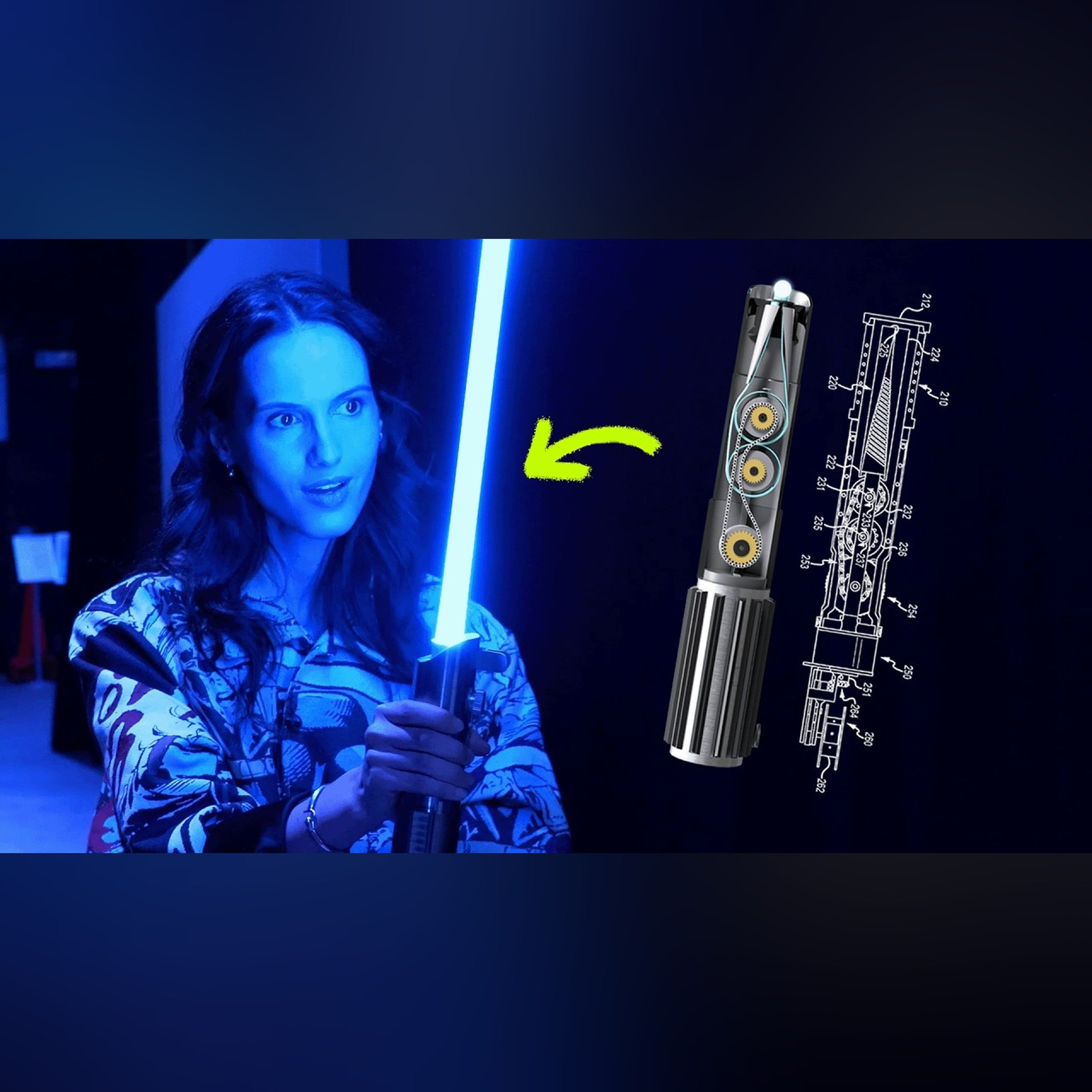
I tested Disney’s coolest new tech… Go to https://surfshark.com/cleo for 4 extra months of Surfshark Today I’ve been invited behind the scenes at Walt Disney Imagineering, the place where Disney brings their craziest ideas to life - from STUNT ROBOTS to a real life version of The Force, to adorable little droids! On this show Huge If True, we explore how tech can improve people’s lives - by living longer, going farther, doing more. But the reason I’ve loved Disney since I was a kid is they use tech to improve lives another way… by making people happy. And that means they end up pushing forward tech in some crazy, unexpected ways. So let me take you inside the magic, to show you the cutting edge tech they’re building… how it works… and what happens when we put it to the test! Chapters: 0:00 What is Disney building next? 1:11 What does Walt Disney Imagineering do? 1:52 What are Disney’s new droids really like? 2:47 How do Disney’s new droids work? 5:08 What’s the world’s most realistic l
Explore what makes polio so dangerous, what is causing the 21st century resurgence of cases, and how we can eradicate the disease. -- In 1952, polio was everywhere: killing or paralyzing roughly half a million people annually. Yet just 10 years later, paralytic polio cases in the US dropped by 96% and we were on track to get rid of polio for good. But in recent years, the virus started striking back. So, what’s behind these recent spikes? Explore the dangers of poliovirus and the possibility of eradicating this deadly disease. Directed by Anton Bogaty. This video made possible in collaboration with Gates Ventures Learn more about how TED-Ed partnerships work: https://bit.ly/TEDEdPartner A special thanks to Ananda Bandyopadhyay, Amber Zeddies, and Kathleen O'Reilly who provided information and insights for the development of this video. Support Our Non-Profit Mission ---------------------------------------------- Support us on Patreon: http://bit.ly/TEDEdPatreon Check out our merch: htt
Scientists have developed a powerful computational method that could dramatically expand the world of two-dimensional materials. By examining thousands of crystal structures, researchers have uncovered promising candidates with unusual electronic and magnetic properties. The discovery could open new possibilities for next-generation electronics, spintronics, and nanotechnology, revealing how much potential remains hidden in materials we already know. This episode includes AI-generated content.
Project Synapse: Markets in Freefall, Fragile Infrastructure, and AI's Perfect Storm The hosts banter through the show's intro before focusing on a sense that "things are out of control," citing a WallStreetBets suicide-hotline post amid a market crash and discussing cascading system failures involving Microsoft, the FAA, and a reported NSA internal communications outage. They argue politicians and leadership lack technical competence and clear messaging, increasing panic, while emphasizing that many problems stem from aging, underfunded infrastructure and complex, brittle software (PHP, NGINX, Java), not proven AI attacks—more a "perfect storm" of crises. They debate whether AI should help fix complexity, stressing critical thinking, accountability, and using multiple AIs to verify each other. In a lightning round they cover Anthropic's IPO performance, mixed reactions and token limits with ChatGPT 6.2 (favoring "Sol" over "Astra"), Google's cheaper Neon model and confusing UX, Loblaw
How to kill your current self My private network for entrepreneurs ⚜ - http://newelite.pro/search-for-freedomJoin the Icon Blueprint personal brand academy waitlist - https://t.me/+AwtcD_v7V4xiNGE1My instagram - https://www.instagram.com/jackhopfitness?igsh=aGhqMm1iNHg2eXg5&utm_source=qre Episodes created by entrepreneur and masculinity ace Jack Hopkins for his youtube channel, this podcast is dedicated to helping men rediscover their inner strength and confidence in a society that often promotes feminine values over masculine ones.Follow the podcast for valuable insights, inspiring stories, and practical advice on how to embrace your masculinity, build your confidence, and achieve your goals. Whether you're looking to improve your relationships, advance your entrepreneurial career, or simply feel more confident and capable, Jack has valuable insights that can help you achieve your goals.So, if you're ready to reclaim your masculinity and awaken the beast that lives inside you, follow
Point One Nav CEO and co-founder Aaron Nathan explains why dependable positioning is foundational to robotics and autonomous systems. Drawing on lessons from Cornell’s 2005 DARPA Grand Challenge, Nathan discusses how RTK, GNSS, sensor fusion, and shared coordinate systems help machines navigate accurately and reliably. The conversation covers RTK’s ability to improve positioning from roughly five meters to about two centimeters, as well as its limitations under tree cover and in urban canyons. Nathan explains how combining RTK with cameras, lidar, and inertial sensors can support applications in agriculture, surveying, construction, mining, logistics, delivery drones, lawn mowers, and autonomous vehicles. He also discusses the challenges of scaling from pilot projects to production fleets, Point One Nav’s rapid growth and global expansion, the future of indoor positioning, and the upcoming FUSE location-technology conference. FUSE 2026 is happening on Nov 19, 2026 in San Francisco. Sig
Acting on preliminary research can be justified when the risks of waiting are high.
Share your view, then see how readers voted. No sign-in required. This poll is shared across stories.
Do you agree or disagree?
Common Quandary
A Common Quandary to discuss
Another conversation to explore, separate from this news story.
An old friend refuses to use someone's new name. Do you correct them at the reunion?
At a reunion, an old friend repeatedly uses the name a former classmate had years ago. They say shared history gives the old name affectionate meaning; the classmate has clearly introduced themselves with a different name.
When does preserving your shared past deny who someone is now?