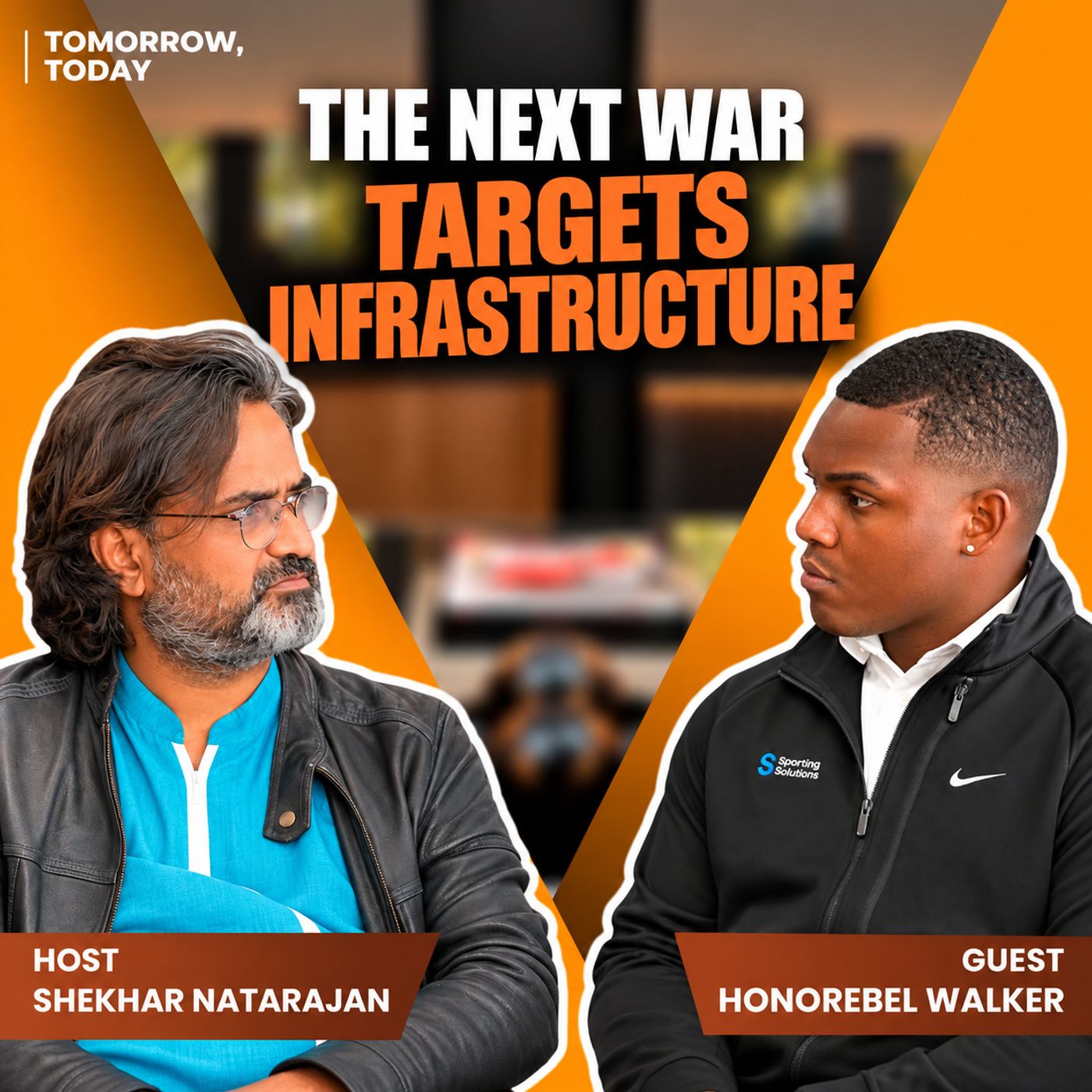
THE HIDDEN THREATS TO OUR POWER, PORTS AND ENERGY SYSTEMS | Shekhar Natarajan x Honorebel S. Walker
Listen through the publisher, then discuss the episode here or arrange an in-person Roundtable. Your city determines where to meet.
Roundtables are designed for groups of four, with a shared subject and room for everyone to speak. Come for discussion, with no dating expectation.
In This Episode: Honorebel S. Walker joins Shekhar Natarajan to discuss how robotics, AI and autonomous systems could transform the protection of critical infrastructure. 1. Honorebel S. Walker's journey into robotics, engineering and critical infrastructure technology. 2. What SpaceTime Industries does and why it focuses on protecting critical infrastructure. 3. Why machines should take the lead when jobs become dangerous, remote or expensive. 4. How robotics can support surveillance and inspection at remote industrial facilities. 5. The role of Sentinel, SpaceTime Industries' software platform for coordinating autonomous systems. 6. How drones, ground vehicles and existing sensors can work together. 7. Why integrating commercially available robotics can create a different approach to infrastructure monitoring. 8. The challenges of deploying autonomous drones and meeting operational requirements. 9. How remote solar farms can use robotics for thermal imaging and routine inspections. 10. The growing problem of copper theft and security risks at remote energy facilities. 11. How SpaceTime Industries identified suspicious vessel activity near subsea cable infrastructure in Alaska. 12. Why critical infrastructure is becoming an increasingly important national security concern. 13. How AI supports threat scoring, monitoring and coordination between autonomous systems. 14. Why many critical infrastructure facilities are still 10 to 15 years behind in technology adoption. 15. What makes ports dangerous and why monitoring them is so important. 16. The role of maritime domain awareness in protecting coastal infrastructure. 17. The opportunities and challenges of bringing robotics into traditional industries. 18. Honorebel's background in electrical engineering, robotics and construction technology. 19. How persistent autonomous monitoring could change the future of infrastructure protection. 20. Why the next generation of warfare may increasingly target the infrastructure society depends on. Hosted by Simplecast, an AdsWizz company.
Episode information is provided by the publisher. Listening takes place on the publisher’s service.
Listen at the source ↗