English-language podcasts

PBS Space Time

The Impossibility of Perpetual Motion Machines
22 min

Listen through the publisher, then discuss the episode here or arrange an in-person Roundtable. Your city determines where to meet.

Roundtables are designed for groups of four, with a shared subject and room for everyone to speak. Come for discussion, with no dating expectation.

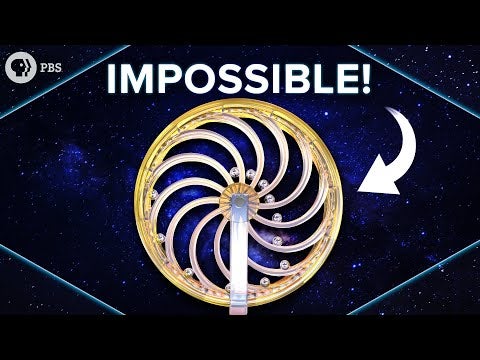
You can learn more about CuriosityStream at https://curiositystream.com/spacetime Uploaded 06-03-19 PBS Member Stations rely on viewers like you. To support your local station, go to: http://to.pbs.org/DonateSPACE Check out the new Space Time Merch Store! Support Space Time on Patreon See Matt in NYC at Caveat March 7th at 9pm: Bad ideas come and go in physics. But there’s one bit of nonsense that is perhaps more persistent than all others: the perpetual motion machine. No working perpetual motion machine has ever been experiment verified. All break the laws of thermodynamics. In fact, we classify based on WHICH law of thermodynamics they break. We have perpetual motion machines of the first kind - they violate energy conservation - they pump more energy out than they need to keep running. This includes most of the historical devices. Then there are machines of the second kind - they’re a bit more subtle in their wrongness because break the second law of thermodynamics - extracting energy by reversing entropy. Many modern “free-energy” devices fall into this category. Now the best modern designs are by you - answers to our recent challenge question, which we’ll get to at the end. But first let’s take a look at examples of what other people came up with - this’ll be a fun little journey through some pretty terrible science. Challenge Winners Please Email [email protected], with your choice of product from the Merch Store (https://pbsspacetime.com/) Connor Grey Creepy Magician Alex Taylor Adrien Romeo Epsilon Centauri Enoae Andrei Tweet at us! @pbsspacetime Facebook: facebook.com/pbsspacetime Email us! pbsspacetime [at] gmail [dot] com Comment on Reddit: http://www.reddit.com/r/pbsspacetime Help translate our videos! Sound Waves from the Beginning of Time Hosted by Matt O'Dowd Written by Matt O'Dowd Graphics by Kurt Ross Directing by Andrew Kornhaber Designing a perpetual motion machine has a very long history and became quite the craze from the middle ages through the renaissance. The first well-documented design for a perpetual motion machine was from the 12th century. Bhāskara's wheel, named after the Indian mathematician, was embedded with tubes of mercury that would flow from back and forth as the wheel turned. Other types of over-balance wheels followed through to the Renaissance and worked on the same principle. There were also designs that employed the magical-seeming lodestones – magnets. For example, this ramp in which a ball is pulled to the top by a magnet before falling through a hole and rolling to the bottom again. Then there are the self-pumping waterwheels or self-blowing windmills. Special thanks to our Patreon Big Bang, Quasar and Hypernova Supporters: Big Bang: Anton Lifshits coolascats David Nicklas Fabrice Eap Juan Benet Justin Lloyd Tim Davis Quasar: James Flowers Mark Rosenthal Tambe Barsbay Vinnie Falco Hypernova: chuck zegar Danton Spivey Donal Botkin Edmund Fokschaner Jens Theisen John Hofmann Jordan Young Joseph Salomone kkm Mark Heising Matthew O'Connor Thanks to our Patreon Gamma Ray Burst Supporters: Alexey Eromenko Antonio Ruiz Bradley Jenkins Brandon Labonte Buruk Aregawi Carlo Mogavero Daniel Lyons David Behtala David Crane David Schmidt Dustan Jones Geoffrey Short Greg Weiss Jack Frosch James Hughes James Quintero Jinal Doshi JJ Bagnell John Webber Jon Folks Jonah Joseph Emison Josh Thomas Kenneth F Leonard Kevin Warne Kyle Hofer Malte Ubl Mark Vasile Nathan Hitchings Nicholas Rose Nick Virtue Ratfeast Richard Broman Scott Gossett Sigurd Ruud Frivik Tim Crookham Tim Stephani Tommy Mogensen سلطان الخليفي Learn more about your ad choice

Episode information is provided by the publisher. Listening takes place on the publisher’s service.

Listen at the source ↗

Featured places to meet in Palo Alto, CA

Explore these places and arrange a conversation through ThinkMatch.

City guide for Palo Alto, CA

More from PBS Space Time

PBS Space Time

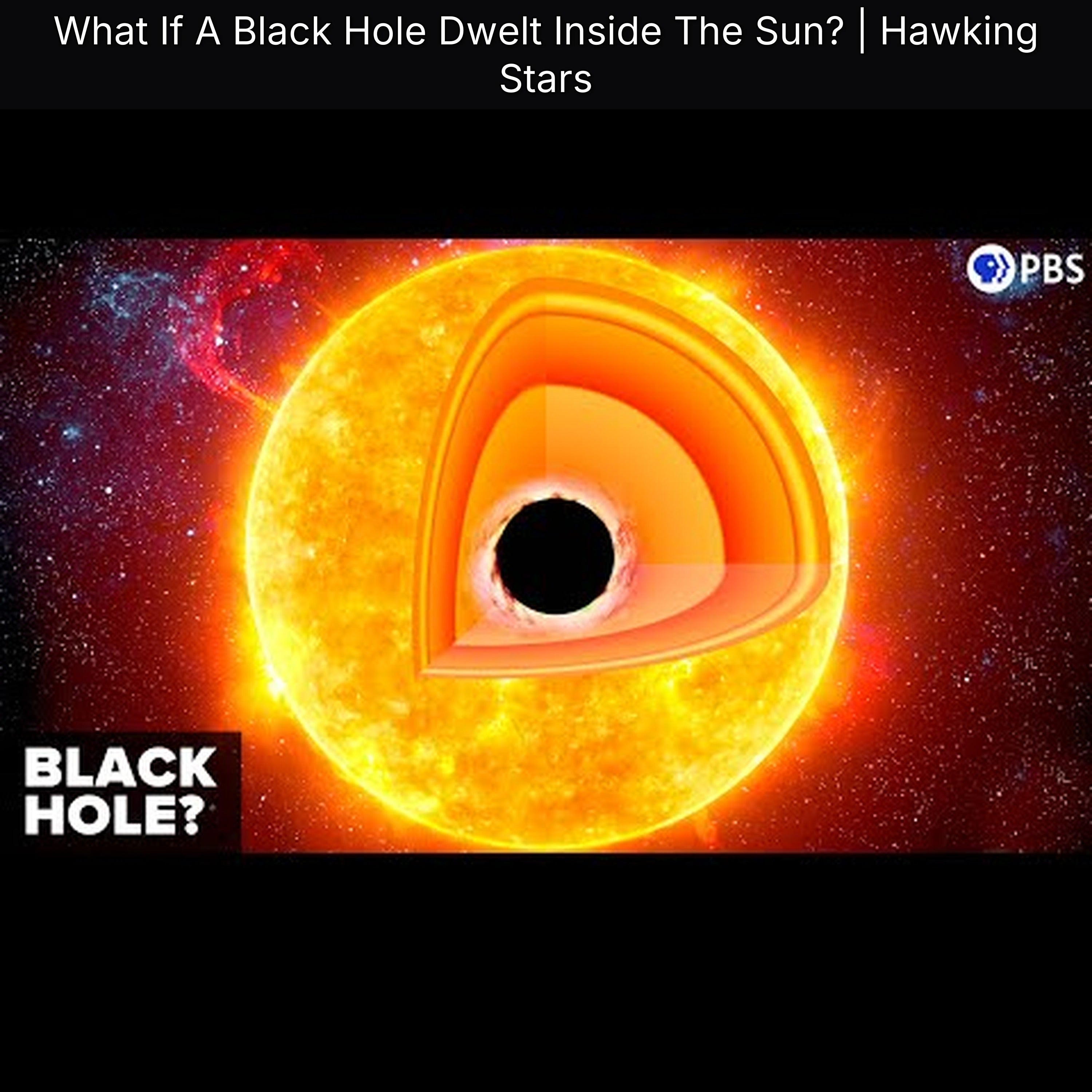
What If A Black Hole Dwelt Inside The Sun? | Hawking Stars

24 min

PBS Member Stations rely on viewers like you. To support your local station, go to:http://to.pbs.org/DonateSPACE Sign Up on Patreon to get access to the Space Time Discord! A fun nightmare sci-fi scenario is the sun being consumed by a black hole. Fortunately the chance of a black hole randomly wandering into our solar system is pretty tiny. That’s good news. But what if it’s already here, hiding in the core of the Sun and slowly eating it from the inside out? Hawking Stars Journal Papers: Search the Entire Space Time Library Here: https://search.pbsspacetime.com/ Hosted by Matt O'Dowd Written by Matt Caplan & Matt O'Dowd Post Production by Leonardo Scholzer, Yago Ballarini & Stephanie Faria Directed by Andrew Kornhaber Associate Producer: Bahar Gholipour Executive Producers: Eric Brown & Andrew Kornhaber Executive in Charge for PBS: Maribel Lopez Director of Programming for PBS: Gabrielle Ewing Assistant Director of Programming for PBS: John Campbell Spacetime is produced by Kornhaber

Discuss this episode

PBS Space Time

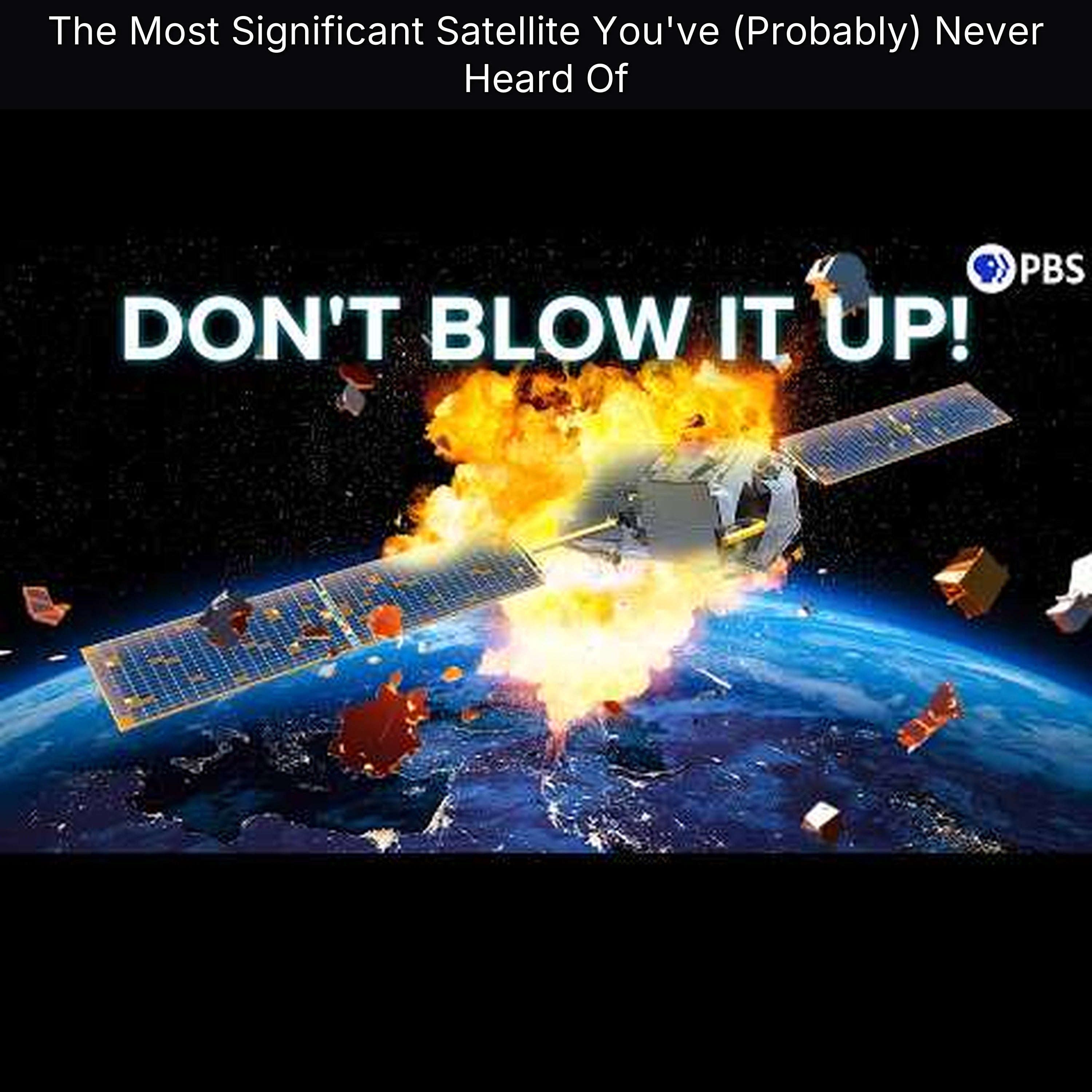
The Most Significant Satellite You've (Probably) Never Heard Of

20 min

Remove your personal information from the web at https://joindeleteme.com/SPACETIME One of the most important reasons we go to space is to know our own planet better. Today I'm going to tell you about an orbiting facility that literally watches Earth's biosphere breath and grow and die with incredible resolution. I'll talk about its profound existential and economic importance, and about why it's in danger of being lost. PBS Member Stations rely on viewers like you. To support your local station, go to:http://to.pbs.org/DonateSPACE Sign Up on Patreon to get access to the Space Time Discord! Check out the Space Time Merch Store Pale Blue Dot By Carl Sagan Search the Entire Space Time Library Here: https://search.pbsspacetime.com/ Hosted by Matt O'Dowd Written by Fernando Franco Félix & Matt O'Dowd Post Production by Leonardo Scholzer, Yago Ballarini & Stephanie Faria Directed by Andrew Kornhaber Associate Producer: Bahar Gholipour Executive Producer: Andrew Kornhaber Executive in Charge

Discuss this episode

PBS Space Time

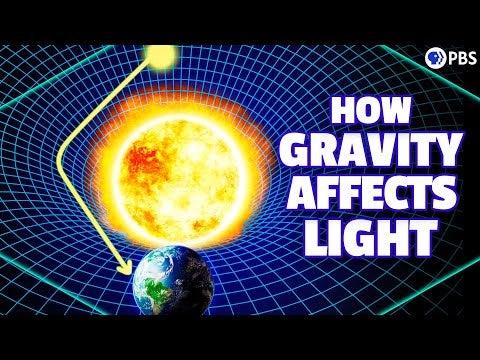
How Does Gravity Affect Light?

18 min

PBS Member Stations rely on viewers like you. To support your local station, go to: http://to.pbs.org/DonateSPACE ↓ More info below ↓ Uploaded 09-03-21 We know that gravity exerts its pull on light, and we have an explanation for why. Actually, we have multiple explanations that all predict the same thing. And at first glance, these explanations seem to describe completely different causes. So what is the true connection between light and gravity, or is truth, in fact, entirely relative? Sabine Hossenfelder's episode "Do we travel through time at the speed of light?" Check out the Space Time Merch Store Hosted by Matt O'Dowd Written by Matt O'Dowd Graphics by Leonardo Scholzer, Yago Ballarini, Pedro Osinski, Adriano Leal and Stephanie Faria GFX Visualizations: Katherine Kornei Directed by Andrew Kornhaber Assistant Producer: Setare Gholipour Executive Producers: Eric Brown and Andrew Kornhaber "FREE GMC Motorhome reimagined low poly" (https://skfb.ly/6XxAN) by Karol Miklas is licensed

Discuss this episode

Community Poll

Keeping food affordable should not require producers to work for an unsustainable income.

Share your view, then see how readers voted. No sign-in required. This poll is shared across stories.

Do you agree or disagree?

Choose one answer

Common Quandary

A Common Quandary to discuss

Another conversation to explore, separate from this news story.

A disgraced billionaire's name is on the beloved campus library. Does it come down?

A major donor funded a beloved public building decades ago. New evidence shows they also caused serious harm that was legal and accepted by many peers at the time. Removing the name may jeopardize future donations.

What does an institution owe the truth when its history funded the present?

Explore this quandary