The laws of the universe are unable to explain these origin mysteries | Paul Davies
62 min
Listen through the publisher, then discuss the episode here or arrange an in-person Roundtable. Your city determines where to meet.
Roundtables are designed for groups of four, with a shared subject and room for everyone to speak. Come for discussion, with no dating expectation.
Physicist and cosmologist Paul Davies, author of The Demon in the Machine, argues that the deepest mystery of life’s origin is how chemistry came to write its own code. Davies traces the question from Aristotle and Schrödinger’s “aperiodic crystal” to Maxwell’s demon, Michael Levin’s two-headed flatworms, and the possibility of a shadow biosphere hiding on Earth.
Episode information is provided by the publisher. Listening takes place on the publisher’s service.
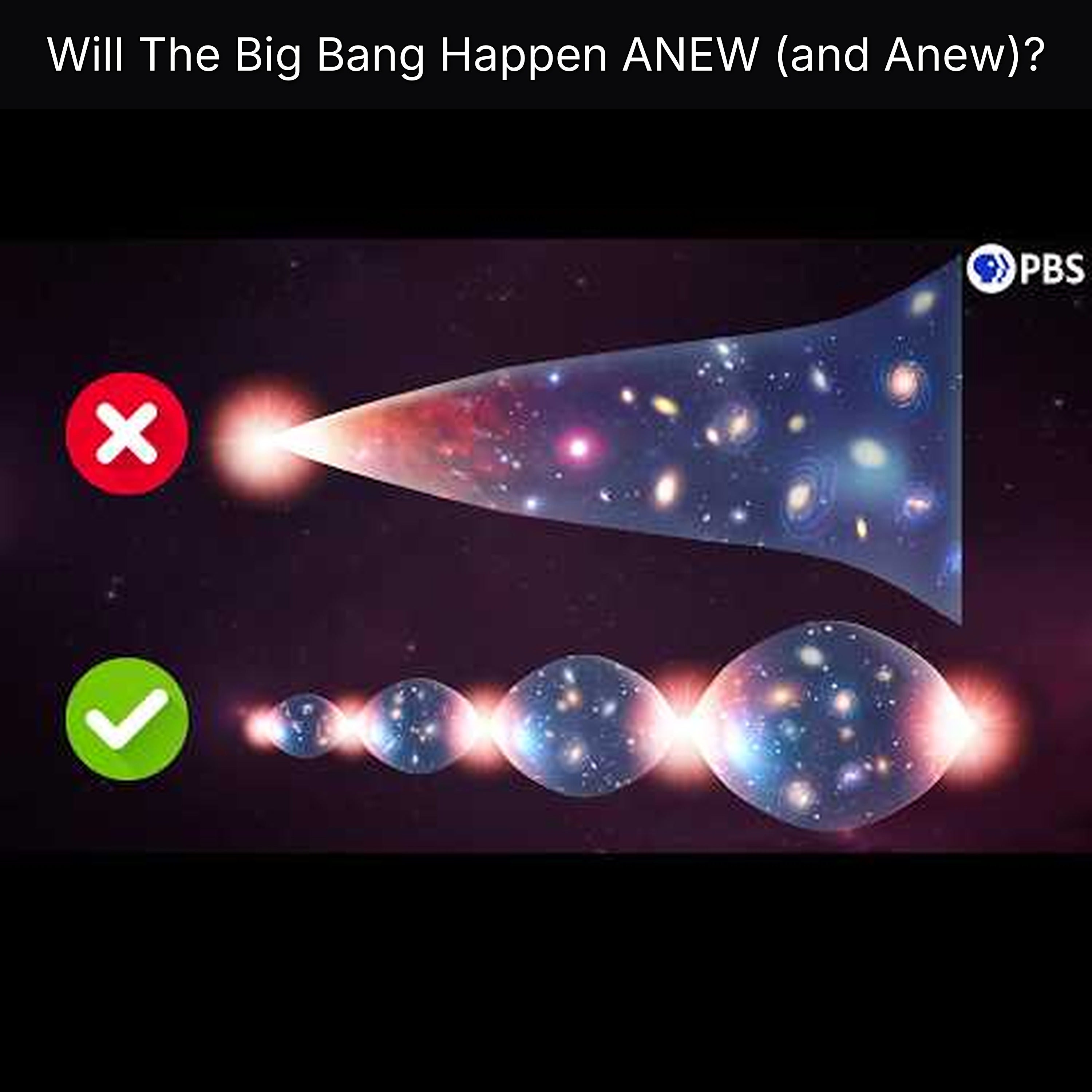
Sign Up on Patreon to get access to the Space Time Discord! How did the universe begin? How can something come from nothing? One way to “solve” this most difficult of philosophical conundrums is to avoid it altogether. Maybe the universe didn’t begin. Maybe the Big Bang was just one in an endless cycle. Check out the Space Time Merch Store PBS Member Stations rely on viewers like you. To support your local station, go to:http://to.pbs.org/DonateSPACE Search the Entire Space Time Library Here: https://search.pbsspacetime.com/ Hosted by Matt O'Dowd Written by Richard Dyer & Matt O'Dowd Post Production by Leonardo Scholzer, Yago Ballarini & Stephanie Faria Directed by Andrew Kornhaber Associate Producer: Bahar Gholipour Executive Producer: Andrew Kornhaber Executive in Charge for PBS: Maribel Lopez Director of Programming for PBS: Gabrielle Ewing Assistant Director of Programming for PBS: John Campbell Spacetime is a production of Kornhaber Brown for PBS Digital Studios. This program is p
Merriam-Webster's Word of the Day for November 22, 2026 is: copacetic • \koh-puh-SET-ik\ • adjective Copacetic (less commonly spelled copasetic or copesetic) describes things that are very satisfactory. // Worry not: I assure you that everything’s copacetic. See the entry > (https://www.merriam-webster.com/dictionary/copacetic) Examples: “We will be blessed with a second lunar eclipse on this night, but it won’t quite be total: at maximum, a little more than 90 percent of the moon will fall into Earth’s shadow. The event will start at 10:35 P.M. EDT, and the maximum eclipse will occur just after midnight. It won’t be as cool as the March eclipse, but the timing will be a lot more copacetic.” — Phil Plait, Scientific American, 9 Jan. 2026 Did you know? Copacetic (with many variant spellings) is probably better known for competing theories of its origin than for any record of unconscious everyday use in American English. The first written occurrence of the word thus far detected (as copa
Steve Taylor, PhD, is the author of Extraordinary Awakenings, The Leap: The Psychology of Spiritual Awakening, Spiritual Science, Back to Sanity, Out of the Darkness and many other books. He’s senior lecturer in psychology at Leeds Beckett University. Steve’s articles and essays have been published in over 100 academic journals, magazines, and newspapers and he blogs for Scientific American and Psychology Today. His website is https://www.stevenmtaylor.com/ In this video, rebooted from 2021, he defines spiritual awakening as an opening to a larger understanding of oneself. Ultimately, he maintains that our deepest self is at one with the entire universe. Many human problems result from a sense of separation, of being stuck at an ego level. He describes several types of awakenings. Often they result from a sense of acceptance, even in the aftershock of trauma. (Recorded on December 5, 2021) Check out New Thinking Allowed's AI chatbot. To order a copy of Charles T. To order Extraordinary
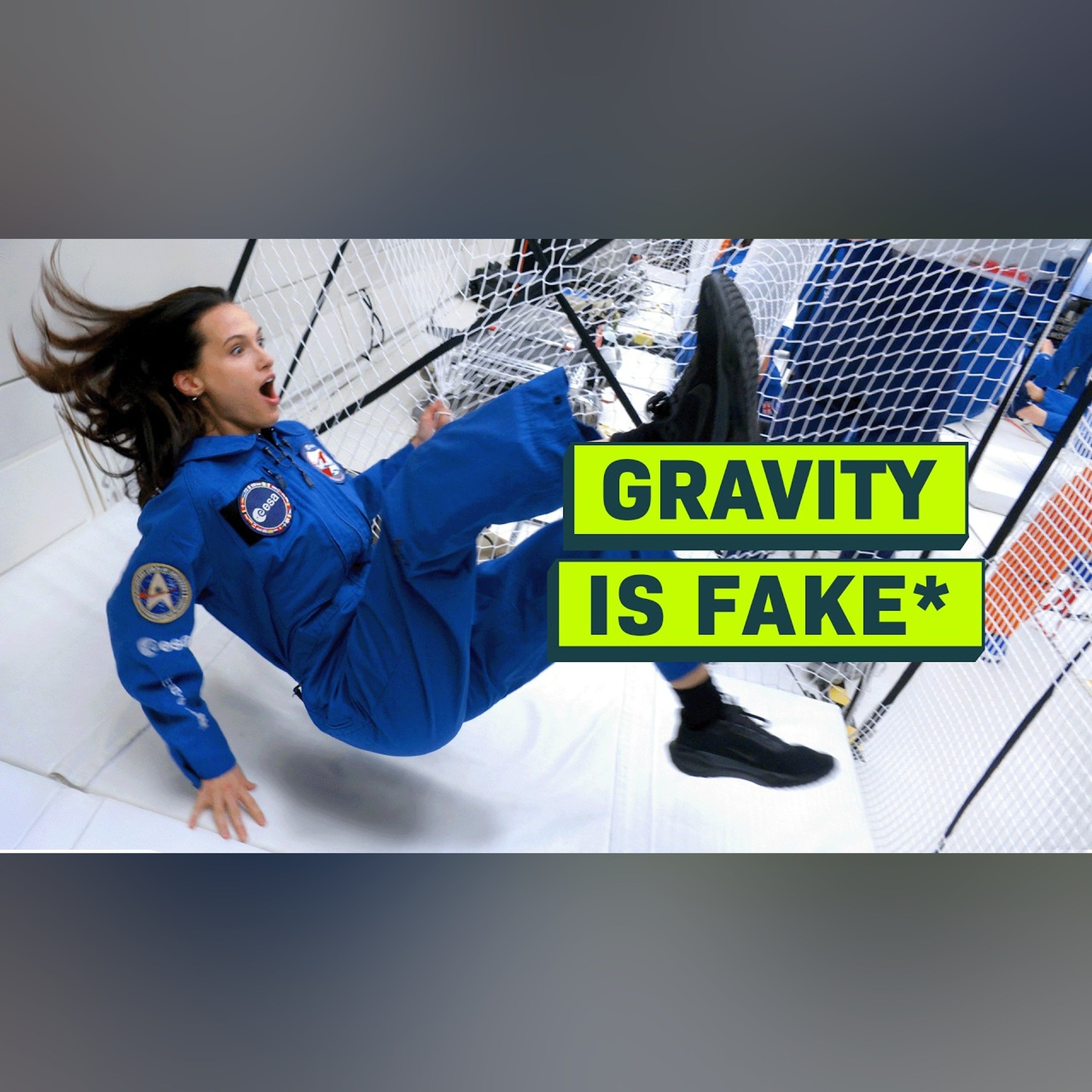
There’s a big problem with gravity… Build and learn with KiwiCo! Gravity is a lie. I went into zero gravity to explain why… But it won't be easy because gravity is actually one of the most controversial subjects in all of physics. This is not some philosophical debate. A huge amount of the tech you use every day depends on our current (limited) understanding of gravity. If we can understand gravity a little bit better, we can build more things that are huge if true! So in this video, I joined the European Space Agency on a real zero gravity flight and interviewed theoretical physicists to understand: What really IS gravity? And what are the real life sci-fi ways we might use it in the future? Chapters: 0:00 The big problem with gravity 0:58 What is a zero gravity flight? 1:40 What is gravity? 2:49 What’s Einstein’s equivalence principle? 3:40 What does zero gravity feel like? 5:52 Why is falling the same as floating? 6:58 How did gravity disappear? 9:28 Why is gravity not a force? 11:3
Watch where your mind goes in that first raw second, before you've had time to compose yourself. When things fall apart, that instinctive reach tells you almost everything about the direction your life is headed. Uploaded 14-09-26 For most people, the mind goes outward. To the economy. To the boss who didn't recognize them. To the parents, the partner, the timing, the luck that never came. And some of it may be entirely true. But here is the truth: an excuse can be one hundred percent accurate and still be one hundred percent useless. The moment you assign the cause of your problem to something outside yourself, you have also assigned the solution to something outside yourself — and then you wait, helpless, for a world that is in no hurry to change on your behalf. This seminar unpacks the single mechanic behind why some people rise from the exact same wreckage that keeps others stuck: where they point their mind on that first difficult day. CHAPTERS 0:00 Intro — where your mind goes fi
Did you know your mouth is a nonstop biological water park?! Every single day, your body makes enough saliva to fill up to four whole water bottles! But spit isn't just warm water—it's a magical biological potion packed with incredible superpowers. Join Mira and Finn as they explore the wild world of saliva! Discover how a microscopic machine called amylase starts digesting your favorite foods the exact millisecond you take a bite. Find out how spit turns sharp, crunchy chips into soft, squishy balls to protect your throat! Plus, did you know saliva actually builds invisible armor for your teeth by filling in holes with special minerals like calcium and phosphate? It even works as a magical liquid key to unlock flavors—without saliva, chocolate and pizza would taste like absolute cardboard! From amazing spit factories hiding inside your cheeks to real-life birds that build entire nests out of spit, get ready for a mind-blowing biological adventure! Tune in to find out why your mouth is
When you see the sun, you’re seeing it as it was eight minutes ago, and the faintest star yet observed, Earendel, shines from 12.9 billion years in the past. Astronomer Michelle Thaller, who spent 28 years at NASA, explains how every telescope is a time machine and how gravity itself bends space into natural lenses that let us peer to the dawn of the universe.
Descartes cut open living dogs and insisted their cries were just the noises of a machine. Astrophysicist and astrobiologist Adam Frank, a professor at the University of Rochester and author of The Little Book of Aliens, argues that the same life-as-machine metaphor still shapes how we think about AI, and that it gets life fundamentally wrong. Living things are self-creating, self-repairing systems that decide what matters to them, which is why he calls today’s AI an artificial mimic rather than an intelligence.
Publicly supported activities should offer reduced prices to people who cannot afford admission.
Share your view, then see how readers voted. No sign-in required. This poll is shared across stories.
Do you agree or disagree?
Common Quandary
A Common Quandary to discuss
Another conversation to explore, separate from this news story.
A stranger takes an emotional call in the quiet car. Do you shush them?
On a crowded train's designated quiet car, a passenger answers a call and begins discussing an apparent family emergency. They are speaking softly but continuously, and everyone nearby is listening despite trying not to.
Do public rules make room for private emergencies?