The Most Extraordinary Images We’ve Ever Taken of a Comet
44 min
Listen through the publisher, then discuss the episode here or arrange an in-person Roundtable. Your city determines where to meet.
Roundtables are designed for groups of four, with a shared subject and room for everyone to speak. Come for discussion, with no dating expectation.
Theories on how our solar system formed have been turned on their head.In this Astrum compilation, we’re delving into the world of comets. What they’re made of, where they come from and just how difficult they are to land on. From the probe that crashed into one on purpose, to another that landed on a comet that looks more like a rubber duck than a rock… and that’s before we even get started on 3I/ATLAS.▀▀▀▀▀▀ The Astrum book is still available in the US!
Episode information is provided by the publisher. Listening takes place on the publisher’s service.
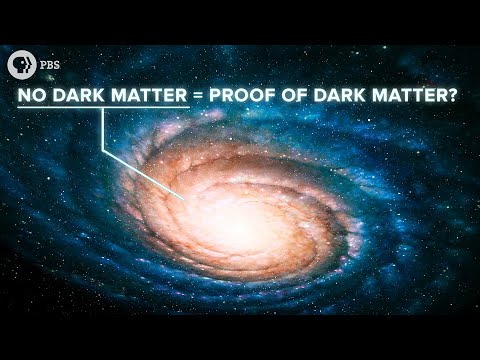
You can learn more about CuriosityStream at https://curiositystream.com/spacetime Uploaded 24-04-19 PBS Member Stations rely on viewers like you. To support your local station, go to: http://to.pbs.org/DonateSPACE We’ve been failing to detect dark matter for decades. Finally, the latest failure to detect dark matter may have actually proved its existence. One of these is true: either most of the matter in the universe is invisible and formed of something not explained by modern particle physics OR our understanding of gravity is completely broken. The debate over which is true has raged for decades, but may finally have been resolved in an unlikely way: the proof that dark matter exists, and really is an exotic, unknown substance, may have come from the discovery of two galaxies that appear to have no dark matter at all. Today on Space Time Journal Club we’ll look at the papers that reveal this discovery: Check out the new Space Time Merch Store! Support Space Time on Patreon Need a Re
Explore how the Hubble Space Telescope reveals the Universe, from iconic images to major discoveries, and how it complements the James Webb Space Telescope. "ASTROMAN: the Dark Sky Guardian" is a podcast channel that aims to explore popular science in multiple disciplines and research on interdisciplinary approaches, such as sustainability, dark-sky protection, astrophotography, space exploration, astronomy innovation, inclusive science communication, and STEAM Education by integrating science and arts. Exodus Chun-Long Sit, also known as the ASTROMAN, is a transmedia astronomy educator, popular science author, STEAM educator, and science communicator in Hong Kong. He is recently the National Astronomy Education Coordinator (Chair of Hong Kong, China) of the International Astronomical Union and President of Starrix. He was also an International Committee Member of the Dark Sky International, regularly organizing public lectures at the Hong Kong Space Museum and the Hong Kong Science Mu
When she was just five years old, a little girl began receiving terrifying nighttime visits from a mysterious man dressed in a dark cape and top hat. His face was completely hidden in darkness, and he would stand over her bed, watching her as she struggled to scream. The visits continued for years. Even moving to a different home didn't stop them. And when her mother finally witnessed the figure herself, she took action, hoping to put an end to whatever had been tormenting her daughter. Eventually, the encounters stopped. But when the young woman was eighteen, she met someone with whom she shared an extraordinary coincidence. And something she discovered during that meeting brought back every frightening memory of the dark man. Had she been haunted by something that was also visiting someone else? #RealGhostStoriesOnline #TrueGhostStories #TheHatMan #ShadowPeople #DarkMan #ChildhoodHauntings #GhostlyApparitions #ParanormalEncounters #ShadowFigures #UnexplainedMysteries Love real ghost
This will be the next space suit on the moon. What can it do? Only 12 people have ever walked on the moon and they all did it within just 4 years of each other. Then, for the last 50 years, no one has gone back… but that’s about to change. Soon, astronauts will return to the moon to prepare for people to live there long-term and to get us ready to send the first humans to Mars. But to do it, they need to survive outside in space and work for hours in one of the most dangerous conditions a human will ever face. The problem is, our spacesuits for the Moon haven’t been updated in decades! But now, to make this next chapter in space possible, space suits are getting a major upgrade. These new suits will give astronauts the superpower to do more, for longer… and I’m one of the first civilians to put one on. In this video, we’re taking you behind the scenes to show how Axiom Space is designing, building, and testing NASA’s new space suits. I am going to put myself and this suit to the test,
For a written breakdown, early access to content like this, and extra nuances, see the associated StayCurious Metabolism newsletter: https://staycuriousmetabolism.substack.com/p/why-you-need-to-track-your-heart?r=40ekz2 If you want to try the omega supplement I use, Accentrate Omega Max, here’s the link: https://www.fenixhealthscience.com/staycurious Heart rate variability (HRV) is more than just a number, it’s a real-time window into how well your brain, heart, and nervous system are working together. In this video, we break down what HRV actually measures, why it’s such a powerful predictor of mortality and heart attack risk, and how it reflects something deeper: your body’s ability to adapt, recover, and respond to stress. We walk through landmark studies showing that low HRV is associated with significantly higher risk of death and first cardiac events—even after controlling for traditional risk factors. But this isn’t just about risk. HRV is something you can measure today and act
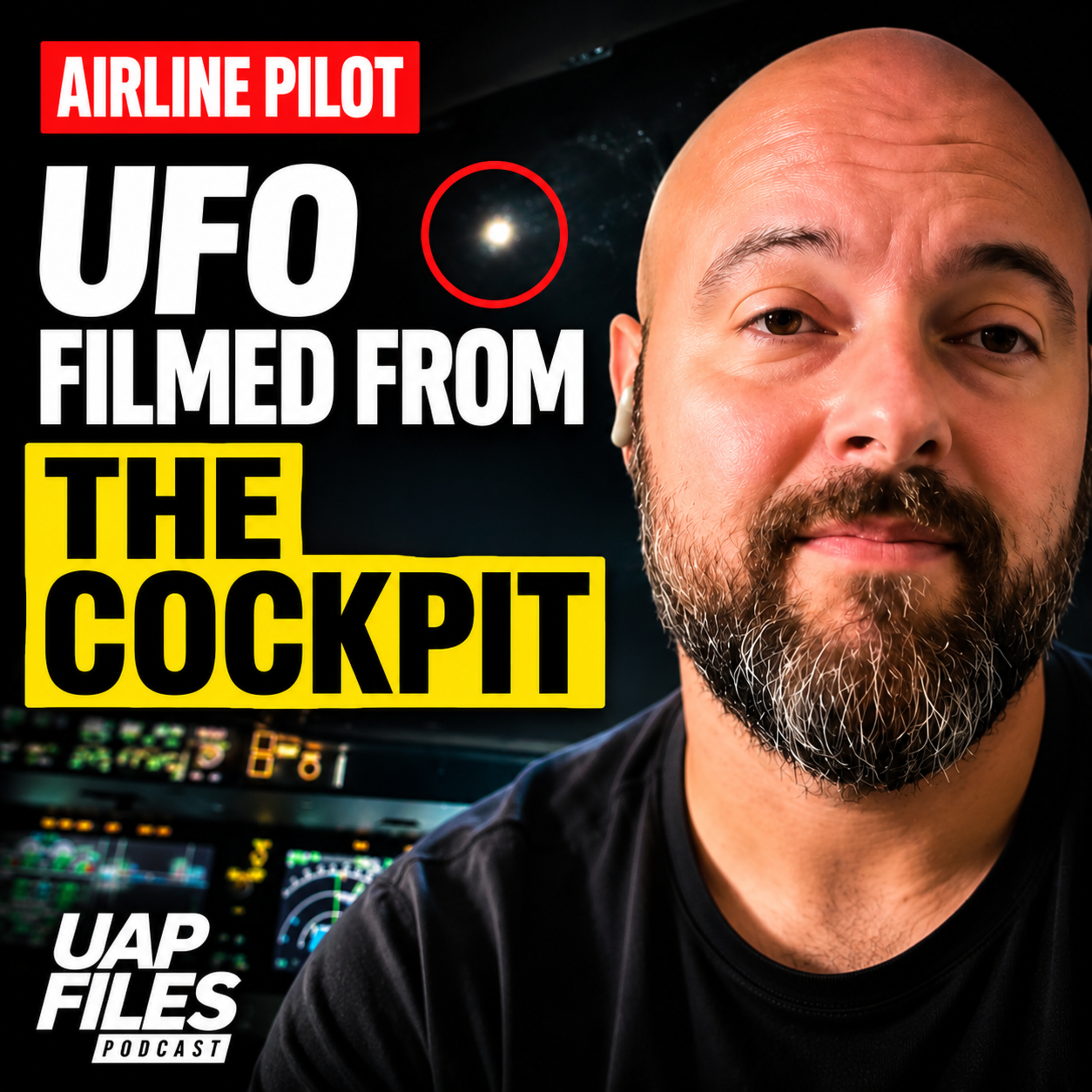
Alessandro “Boni” Bonifacio Rodrigues is an airline pilot who flies the Airbus A350 and has more than 9,000 hours in the air. Over the years he has started filming the things he sees out of the cockpit window that don’t behave like stars, satellites or planes. In this clip from UAP Files Podcast S2E29, Boni explains what he looks for and talks me through his footage, which is on screen as we talk. In this clip: • How a pilot tells Starlink, the ISS, shooting stars and twinkling stars apart • Three super-bright lights, filmed on his iPhone through the cockpit window, “easily 10,000 ft above me” • A friend’s footage over India of a fast object with a strange, magnetic-field-like shape • A hollow, doughnut-shaped object in the clouds filmed by a pilot friend who pulled over while driving in Brazil • Why sceptics who say pilots just misidentify things don’t convince him • How openly pilots now talk about it with each other • A “constellation” of seven or eight objects going through the clo
Voyager 1 has just reached a major milestone: one light-day from Earth. It’s the furthest a man-made object has ever travelled, crossing the boundary at the edge of our Solar System and venturing out into interstellar space. In this video, we explore what Voyager 1 has found so far, the discoveries it’s still making, and the hazards it faces out there in deep space. Where is it heading next?▀▀▀▀▀▀ Take your fascination for space to a new level with Black Friday offers coming to DWARFLAB. Scan the QR code or follow the link https://bit.ly/astrum_dwarflab to check the offer available in your market.▀▀▀▀▀▀ The Astrum book is still available in the US!
Earth’s magnetic shield is weakening over the South Atlantic. This mysterious “Bermuda Triangle of Space” is a place where satellites glitch, cosmic radiation spikes, and astronauts see strange flashes of light. But what’s causing this growing hole in the magnetosphere isn’t something in space - it’s coming from inside the planet. Using seismic tomography and ancient volcanic lava, scientists have traced the disturbance back to a continent-sized “blob” sitting on top of the Earth’s core that may be the buried remains of an alien planet… and it might even explain how Hawaii formed… ▀▀▀▀▀▀ ▀▀▀▀▀▀ The Astrum book is still available in the US!
This compilation features Astrum’s best content about asteroids. We’re journeying to the asteroid belt and further, to explore the intriguing rocky objects of our solar system. What have we discovered on large asteroids like Ceres and Vesta? Why did NASA's DART mission smash into an asteroid, and what happened next? And what did we find inside the sample from asteroid Bennu? ▀▀▀▀▀▀ The Astrum book is still available in the US!
A club's identity belongs partly to its community, not solely to its owners.
Share your view, then see how readers voted. No sign-in required. This poll is shared across stories.
Do you agree or disagree?
Common Quandary
A Common Quandary to discuss
Another conversation to explore, separate from this news story.
A parent clearly built the winning science project. Who should lose the prize?
An elementary student submits an elaborate science project far beyond their apparent ability. The parent proudly describes working together all weekend, and the child clearly learned something, but other students completed simpler projects themselves.
What is a fair response when help improves learning but distorts achievement?