The origins of drama as a literary art - Mindy Ploeckelmann
6 min
Listen through the publisher, then discuss the episode here or arrange an in-person Roundtable. Your city determines where to meet.
Roundtables are designed for groups of four, with a shared subject and room for everyone to speak. Come for discussion, with no dating expectation.
View full lesson: http://ed.ted.com/lessons/the-emergence-of-drama-as-a-literary-art-mindy-ploeckelmann When presented with the problem of hoards of illiterate commoners, English clergymen in the 11th century created plays to spread word about the Bible. Eventually, the plays moved out of the church and into the streets. Mindy Ploeckelmann tracks the development of drama from mystery plays to morality plays and, eventually, to Shakespeare. Lesson by Mindy Ploeckelmann, animation by Johnny Chew.
Episode information is provided by the publisher. Listening takes place on the publisher’s service.
Have you ever seen pictures of giant stone heads sitting in the grass and wondered how they got there? Get ready for a mind-blowing adventure to one of the most remote places on Earth: Rapa Nui, also known as Easter Island! About 800 years ago, expert Polynesian sailors found this tiny island in the middle of the Pacific Ocean using only the stars and ocean currents to guide them. Once there, they carved nearly a thousand massive stone statues called moai! But here is the biggest surprise: these statues aren't just heads—they have full bodies buried underground! Some weigh as much as 40 cars, and the islanders moved them without wheels, cranes, or metal tools. How did they do it? The local legends say the statues literally walked to their places, waddling side to side with the help of ropes and incredibly smart human engineering! Join Mira and Finn as they uncover the secrets of the moai, find out how the island got its English name from a Dutch captain, and learn all about the giganti
Happy Sunday! Welcome to Heal Squad’s The Sunday Set Up. Life lessons to help you start the week. How much of success comes down to simply showing up? This week, we talk keeping an open mind, taking chances, and recognizing the doors that open along the way. From Olympic athletes appearing on national television alongside Mercedes Moné to performers who keep showing up week after week hoping for their big break, we explore why success isn't always about talent or luck. Sometimes it's about making connections, putting in the effort, and being willing to try without knowing what we'll get in return. We talk knowing when to stop investing time in people who aren't willing to help themselves, and why even experiences that don't work out can teach us something valuable. The takeaway: don't wait for the perfect moment or expect someone else to make things happen. Be willing to take a chance, walk through the doors that open, and remember that half of life is just showing up. Plus, a little b
Join NCI University today to master human behavior and influence: Uploaded 05-11-21 This is a dive to discover the possibilities, not the case itself. Sirhan Sirhan, in full Sirhan Bishara Sirhan, (born March 19, 1944, Jerusalem), Palestinian-born Jordanian citizen who was convicted (1969) of fatally shooting U.S. Sen. Robert F. Kennedy on June 5, 1968. He received the death penalty, but the sentence was later commuted to life. Sirhan, a Christian Palestinian, was born in Jerusalem. In 1948 Jordan took control of East Jerusalem and what is now the West Bank, and the following year it granted citizenship to people living in those areas. It is believed that this is how Sirhan became a Jordanian citizen. In the 1950s, he and his family moved to the United States and eventually settled in Pasadena, California. There he attended Pasadena City College and later held odd jobs, notably working at a horse stable and later at a health food store. During this time, Sirhan became vocal in his oppo
#JimRohnMotivation #JimRohn #JimRohnSpeech In this Jim Rohn Motivation video, discover the transformative power of reframing your perspective. Jim Rohn explains how shifting the lens through which you view life’s challenges can turn setbacks into stepping stones and adversity into opportunities, empowering you to achieve success in every area of life. The Transformative Power of Reframing: A Key Habit of Successful People (Written Version): https://jimrohnmotivation.blog/the-transformative-power-of-reframing-a-key-habit-of-successful-people/ Key Topics From This Motivational Video: - The habit of reframing challenges into opportunities - How successful people turn failures into stepping stones - Emotional agility and managing fear constructively - The ripple effect of reframing on personal and professional growth - Why reframing is essential for creativity and innovation Reframing is more than just positive thinking—it’s a disciplined mindset that allows you to extract lessons from eve
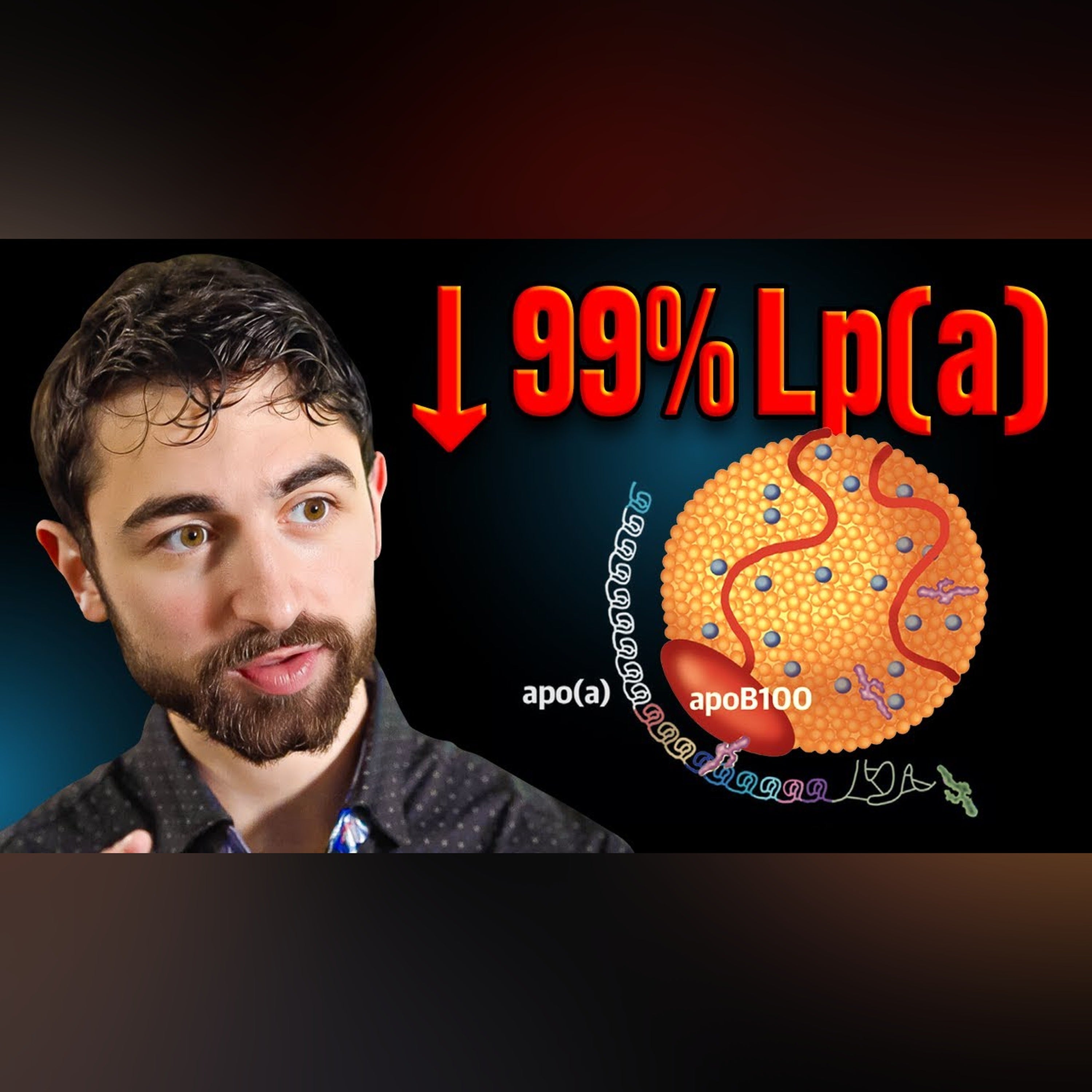
Lp(a), lipoprotein(a) is a major genetic risk factor for heart disease and one of the most talked-about topics in modern cardiology. It plays a significant role as a causal risk factor for cardiovascular disease and is thought to be largely genetically determined. What do you do if you’re genetically cursed, like me, with high Lp(a) levels? In this video, I promise on my own heart health, you'll gain a deeper understanding of Lp(a): what it is, why it’s so important for your heart and metabolic health, and what actionable steps you can take to manage your cardiovascular risk. To give you a roadmap, here’s what we’ll cover in the 8 chapters: 1. Defining Lp(a) 2. Guidelines on measuring Lp(a) and risk thresholds 3. Medications in development to reduce Lp(a) by as much as 99% 4. How to reduce cardiovascular risk 5. Why statins increase Lp(a) and what this means 6. Saturated fat can lower Lp(a) level 7. Oxidized phospholipids as the cargo of Lp(a) 8. Nuance notes for the nerds. This video
View full lesson: http://ed.ted.com/lessons/surviving-a-nuclear-attack-irwin-redlener The face of nuclear terror has changed since the Cold War, but disaster-medicine expert Irwin Redlener reminds us the threat is still real. He looks at some of history's farcical countermeasures and offers practical advice on how to survive an attack. Talk by Irwin Redlener.
Explore what makes polio so dangerous, what is causing the 21st century resurgence of cases, and how we can eradicate the disease. -- In 1952, polio was everywhere: killing or paralyzing roughly half a million people annually. Yet just 10 years later, paralytic polio cases in the US dropped by 96% and we were on track to get rid of polio for good. But in recent years, the virus started striking back. So, what’s behind these recent spikes? Explore the dangers of poliovirus and the possibility of eradicating this deadly disease. Directed by Anton Bogaty. This video made possible in collaboration with Gates Ventures Learn more about how TED-Ed partnerships work: https://bit.ly/TEDEdPartner A special thanks to Ananda Bandyopadhyay, Amber Zeddies, and Kathleen O'Reilly who provided information and insights for the development of this video. Support Our Non-Profit Mission ---------------------------------------------- Support us on Patreon: http://bit.ly/TEDEdPatreon Check out our merch: htt
Todd Humphreys forecasts the near-future of geolocation when millimeter-accurate GPS "dots" will enable you to find pin-point locations, index-search your physical possessions ... or to track people without their knowledge. And the response to the sinister side of this technology may have unintended consequences of its own. (Filmed at TEDxAustin.) Uploaded 26-06-13 Talk by Todd Humphreys.
Residents should have a practical way to appeal decisions made by unelected public bodies.
Share your view, then see how readers voted. No sign-in required. This poll is shared across stories.
Do you agree or disagree?
Common Quandary
A Common Quandary to discuss
Another conversation to explore, separate from this news story.
You cannot stand your friend's partner. Do they still get a wedding invitation?
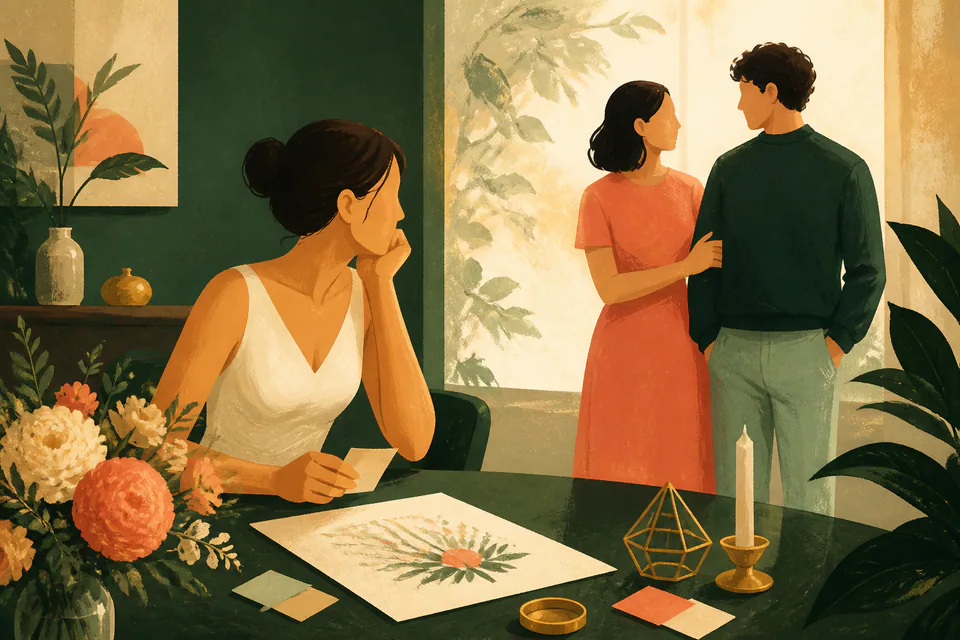
You are planning a small wedding and strongly dislike the person your longtime friend has been dating. Inviting them would make you uncomfortable, but excluding only that partner would embarrass your friend.
Whose comfort should govern a celebration centered on you?