Listen through the publisher, then discuss the episode here or arrange an in-person Roundtable. Your city determines where to meet.
Roundtables are designed for groups of four, with a shared subject and room for everyone to speak. Come for discussion, with no dating expectation.
View full lesson: http://ed.ted.com/lessons/the-hidden-power-of-smiling-ron-gutman Ron Gutman reviews a raft of studies about smiling, and reveals some surprising results. Did you know your smile can be a predictor of how long you'll live -- and that a simple smile has a measurable effect on your overall well-being? Prepare to flex a few facial muscles as you learn more about this evolutionarily contagious behavior. Talk by Ron Gutman.
Episode information is provided by the publisher. Listening takes place on the publisher’s service.
Do you want to know the FASTEST way to END SUFFERING? It’s actually very simple... Do this every day and your WHOLE WORLD will change in an instant. Uploaded 29-06-21 Learn the tools you need to turn this around: Prime Your Brain to STOP Suffering - https://youtu.be/60ROjGMqXUQ FULL Priming Routine Tony Uses Daily to Succeed In Life - https://youtu.be/faTGTgid8Uc The Proven HAPPINESS Formula You Need Now - https://youtu.be/AL7Cb2O6Lhk I truly believe that we’re living in the greatest time in HISTORY — creativity, innovation, and opportunity exist like never before. We’re blessed to live in an abundant time, where so many of our desires are met instantly — at the touch of a button, the click of your mouse, the swipe of your thumb. Social media links us to people all over the world — we can count the number of “friends,” and we get a dopamine boost with every , ️, or . The crazy thing is, that most of us believe that kind of instant gratification = happiness. But what we’re really experi
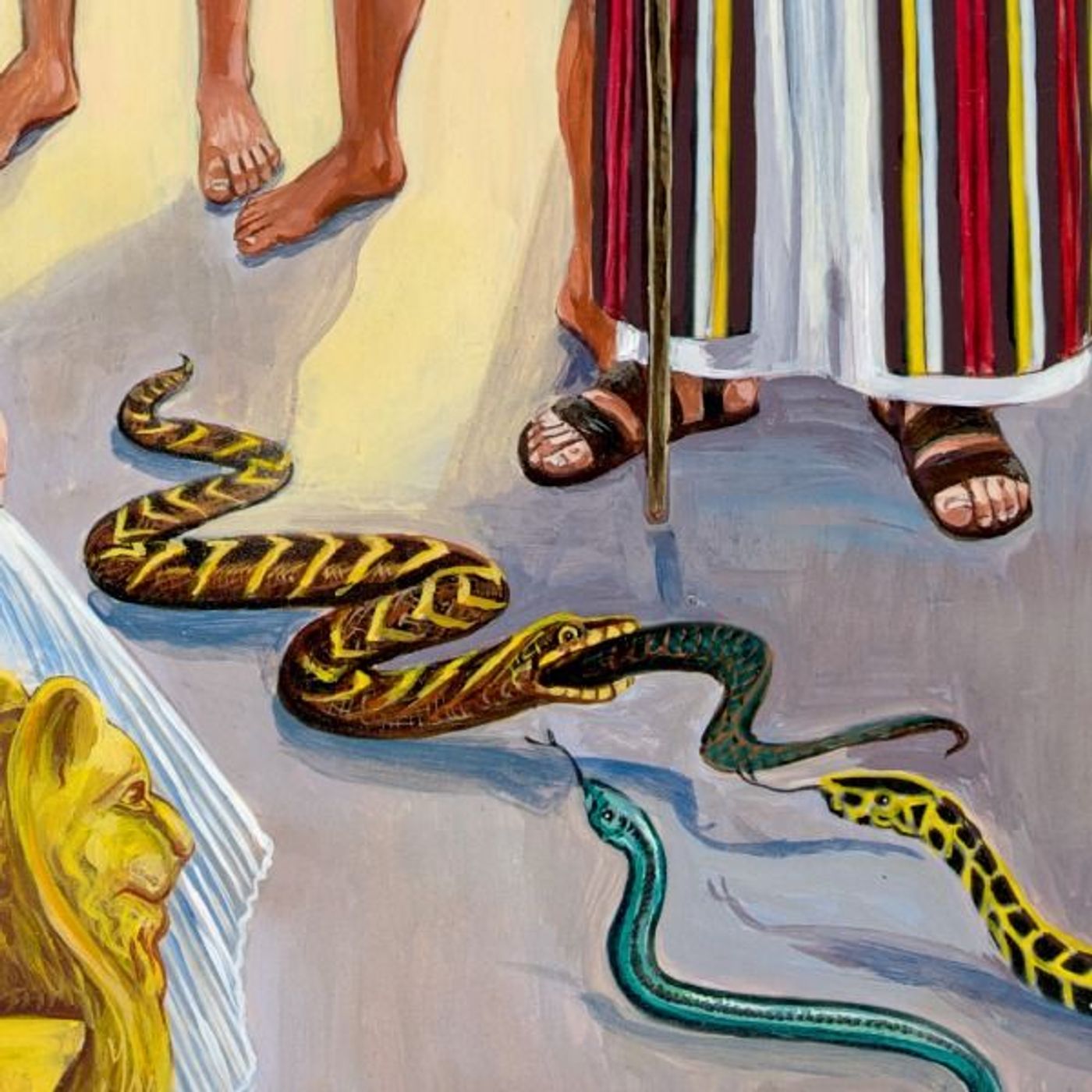
When Moses and Aaron stood before Pharaoh, God gave them a sign to demonstrate that their message came from Him. Aaron was instructed to throw his staff before Pharaoh, and it became a serpent. Pharaoh then summoned his magicians, who performed a similar act through their secret arts, turning their staffs into serpents as well. The difference became clear when Aaron's staff swallowed theirs. Yet even a powerful demonstration was not enough to change Pharaoh's heart. Every contribution counts. Thank you for being part of our journey!
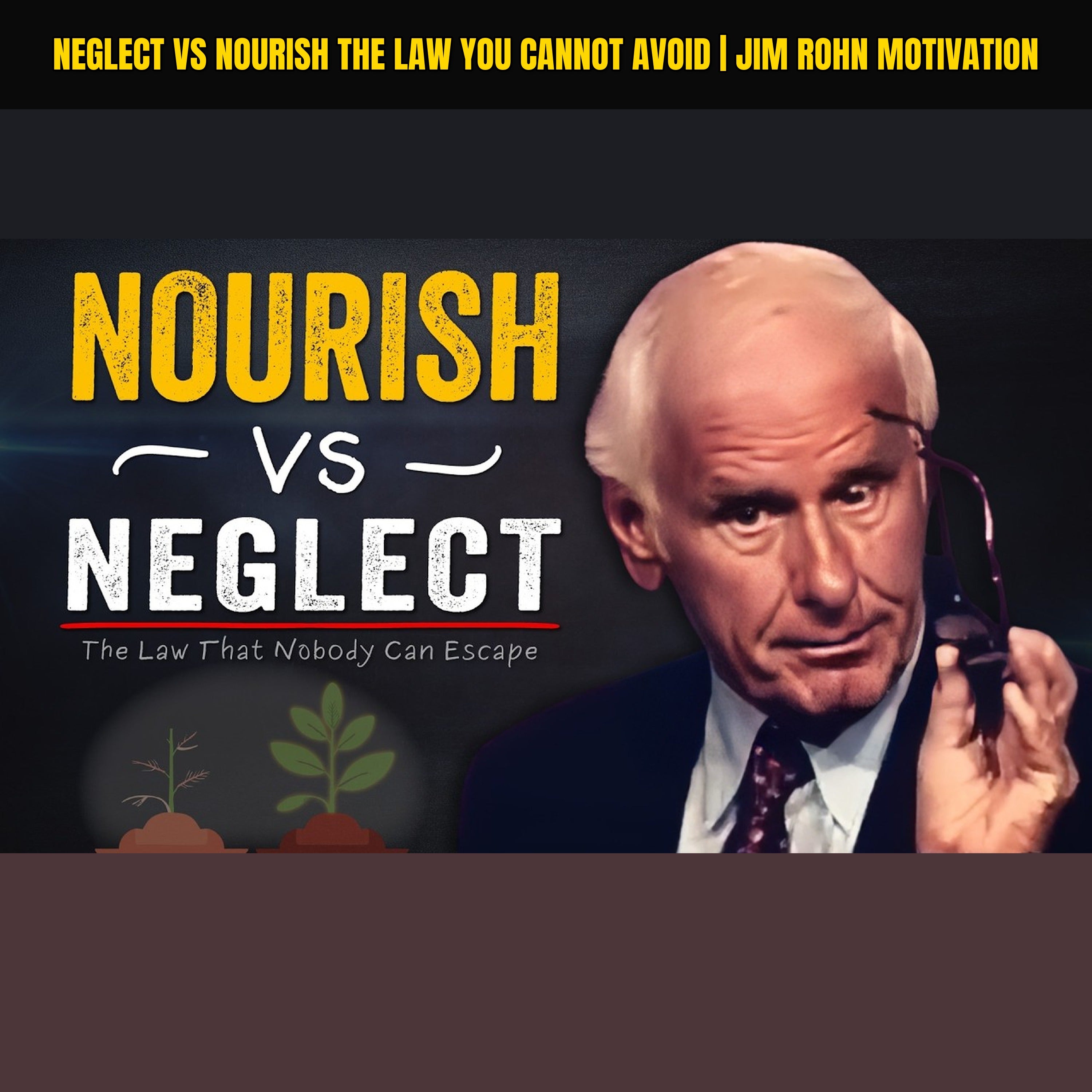
#JimRohnMotivation #JimRohn #JimRohnSpeech In this Jim Rohn Motivation video, uncover the hidden force that silently shapes every area of your life—neglect. Learn how seemingly harmless choices stack into serious consequences, and how small daily habits hold the power to either build or destroy your future. Key Topics From This Motivational Video: The silent danger of daily neglect How the law of decay governs life The compounding power of small actions Why nourishment beats intensity How to break the pattern of guilt and avoidance This Jim Rohn motivational video dives deep into one of the most powerful but overlooked principles of personal development: the law of compounding. Whether you're tending to your health, finances, relationships, or mindset, consistent care—not bursts of effort—determines your trajectory. Every day offers a simple test: did you nourish or neglect? That answer defines your life. This Jim Rohn Motivational Video Is Perfect For: People feeling stuck in cycles o
Access the masterclass instantly for free: https://nci.university/learn Uploaded 10-01-26 Your goals don’t fail because you lack discipline — they fail because they were aimed at the wrong system. Optimizing behavior without fixing brain chemistry is like issuing commands to a damaged machine. Until the chemical environment is right, effort just increases friction and burnout. All goals live in the conscious mind — but control does not. Real behavior is governed by the mammalian brain, the ancient systems that decide safety, threat, and energy allocation. Every resolution collapses when those lower systems detect risk, even if you consciously “want” the outcome. Goal-setting ignores this hierarchy — and that’s why it keeps failing. Once you target the parts of the brain actually in charge, change stops feeling like force. Discipline becomes unnecessary when the system itself is aligned. Please note that the content provided in this broadcast is for informational and educational purpose
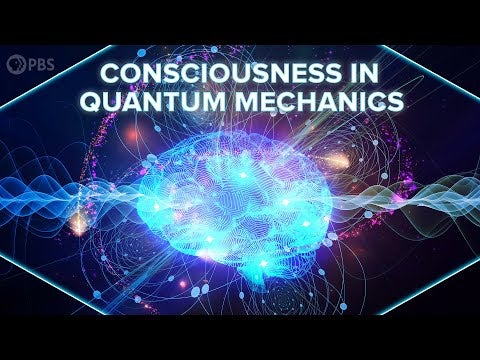
PBS Member Stations rely on viewers like you. To support your local station, go to: http://to.pbs.org/DonateSPACE ↓ More info below ↓ Uploaded 18-02-20 Sign Up on Patreon to get access to the Space Time Discord! Sign up for the mailing list to get episode notifications and hear special announcements! Check out the Space Time Merch Store It’s not surprising that the profound weirdness of the quantum world has inspired some outlandish explanations - nor that these have strayed into the realm of what we might call mysticism. One particularly pervasive notion is the idea that consciousness can directly influence quantum systems - and so influence reality. Today we’re going to see where this idea comes from, and whether quantum theory really supports it. Hosted by Matt O'Dowd Written by Matt O'Dowd Graphics by Leonardo Scholzer and Adriano Leal Post Production: Yago Ballarini, Max Willians, Pedro Osinski Directed by: Eric Brown and Andrew Kornhaber Executive Producers: Eric Brown and Andrew
In today's brief: A fingerprint on Mars: NASA's HiRISE camera finds bright boulders lined up in long curving rows on Daedalia Planum, a pattern seen nowhere else on the planet. The light that wasn't Venus: a reader's predawn photo shows Venus and six stars, plus a seventh light no catalog can name. Curses to kill a god: 40 pierced, charred fragments of the 3,400-year-old Apophis ritual turn up in temple rubbish dumps at Thebes. Drawing near-death: 50 people sketched their near-death experiences, and the scenes fell into three shapes. An impossible eruption: the deepest explosive volcanic flow ever found, 6,000 metres down in the Challenger Deep. The Shroud's DNA: a new study finds people, animals, coral and crops on the Shroud of Turin. Quick hits: a Utah motorist's alien sighting, a one-horned "unicorn" deer in Estonia, the cats of Beni Hassan, and the Pentagon's next UFO file release. Every story and source: https://believepod.com/ufo-paranormal-news-26-november-2026/ New episodes ev
Dig into the slippery slope fallacy, which assumes that one step will lead to a series of events that lead to an extreme— often bad— scenario. Uploaded 19-08-21 -- It’s 1954. Vietnamese nationalists are on the verge of securing an independent Vietnam under communist leader Ho Chi Minh. U.S. President Eisenhower claims that by virtue of the "falling domino principle," communist control of Vietnam would lead to the global spread of authoritarian communist regimes. Can you spot the problem with this argument? Elizabeth Cox explores the slippery slope fallacy. Lesson by Elizabeth Cox, directed by TOGETHER. Support Our Non-Profit Mission ---------------------------------------------- Support us on Patreon: http://bit.ly/TEDEdPatreon Check out our merch: http://bit.ly/TEDEDShop ---------------------------------------------- Connect With Us ---------------------------------------------- Sign up for our newsletter: http://bit.ly/TEDEdNewsletter Find us on Twitter: http://bit.ly/TEDEdTwitter Pe
View full lesson: http://ed.ted.com/lessons/how-do-we-measure-distances-in-space-yuan-sen-ting Uploaded 09-10-14 When we look at the sky, we have a flat, two-dimensional view. So how do astronomers figure the distances of stars and galaxies from Earth? Yuan-Sen Ting shows us how trigonometric parallaxes, standard candles and more help us determine the distance of objects several billion light years away from Earth. Lesson by Yuan-Sen Ting, animation by TED-Ed.
As machines take on more jobs, many find themselves out of work or with raises indefinitely postponed. Is this the end of growth? No, says Erik Brynjolfsson -- it's simply the growing pains of a radically reorganized economy. A riveting case for why big innovations are ahead of us ... if we think of computers as our teammates. Be sure to watch the opposing viewpoint from Robert Gordon. Uploaded 30-08-13 Talk by Erik Brynjolfsson.
Workers should share in the financial gains from technology that increases their productivity.
Share your view, then see how readers voted. No sign-in required. This poll is shared across stories.
Do you agree or disagree?
Common Quandary
A Common Quandary to discuss
Another conversation to explore, separate from this news story.
Your carry-on fits only if you sit on it. Do you try the airport sizer?
Your suitcase is slightly larger than the airline allows, although it has fit overhead on previous flights. Checking it costs extra and risks missing a connection. Other passengers have equally questionable bags and staff are checking inconsistently.
Does uneven enforcement weaken a traveler's duty to follow the rule?