Listen through the publisher, then discuss the episode here or arrange an in-person Roundtable. Your city determines where to meet.
Roundtables are designed for groups of four, with a shared subject and room for everyone to speak. Come for discussion, with no dating expectation.
Viewers like you help make PBS (Thank you ) . Support your local PBS Member Station here: https://to.pbs.org/DonateSPACE Uploaded 04-04-18 Worried about black holes? Consider this: Every time you accelerate - you generate an event horizon behind you. The more you accelerate away from it the closer it gets. Don’t worry, it can never catch up to you, but the Unruh radiation it generates sure can. You can further support us on Patreon at https://www.patreon.com/pbsspacetime Get your own Space Time t-shirt at http://bit.ly/1QlzoBi Tweet at us! @pbsspacetime Facebook: facebook.com/pbsspacetime Email us! pbsspacetime [at] gmail [dot] com Comment on Reddit: http://www.reddit.com/r/pbsspacetime Help translate our videos! https://www.youtube.com/timedtext_cs_panel?tab=2&c=UC7_gcs09iThXybpVgjHZ_7g (https://www.youtube.com/timedtext_cs_panel?c=UC7_gcs09iThXybpVgjHZ_7g&tab=2) Previous Episode: The Andromeda-Milky Way Collision Around the same time that Stephen Hawking was demonstrating the existence of the black hole radiation that would bear his name, three other researchers, Stephen Fulling, Paul Davis, and William Unruh, were looking at an effect that now seems eerily similar. They were independently studying how the nature of quantum fields appears to change depending on whether or not an observer is accelerating. They found that simple act of acceleration cuts off your causal access to a region of the universe. It creates a type of event horizon. As we saw in our episode on horizon radiation, the presence of horizons distorts the quantum vacuum in a way that can create particles. Hosted by Matt O'Dowd Written by Graeme Gossel and Matt O'Dowd Produced by Rusty Ward Graphics by Grayson Blackmon Assistant Editing and Sound Design by Mike Petrow and Linda Huang Made by Kornhaber Brown (www.kornhaberbrown.com) Classical analogue of the Unruh effect Leonhardt, Griniasty, Wildeman, Fort, and Fink Special thanks to our Patreon Big Bang, Quasar and Hypernova Supporters: Big Bang CoolAsCats David Nicklas Faisal Saud Anton Lifshits Joey Redner Quasar Tambe Barsbay Mayank M. Mehrota Mars Yentur Mark Rosenthal Dean Fuqua Roman Pinchuk ColeslawPurdie Hypernova Edmund Fokschaner Matthew O’Connor Eugene Lawson Barry Hatfield Martha Hunt Joseph Salomone Chuck Zegar Jordan Young Ratfeast John Hofmann Craig Peterson Thanks to our Patreon Gamma Ray Burst Supporters: James Hughes Fabian Olesen Kris Fernet Jane Meyers James Flowers Greg Allen TJMadison Denys Ivanov Nick Virtue Alexey Eromenko Nicholas Rose Scott Gossett Mark Vasile Patrick Murray Sultan Alkhulaifi Alex Seto Michal-Peanut Karmi Erik Stein Kevin Warne JJ Bagnell J Rejc Avi Goldfinger John Pettit Florian Stinglmayr Benoit Pagé-Guitard Nathan Leniz Brandon Labonte David Crane Greg Weiss
Episode information is provided by the publisher. Listening takes place on the publisher’s service.
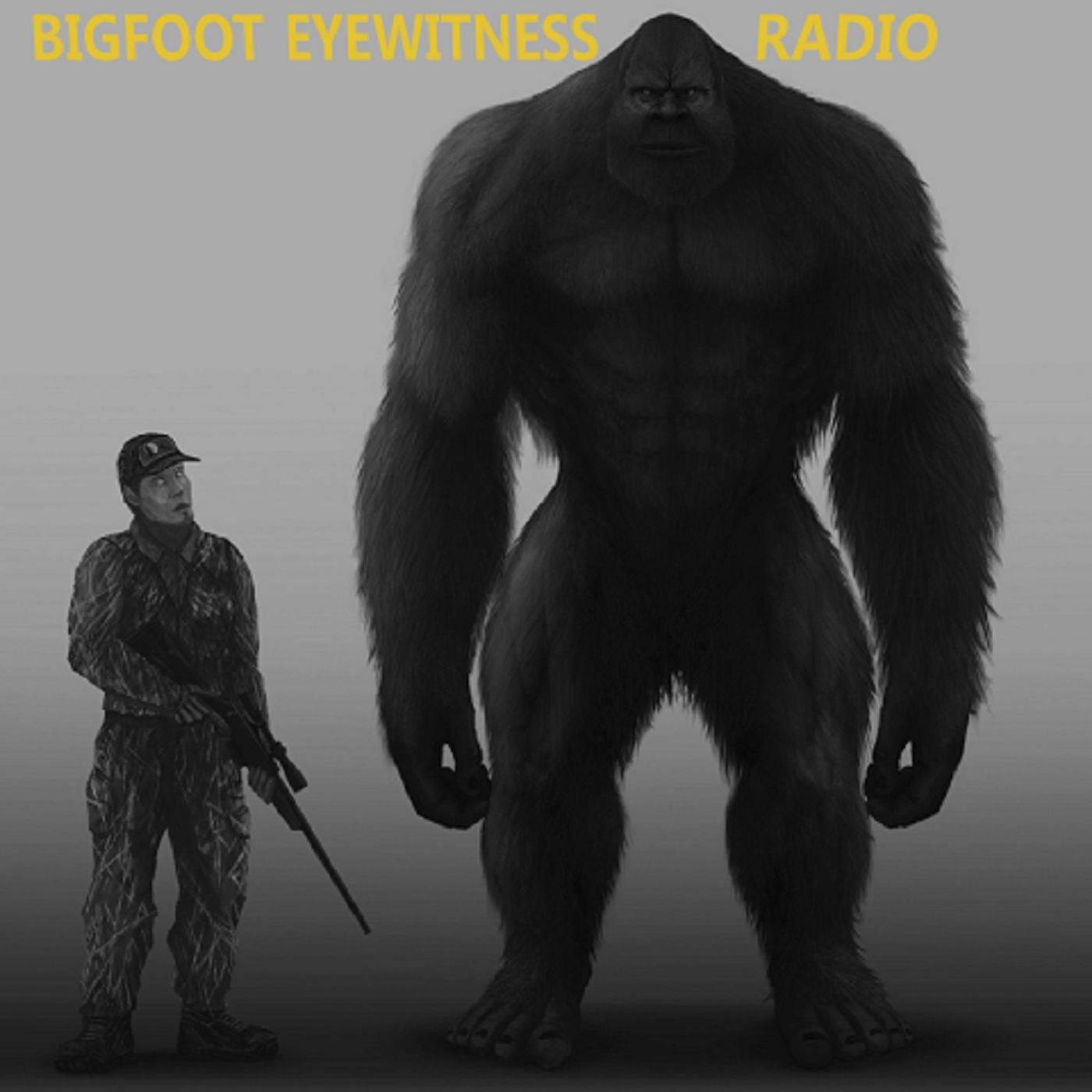
For most of her life, Emily Mayles, tonight's guest, felt right at home in the woods of southeastern Ohio. Whether she was mushroom hunting, digging ginseng, or simply enjoying the outdoors, being surrounded by nature was something she loved. That all changed after a series of terrifying experiences convinced her that something enormous and mysterious was lurking in the forests near her home. Emily's first frightening experience happened in March of 2020, when an unbelievably powerful scream erupted from the woods behind her house. The sound was so terrifying that she found herself practically paralyzed with fear. Years later, she and her husband heard something equally disturbing while standing on their back deck. This time, however, the sounds seemed to be coming from multiple locations. As frightening as those experiences were, neither could have prepared Emily for what she would witness on the Fourth of July, while riding through the Ohio countryside on the back of her husband's mo
A kiss can be wonderful. It can create an instant connection, spark romance, or make you feel closer to someone. But a kiss can also have the opposite effect — and sometimes ruin everything. So what makes kissing so powerful, and why can one kiss make such a difference? There's some fascinating science behind it. https://www.scientificamerican.com/article/why-we-kiss/ We spend an enormous amount of time worrying about what's going to change. What's next? What's coming? How do we prepare? But what if we're paying attention to the wrong things? Some of the most important forces shaping our lives never change, and understanding them may be far more valuable than trying to predict the future — something humans are notoriously bad at. Morgan Housel, partner at The Collaborative Fund and author of Same as Ever: A Guide to What Never Changes (https://amzn.to/3SwWn6u) (https://amzn.to/3SwWn6u)), joins me to explain why the things that stay the same may be the most important things to understan
In this Jim Rohn Motivation video, Jim Rohn reveals the transformative power of capturing ideas before they vanish. He emphasizes how one single thought, when written down and applied, can reshape your destiny in wealth, health, relationships, and influence. Key Topics From This Motivational Video: Why most people lose life-changing ideas The habit that separates the average from the extraordinary How to treat your ideas like treasure The connection between capturing and applying insights The role of journaling in building a better future In this powerful Jim Rohn speech, you'll learn why the discipline of writing down ideas is one of the greatest investments you can make. Rohn shows how a single notebook can become your personal goldmine—a treasury of wisdom, opportunity, and action. Ideas don’t wait, and if you’re not ready to catch them, they disappear forever. But when you become intentional about capturing them, life responds with abundance. This Jim Rohn Motivational Video Is Per
In this video, Disability Attorney Walter Hnot of the Disability Resolution Law Firm goes over EM 24059 and how it will change your access to social security benefit communications. Americas Most Viewed Disability Attorney Like the content? Review us here: https://g.page/r/CcwyektC7nCPEAg/review . If the link does not work, Google: Disability Resolution, P.A. Welcome to the largest Social Security Disability Tutorial Video Library On Earth. PRIVATE ONE HOUR SESSION PHONE CALL THIS IS HOW YOU CAN GIVE BACK TO HELP GROW THE CAUSE: Option 1: Leave 5 |==================5 STAR REVIEWS==================| Google (Search Disability Resolution Orlando, FL)- https://www.google.com/search?authuse... (https://www.google.com/search?authuse...=) AVVO (Search Walter Hnot) - https://www.avvo.com/attorneys/32817-... BBB (Search Disability Resolution Orlando, FL)- https://www.bbb.org/us/fl/orlando/pro... MARTINDALE (Search Walter Hnot Orlando, FL) - https://www.martindale.com/attorney/w... Option 2: Don
Investigate the theories surrounding cosmic dust bunnies and discover how the tiny particles could hold the key to the formation of life on Earth. Uploaded 05-09-19 -- Consider the spot where you’re sitting. Travel backwards in time and it might’ve been submerged at the bottom of a shallow sea, buried under miles of rock or floating through a molten landscape. But go back about 4.6 billion years, and you’d be in the middle of an enormous cloud of dust and gas orbiting a newborn star. What exactly is this cosmic dust? Lorin Matthews investigates. Lesson by Lorin Swint Matthews, directed by Frederic Siegel (Team Tumult). Sign up for our newsletter: http://bit.ly/TEDEdNewsletter Support us on Patreon: http://bit.ly/TEDEdPatreon Find us on Twitter: http://bit.ly/TEDEdTwitter Peep us on Instagram: http://bit.ly/TEDEdInstagram View full lesson: https://ed.ted.com/lessons/the-dust-bunnies-that-built-our-planet-lorin-swint-matthews Thank you so much to our patrons for your support! Without you
Today, Mel is doing something she's never done before on The Mel Robbins Podcast. She's bringing members of her team into the studio for live coaching with world-renowned communications expert Vinh Giang. Vinh is known for teaching millions of people online how to stop sounding insecure, speak more clearly, and get people to listen when you talk. And when you hear him coaching today, it will be like he’s coaching you. One person freezes when they're put on the spot. Another can't stop interrupting people. Someone else has great ideas but stays quiet because they're afraid of being judged. Does any of that sound familiar? And Vinh isn't just giving advice. He's coaching real people through practical exercises, right there in the studio, so you can hear the difference and start making those same changes in your own life. As Mel says, put yourself in their shoes. As Vinh works with each person, you'll recognize things you struggle with, too. You'll learn: -What to do when your mind goes b
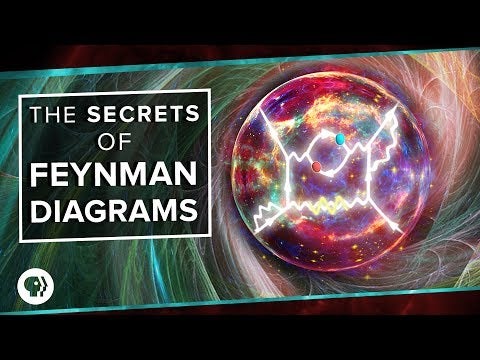
Viewers like you help make PBS (Thank you ) . Support your local PBS Member Station here: https://to.pbs.org/DonateSPACE Uploaded 26-07-17 Unlock the secrets of Feynman Diagrams. Part 5 in our Quantum Field Theory series. And if you're submitting an answer to our challenge question email your answer by August 2nd to pbsspacetime [AT] gmail.com with the subject line "Feynman Diagram Challenge." You can further support us on Patreon at https://www.patreon.com/pbsspacetime Get your own Space Time tshirt at http://bit.ly/1QlzoBi Tweet at us! @pbsspacetime Facebook: facebook.com/pbsspacetime Email us! pbsspacetime [at] gmail [dot] com Comment on Reddit: http://www.reddit.com/r/pbsspacetime Help translate our videos! https://www.youtube.com/timedtext_cs_... Previous Episode: The Real Star Wars Feynman’s path integral shows us that, to properly calculate the probability of a particle traveling from point A to point B, we need to add up the contributions from all conceivable paths between tho
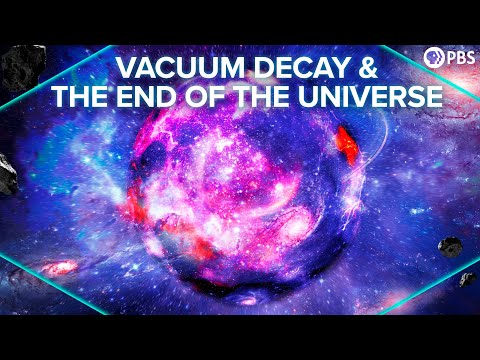
Sign Up on Patreon to get access to the Space Time Discord! Uploaded 18-08-21 The universe is going to end. But of all the possible ends of the universe vacuum decay would have to be the most thorough - because it could totally rewrite the laws of physics. Today I hope to help you understand exactly how terrified you should be. Check out the Space Time Merch Store Sign up for the mailing list to get episode notifications and hear special announcements! Hosted by Matt O'Dowd Written by Matt O'Dowd Graphics by Leonardo Scholzer, Yago Ballarini, Pedro Osinski, Adriano Leal and Stephanie Faria GFX Visualizations: Ajay Manuel Directed by Andrew Kornhaber Assistant Producer: Setare Gholipour Executive Producers: Eric Brown and Andrew Kornhaber End Credits Music by J.R.S. Schattenberg: https://www.youtube.com/user/MultiDroideka Special thanks to Our Patreon Sponsors Big Bang Supporters Ari Paul Kyle Bulloch Charlie Mrs. Tiffany Poindexter Leo Koguan Sandy Wu Matthew Miller Scott Gray Ahmad Jo
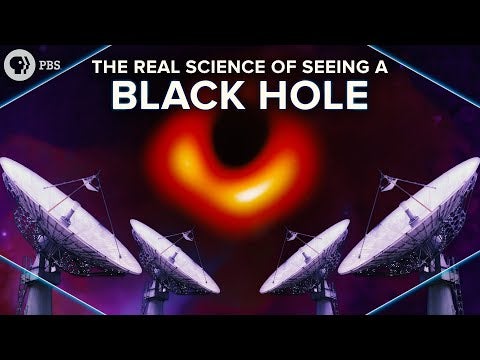
You can learn more about CuriosityStream at https://curiositystream.com/spacetime Uploaded 01-05-19 PBS Member Stations rely on viewers like you. To support your local station, go to: http://to.pbs.org/DonateSPACE How do you take a picture of a black hole and what can we learn from it? Our first ever actual bona fide photo of a black hole, made by the Event Horizon Telescope and revealed to the world in a press conference on April 10th. Since then it’s got plenty of coverage, because … I mean look at it. It’s a freaking black hole. It’s black, it’s holey, it’s everything we hoped it would be. Now that the giddiness has subsided and I personally have stopped spending hours on end staring at a black spot, we can take a breath and actually look at the real science here and discuss exactly how a picture like this could be taken and what we can learn from it. Check out the new Space Time Merch Store! Support Space Time on Patreon Need a Black Hole Refresher #Blackhole #astrophysics #spaceti
People directly affected by a local change should have more influence than other residents.
Share your view, then see how readers voted. No sign-in required. This poll is shared across stories.
Do you agree or disagree?
Common Quandary
A Common Quandary to discuss
Another conversation to explore, separate from this news story.
A $300 package lands at your door by mistake. Do you keep it?
A package containing expensive headphones arrives with your address but another person's name. The retailer says it has already replaced the order and does not ask you to return it.
If no one appears to lose, what still makes keeping it right or wrong?