Listen through the publisher, then discuss the episode here or arrange an in-person Roundtable. Your city determines where to meet.
Roundtables are designed for groups of four, with a shared subject and room for everyone to speak. Come for discussion, with no dating expectation.
Episode 412 In 70 years of reporting, New Scientist has covered some truly bizarre stories. So to celebrate our 70th birthday, we’re looking at some of the strangest ones to grace the mag. From rats driving cars to monkeys using sex toys, these are the stories that we can’t stop thinking about. Whether it’s sniffing your hands after you meet someone new, or the man whose body became a brewery, these might not be the most groundbreaking stories, but they each reveal something important about the world, the universe and us. To discuss these stories and more, Rowan Hooper and Penny Sarchet are joined by Sam Wong and Alice Klein.
Episode information is provided by the publisher. Listening takes place on the publisher’s service.
Imagine being able to play the piano, saxophone, trumpet, and clarinet—all without being able to see! Meet Ray Charles, a boy who grew up in a tiny Florida town with a huge love for music. Even though an illness took away his eyesight by the time he was seven years old, Ray never let that stop his dreams. Thanks to his hardworking mom and a special school where he learned to read music using tiny raised bumps called Braille, Ray became a musical mastermind! He packed his bags as a teenager, moved all the way across the country to Seattle, and did something nobody had ever done before. Ray mixed the soaring sounds of gospel church choirs with the gritty emotions of the blues and the lively fun of jazz to invent a brand new style of music called Soul! From his stomping, joyful performances to having a whole US state name their official song after him, Ray's music is still celebrated everywhere. Join Mira and Finn as they explore the incredible, toe-tapping story of "The Genius" of Soul,
Master the skills that change lives — Complimentary NCI Training: https://nci.university/learn Uploaded 05-03-26 Years of behavioral conditioning have replaced your reality with a simulation you never consented to. Once you see the six layers of control operating beneath every headline, every outrage cycle, every political drama — you cannot unsee them. Unsettled is exactly how you're supposed to feel right now. Architecture — not individuals, not parties, not villains — is what this video exposes. Reality was never taken from you by force. It was substituted so gradually you called it normal. Every emotional reaction you've ever had to the news, to politics, to social media — was engineered. Grounded in behavioral science, military intelligence doctrine, and documented history — this is not a conspiracy video. Only one thing changes after watching this: you stop reacting on cue. Deciding to see the machinery is the most dangerous thing you can do to the system that built your cage. //
View full lesson: http://ed.ted.com/lessons/particles-and-waves-the-central-mystery-of-quantum-mechanics-chad-orzel Uploaded 15-09-14 One of the most amazing facts in physics is that everything in the universe, from light to electrons to atoms, behaves like both a particle and a wave at the same time. But how did physicists arrive at this mind-boggling conclusion? Chad Orzel recounts the string of scientists who built on each other’s discoveries to arrive at this ‘central mystery’ of quantum mechanics. Lesson by Chad Orzel, animation by Joana Bartolomeu.
This is a Grave Talks CLASSIC EPISODE! PART TWO At a young age, DC O’Rourke received what he believes was a message from his deceased grandfather—words of hope that would quietly shape the course of his life. That early experience sparked a deep and unshakable curiosity about the paranormal, one that only intensified as he grew older. Not long after, DC found himself drawn to a remote patch of woods that felt anything but ordinary. What began as curiosity quickly turned into something far more unsettling. The forest seemed to hold a presence—dark, oppressive, and possibly demonic. It was the first of many locations that would pull him deeper into the unexplained. From childhood encounters to chilling discoveries in the woods, this conversation lays the foundation for a journey into places where light and darkness collide—and where the unknown refuses to stay hidden. #TheGraveTalks #MessagesFromBeyond #ParanormalJourney #HauntedWoods #DemonicForces #SpiritCommunication #ParanormalPodcas
What’s happening to your brain on a trip? Why do psychedelics have such powerful clinical benefits for severe depression and PTSD? Is it because they make you lovey-dovey and woo-woo? Because they dissolve neurological dead-ends? Because they create a space in which therapy can plant roots? Is it science? Is it faith? What’s going on? Australia is the first country to legalise psychedelic-assisted therapy for people with severe depression and PTSD. Today’s guest is responsible for that world-first policy. Tania de Jong and her husband lobbied the Australian health authorities for years to get psychedelics re-classified as medicines. She joins Josh to describe how and why, the drugs’ different medical roles, how they defrag your brain, and to speculate about the spiritual and humanistic side of tripping. Josh did not want to spend the whole interview interjecting with warnings to listeners about psychedelics. We do not recommend trying them illicitly. If you’re interested in experimenti
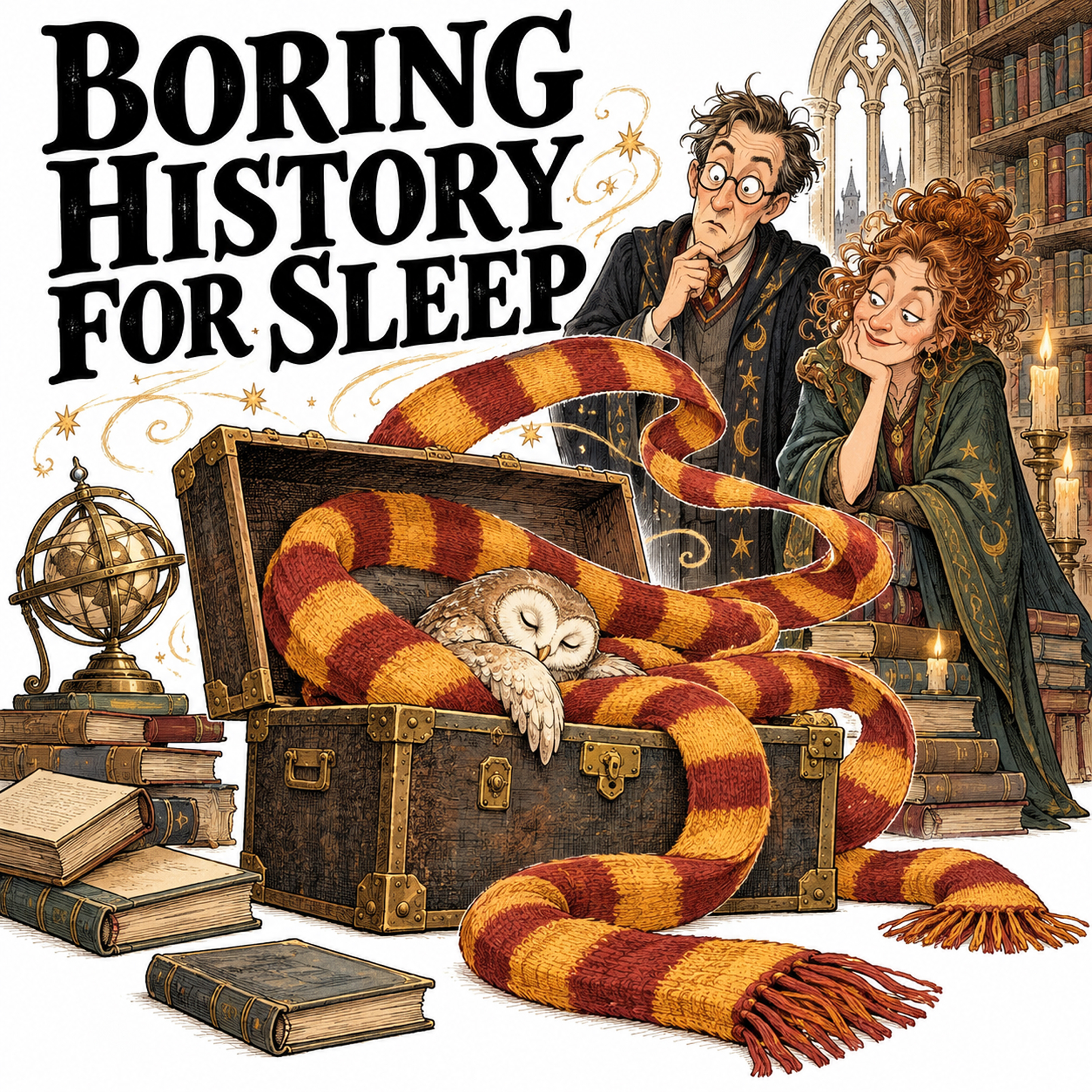
What began as a story about an ordinary boy who discovered he was a wizard became one of the most beloved fictional worlds of all time. From the moment Harry Potter received his invitation to Hogwarts, readers were drawn into a universe filled with magic, mysterious creatures, ancient secrets, and unforgettable characters. Discover how J.K. Rowling created the wizarding world, explore the history of Hogwarts, and meet the witches, wizards, and magical creatures who brought the stories to life. Follow Harry, Hermione, and Ron through their adventures, rivalries, friendships, and encounters with the dark forces threatening their world. Explore how a series of fantasy novels grew into a global phenomenon, transforming literature, cinema, and popular culture for generations of fans. Boring History for Sleep — Soft stories about magical worlds, extraordinary characters, and the stories that captured our imagination.
Episode 411 Why may now have an answer as to why autism is less common in women and girls. And it’s all to do with ZFX, a gene that may explain the so-called “female protective effect”. A new study found a set of genes that appear to be linked to autism, all associated with ZFX, which is found on the X chromosome. Because women have two copies of the X, they have twice the expression and activity of the gene than men. While this is promising, it’s not definitive. Underdiagnosis and other genetic factors may be at play. It may not even be true to say autism is four times more common in men than women. To discuss what this new finding means, how our understanding of autism is shifting and whether we should rethink the autism spectrum completely, Rowan Hooper and Penny Sarchet are joined by science writer Michael Marshall. Join our free, live online event for subscribers on the 18th November: Image Credits: Emw (https://commons.wikimedia.org/wiki/File:Protein_ZFX_PDB_5znf.png),CC BY-SA 3.
Episode 409 COP31 is about to take place against the backdrop of a year of accelerating climate disasters, plus a record breaking October and confirmation that we’ve exceeded the Paris climate agreement. This year's UN climate meeting isn’t planned to be a big one, but will be essential in ironing out a lot of the unresolved agreements made at last year’s meeting in Brazil. But as people continue to question the value of the COP process, can these summits move the needle or do they need major reform? To discuss what we can expect and whether COP is still effective, Rowan Hooper is joined by environment reporter Madeleine Cuff and Mark Maslin, professor of Earth System Science at University College London. Image Credits: COP 30: hlcchampions, CC BY 4.0, via Wikimedia Commons COP 21: Guilhem Vellut from Paris, France, CC BY 2.0, via Wikimedia Commons
Vocational training should receive the same respect as university education.
Share your view, then see how readers voted. No sign-in required. This poll is shared across stories.
Do you agree or disagree?
Common Quandary
A Common Quandary to discuss
Another conversation to explore, separate from this news story.
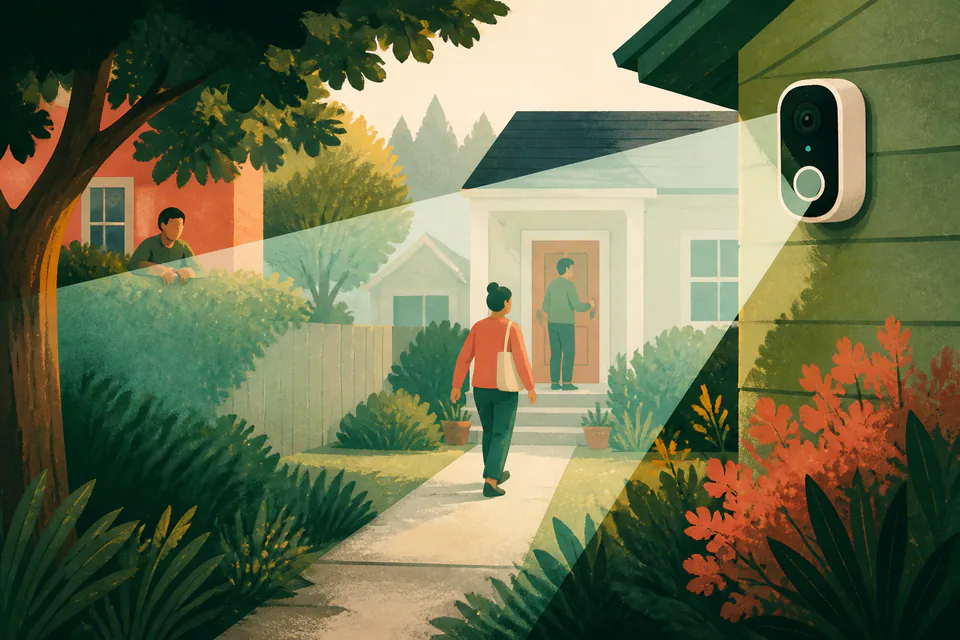
Your neighbor's doorbell camera watches everyone entering your home. Is that their business?
A neighbor installs a doorbell camera that records your front yard and every visitor entering your home. They say the wide angle is necessary to capture package theft and the footage is rarely reviewed.
Where should private security stop in a shared public view?