Listen through the publisher, then discuss the episode here or arrange an in-person Roundtable. Your city determines where to meet.
Roundtables are designed for groups of four, with a shared subject and room for everyone to speak. Come for discussion, with no dating expectation.
What’s happening to your brain on a trip? Why do psychedelics have such powerful clinical benefits for severe depression and PTSD? Is it because they make you lovey-dovey and woo-woo? Because they dissolve neurological dead-ends? Because they create a space in which therapy can plant roots? Is it science? Is it faith? What’s going on? Australia is the first country to legalise psychedelic-assisted therapy for people with severe depression and PTSD. Today’s guest is responsible for that world-first policy. Tania de Jong and her husband lobbied the Australian health authorities for years to get psychedelics re-classified as medicines. She joins Josh to describe how and why, the drugs’ different medical roles, how they defrag your brain, and to speculate about the spiritual and humanistic side of tripping. Josh did not want to spend the whole interview interjecting with warnings to listeners about psychedelics. We do not recommend trying them illicitly. If you’re interested in experimenting, please only seek out legitimate, well-reviewed therapeutic clinics. Don’t be stupid.
Episode information is provided by the publisher. Listening takes place on the publisher’s service.
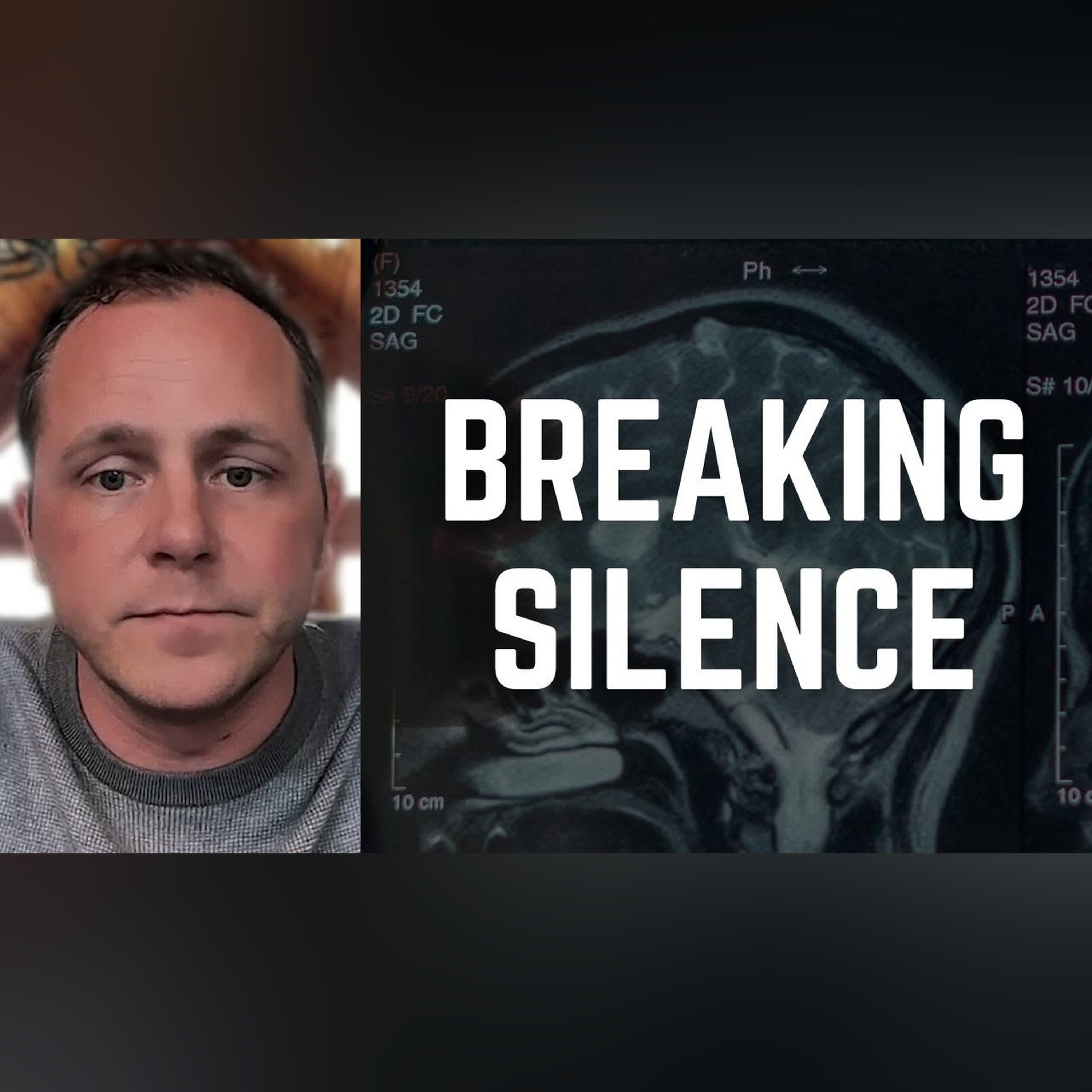
In this video, I finally open up about my diagnosis with Temporal Lobe Epilepsy and possible Mesial Temporal Sclerosis, conditions that have disrupted my life behind the scenes. This revelation comes after years of battling symptoms in secrecy, from memory loss to severe neurological episodes. My decision to come forward is driven by a desire to illuminate the challenges of living with a brain disease, the struggles of maintaining a façade of normalcy, and the personal acceptance of a life-altering reality. Uploaded 06-04-24 Why share this now? Because knowledge is power, but shared knowledge is empowerment. By documenting my journey, I aim to demystify these conditions, provide solace to those silently suffering, and initiate a conversation on the importance of mental and neurological health. This video is just the beginning. I promise to document my experiences, the good days and the bad, in hopes that my journey can offer understanding, hope, and support to those facing similar batt
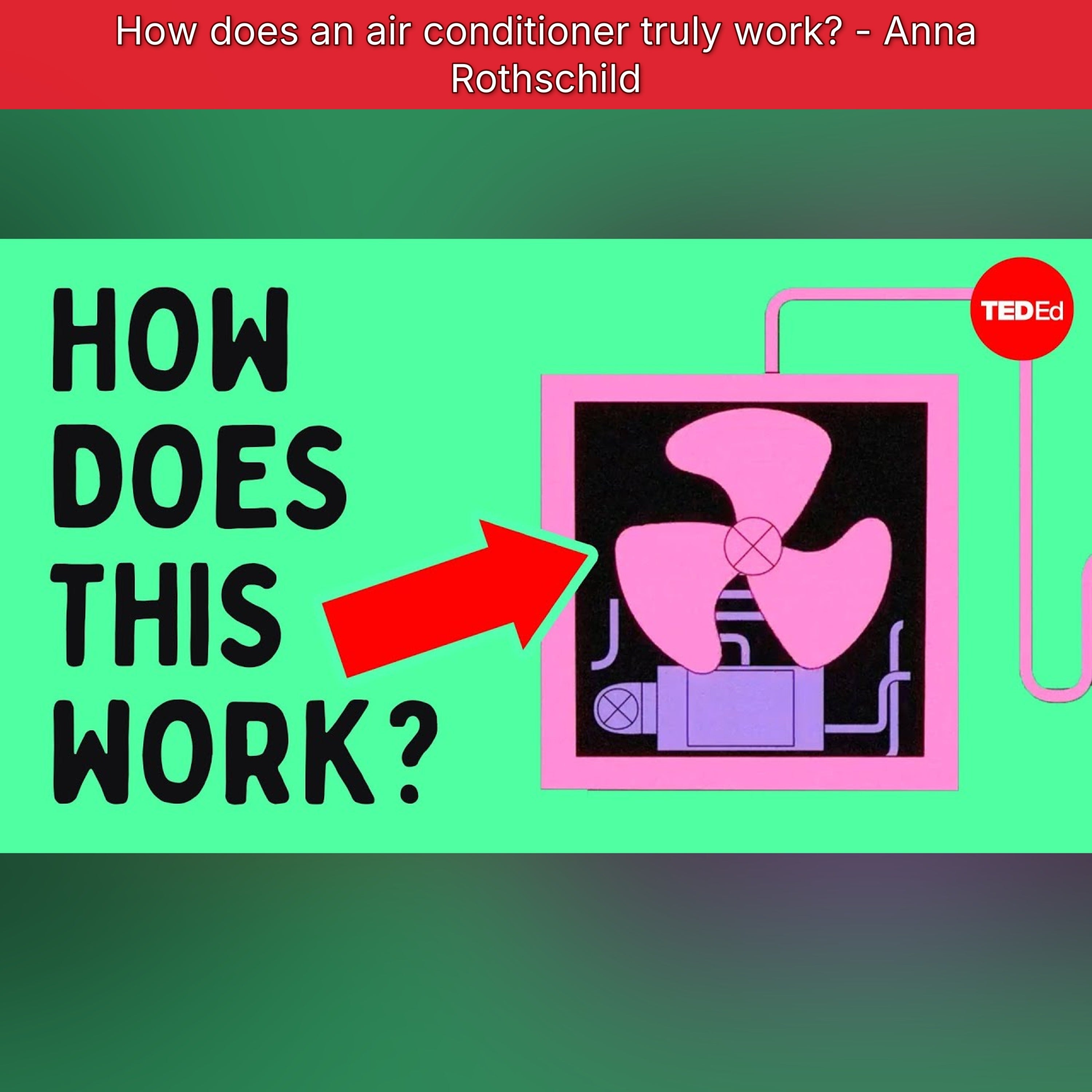
Dig into the science of how heat pumps both heat and cool a home, and find out the benefits and drawbacks of this technology. -- Typically, with any piece of technology, you pump one unit of energy in and you get about one out. That’s just the first law of thermodynamics: energy has to be conserved. But there’s a piece of technology called a heat pump, where for every bit of energy you put in, you get three to five times as much heat out. What wizardry is this? Anna Rothschild investigates the science of heat pumps. Lesson by Anna Rothschild, directed by Kevin Herrmann, AIM Creative Studios. This video made possible in collaboration with Speed & Scale Learn more about how TED-Ed partnerships work: https://bit.ly/TEDEdPartner Support Our Non-Profit Mission ---------------------------------------------- Support us on Patreon: http://bit.ly/TEDEdPatreon Check out our merch: http://bit.ly/TEDEDShop ---------------------------------------------- Connect With Us -----------------------------
So, uh... does it work? Metformin is an old, cheap drug used to help control blood sugar in people with diabetes. Now, it’s back in the news because some people - particularly wealthy people - are using it for possible anti-aging effects. That’s right. One of the most popular ways rich people are trying to live longer isn’t some million dollar cryo-something experiment, but a pill that costs pennies that's already on the market. So, the big question is: Does it work? To find out, I interviewed the lead researcher on the biggest study of metformin for anti-aging, Dr. Nir Barzilai. The answer he gives me? Well, it’s complicated. Note: I do not take metformin, nor am I advocating anyone else should. Please don't get medical advice from a youtube video! The purpose of this video is to explain the research that exists, explore what it tells us about aging in general, and discuss the effort Dr. Barzilai is leading to learn more. 00:00 What is metformin? 00:53 What is aging? 01:46 Can we slow
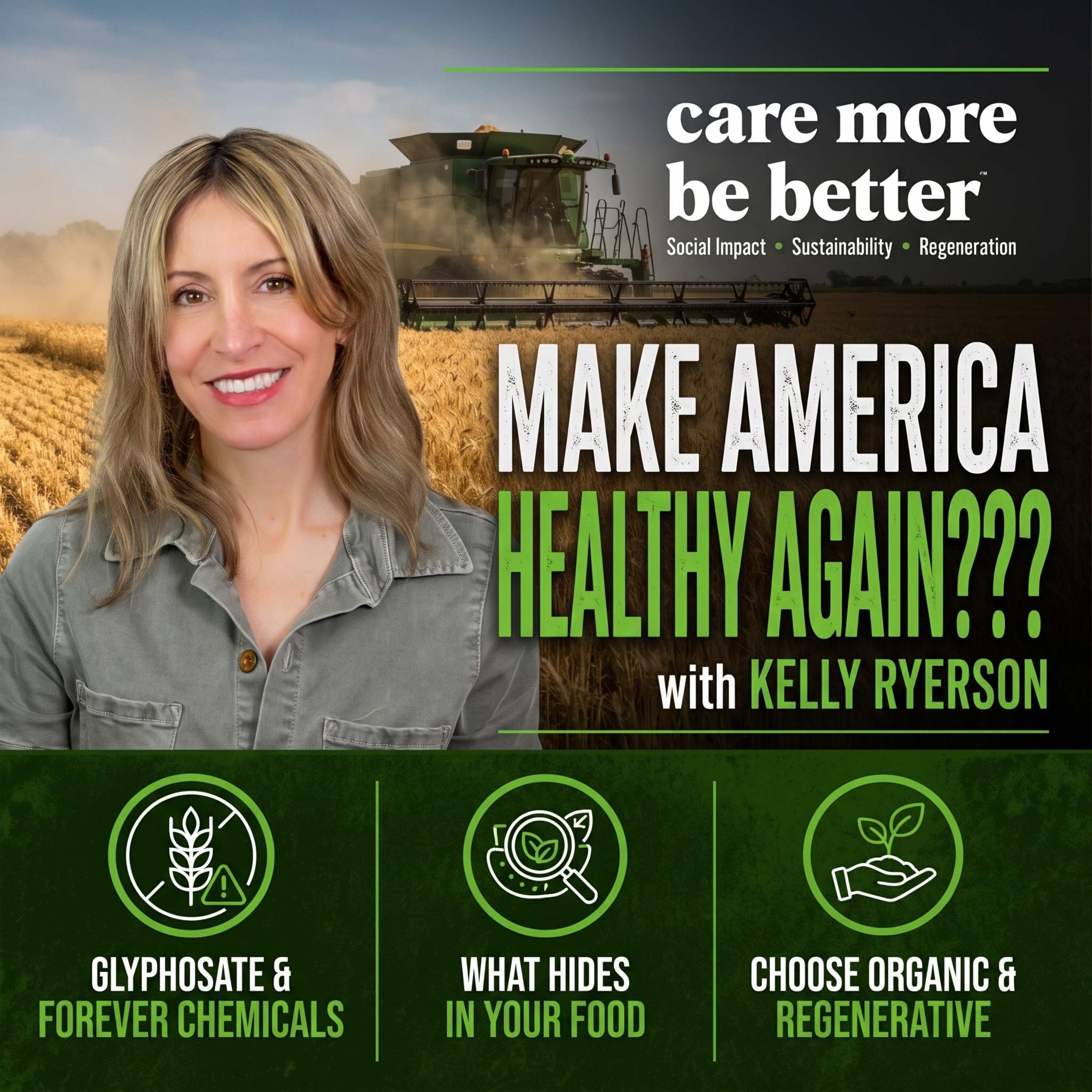
Before the holiday leftovers come out, here is what a year of pesticide policy is putting back into them. This bonus episode opens with the news: an executive order boosting glyphosate production, a Supreme Court ruling that limits state lawsuits over Roundup's cancer warnings, and EPA approvals of new pesticides that scientists say meet the definition of forever chemicals, a label the agency disputes. We also ask what it means that the Make America Healthy Again movement, and its leader, Robert F. Kennedy Jr., are defending those choices. Then you'll hear Kelly Ryerson, the Glyphosate Girl, explain what glyphosate may be doing to our bodies and soil, where it hides in everyday foods, and the practical steps you can take today to limit your exposure. This interview was recorded before the news above broke, for Nutrition Without Compromise, a podcast brought to you by Örlö Nutrition, a brand Corinna works with. It was originally published as episode 68 in fall of 2023. Episode blog page
I don't want to control anything anymore. In this Afternoon Vibe from The Positive Mindset Podcast, Henry Lawrence gets honest about the moments when he doesn't know the next step, and about praying "Lord, I give it to you" while still holding on to the outcome. He talks about letting go of the need to control everything, because we didn't create this and we're not supposed to control it. He shares why being your own moral standard makes it easy to adjust the rules, and he leaves you with a simple exercise: for one week, pretend that God is real and give it your whole everything. Then he asks one question that can change how you find your path: if you were to die today, what do you think would happen? Whatever you believe, become the proof of it today, and your life will unfold. In this episode: • "Do you want to be the ultimate commander for everything that happens?" • "When we're our own moral standard, we'll adjust it." • "Pretend for one week that God is real." • "How can you be th
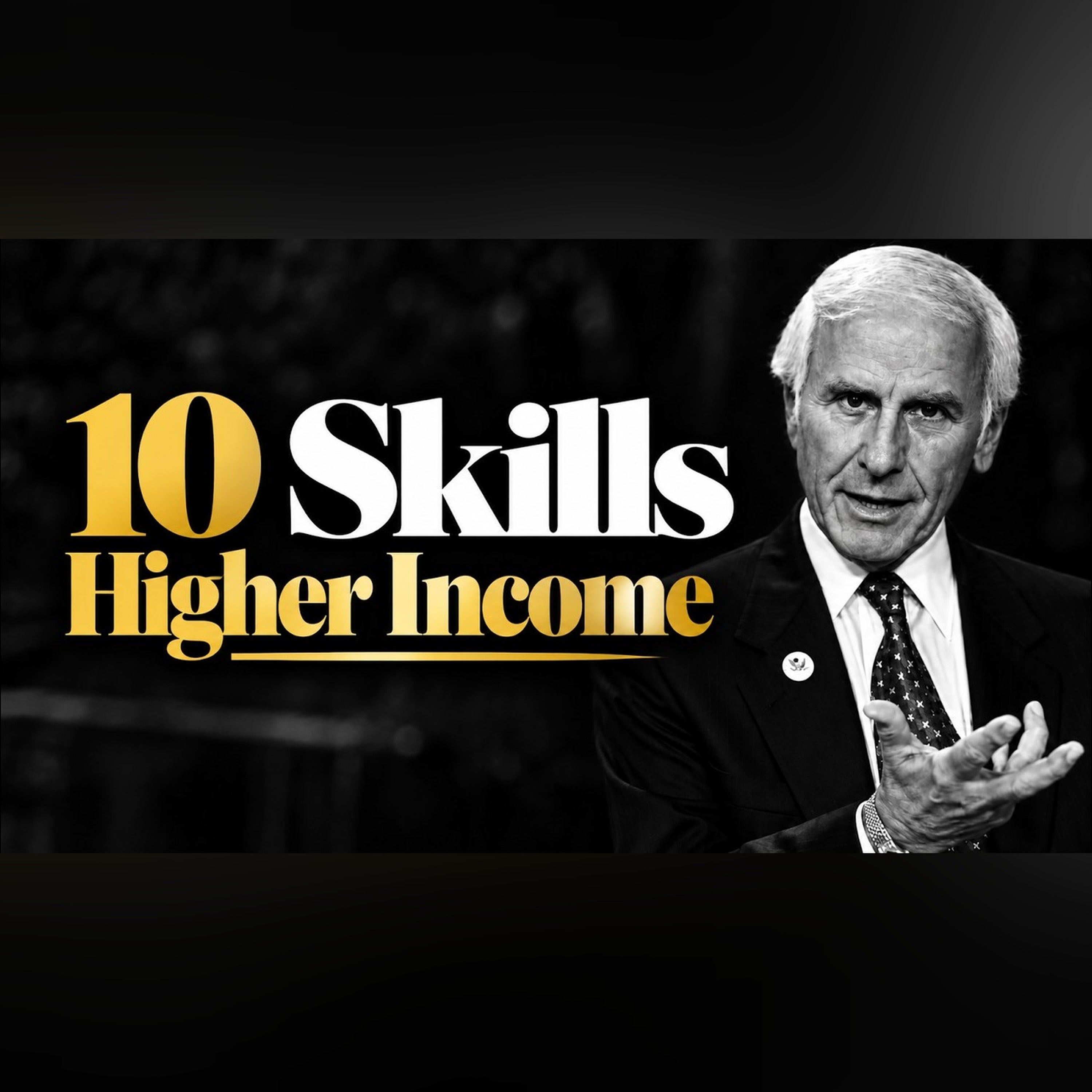
How do I make more money? Ask it that way and you go looking for a better job, a side hustle, a lucky break, some clever trick to shortcut the whole thing. But that was never the real question. Uploaded 20-10-26 The real question is a different one entirely. What would I have to become in order to be worth more? Because your income, in the long run, is not an accident. It is not luck. It is a payment, and a payment is always in exchange for value. Here is the truth: the marketplace does not pay you for your time or your needs or how hard you are trying. It pays you for the value you bring, and that value is determined almost entirely by the skills you have developed. This seminar walks through ten skills you must develop to change your income — not ten jobs, not ten industries, but the skills underneath the skills that make you valuable no matter what you do. CHAPTERS 0:00 Intro — the real question about money 3:09 #1 — Selling 5:36 #2 — Communication 7:58 #3 — Managing Yourself 10:56
Oh, if only we could escape this hell of late capitalism, right? We're overworked, polluted, stressed, overstimulated, and we can't afford anything. If only we could return to a simpler time when humans lived in harmony with nature, growing our own food, feeling part of our communities! Forget it, argues Chelsea Follett. The olden days were violent, boring, diseased and miserable. And she has allllll the grisly anecdotes to prove it. Whether it's JD Vance's wistful nostalgia for the working towns of the 1950s, to the Democratic Socialists' disdain for capitalism, to Robert F Kennedy Jr's lies about modern medicine, to climate activists' reverence for a simpler time, everyone seems inclined to idolise the past. Why? Follett is a research fellow at the Center for Global Liberty & Prosperity who works with HumanProgress.org at the Cato Institute, a libertarian think tank. Her new book is "The Grim Old Days: An Introduction to the Preindustrial Past" which documents, in gory detail, how ut
"You Can See Everything", the film about disgraced technology founder Elizabeth Holmes, is already the second-highest-grossing documentary in US history (get out of here, Michael Moore's "Fahrenheit 9/11"). Four weeks after its US release, it has finally opened in Australia where it took the box office by storm, debuting as the nation's #1 film. A Nathan Fielder fanboy, Josh saw the movie in America on the day it opened and has been champing at the bit to explore the questions it raises about truth, objectivity, deceit, abuse, science and art. Is its subject, Elizabeth Holmes, a misunderstood visionary, or a shameless crook? Is she a victim of controlling men, or their predator? Did the filmmaker, Nathan Fielder, get conned? If Holmes made false promises... then does the film's quest for objectivity represent another kind of false promise? And who the heck has never even heard of "Who's on first"? Wenlei Ma is a film critic at The Nightly. She stops by the Uncomfortable Conversations s
Richard Dawkins is one of the world’s most influential intellectuals. An icon of science, reason and atheism, he shook the field of biology half a century ago with his groundbreaking book The Selfish Gene. The Royal Institution shortlisted it as one of the best science books of all time. Dawkins has too many honorary doctorates and awards to list. In 2021, the American Humanist Association withdrew its highest honour - which they’d awarded him a quarter-century earlier - because of his scientific approach to biological sex and transgenderism. In 2004, he was voted #1 in Prospect magazine's list of the top 100 public British intellectuals. He invented the word “meme” to describe the cultural equivalent of a gene, and founded the Richard Dawkins Foundation for Reason and Science. At the age of 85, Dawkins has a new book, 42 Tales From Life, featuring essays exploring animal behavior and evolution. He was kind enough to visit the Uncomfortable Conversations studio on a tour of Australia a
New community initiatives should have a realistic long-term support plan before launching.
Share your view, then see how readers voted. No sign-in required. This poll is shared across stories.
Do you agree or disagree?
Common Quandary
A Common Quandary to discuss
Another conversation to explore, separate from this news story.
One friend is rich, one is broke, and everyone ordered differently. How do you split dinner?
A group of longtime friends traditionally divides restaurant bills equally. Their incomes have grown increasingly unequal, and one friend now declines gatherings because even their share is difficult to afford while others order without thinking about price.
When should friendship adjust for differences in wealth?