The World's No.1 Creative: How to Make People Care About Your Work | Nils Leonard
60 min
Listen through the publisher, then discuss the episode here or arrange an in-person Roundtable. Your city determines where to meet.
Roundtables are designed for groups of four, with a shared subject and room for everyone to speak. Come for discussion, with no dating expectation.
Most great ideas never happen. But what’s really stopping ideas from becoming reality? Is it fear of failure, self-doubt, or the belief that you need someone else’s permission to make something extraordinary? On What’s The Trick?, Ben Hanlin sits down with Nils Leonard, co-founder of Uncommon Creative Studio, to uncover the psychology of creativity, why brilliant ideas never become reality, and what separates people who dream big from those who actually make things happen. Recognised by Business Insider as the world’s number one creative person, Nils has helped create some of the most memorable advertising campaigns for global brands including British Airways, The Ordinary and OVO Energy. In this fascinating conversation, Nils reveals why being a little delusional might be the secret to success, how your own mind can hold you back, and why waiting for permission could be killing your best ideas. Discover how to overcome creative barriers, develop a clearer vision for success, grab people’s attention and turn ambitious ideas into something truly unforgettable. 00:00 Why Most Great Ideas Never Happen 01:40 What Actually Makes a Great Idea? 03:19 Building Uncommon Creative Studio 06:05 Stop Waiting for Permission 06:43 Why Being Delusional Can Lead to Success 09:58 The Power of Visualising Your Future 11:11 Starting a Business With No Clients 15:42 The Creative Process Behind Famous Campaigns 21:21 How The Ordinary Challenged the Beauty Industry 25:24 Why Great Advertising Makes You Feel Something 27:35 Midpoint Break 30:42 How Rat Boots Went Viral With 160 Million Views 33:12 How to Know If an Idea Is Brilliant 36:33 The Secret to Grabbing Attention 41:24 Reinventing British Airways' Safety Video 46:15 The Greatest Advertising Campaigns Ever 48:35 The Melting Statue That Made Headlines 50:39 The Brands Changing the Game 55:29 Fast Five With Nils Leonard 57:35 The Secret to Creating Something That Lasts About Ben Hanlin: About the podcast: Listen / Watch: YouTube: https://www.youtube.com/@BenHanlin Apple Podcasts: https://linktr.ee/benhanlin Spotify: https://linktr.ee/benhanlin Work with Ben: --- FOLLOW BEN: Instagram: http://instagram.com/benhanlin Facebook: https://www.facebook.com/benhanlin TikTok: https://www.tiktok.com/@benhanlin --- FOLLOW NILS LEONARD: Instagram: https://www.instagram.com/nilsleonard/ LinkedIn: https://www.linkedin.com/in/nils-leonard-373b2b3/ Website: https://www.uncommon.studio/ How do creative people turn ideas into reality? Hosted on Acast.
Episode information is provided by the publisher. Listening takes place on the publisher’s service.
Your best hours. The ones where your mind is sharp, where your energy is high, where you could build something remarkable if you pointed yourself at it. Where do those hours go? Uploaded 16-09-26 I've asked a lot of people that question over the years. And when they're honest, the answer is almost always the same. Their best hours go to someone else. They spend the top of their morning building someone else's business, chasing someone else's numbers, advancing someone else's vision. And what's left for their own dream? The scraps. The tired hours. The hours after the good ones are already spent. I'm not telling you to walk out of your job tomorrow. I'm telling you most people have never even noticed the trade they're making. Here is the truth: not every hour is equal, and you have been handing your sharpest, freshest hour to work that isn't the work of your own life — and calling it being responsible. This seminar unpacks the single mechanic behind why your own dream never moves: you s
If you really want lasting change, real results that stick around, what do you have to do? Tony Robbins is asked this all the time. His answer is always the same: For your life to change, you have to change. For things to get better, you have to get better. You need to create new patterns that facilitate progress and eliminate the patterns that don’t. Your life isn’t determined by what you do some of the time. It’s determined by what you do consistently. If you’re serious about getting results, you need a system. Tony Robbins Immersion Coaching can provide that system. For three decades, Tony has built his brand based on one thing: Robbins = Results. His system of Immersion Coaching is unlike anything else in the world. He is the Father of the Coaching Industry and his coaches' standards and training for success coaching are the best in the industry. We provide general Immersion Coaching as well as Specialized Curriculum Coaching Courses on the areas of life that matter most. As Tony s
Happy Sunday! Welcome to Heal Squad’s The Sunday Set Up. Life lessons to help you start the week. How much of success comes down to simply showing up? This week, we talk keeping an open mind, taking chances, and recognizing the doors that open along the way. From Olympic athletes appearing on national television alongside Mercedes Moné to performers who keep showing up week after week hoping for their big break, we explore why success isn't always about talent or luck. Sometimes it's about making connections, putting in the effort, and being willing to try without knowing what we'll get in return. We talk knowing when to stop investing time in people who aren't willing to help themselves, and why even experiences that don't work out can teach us something valuable. The takeaway: don't wait for the perfect moment or expect someone else to make things happen. Be willing to take a chance, walk through the doors that open, and remember that half of life is just showing up. Plus, a little b
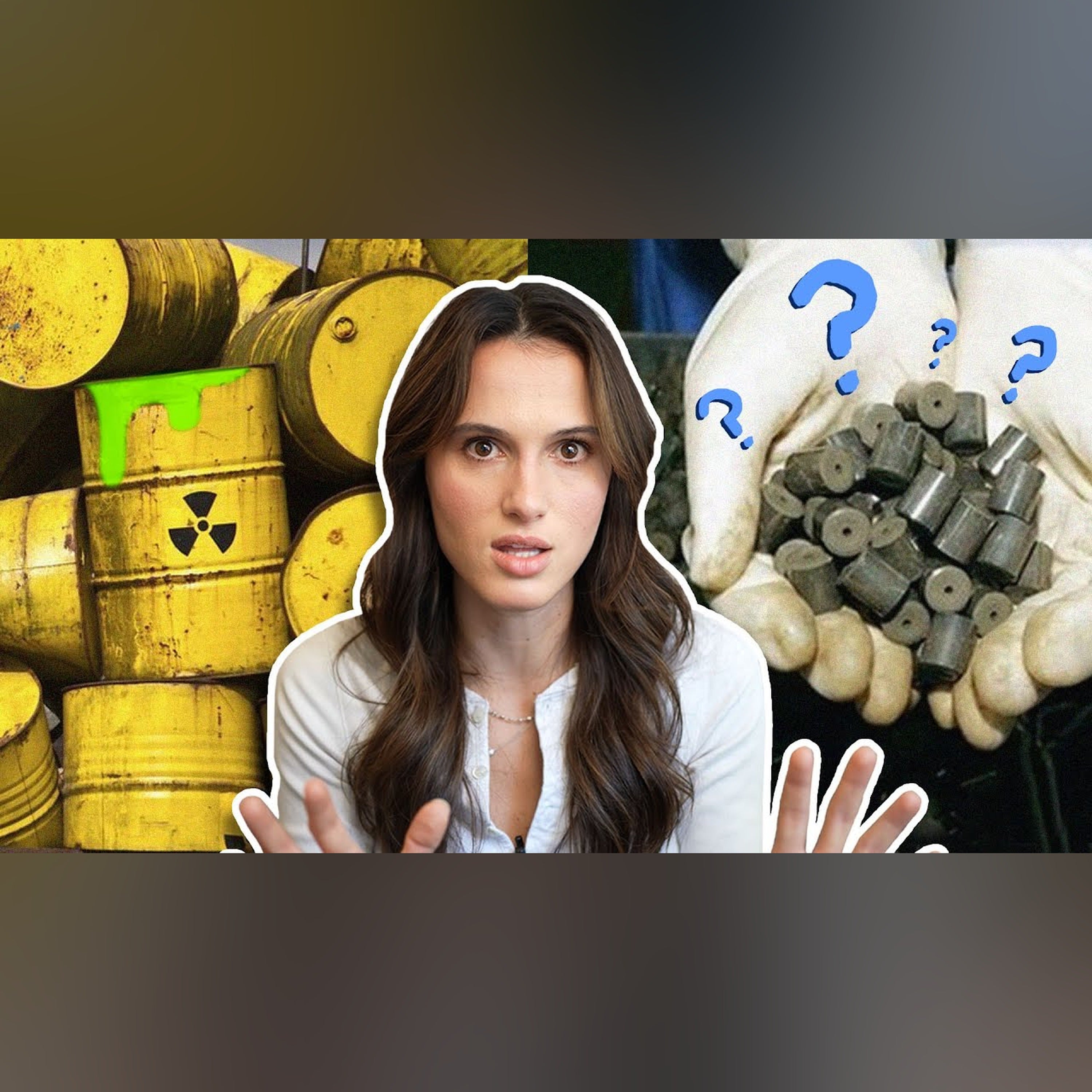
What if we could actually USE nuclear waste? Watch Johnny’s explainer on nuclear power here - and subscribe to his channel! https://youtu.be/QzTgZ6kOEM8 Nuclear waste is scary. Maybe you’ve seen it as glowing green goop in The Simpsons, or as a radioactive threat on the news. Either way, you likely know it has been a major block to the use and improvement of nuclear power. Over the last few decades, experts, politicians and the public have had heated debates over what to do with this radioactive material created by nuclear power plants. But what if there were a way to not just store nuclear waste, but actually USE it? This video is about the effort to make electricity out of nuclear waste. Really. It turns out, we developed the tools to do this decades ago. This story is about a technology we left behind and the people who want to bring it back. For this video, I had the privilege of visiting one of the largest and oldest research centers in the US, the Argonne National Laboratory. I’m
Master the skills that change lives — enroll in your free human behavior course today: https://nci.university/learn Uploaded 15-01-26 EXECUTIVE SUMMARY: Video: What It Feels Like to See Into People Purpose: Reframe how human behavior is actually driven and perceived Outcome: Permanent shift in how you experience people and conversations CORE IDEA: Human behavior is not driven by beliefs, opinions, or logic. Those are after-action reports. Behavior is driven by the nervous system’s constant assessment of: • safety • approval • power • avoidance of shame Decisions are made before conscious thought. Beliefs are constructed afterward to justify what already happened. WHY THIS MATTERS: Most people spend their lives interacting with: • beliefs • arguments • explanations • surface narratives As a result, they miss the layer where real decisions are made. This video focuses on that lower layer — the one that actually governs: • conflict • influence • attraction • resistance • leadership • trus
Have you ever tried something so hard, failed, and then tried again anyway? Meet Tony Hawk, the boy who turned his restless energy into skateboarding history! Growing up in sunny San Diego, California, Tony was a frustrated kid until his brother gave him a scratched-up blue skateboard. It was pure magic! By age 14, he was a fearless professional skater inventing wild, sky-high tricks on massive wooden ramps. Imagine being at the 1999 X Games, watching Tony attempt the ultimate, "impossible" trick: the 900! That's two and a half dizzying spins high in the air. Crash after crash, he fell ten times. But on his eleventh try? He landed it perfectly, while the crowd went absolutely wild! That same year, his smash-hit video game made him a superstar all around the world. But Tony didn't just want fame. He wanted every kid to have a safe place to ride, fall, and get back up. Through his charity, he has helped build hundreds of free public skateparks everywhere! Grab your helmet and drop in as
Listening doesn't cost anything... but when we're not listened to, it can cost society an awful lot. So when you ask someone "How are you?", are you genuinely interested in the answer? Dame Evelyn Glennie is a Grammy-winning solo percussionist who has been deaf since the age of 12 – and the first person to create and sustain a full-time career as a solo percussionist. She led 1,000 drummers in the London 2012 Olympic opening ceremony, and her mission is to teach the world to listen. Ben Hanlin asks her why the London 2012 drummers played buckets instead of drums, how she feels music through her whole body, why the Royal Academy of Music first turned her down, why Beethoven's Moonlight Sonata feels different in C-sharp minor, and the simple "sound spring clean" that can make anyone a better listener. CHAPTERS 00:00 Intro 01:05 How did Danny Boyle pitch the London 2012 ceremony? 04:09 Why did the London 2012 drummers play buckets? 05:02 How do you find 1,000 drummers – and rehearse them?
Jonathan Goodwin has been hanged, buried alive, attacked by sharks and covered in 200,000 bees. In 2021, while rehearsing for America's Got Talent: Extreme, a stunt went horribly wrong and left him paralysed from the waist down. When he was told he'd never walk again, his answer was simply: "Okay." So why do we waste so much energy on the things we can't change? Ben Hanlin sits down with the escape artist, daredevil and Britain's Got Talent star to get under the surface of his ideas: the cocky email that launched his TV career, why he wanted a hot iron to burn through him, the scorpion sting that left a hole in his tongue, and why most magicians misunderstand their real job. Plus practical advice for anyone who has to stand up in front of an audience. CHAPTERS 00:00 Intro 00:23 Who is Jonathan Goodwin? 01:48 What went wrong on America's Got Talent: Extreme? 03:42 Where did the idea for the stunt come from? 05:50 How do you cope when your life changes overnight? 09:20 Why put a live sco
Local events should make a deliberate effort to welcome people attending alone.
Share your view, then see how readers voted. No sign-in required. This poll is shared across stories.
Do you agree or disagree?
Common Quandary
A Common Quandary to discuss
Another conversation to explore, separate from this news story.
A bot will reject your honest résumé. Is it okay to add a year of experience?
A role requires three years of experience. You have two, possess all the practical skills, and know automated screening will reject an honest application before a person sees it.
Can an unfair gatekeeping system justify misrepresentation?