Listen through the publisher, then discuss the episode here or arrange an in-person Roundtable. Your city determines where to meet.
Roundtables are designed for groups of four, with a shared subject and room for everyone to speak. Come for discussion, with no dating expectation.
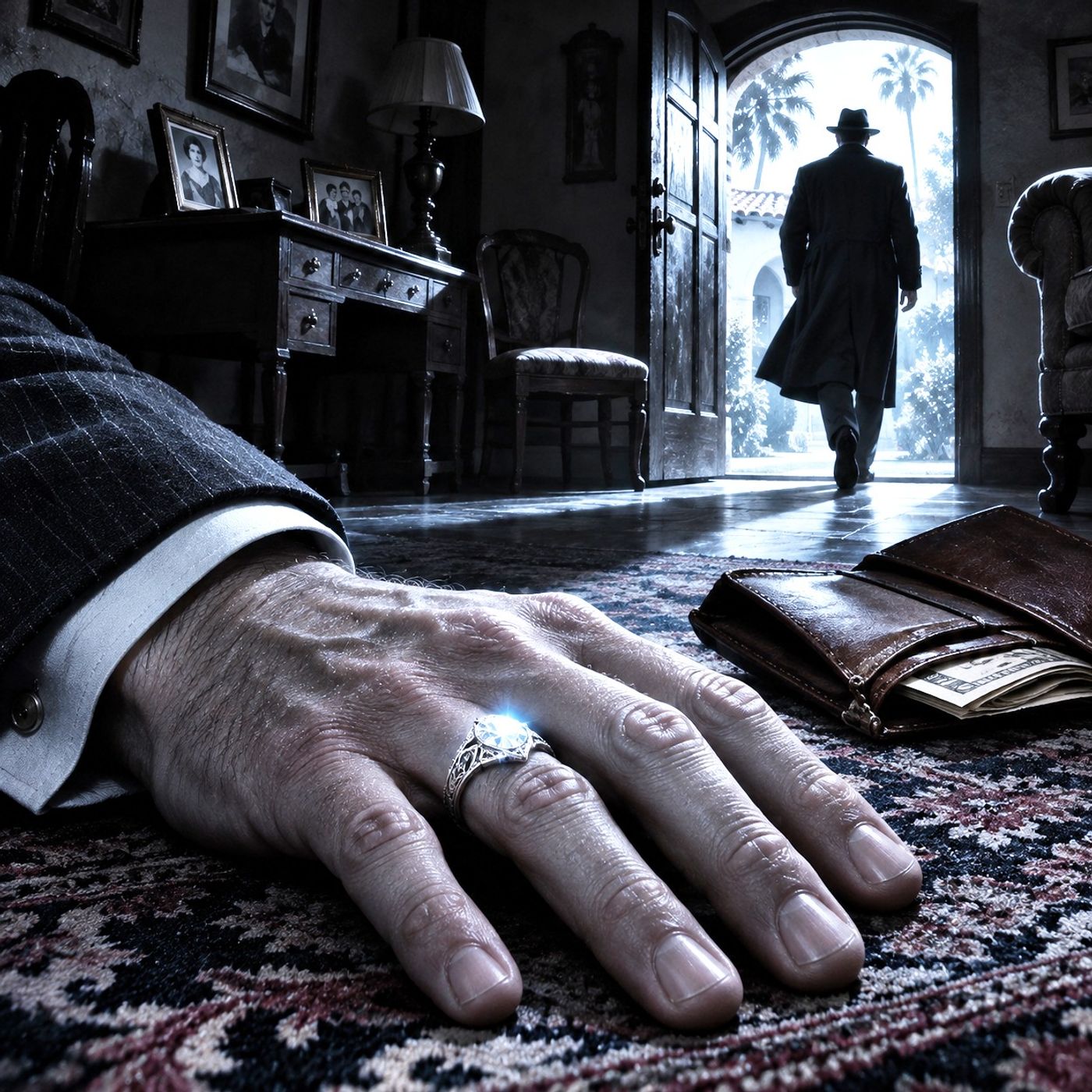
Thomas Randolph married six times, with four wives dying suspiciously whilst he collected hefty life insurance payouts. When his sixth wife Sharon was shot dead in 2008, he killed the alleged intruder, his own handyman. Detectives uncovered disturbing patterns spanning decades, eventually securing his conviction for murder after two trials.
Episode information is provided by the publisher. Listening takes place on the publisher’s service.
On the morning of February 2nd, 1922, silent film director William Desmond Taylor was found dead in his Los Angeles bungalow, and a man in the gathering crowd who said he was a doctor declared it a stomach hemorrhage; police found a bullet wound in Taylor's back, and the doctor was never seen again. Nobody was ever convicted of killing Taylor, and the same goes for the Villisca axe murders, the Black Dahlia, and the woman found stuffed inside a hollow wych elm in England. SOURCES and RESOURCES: “Unsolved Murders That Will Send Shivers Down Your Spine” posted at The-Line-Up.com: http://ow.ly/8Pu830n5ib3(used with permission) (Over time links may become invalid, disappear, or have different content. I always make sure to give authors credit for the material I use whenever possible. If I somehow overlooked doing so for a story, or if a credit is incorrect, please let me know and I will rectify it in these show notes immediately. Some links included above may benefit me financially through
A Dallas murder investigator was found covered in blood while his wife lay dead with a knife lodged in her neck. Jimmy Spurger Jr., 54, the chief investigator for the Dallas County Public Defender’s Office, was charged with murder after Teresa Spurger was found stabbed to death inside their Dallas apartment on November 6, 2026, just 11 days after he filed for divorce. The couple had been married for approximately 35 years. In this episode of Drop Dead Serious, Ashleigh Banfield examines the disturbing discovery and Jimmy Spurger’s release on a $1 million bond. His former coworker, and owner of Pink Lady Prison Consultants, Holli Coulman, joins Ashleigh to discuss the man she knew and the murder charge that stunned his colleagues.
Sherry Shriner built an internet doomsday cult around a twisted belief in reptilian shapeshifters, demonic possession, and an impending apocalyptic war between humans and extraterrestrials. Through online broadcasts and conspiracy-fueled teachings, Shriner amassed a devoted following convinced that evil entities were hiding in plain sight. But when Shriner accused one of her followers, Barbara Rogers, of being a reptilian witch, Barbara’s boyfriend, Steven Mineo, dared to challenge the woman he once revered. What followed was an escalating feud fueled by paranoia, accusations of demonic possession, and ultimately, MURDER. On July 15, 2017, Steven was shot point-blank in the forehead by Barbara, who claimed he had begged her to pull the trigger. This is the deeply disturbing story of an internet cult where conspiracy theories blurred the line between fantasy and reality, and one man paid the ultimate price. FOLLOW/SUBSCRIBE wherever you are listening! FOLLOW ME EVERYWHERE! YouTube: http
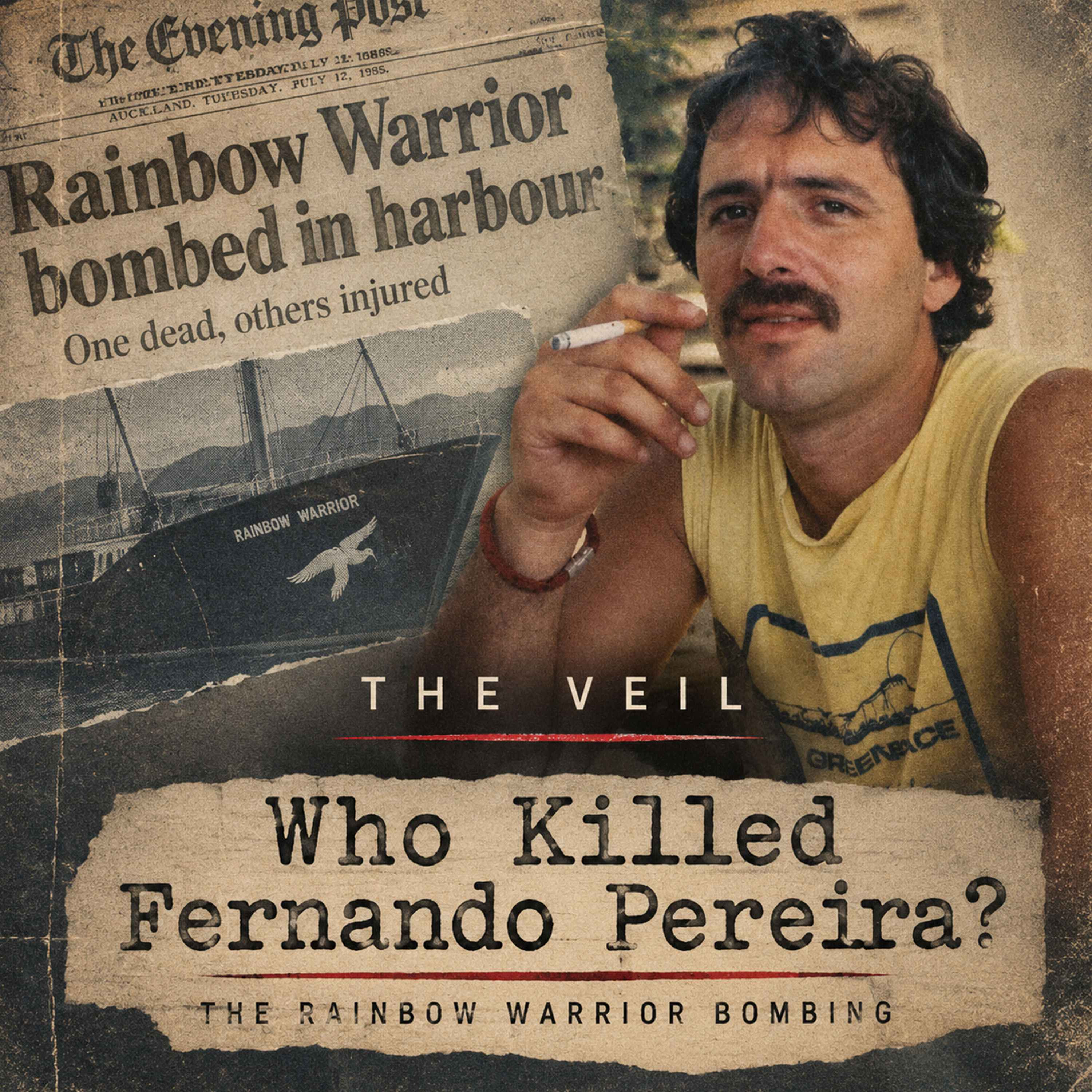
The bombing of the Rainbow Warrior, Auckland, New Zealand, 1985 Three days in the interview rooms at Auckland Central. A fisherman called Peter who never turns up, a pair of scars no surgeon made, a horoscope that reads like a police brief, and a young constable who speaks French. Then the passports come back from Switzerland as forgeries. As the Turenges are charged, the investigation chases a yacht to Norfolk Island, a doctor to Sydney, a volunteer to Israel and a pair of black pantyhose to Paris, and France's denials begin to give way. IN MEMORY Fernando Pereira, 1950 to 1985, photographer, father of Marelle and Paul. A NOTE ON SOURCING Alain Mafart and Dominique Prieur, who used the names Alain and Sophie Turenge, are named because they pleaded guilty to manslaughter and wilful damage in November 1985. Christine Cabon is named because her role has been publicly documented and she has spoken about it. The Ouvéa's crew, the yacht's doctor, the divers and their commander are described
A Texas deputy. Two guilty verdicts. More than 19 years behind bars. Now Kent McGowen joins Max Palasi to explain why he believes he was wrongly convicted. In August 1992, Harris County sheriff’s deputy Joseph Kent McGowen shot and killed Susan White while serving an arrest warrant at her home. He maintains that he acted in self defence. Prosecutors disputed his account, and a jury found him guilty. His first conviction was overturned. A second trial in 2002 resulted in another guilty verdict and a 20 year sentence. He was released in 2021 after serving more than 19 years. We’ll discuss the events leading up to that night, Susan White’s 911 call, the disputed evidence, both trials and life in a Texas prison as a former police officer. We’ll also explore his return to life outside and why he continues to challenge his conviction. McGowen’s claims represent his account. His release was not an exoneration, and his conviction remains in place. LIVE: Saturday 14 November at 7 pm UK Hosted b
The Cheat Sheet is The Murder Sheet's segment breaking down weekly news and updates in some of the murder cases we cover. Today, we will cover stories out of New Jersey, Missouri, and Illinois. NewsNationNow’s report on the murder of Brooke Hanlon: https://www.newsnationnow.com/crime/911-call-brooke-hanlon-investigation/ Patch’s report on the murder of Brooke Hanlon: https://patch.com/new-jersey/mendham-chester/bombshell-dna-evidence-found-brooke-hanlon-case-report NBC News’s report on the mysterious deaths of Leo and Katherine Lindeman: https://www.nbcnews.com/dateline/missing-in-america/leo-katherine-lindeman-believed-bodies-found-missouri-rcna607119 KY3’s report on the mysterious deaths of Leo and Katherine Lindeman: https://www.ky3.com/2026/11/13/toxicology-tests-may-help-determine-deaths-missing-mcdonald-county-couple/ Yahoo’s report on the mysterious deaths of Leo and Katherine Lindeman: https://www.yahoo.com/news/us/articles/sheriff-bodies-missouri-couple-found-035907902.html?gu
In 1995, Mark Winger claimed he heroically shot an intruder he found beating his wife Donnah with a hammer. Police initially accepted his account, labelling driver Roger Harrington a deranged killer. Years later, new evidence revealed Mark had orchestrated both murders to escape his marriage whilst framing an innocent man.
Betsy Faria was brutally murdered in December 2011, and police arrested her husband Russ despite his solid alibi. Friend Pam Hupp, who inherited Betsy's life insurance and was last seen with her, escaped scrutiny. After Russ's wrongful conviction was overturned, Hupp killed again, finally exposing her as the true culprit.
Faith Hedgepeth, a nineteen-year-old University of North Carolina student, was sexually assaulted and bludgeoned to death in her Durham apartment in September 2012. Despite extensive DNA evidence, the case remained unsolved for nine years until genealogy testing identified Miguel Salguerro-Olivares. In 2026, he was convicted and sentenced to life imprisonment.
Landscape restoration needs funding commitments that extend beyond normal political terms.
Share your view, then see how readers voted. No sign-in required. This poll is shared across stories.
Do you agree or disagree?
Common Quandary
A Common Quandary to discuss
Another conversation to explore, separate from this news story.
Your family connection could get your child into their dream school. Do you use it?
A university argues that considering family ties builds loyalty and encourages donations that fund scholarships. Critics say the preference preserves inherited advantage and takes places from stronger applicants.
Can benefits to the whole institution justify an unequal admissions advantage?